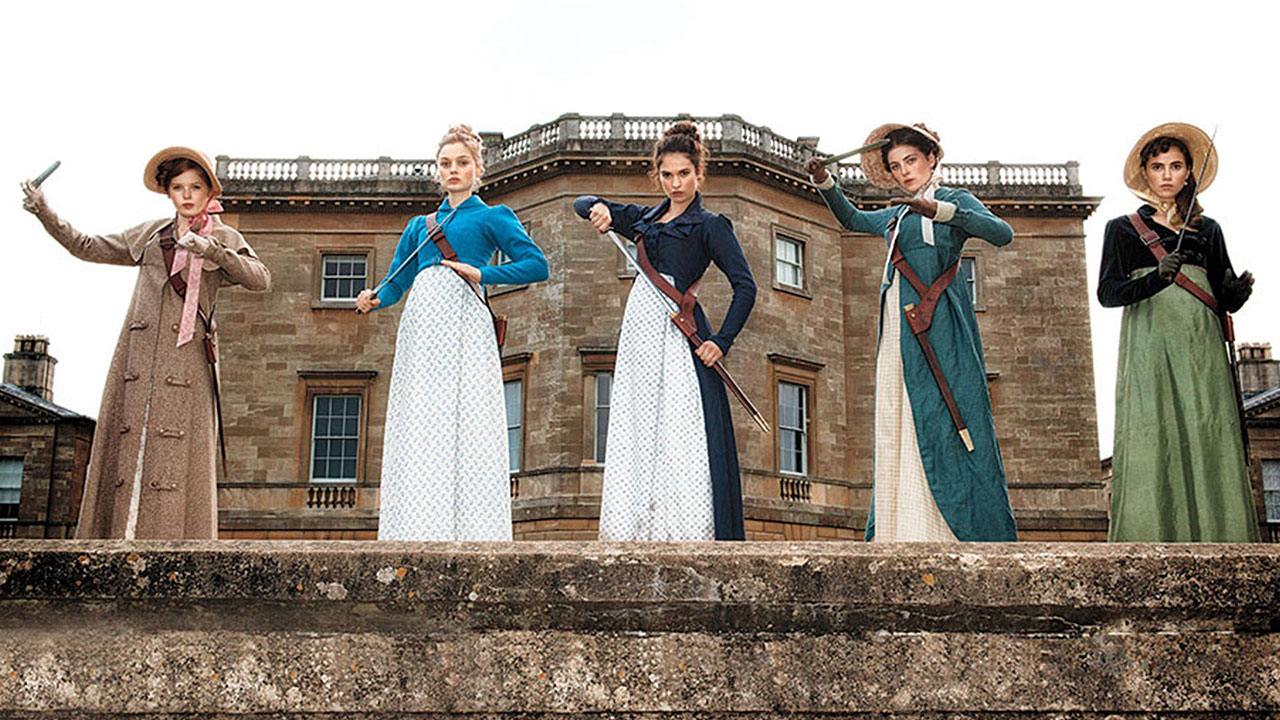
This past Thursday, I attended a film screening of Pride and Prejudice and Zombies, the latest film to be adapted from a book....that was itself adapted from a different book. I remember when the book Pride and Prejudice and Zombies came out, and I thought the book might lure unsuspecting youth into actually enjoying a literary matsterpiece and classic. I greatly enjoyed reading the original and admit that I snubbed the pop culture revival. Upon given the opportunity to go to a screening, however, I put my skepticism aside. As a film, I thought PPZ was excellent, extremely entertaining and just enough of the original to be a humorous homage. I have to say that Lily James and Matt Smith stole the show and created exciting and entertaining characters. This blog is not simply about movie reviews, however, so I feel compelled to discuss some elements of communication and rhetorical theory that, in this case, heightens my enjoyment of the film, and one cautionary note. I will first address what I felt were positive feminist inversions in the film through perspective by incongruity before discussing the future of orality and literacy. Suffice to say, this post will have comments about specific elements of the film. You have been warned.
Although many of the fighting scenes became repetitive, I never tired of the many scenes of the Bennet sisters pulling knives out of garter belts or revealing hidden weapons from underneath their dresses. The Bennet sisters were trained as Chinese warriors and often came to the aid of their family and male counterparts. In discussing these scenes, I am reminded of Kenneth Burke's perspective by incongruity, by which two disparate things are united to highlight the differences between them. In PPZ, I found this concept in play along multiple dimensions. The weaponry along the exaggerated feminity of the time period. Large skirts and corsets are made to restrict the movements of ladies, and yet the Bennet sisters move seemingly without pause to eliminate dozens of potential zombie threats. Furthermore, the juxtaposition of 19th century language and style with a contemporary horror fascination reflected the movie's unique narrative. One of my favorite parts was the puppeter-style history book that explained the relationship between the plague and the zombie outbreak - fascinating legitimization of a decidedly impossible occurrence.
Perspective by incongruity also laid a stark humor over the entire novel. The imminent zombie horde emphasizes how absurd the choice of husbands for Elizabeth is and the amount of time and attention given to such occasions. Even with zombies attacking and killing people at the balls, Mrs. Bennet and many of the people present are preoccupied with marriage and inheritances. The incongruence of these simultaneous acts highlights the odd traditions of the past and reignites the agency of Elizabeth in choosing her husband, despite the risks. I have recently paid much attention to the rise of feminist themes in horror movies (such as Teeth, It Follows, and Crimson Peak). I am happy to find these themes traversing genres and emerging in a more mainstream film. I hope these themes do not become overblown and trite, and keep their sincerity and calls for reconsidering the roles of women in narratives.
I did enjoy PPZ and found many instances of progressive film-making. I do wonder, however, if the creation of such films do not damage readership. When I first encountered the novel, I thought at least people would still be reading - what is there now? I do not mean to undermine film as a medium of communication, but I wonder what the long term effects are of children brought up watching the Lord of the Rings, Pride and Prejudice, Roald Dahl novels, the Great Gatsby, and Bride to Teribithia. Furthermoe, what happens when these film adaptations are perversions of the original text? Excellent movies, to be sure, but I wonder what components of visuality and literacy, minus orality, are lost on the current generation.
Last week, I started a series of three posts about horror films and sexuality. The first week discussed "Teeth" and the complications of sexual purity, education, and consent. This week addresses "It Follows," a 2015 film with a unique and exciting "monster." I will first discuss the film as an innovative step forward in the horror genre. Then, I will praise the film's subtle but profound incorporation of female sexual empowerment. All three of these posts will contain detailed plot information and reflection, so those who do not want to be "spoiled" should skip these posts.
It Follows was simultaneously praised as an instant classic and creative horror endeavor. The plot is simple, yet immediately and strikingly unnerving. The film's "monster" is a shape-shifting, unidentified creature that slowly but adamantly walks directly towards its prey. Once caught, the person is ripped to shreds. The creature has no shape of its own; the monster is truly hidden in plain sight, hiding with the appearance of strangers, friends, or family. This set-up has the unique ability to invoke fear in the audience with scenes of people walking towards the camera in the background. What is normally considered an average part of everyday life becomes a potential and immediate threat. Without seeing the film yourself, it is hard to convey the silliness one feels at being completely terrified at a young girl or old woman walking slowly towards you. That is part of the genius of the film; the banal, everyday activities become risky, dangerous, and potentially life-ending. What actions do we participate in everyday, how many people do we cross paths with, that could alter our lives indefinitely? The film also conveys intense paranoia, where anyone approaching the main characters are met with skepticism and aggression before they can be identified. Even when the characters flee the town briefly and relax on the beach, there is an ominous aura that the creature will catch up eventually; any safety is only temporary.
I will now discuss the sexual elements of the film. The "creature" follows individuals based on their sexual partners. The origins of the creature are left quite murky, but, in short, the creature follows whoever the person it was previously following has sex with. Jay, the lead female character, has sex on a date and catches "It." Her sexual partner was kind enough to explain the creature to her and warn her to pass "It" along quickly or else it will kill her. There are certainly undertones of sexual anxiety here. Any sexual partner could result in an STD or pregnancy, which is an obvious metaphor for "It" that silently follows but has the potential to kill. This metaphor breaks down, however, when one thinks of passing the creature to others so that one could be rid of it themselves. STDs are reciprocal and cannot be erased by sex with others. Indeed, this type of thinking is indicative of myths where sex with virgins can cure AIDS. Some have called It Follows as an exercise in sexual fear and anxiety, because of the potential consequences and risks one takes when engaging in sexual activity, especially casually so. Despite these potentially shaming interpretations, I see positive and productive scenes that sexually empower women. I will discuss three of them: when Jay is originally passed "It," the discussions the main characters have about destroying the creature, and the act of following and stalking.
There is a long-lasting myth that women use sex for power, money, and ulterior motives. The stereotype is that men require sex more and women less, so women can dangle sexual relief as a bargaining chip. I feel no need to explicate why these stereotypes are just that, stereotypes with little practical application. Given this assumption and other sexual myths that circulate in popular culture, I find the scene where Jay is passed the creature by Hugh a welcome inversion. Hugh, a male, is the one using Jay and sex for a non-sexual purpose - to pass the creature along. He dates Jay and acts with a motivation unrelated to the relationship and having sex. Instead, he has sex out of the need for self-preservation, out of fear, not unlike a victim of domestic assault. Instead of the female using sex maliciously or with ulterior motives, Jay enjoys her casual, sexual encounter and we feel no animosity towards her. Instead, our scorn is directed towards Hugh, however briefly, the man who has sex to save his own skin and endangers the main character's life. Sex becomes a betrayal of her consent; Jay got far more than she expected from the encounter. Unlike current arguments about abortion and birth control, we don't feel that Jay's consent to the sexual encounter makes her somehow "deserving" of this fate.
After Jay convinces her friend of the danger she is in, they discuss how to kill it. Jay decides and consents to sex with a member of the group to pass the creature along to buy them more time. There is the implication that the male may be better able to protect himself, or simply that this is Jay's sexual preference. Either way, his brutal death confirms for the group that there is no safety based on one's gender. Everyone is equally susceptible to the actions of this creature. Perhaps it is time or death itself that marches towards all of us. Later in the film, Jay has sex with another male friend, who quickly has sex with a prostitute. Sex, in the film, is removed from its traditional, romantic settings. Instead, it becomes a normal part of life that may be engaged in for many reasons besides love. Although we might condemn Hugh at first for his actions, we become accustomed quickly to the idea that if sex is the way "It" operates, sex may also be the solution to defeating it. Jay and Paul have sex from a platonic, friendship type of love, concerned for Jay's safety. This sexual act blossoms into romantic love, but this was not its roots. It Follows presents an alternative view of sex. Unlike Teeth, sex is not dangerous or shameful. There are potential consequences to its engagement, but the danger of "It" is separated and distinct from the sex itself. Sex is a more normalized, everyday activity that holds no more or no less threat than other daily activities. Sex is not given the importance that is provided in Teeth and thus removes the common sex-shaming in horror films and the "sluts die first" mentality.
Catcalling video mentioned below.
While watching It Follows, I couldn't help but be reminded of the video where a woman filmed herself walking along in New York City for a day. The simple act of walking, of being followed, is a fear that women every day fear. As someone who has been followed from a bus to a Metro being taunted by a man, and on a separate occasion been grabbed by someone approaching from behind (in addition to numerous verbal assaults), the fear and uncertainty of being followed is well communicated in the film. Everyone may not immediately recognize the potential danger in stalkers or people following, but the film illuminates this potential danger. Anyone walking behind the main characters is noticed and understood as a threat. I don't believe that everyone is a potential threat, but it is clear that everyone has the potential to be. Unexpectedly, strangers (and sometimes even friends) can become risks to one's self-hood and safety. And it may begin with a simple act of following.
It Follows quickly became one of my favorite horror films. I applaud the interesting and exciting decisions made about the actions and appearance of the creature and greatly enjoyed the sexual themes throughout the film. No film is perfect, and indeed I may have changed a few elements of the film to further its cohesion and consistency, but It Follows communicated a positive, inclusive message that I hope will be furthered in future horror films. Films have the power to influence public opinion and insert educational messages in an entertaining way. The normalization of sex and the empowerment of female sexuality are productive trends in the journey towards equality and sexual freedom.
Sexuality and horror films often go together. They represent the promise of new life, the pleasure of intimacy coupled with the fear of death and the terror of isolation. Beginnings and endings are ideas I am pursuing in my dissertation. I'm interested in how these concepts emerge together in many contemporary controversies. Horror films are another place where beginnings and endings are merged seamlessly. In this three-post series, I take a comparative look at three horror films, Teeth, It Follows, and Crimson Peak. I find a pattern of sexual anxiety and sexual exploration that pushes boundaries of "normal" sexual behavior. If people haven't seen these films, or don't want to be "spoiled," this is a warning that I will be talking about film details and plot elements. These films have captured my imagination because they play with and expand on the agency and power of females, which I think is a positive (and at the very least interesting) trend in contemporary film.
Post image retrieved from this website.
This poster brings up an interesting correlation between Dawn's last name, O'Keefe, and the
association between flowers and vaginas in Georgia O'Keefe's paintings.
Teeth (2007) is about Dawn, an advocacy speaker for the purity movement at her church. When she is raped by a fellow church member, she discovers that she has vagina dentata or a "toothed vagina." These teeth act on their own accord and work to protect Dawn from her rapist, castrating him in a gruesome scene. At first, she is understandably frightened and considers her plight a result of her sin. After research about herself and these teeth, Dawn has an epiphany. Her enlightenment, as indicated by her name and frequent references to the sun, comes in the form of sexual empowerment, where she can use her teeth to her advantage. Although the teeth are not under Dawn's direct control, they do not attack in a scene where Dawn is enjoying consensual sex. When the same sex scene invites Dawn's scorn and rage, the teeth attack and emasculate him. There are certainly problems in this film that disempower Dawn. Dawn does not preemptively attack or fend off potentially negative sexual encounters. For Dawn to fight back in her unique way, she must first be penetrated and submit herself to the sexual advances of men. At the end of the film, Dawn takes refuge in a man's car, who begins licking his lips and making sexual advances towards Dawn. Knowledgeable that the imminent sexual encounter will result in his castration, she smiles.
Dawn at the end of the film. Image retrieved from Rotten Tomatoes.
This film blurs lines of consent in the sense that Dawn "willingly" engages in certain sexual encounters with the knowledge that her teeth would attack her sexual partner. Despite these issues, Teeth does show a sexual empowered female who explores her own sexuality and comes to terms with her unique strength and eroticism. In Audre Lorde's "The Uses of the Erotic," she argues, "the erotic is a resource within each of us that lies in a deeply female and spiritual plan, firmly rooted in the power of our unexpressed or unrecognized feeling" (p. 87). The erotic is a power that is oppressed and corrupted by dominant power structures to keep women from realizing its power. For Dawn, the religious group is the source of oppression, where her sexual power is "vilified, abused, and devalued" (p. 88). Issues of purity and virginity are non-identities, where a lack of participation (such as atheism or vegetarianism) in an action indicates membership. Lorde argues that this oppression keeps women "in the service of men" as "a distant/inferior" person (p. 88). Teeth offers Dawn the opportunity to reclaim her sexuality and eroticism from men who take advantage of her and only see her as a sexual object. Dawn transforms from a meek virgin to an empowered crusader throughout the film, in part from her increased knowledge about sexuality and the body. In one scene, Dawn removes a sticker (shaped liked a golden sun) from her sex ed textbook covering the anatomy of the vagina. The film makes a strong statement that her religious upbringing and lack of accurate and complete sexual education directly leads to her vulnerable, naive condition. It is through knowledge and an enlightenment religion that Dawn becomes a more powerful female. Lorde argues that when women embrace the erotic, they "rise up empowered" (p. 88).
With that empowerment, however, comes scorn. Lorde said, "women so empowered are dangerous" (p. 88). Women who claim power and dare to challenge the system, as seen in the new movie Suffragette, they receive backlash. The contemporary feminist movement is often accused of grasping for more than women are due, that attempts at "equality" are really clothed attempts at dominance. Similar to arguments about affirmative action, those that oppose feminism truly fear losing their place in the system or damaging what is deemed "normal," and thus the desired order. In a recent r/ChangeMyView post on Reddit, a female redditor claimed that "Men are superior to women." Her reasons were because of men and women's physical differences and also the presence of men in more challenging/intellectual jobs. It's clear to me that even disturbances in an order that disadvantages women receives scorn from women themselves. If everyone is equal, perhaps there is no reason other than our own shortcomings to blame on our failures. Or, if everyone is equal, then perhaps our successes are not as meaningful as others. In a powerful article by Carole Blair, Julie R. Brown, and Leslie A. Baxter, they argue that the academic review process, filled with intelligent and intellectual women, is also a biased space. They respond to an article that ranks the publication count of female communication scholars and rejection letters they received on an earlier version of the article. Their attempt to challenge the ranking article was met with scorn and rejection from both male and female reviewers. They argue that the original report "is a thematic marker of a masculinist ideology and that the anonymous reviews of our original essay are unusually explicit manifestations of the apparatuses that sustain and enable those ideological themes" (p. 384).
Teeth brings up these important issues of female agency and how sexuality can be used as a force of attraction but also creating fear. This film puts an interesting spin on how female sexuality can itself be a weapon, the monstrous female fighting back with the strength of her form. I see many movies that laud the adjusted or upgraded female, such as Aeon Flux and Ultraviolet, but less often do I see films that empower the everyday female to fight back. There are definitely a notable few which I hope to address in a later post. As recent articles have suggested, it is oftentimes females who end up surviving horror films, oftentimes with the help and intervention of others. Teeth, however, empowers the female protagonist to use not only her self, but her sexual self, to survive.
On Friday, September 25th, I attended an event at the USC Caruso Catholic Center hosted by many organizations including Pando Populus. This organization takes it name from the pando tree and describes its significance on its website: "Above ground, Pando appears to be a vast grove of individual trees. Underground they are all interconnected through a single root system. Each part is affected by and nourishes the other. It has survived this way for as long as 80,000 years." The pando tree is a synecdoche for the interconnectedness of all life and an analogy for how we must work together to correct the damage done to our environment.
The event was held in support of Pope Francis's visit to Washington D.C. and the release of his encyclical "Laudato Si." The event was religious-themed with the Bishop Mary Douglas Glasspool representing the Episcopal Diocese of Los Angeles, held in a Catholic Church, with speakers from the Muslim Public Affairs Council, Faith2Green, and Interfaith Power and Light. The theme, "The Pope is Pando" lauded the work of Francis as a figurehead and representative of how religion can be a uniting force for environmental activism. I've previously discussed the rhetoric of creation care as an emerging social movement with the potential power to tip the scales in favor of larger influence. While the group I studied was primarily evangelical rhetoric, it's clear that many religions are finding common ground in the spiritual to influence their view of the natural.
Logo for the Pope is Pando event. Retrieved from this site.
In Francis's encyclical, he made repeated mention of an "integral ecology" where life is integrated in a familial metaphor. Common to Catholic and Christian rhetoric, the familial metaphor connects people and faith leaders as fathers, mothers, sisters, and brothers. Francis incorporates the environment in the familial metaphor as shared children in God's creation. He argued that the Earth and nature are female family members: "our common home is like a sister with whom we share our life and a beautiful mother who opens her arms to embrace us" (p. 3). The feminization of "Mother Earth" is a phenomenon I would like to explore in a different blog post. For now, I will say that emphasizing the femininity of nature implies vulnerability in need of our protection and to motivate us to save her as one might a damsel in distress. Francis argued, "This sister now cries out to us because of the harm we have inflicted on her by our irresponsible use and abuse of the goods with which God has endowed her" (p. 3). If we are all interconnected - a united organism - then a threat to one part of it is a threat to the whole. Faith appears to be one way that people are transcending differences in order to focus attention away from economics and politics and onto justice, morality, and the environment.
There are many issues that I feel compelled to address as a rhetorician and social agent of change (Klumpp and Hollihan argue). Engaging with these issues, however, requires reflexivity about my own status as a privileged, white, heterosexual, cisgender, able-bodied, female and how that type of person/body can speak for others. Can I speak for others? Perhaps literally, yes, I could use my platform on this blog and as an academic to speak for others. It wouldn't be well or with full knowledge, but I could. Thus, the better question would be should I speak for others?
On one hand, attention to these important issues of transgender rights, racial inequalities, gender equality, and equality more broadly should have as many advocates as possible. People of all description can be allies and amplify the voices and stories of those who can speak more genuinely about these problems.
On the other hand, speaking for others complicates issues of voice, could serve to isolate the voices of others, and reifies a system in which certain voices are more valuable than other voices. In an academic exchange in a journal, Campbell and Biesecker addressed the issue of speaking for women in rhetorical history and how the "canon" of rhetoric that is studied systematically removes female voices. Though Campbell erred on the side of including as many voices as possible into the current canon, Biesecker was in favor of rejecting the canon as a system of tokenization.
The rhetoric of tokenism highlights certain voices that triumph against an oppressive system as evidence that the system is not oppressive. The lauded status of certain individuals (Cloud has an excellent article on Oprah as exemplar) is unique and worthy of note, and their success is linked to their individual qualities. If others simply embodied these same qualities, they could also rise above the system, meaning that change is unnecessary.
This is the token black character on South Park, literally named "Token." Retrieved from this site.
Part of the problem in speaking for others is this dynamic of visibility, voice, invisibility, and silence. To speak for others is to reify that certain voices are not being paid attention to, but it also silences their actual message in favor of a conduit. To remain silent, though, is to allow and passively participate in the maintenance of the status quo.
I am still working through these problems and try to keep them in mind in the work that I address and the comments that I make. I try to always be reflective and aware of the position from which I consume information and process opinions. For now, I err on the side of commenting from my limited position, especially when certain issues are prevalent and pressing.
One issue that has recently emerged, and one which I am reluctant to rehash considering the wishes of my colleagues, has been the Annenberg Innovation Lab Black Twitter project. I wish only to comment on this situation's similarities to the issues of authorship, voice, and who is allowed/should study others as a researcher. A summary of the incident can be read here and an excellent response by my colleague Dayna Chatman can be read here. This incident helped me reflect more on my status as a researcher and how academia as a whole can be more reflexive of how our personal situations affect our approaches to certain issues.
Catcalling has been appearing frequently in article I've been reading, on social media, and in conversations with friends. I have already discussed more generally the problems that females face specifically on college campuses, but catcalling is a form of aggression that plagues all women. I use the term aggression purposefully and meaningfully as these catcalls are verbal, sexual assaults on females. These are, in many ways, hate crimes in that they are addressed and targeted towards a particular gender. I argue that these are violent, aggressive verbal attacks on females and are not addressed in order to be compliments or flattery. Any woman of all shapes and sizes in clothing from SoCal casual to Boston coats (I have seriously been catcalled walking down Boylston in my HUGE winter jacket) are catcalled. Like rape, catcalling is not about "flattering" or "complimenting" someone; it is about power, laying claim, objectifying, and reifying an order where men can and are allowed to "be men." The clip below is from a Fox News show where four clueless women and one man discuss how flattering and welcoming catcalling is.
The hosts argue "let men be men." This statement characterizes men as overly sexual, aggressive, and blameless for their actions. This attitude let's men off for perpetrating abusive, violent action towards women. The blame is shifted to the victims for not "taking a joke," their choice of outfit that incites a catcall, or walking in a certain area. Victim blaming is never something that should be encouraged or tolerated in society. Just like bullying or assault on college campuses, it is always the fault of the perpetrator, the person committing the crime and assault. It is never the fault of the victim. In the famous words of the recently passed Robin Williams in Good Will Hunting, victims must always remember, "it's not your fault." The hosts of the show should be ashamed of themselves for laughing and tolerating the inane slow clap of their male counterpart. The female presence is not a show or performance for the adoration or approval of males.
I have been catcalled many times and the first thing that I have thought was not, "oh how nice," or "how flattering!" Instead, it immediately places me in a subject position where my presence is only meaningful in that is a display and object for the male gaze. In one instance, I had a man follow me off a bus in Los Angeles and onto the Metro, yelling at me and attempting to accompany me to my destination. I will probably never forget the fear I felt when I realized he was behind me as I stepped off the bus. My relief in getting out of the situation became sheer panic. He ran up next to me and said, "I'm not trying to scare you sweetie, I just want to marry you." Another time, I was grabbed from behind by a young male on a skateboard on the very street where I live. This catcall, which I tried to ignore, ended in physical assault and made me feel like an object to be squeezed, held, and owned by others. When I step on the street, I have no control over the actions of others, what they may call me, how they may judge me, but I will say that it is more rare than not to have an assault-free day. Louis Althusser noted that when a police officer yells, "Hey you!" at someone, they immediately construct a subject position for them to inhabit. This interpellation is done from a position of power that constructs for the other person an identity that they have no part in constructing. Any reaction is to that assignment position within what Althusser called an "ideological state apparatus" that reifies hierarchy.
Buzzfeed attempted to create a humorous interpretation of catcalling. The video shows "What men are really saying when catcalling." This video is important because it addresses the counter-argument that many people use to defend catcalling: that it is a legitimate way to approach a female. If someone is interested, why not simply call out to them and engage them in conversation? Well, as the video shows and as I fully agree, catcalling is not an invitation. There is no desired or appropriate response. The male simply wishes to undermine the female, assert power, and inflate their own egos. As one of the males in the video states, "I noticed you're confident, so I'm cutting you down to feel powerful." Another notes that he's not sure why he's calling because he wouldn't know what to do if the female responded. When I have tried to respond to catcallers, I am either called a bitch, frigid, or am assumed to already have a boyfriend. Because already being owned by a male is the only reason to call off an approach.
Playboy also recently released a chart that describes when it is appropriate to catcall a female. Though my initial reaction was, "why do you need a flowchart to define the word 'never'?" this chart is important because it incorporates the participation of the female. The only way for catcalling to be appropriate, via this chart, is with the consent and agreement of the female party. This approach considers females active agents instead of simply passive objects to be called upon.
Catcalling engages issues of hierarchy and ideology. In what situations do females catcall men? In what situations do females have the power to objectify and undermine men? Simply put, they never do. The structure of hierarchy implies that the minority or discriminated group never has the agency or power to discriminate themselves. Any action is performed within that hierarchy. My response to a catcaller is always framed with the male in the right and myself in the wrong. Althusser's police office constructs the situation and appropriates the actions of the passerby without a need for reaction. Because of their respective positions within the system, the act of addressing and calling upon someone places them in the position of vulnerability, object, and minority. Catcalling reifies a structure that says that men are always in a position of power over women.
Retrieved from this site. Stats are specific to Hollaback Boston.
A few organizations, such as Hollaback , are trying to end street harassment. Hollaback focuses on sharing the stories of females who have been harassed in a triple-pronged attempt to promote awareness of how frequent and widespread the issue is, to provide validation for females who have been verbally harassed, and to promote healing through collective storytelling. I hope that initiatives like this can help to make real and present the plight of harassment that females experience every day. We as a society need to move away from victim blaming, listen to the stories of those shamed and objectified, and acknowledge the societal guilt that we all share by allowing this culture to exist. Though I am not knowledeable enough to comment in more depth, I do want to use this post as an opportunity to amplify how these issues often specifically and disproportionately affect women of color and the transgender community.
I had previously started writing a piece in response to the Tal
Fortgang “check your privilege” article.
I wanted to discuss the plethora of space and attention the media (and society)
gives to the white, male, cisgender, able-bodied, heteronormative perspective.
I briefly stopped working on that article when news of UCSB’s campus
attack became public. I immediately thought that Elliot Rodger’s story was perhaps
more deserving of being critiqued. This was when I realized the great
similarities between these two men (albeit very far away on the violence
spectrum) that can be linked to underlying societal de-valuing of trans- and
cis- women. I will address these two situations separately before
critiquing the reinforcement of hegemony that allows us to avoid blaming
ourselves for the rampant presence of continuous threats of rape and death.
For Tal, being told to “check his privilege” is the worst
part of his college experience. Tal’s rejection of his inherent privilege
denied the negative experiences of others (at college or elsewhere) of racial
discrimination, violence, and sexual assault. The stories of so many women,
especially transwomen and women of color, are forever swept under the rug, but
the whining of a Princeton-educated, non-struggling story of Tal are lauded as
examples of how society is forcing white people to feel guilty “just
for existing.” It is quite disheartening to know that one’s story will not
be believed simply because one does not have the access to media forums in
which to express them. Or, even when those stories are told, they are often the
white, cis-woman perspective. Or, when women are threatened, we still rely on the charity of men to raise the alarm and offer suggestions.
I praise the strong, powerful women at other institutions,
such as USC
and Northeastern
(my current and previous institution of higher education) that have shared
their story and fought back against institutions that deny women the right to
say no, and their legal recourse against perpetrators. I was not strong enough
to tell my story. Even with my high level of privilege, I was terrified of the
consequences of reporting my sexual assault by a trusted friend at Northeastern.
The word “survivor” never rang true for me. “Survivor” would imply that I had
faced a natural force, like a tsunami or a disease, and overcame the event and
devastating effects. I didn't, though. I
was faced with a human force, a man in complete control of his actions, a
friend, who I had given my trust to, had made a conscious decision to act,
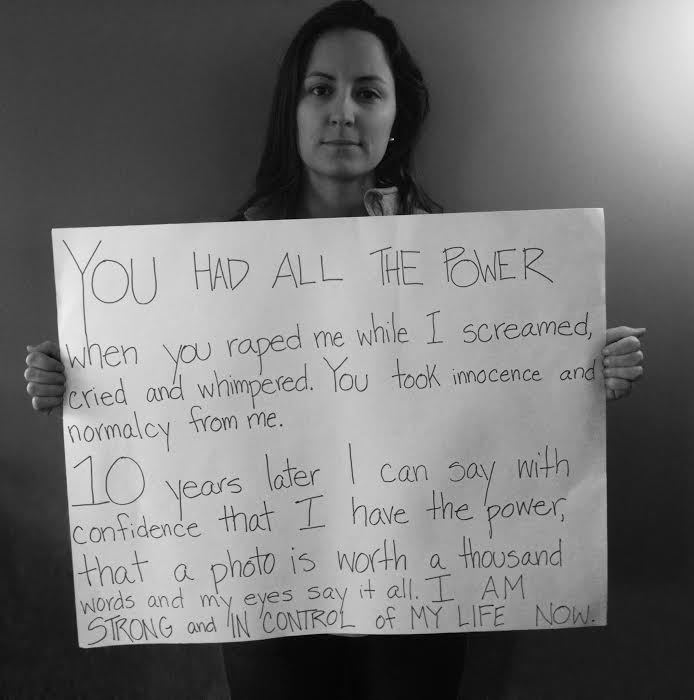
devalue our friendship, and violate my body. This is, unfortunately, the story
of so many women in collegiate settings, but so few are given the space to
share their stories, or feel that they can freely and without consequence equally
access our rights.
Elliot Rodger’s story is also garnering national attention,
including his manifesto where he declares his hatred of women and need to enact
revenge through murder. Despite such plain, obvious language, some people have
come to Rodger’s defense
by displacing blame from his white, male privilege to mental
illness. One of my colleagues at USC, Francesca Marie Smith, argued that
mental illness can be used as an argumentative strategy to undermine the
culpable of agents in a given situation. Examining the 2011 shooting of Gabby
Giffords, she concluded that a focus on the mental capacity of Jared Lee
Loughner derailed larger conversations about the societal pressures and
political polarization that may have fueled the attack.
Elliot should not be memorialized, lauded, made a hero, or
removed from blame. This was a calculated, terrorist attack on women as a whole because he
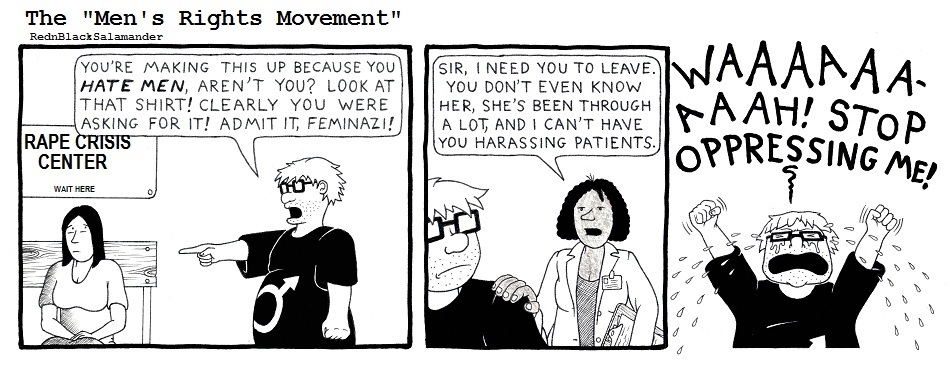
had been told “no.” He believed he had a right to the female body as sexual
property and projected his own shortcomings on the failure of (female) others. People
should not watch his videos or read his manifesto: let us not immortalize a misogynist
who decided to take life instead of realize the privilege in his own.
These two stories began and ended very differently. Tal has
certainly upset people with his lack of awareness and care for the stories of
others, but Elliot has murdered. I do not wish to equate these stories; I am
not making claims about “all
men.” I am instead commenting on the attributes that they share and what
this says about our society.
Both are inherently linked to race
and gender, because they laud the white, male perspective over all other bodies. Yes, Elliot was mixed race, but there is no denying his feelings of privilege and superiority that accompany this perspective. Both believe in the power of their privileged body to make decisions and that they have the right to remove of agency from others. Tal and Elliot are not allowed to be told “no,”
especially not by people of color or women. Tal cannot be told to “check his
privilege” and Elliot cannot be denied sex. These are the autonomous decisions
of others that put into question the privilege that Tal and Elliot could not
even recognize they had (being blind to their own condition and the conditions
of others).
These men are just two chapters in the larger story of a society
that allows their privilege to continue unabated, that celebrates and defends
them, and that prevents us from looking inward at our own complicity. If it the
fault of people who question Tal’s struggle, Elliot’s mental condition, or my inebriation,
then society as a whole is declared “not guilty.” We can live in the façade of
a world where these events are mere peppered outliers in a properly functioning
society, instead of symptoms of a diseased organism. Walking down the street or
taking public transportation is an opportunity for women to be yelled at, groped, followed, threatened, or even worse. Even spending time
with trusted friends and family members can lead to the violation of the
female body. Althusser's police officer defines the power structure and everyone's position in it by addressing someone, "Hey you!" When I walk down the street and am called "bitch" while being grabbed from behind, that also defines me without my permission, reaction, or ability to subvert.
We cannot let these stories be drowned out by the mob quick
to defend the current system. We must give space and attention to those that
are fighting for change and awareness of larger issues. We perhaps cannot
change the minds of current misogynists or denialists who will resist at all
costs the crumbling of the society that preferences them. But, with increased
effort, we may be able to usher in new generations brought up in a society that
recognizes the issues that face the majority of us and fosters a culture that
is actively trying to change it.
This was not the intended blog post for this Sunday, but a few recent advertisements have been on my mind, recently. Their repetition on the TV channels I watch and on Hulu has increasingly bothered me in their portrayal of the female. I will link to them both here and then discuss the problems that emerge in the persistent stereotyping (especially gender stereotyping) that occurs in media.
The first commercial is from Verizon, which advertises that if you buy a phone, you'll get a second free. Then, the commercial explores various options for who the second phone should be given to. Attempting humor, the commercial proposes that a girlfriend may enjoy the free phone, "but don't tell her that it's free." The face of the female fades from happy to disgruntled. This commercial plays on the "high maintenance" girlfriend trope where females are not happy or satisfied unless a lot of money has been spent. Shows such as Bridezillas, MTV True Life, arguably every Real Housewives version, emphasize this theme of women as spoiled, needing immediate and constant care, and focused on the material. These stereotypes overpower a more dimensional representation of the female outside of material goods and characterize all women as high maintenance. This description itself is inherently offensive. One's provides maintenance to a car or an object, not to a person. There is the association with a female as an accessory, a tool, an object needing maintenance, improvement, and upgrades in order to function. This also implies that the partner (oftentimes male) in the relationship is the only one with purchasing power. This clip from Bridezillas, featuring Remy and Rob, illustrates the dynamic quite well.
The Verizon commercial bother me, because it ignites these stereotypes as women as only valuing the material, lacking purchasing power, and only superficially strong in their demand of items they cannot provide for themselves. Even in the portrayal of strong women who declare they deserve certain items or treatment, there is an underlying weakness in the women who rely on others for self-validation, respect, and attention.
The second commercial focuses more on the vegetarian as weak, but the non-present character is given a female gender. This is a commercial from Walmart about setting a table for an Easter lunch. The planner describes why certain people are placed in certain spots noting that her vegetarian sister is at the opposite end of the table "so she can't see the ham." My first reaction was one of disgust that a commercial would rely on stereotyping vegetarians as too weak to even see meat. Though this is just a small statement, a lot of information is imparted in a short amount of time to the viewer. The audience is surely meant to consider the planner quite respectful. But, the implications are that vegetarians (and perhaps specifically female ones) cannot stomach the sight of food they cannot consume.
Both of these commercials highlight the importance of stereotyping in the world of advertising. When a company has only 30 seconds to compare one's attention and express the benefits of a product or service, stereotyping is a potential strategy. Originally conceptualized as the images that one sees in one's head, stereotyping is now defined as a mental shortcut that associates certain characteristics with others. There are racial, gender, ethnic, religious, political, and geographic stereotypes, all which connect a person to a host of underlying associations. Stereotyping makes sense if one's goal is to impart information as quickly and as succinctly as possible. The human brain is lazy and would rather use mental shortcuts to absorb, process, and respond to information. Popkin called this "low information rationality" where people tend to use the least amount of information possible to make their decisions. He connected this specifically to voting, where people may vote in elections based solely on a party affiliation, a rumor about a candidate, or even their aesthetic appearance over delving in deeply into issues and more complex information.
Apologies for the video quality. South Park's "Museum of Tolerance"
Though stereotyping may make sense for advertisers, other media theories, such as cultivation, encourage us to reconsider the potential consequences of long term, frequent consumption of media tropes. If females are consistently portrayed as weak, high maintenance, powerless, vulnerable, and other "feminine" characteristics, how can we expect a new generation that is more open to feminism and equality? There are certainly many factors that influence people's attitudes, opinions, and behaviors, but it may not be surprising that a media that reflects and stereotypes females in such as way may also be contributing to other gender-based issues. There are many examples I could pull from, but I will encourage people to look at this video from Fox News about women being paid "what they're worth."
Football was not a large part of my undergraduate experience (though ice hockey was!), so I have to admit how overwhelmed I was attending a USC football game for the first time last year. Not only is the sound booming, but the action is non-stop, the heat is blazing, and the energy is palpable. Considering the history of the Coliseum in hosting the Olympic games and the traditional sports association with gender stereotypes, I thought I would dedicate this post to the gender disparities I noticed at the last game I went to.
It doesn't take a communication scholar (or any scholar for that matter) to notice the strong gender separation in the sport of football. I find the disparities highlighted at the football game because of the lack of a female equivalent to football really doesn't exist. Instead, females participate in the football game in the form of marching band members, the audience, and the USC song girls (our version of cheerleaders). The audience has the power of gaze and observation over the performing male bodies. The athleticism of the male is the activity to be cheered and booed when performance is outstanding or below expectations.
Though the audience in a sense has this gaze and some power, the ultimate power over the mood of the game relies on the performance of the masculine bodies on the field. Though the center of attention, they hold the power over the narrative of the game day.
The marching band embodies a skillful performance, precision, and musicality which reminds me of the Ancient Greek chorus that interrupts the action for some crowd appeal, break from the continuing action, and engagement with the audience. The mixed genders that make up the marching band show a skilled performance of expertise with instruments, hands, and foot coordination as opposed to expertise of physical force and dexterity. The feminine role is exemplified as a member of the team, an important, integral part of the marching band and its cohesive performance. Though the drum major is traditionally male at USC (doning the Trojan uniform and leading the marching band as would an army general), the band itself is composed of all types of people who come together, unified for a common goal.
Although the song girls are a USC tradition, I find their performances over the games I've been to a sad reinforcement of gender stereotypes that portrays the female as the unskilled observer whose only purpose is to perform the sexualized dance routine in the breaks between football plays. I do not wish to offend members of the USC family who enjoy this tradition, but I find the un-coordinated hair-flipping and hip-shaking a detriment to the capabilities of women and creates a stark contrast between the abilities of the male bodies and the sexuality of the female bodies. The male body in the game is only a success if it performs physically in terms of strength, agility, and operationalized by scoring touchdowns and running yards. The female body, on the edge of the performance arena, is only a success if it can serve as the sexualized object of the audience and football player's gaze. A step out of line, a missed tackle, an out of place hip twirl, a weak head flip all create standards of excellence that the male and female performers can meet. The clear differences are between the amount of skill for each activity, the measurement of success or physical prowess, and the power struggle that occurs between performance and audience.
I understand the history of male performers and female cheerleaders is a historic one, but I still feel that the traditional "cheerleader" shows more skill and prowess than do all of the song girls combined. Physical athleticism is achieved through advanced cheerleading techniques, formations, and gymnastic abilities.
The format and engagement of the athletic body may not ever change, but I think that engaging the more athletic abilities of females at sporting events can help to minimize gender disparities and the differences between athletic performances and the expectations of the body.
On USC's campus in the past fall, I was approached by a woman as I was walking home from class. Thinking that she might be looking for directions, I was surprised when she approached me and asked if I had heard of "God the Mother". I hadn't; of course I had heard of God the Father, the traditional Judeo-Christian appositive for a higher power. I was intrigued and asked her to tell me more. This facet of Christianity follows a path of divinity for a character they call "the mother". She is described in Revelation and also in Galatians as Christ's "bride" and the "mother" of all humans. When Christ returns in his second coming, the World Mission Society Church of God believe that both female and male forms will come to rule.
Upon first hearing, these ideas sounded unique and ground-breaking to me. A larger, more prominent role for women? To be considered divine and worshiped playing a role (as opposed to the passive Virgin Mary role) in human salvation? It seemed a positive and reassuring step in the right direction for gender equality in faith. The patriarchal system in Christianity is undeniably exclusive to females. Although some facets do allow for women to be ordained and serve in higher roles, typically faiths that believe in consubstantiation do not allow for female priests as the priest becomes Christ momentarily during the transformation of the bread to the body of Christ. Furthermore, many biblical passages undermine the role of women and encourage subordination. For example, 1 Timothy 2:12 reads, "I do not permit a woman to teach or to exercise authority over a man; rather, she is to remain quiet". Titus 2:5 describes that women should "be self-controlled and pure, to be busy at home, to be kind, and to be subject to their husbands, so that no one will malign the word of God". This is of course excluding the many passages that discuss women as property or commodities to exchange. This hierarchy of the male over the female has been reinforced or at least continued through faith (and also science, see Ferngren's Science and Religion), so I thought that this group might be an interesting foil to traditional interpretations.
I agreed to attend weekly meetings with a missionary on campus and learn more about the faith. Fascinated, I took many notes on our meetings. I quickly found, though, that this church was not as different in their treatment as I initially thought. Learning about the "God the Mother" figure reinforced for me that this was merely a different manifestation of the already sexist female role in Christianity. Similar to the role of the Virgin Mary, as I briefly described above, the Heavenly Mother emerges as a vessel, place holder, and masculine foil, with no power, characteristics, or importance herself. Instead, the Heavenly Mother incorporates the traditional gender roles of femininity (i.e., bride, spouse, mother) into a divine form. Though it may seem encouraging to have a female face among the divine, her role as a foil to Christ removes any autonomy and importance in her narrative role. To maintain narrative fidelity (as proposed by Fisher's narrative paradigm), the patriarch must still be in place and the hero of the story must remain the male protagonist. The Heavenly Mother does not challenge this role, become a hero or protagonist herself, but merely complements the masculine figure.
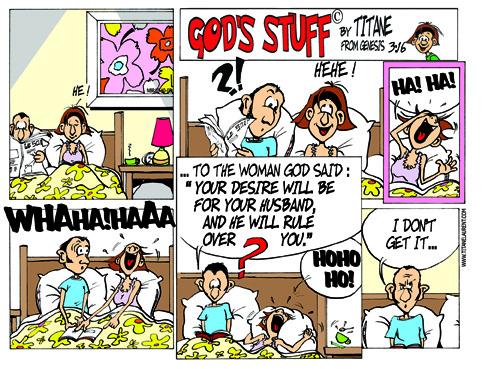
From Godstuffcartoons.com
The Heavenly Mother, and consequentially, all women, are also only laded, valued, or given importance when they fulfill their gender roles. The Heavenly Mother does not have a name, like Christ, or a purpose, other than to serve Christ and be the mother of all humans. The Heavenly Mother thus becomes nothing more than the Virgin Mary: a divine vagina. Her sexual organs are the only meaning she provides for the narrative, as a sexual object for Christ as bride and a vessel for human life as mother. The woman I met with emphasized the importance of the family structure, the "nuclear" mother, father, children unit that is the backbone of society. This structure is a metaphor for the larger Father, Mother, and humankind as children. After prompting by me, my faith partner also admitted that the LGBTQ community does not fit this holy female-male binary (transfemales not in possession of the normative sexual organs) so should be banned from marriage.
My hopes for a more inclusive, engaging, and female-friendly version of Christianity were definitely dashed. I see no benefit to having a divine female figure if her only contribution to the faith is her vagina and its function. I continued to meet with the conversation partner for a few weeks, learning about why her faith was the "true" faith and the literal word of the Bible and its importance. Not only does this faith believe in the second coming, but they believe it will happen in our lifetime. During that apocalypse, we will be welcomed by both Christ and his bride, to be reunited as a heteronormative, nuclear family.
Doing research on the intersection of religion/politics and religion/science have brought forth some interesting, shocking, and saddening examples of what happens when these collisions occur.
Some things that I have read have made me echo the immortal words of Professor Farnsworth on Futurama:
This bill in Tennessee would place those who have had an abortion on an information-sharing list similar to sex-offenders.
The passage of this law in Idaho questions women's abilities to understand if they have been raped and requires them to view an ultrasound of the fetus before obtaining an abortion.
A doctor in Kansas is being stripped of her medical license for agreeing to provide an abortion to a 10 year-old rape victim carrying her uncle's child.
Protesters at Gay Day in Michigan threatened to rape and kill participants in the event, quoting and relying on biblical verses to justify the attack.
Representative Andy Gipson (R - MS) stated and then confirmed his opinion that it is people's duty to follow the word of God by having members of the LGBTQ community put to death.
Doctors in South Dakota are now required (as upheld by a recent ruling) to advise women seeking an abortion that there is a psychological link between having an abortion and depression and suicide.
Republican politicians confirm the active disenfranchisement techniques of Republicans towards African American and Latino voters.
Massachusetts judge approves a sex change operation for an inmate and sparks outrageous comments about the rights of prisoners, sex change operations, and tax allocation.
Stories like these ones above are not always bad, however. They remind me that there are still issues in the world that need to be addressed and corrected. We as people, part of humanity, cannot be satisfied with partial victories, segmented success, or the fracturing of freedom and equality.
Other news stories, however, help me to strike my best Freddie Mercury pose and exclaim:
The passage of the Affordable Care Act allow for equal coverage for women and access to preventative measures so they can be in more control of their health care.
Obama's statements on gay marriage and the Democratic Party supporting the repeal of the Defense of Marriage Act, though a small step, is an important first political gesture to inclusive marriage equality.
The repeal of Don't Ask, Don't Tell ended the prevention against open homosexuals from serving in the military and allowed for people to be open and honest about their identities.
The election of the first openly gay Senator and the passage of marriage equality in Maine and Maryland.
I hope that in the future, I will see more progress towards the acceptance, tolerance, and inclusion of all of humanity through equal treatment and opportunities. These are goals that we all can strive for and as scholars, voters, and communicators, we can strive for change together.
Ever since I gave a lecture on Foucault to the undergraduates at USC, I have begun to link my interests in politics with issues of power, gender, the body, the environment, and religion. Each of these areas has their own discourse, language, and regulations. When these discourses begin to mix and gain voices in each other's spheres, problems can emerge. Consider the mixing of religion in the educational system, where scientific and religious discourses collide in how to teach the origin of humanity. Some would argue that religion should be separate from education and has no role to play, where others would defend its inclusion and right to be there wholeheartedly. Whichever side one would fall on, the reality is that the mixing of discourses complicates ideas of knowledge, power, and truth.
This specific example explores the relationship between religion and science/politics that has been a sordid affair for centuries. From recent debates about abortion, birth control to the nomination of Paul Ryan as the vice presidential nominee, religion and political regulation has risen to prominence. Whereas political discourse relies on the participation of the people and elected politicians to craft and decide regulations, religious discourse (primarily Judeo-Christian in America) places knowledge and truth within the Bible and religious leaders. The problem when they become mixed is that people who are atheists or follow a different faith are subjugated to non-universal laws. Religious discourses are better suited to personal or community spheres for those who believe, whereas political discourses are better suited to federal and governmental policies.
I was surprised at the proposed mixing of the two advocated at a sermon I attended in Pittsburgh. The overall theme of the sermon was to redefine freedom to be less self-centered and more inclusive of community, family, and religious purposes. The preacher discussed the traditional definition of freedom as "doing what you want whenever you want" as a participant in the sin of pride. He instead argued for freedom meaning the opportunity to follow God's plan and do what we were designed to do in life. While seemingly a plea for people to help others and avoid what can sometimes become a self-centered, navel-gazing activity of "I want", I found more sinister and underlying ideologies.
In a world, in a discourse where freedom doesn't mean free to choose or free to follow one's own actions, freedom is actually replaced with restriction, regulation, and oppression. When we sacrifice individual liberties in order to follow God's design, we ignore the 16% of people in the United States with no religious affiliation, those not part of the Christian majority religion, and those who do not wish to mix their religion and politics in favor, we lose freedom. I define freedom as the elusive ability to choose, to have options, to serve oneself as one desires as long as one does not harm, silence, or oppress others. Following God's law means that people do not have the freedom to choose, especially when one thinks of women's rights over their own bodies.
An inquiry into the complications and fears surrounding the female form would be a whole blog post in and of itself to fully address the issue. Suffice to say for this post that religious discourse has traditionally treated the female body as a sexual instrument, subordinate to and property of men. Even in current times, women are being denied their right to regulate their bodies, control becoming pregnant, and accessing services such as Planned Parenthood. The message that bothered me in the previously mentioned service was that by allowing for the discourses to mix, to take the personal focus out of freedom, fosters a community and ideology where restrictions on personal choice flourish. I imagine that women listening to sermons like these when they were younger (e.g., Sarah Palin and Ann Coulter) begin to believe that their rights should be restricted and they do not deserve the choice over their own body. Whether one would choose to have an abortion or not is not the issue, it is the right to be able to choose. If someone, for religious reasons, decides to keep an accidental pregnancy, they are equally without choice if it is mandated so by law.
Sermons and ideas such as these foster a culture comfortable with religious lessons and teachings leaving the Church, personal values, and family life and becoming commonplace in political discourse. When the voices of some are oppressed on the journey to power, freedom is distorted, and ultimately lost. Politicians and the general public should fight against these inclusions and keep the discourses separate. When there is freedom, true choice involved, those who wish to follow God's laws can do so as a personal choice, not a legal mandate.
Just like in American History X, I will defer to the words of others to summarize and inspire my words on freedom. I hope that in the future, human behavior, biopower, and personal choice can be left mostly unregulated, giving people true freedom over themselves and relinquishing them from the ideology of others.
Those who deny freedom to others deserve it not for themselves.
-Abraham Lincoln
Freedom is never voluntarily given by the oppressor; it must be demanded by the oppressed
-Martin Luther King, Jr.
For to be free is not merely to cast off one's chains, but to live in a way that respects and enhances the freedom of others.
With a brief intermission in honor of the Dark Knight Rises, the past three blog posts have focused on nudity, tattoos, and eyewitness testimony and their relationship with the visual communication topic of "the body".
The connection I found between all of these pieces was the idea of power transferred and disciplined through the gaze, specifically, a masculine, powerful gaze. The male gaze is the primary consumer of the ESPN magazine and the differences in framing the masculine and feminine bodies draw the male gaze to the female form. The gaze on the masculine bodies is one of camaraderie, but the gaze on the feminine bodies implies sexuality, ownership, and conquest. The tattoo as a public display directs one's gaze to certain locations on the body, hides other parts, and draws attention to one's narrative and modifications. Victims of and eye-witnesses to crime are robbed of well-being, safety, and peace of mind. Their gaze in identifying the suspect (whether innocent or guilty) reclaims some of that uncertainty and paranoia with power, retribution, and relief. The gaze, then, that tracks the faces and makes the ultimate decision is a tool of power and control reclaimed and operated by the victim.
Gaze and power are two powerful concepts that have importance implications for communication scholars, especially those interested in feminist, cultural, and rhetorical studies. Those in power use different methods of oppression and discipline others, one of those ways in through the gaze. I have had experience with this power at a bar on New Year's Eve two years ago. After dancing and having fun with my friends, a man approached me and told me that his friend wanted to meet me. Unsure why, but optimistic that my single friend might be entertained by the current man while I spoke with his friend, I followed him back to the bar. After awkward introductions and seeing my friend be abandoned at the bar, I tried to break off the conversation with the friend. Upon leaving, he grabbed my arm tightly and said a few words that I can hear clearly even today: "I've been looking at you all night. You will dance with me." The idea that his gaze somehow controlled me or that his gaze provided him power over me was simultaneously ridiculous and terrifying. Was my body not my own? Did simply being out in public make me vulnerable and even complicit in the gaze of others? This particular person seemed to think that the very act of looking, gazing, staring was a service, labor, and favor to me that I was obligated to return or compensate him in some way. This is an event, unfortunately, not unique to me and is the result of a patriarchal society that objectifies and sexualizes the feminine.
Rihanna's "Man Down" Video
But one's gaze should not provide undue or unwanted power over another. The women in the ESPN magazine should be given the same emphasis on skills and abilities instead of their naked form. Those who chose to get ink on their skin to tell stories, personal or public, should not be denigrated or ridiculed for their decisions. Criminal investigations should not rely on the unreliable, reclaim to power that is the eye-witness testimony. No one should be controlled simply because another's gaze is directed towards another person. The power in the gaze is well-documented and remains an important idea for communication scholars as the heteronormative, male hegemony of the gaze has important implications for relationships, argumentation, and power.