Showing posts with label Agency. Show all posts

Sunday, February 14, 2016

The Forest and Sacrificing Agency for Explanation

I recently saw "The Forest," a horror movie that discusses the Aokigahara Forest in Mount Fuji, Japan. The forest is known for its association with people committing suicide in the forest. The forest is said to be haunted by yurei, or the ghosts of those who have taken their lives in the forest. As with other horror films that I have analyzed (The Purge: Anarchy, Teeth, Crimson Peak, It Follows, The Visit, and Pride + Prejudice + Zombies), I will first summarize the film and then discuss some elements of the film that bear further critique. For "The Forest," I'd like to address issues of exoticism and Orientalism, responses to trauma, as well as issues of agency and explanation. This review will contain spoilers of the movie's key moments and plot developments.
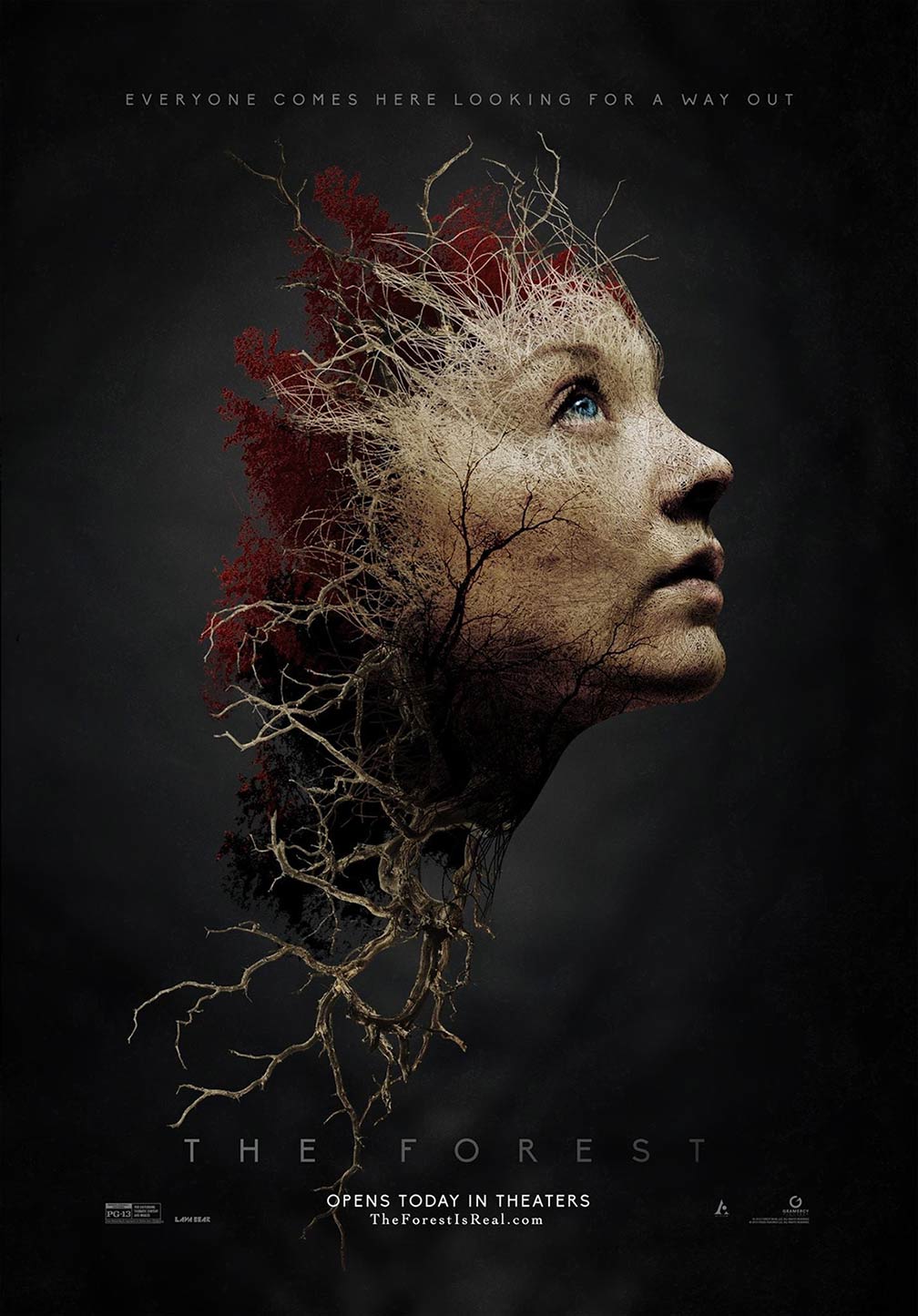
Image retrieved from this site.
The movie focuses on Sara and her twin sister, Jess. Sara travels to Japan to look for Jess once notified by police that her sister is missing in the Aokigahara Forest. Convinced that her twin bond tells her that Jess is alive, Sara disregards the warnings of pretty much everyone in the film and goes into the forest. With this incredibly long build-up and character development, Sara finally enters the forest and camps out with Aiden, a man she met hours earlier in a local bar. This is where the visions start happening and Sara is confronted with haunting images of dead bodies, ghosts, and people she isn't quite sure are alive or not. The climax of the film comes when she becomes suspicious enough of Aiden to stab him and leave herself alone in the forest. A final vision consumes her and she re-enacts finding her parents dead in her house with Jess. In this vision, Sara and Jess's father comes back to life and attacks Sara with a death-grip on her arm. Sara slices at her father's hand to free herself from his grasp. At this point, the continuity is not clear to me, so I will piece together what I think happened. Sara, in her mind, escapes her father's grasp and runs through the forest, trying to get back to the path. But, she's actually sliced her own wrists instead of her father's non-existent hands and has bled out. Her soul, or perhaps spirit, running through the forest alerts her sister, who had been camping the entire movie and seemingly unaffected by the yurei, and starts her running towards the path. Jess is eventually led back to the forest's entrance (in part by her sister's yurei?) and is reunited with Sara's fiance, who at first thinks it is Sara that has emerged from the forest. As the two look into the forest, they see Sara's yurei with glowing eyes.

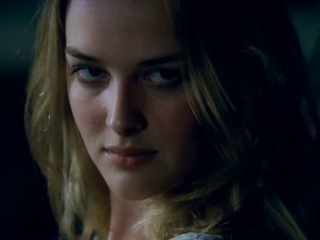
Sara and Aiden in the forest. Image retrieved from this site.
Overall, I was not wowed by the film and would rate it as below average compared to other horror films, although not quite as awful as The Visit. In watching it, however, I was struck by a few details that stood out to me as unique in films I've recently watched and unique to my usual blog analysis. First, I'll address issues of Orientalism and exoticism. Edward Said argued that Western culture patronizes and infantilizes Eastern culture. Western media portrayals of Asia exoticizes Eastern culture and provides them no personal value or consideration beyond gross stereotypes. These inaccurate representations undermine the ability of the West and Western people to understand or value Eastern culture. When The Forest came out, there was backlash in the press that the film painted Japanese culture in a negative light. Many reviewers noted the distinct lack of any Japanese main characters, despite the film happening in Japan (why couldn't Aiden have been Japanese?), and the odd behaviors of many of those that were highlighted. When Sara enters her sister's classroom in Japan, one of the schoolgirls literally freaks out and cannot be consoled at the sight of seeing her teacher again. Although Jess is presumably there to teach children English, the girl is unable to communicate at all in English and instead stammers with cliche wide-eyes and a schoolgirl uniform about the supernatural and ghost stories. Every Japanese person appears to be an expert on local folklore and preoccupied with death. From the woman who keeps dead bodies in her basement and the tour guide who seems numb to cutting down hanged bodies, the movie portrays Japanese people as uncaring and obsessed with death. Many reviewers pointed out the potential for racism and mischaracterization. I must agree that the film engaged in white-washing of a Japanese health epidemic and used the Aokigahara Forest as nothing more than a foreign, exotic backdrop for foregrounding the important, tragic lives of white Americans.

Sara being dragged away by the yurei. Image retrieved from this site.
Reviews also condemned the film for ignoring an important mental health crisis and making light of a serious epidemic in Japan. One review asked, what if a similar film was made about the Golden Gate Bridge in San Francisco, another location that experiences many suicides. Borrowing from my previous points, this conceptualization of Japanese sites as specifically "haunted," exoticizes Japanese culture as being odd, occult, or unnatural. The suicide forest is not addressed as meaningful or an issue for the protagonist to tackle. The forest is merely a "creepy" location for the protagonist to search for her sister. In ignoring the mental health issues inherent in the forest, the movie does touch upon the trauma that Sara and Jess went through in their parents death. The distinction drawn between them is that Jess actually saw her parents' dead bodies while Sara did not. Sara frequently mentions that in not looking, she was not fully there for her sister and could not help her bear that burden. It is then Sara and not Jess who is repeatedly told that she is "filled with sadness," and should not enter the forest. Having seen her parents' bodies, Jess is somehow more fully able to cope with her parents' death. I do not wish to make grand conclusions about what is appropriate and not, but it does strike me as an incredibly interesting statement on trauma and coping mechanisms. There are many different ways to respond with losing loved ones, this case in a murder-suicide. The film seems to argue, or at least, imply that in not fully seeing and acknowledging her trauma, Sara has set herself up for her own suicide. Jess is much stronger against the yurei and the influences of the forest, because she has "faced" her trauma and has overcome it. The messages, however coded and unapparent, may send harmful messages to people coping with their own trauma, who may or may not be seeking actual medical and professional advice to counter or correct media images. While many reviewers advocated boycotting the film for its damaging portrayal of the forest and mental illness, others noted that "art should not be censored."

Image retrieved from this site.
The very first analytical thought I had about the movie was about the lack of agency given to the people who enter the forest. I was struck by the fact that in showing Sara killing herself based on a "trick" of the yurei, that they were removing agency from everyone else who entered the forest. Perhaps they didn't really want to die, but were similarly tricked. Suicide is truly an awful act, and one that I have familiarity with, but minimizing the decision-making power of those who engage in it left me with a bad taste in my mouth. For the film to pawn off the responsibility from individuals to ghosts and supernatural trickery is to provide an explanation that denies the need for broad consideration of mental health and depression. To invoke Burke's pentadic ratio, the film removes agency from individuals and instead focuses on the scene, the Aokigahara Forest, as mitigating the individual's responsibility for their actions. I'm not saying that we should be blaming individuals for taking their lives, there are oftentimes many influencing factors at play. But, I am wary of a film that seems to reduce suicide to the hallucinations caused by the supernatural. I am reminded of Aaron Mahnke's podcast, Lore. In episode 11, Black Stockings, Mahnke discusses myths about fairies who would kidnap children and adults and replace them with "changelings." In his description of the podcast, Mahnke's describes the human need to create stories "to explain the unexplainable." Faced with mental illness and physical disability, it was easier for people to see others as less-than-human and others, instead of caring for fellow humans who were different. Instead of working to solve the issues that lead to suicide sites, like the Aokigahara Forest, people may excuse the actions using supernatural circumstances. This removes agency from individuals, particularly those with mental illness, and ignores larger societal problems.


As far as horror movies go, I thought this film was full of cliches and added nothing to the genre. It also brought up some interesting rhetorical implications for its depictions of Asian cultures, trauma, and mental illness. I hope that in the future that horror films might take more caution in subject matter selection and treatment of sensitive subjects. I agree with one blogger that art should not be censored, but I do think that in making films, people should be concerned with how their treatment might influence audiences and make statements about other cultures and mental illnesses.

Sunday, October 25, 2015

Sexual Anxieties and Horror: Teeth

Sexuality and horror films often go together. They represent the promise of new life, the pleasure of intimacy coupled with the fear of death and the terror of isolation. Beginnings and endings are ideas I am pursuing in my dissertation. I'm interested in how these concepts emerge together in many contemporary controversies. Horror films are another place where beginnings and endings are merged seamlessly. In this three-post series, I take a comparative look at three horror films, Teeth, It Follows, and Crimson Peak. I find a pattern of sexual anxiety and sexual exploration that pushes boundaries of "normal" sexual behavior. If people haven't seen these films, or don't want to be "spoiled," this is a warning that I will be talking about film details and plot elements. These films have captured my imagination because they play with and expand on the agency and power of females, which I think is a positive (and at the very least interesting) trend in contemporary film.

Post image retrieved from this website.
This poster brings up an interesting correlation between Dawn's last name, O'Keefe, and the
association between flowers and vaginas in Georgia O'Keefe's paintings.
Teeth (2007) is about Dawn, an advocacy speaker for the purity movement at her church. When she is raped by a fellow church member, she discovers that she has vagina dentata or a "toothed vagina." These teeth act on their own accord and work to protect Dawn from her rapist, castrating him in a gruesome scene. At first, she is understandably frightened and considers her plight a result of her sin. After research about herself and these teeth, Dawn has an epiphany. Her enlightenment, as indicated by her name and frequent references to the sun, comes in the form of sexual empowerment, where she can use her teeth to her advantage. Although the teeth are not under Dawn's direct control, they do not attack in a scene where Dawn is enjoying consensual sex. When the same sex scene invites Dawn's scorn and rage, the teeth attack and emasculate him. There are certainly problems in this film that disempower Dawn. Dawn does not preemptively attack or fend off potentially negative sexual encounters. For Dawn to fight back in her unique way, she must first be penetrated and submit herself to the sexual advances of men. At the end of the film, Dawn takes refuge in a man's car, who begins licking his lips and making sexual advances towards Dawn. Knowledgeable that the imminent sexual encounter will result in his castration, she smiles.

Dawn at the end of the film. Image retrieved from Rotten Tomatoes.
This film blurs lines of consent in the sense that Dawn "willingly" engages in certain sexual encounters with the knowledge that her teeth would attack her sexual partner. Despite these issues, Teeth does show a sexual empowered female who explores her own sexuality and comes to terms with her unique strength and eroticism. In Audre Lorde's "The Uses of the Erotic," she argues, "the erotic is a resource within each of us that lies in a deeply female and spiritual plan, firmly rooted in the power of our unexpressed or unrecognized feeling" (p. 87). The erotic is a power that is oppressed and corrupted by dominant power structures to keep women from realizing its power. For Dawn, the religious group is the source of oppression, where her sexual power is "vilified, abused, and devalued" (p. 88). Issues of purity and virginity are non-identities, where a lack of participation (such as atheism or vegetarianism) in an action indicates membership. Lorde argues that this oppression keeps women "in the service of men" as "a distant/inferior" person (p. 88). Teeth offers Dawn the opportunity to reclaim her sexuality and eroticism from men who take advantage of her and only see her as a sexual object. Dawn transforms from a meek virgin to an empowered crusader throughout the film, in part from her increased knowledge about sexuality and the body. In one scene, Dawn removes a sticker (shaped liked a golden sun) from her sex ed textbook covering the anatomy of the vagina. The film makes a strong statement that her religious upbringing and lack of accurate and complete sexual education directly leads to her vulnerable, naive condition. It is through knowledge and an enlightenment religion that Dawn becomes a more powerful female. Lorde argues that when women embrace the erotic, they "rise up empowered" (p. 88).

Image retrieved from this website.
With that empowerment, however, comes scorn. Lorde said, "women so empowered are dangerous" (p. 88). Women who claim power and dare to challenge the system, as seen in the new movie Suffragette, they receive backlash. The contemporary feminist movement is often accused of grasping for more than women are due, that attempts at "equality" are really clothed attempts at dominance. Similar to arguments about affirmative action, those that oppose feminism truly fear losing their place in the system or damaging what is deemed "normal," and thus the desired order. In a recent r/ChangeMyView post on Reddit, a female redditor claimed that "Men are superior to women." Her reasons were because of men and women's physical differences and also the presence of men in more challenging/intellectual jobs. It's clear to me that even disturbances in an order that disadvantages women receives scorn from women themselves. If everyone is equal, perhaps there is no reason other than our own shortcomings to blame on our failures. Or, if everyone is equal, then perhaps our successes are not as meaningful as others. In a powerful article by Carole Blair, Julie R. Brown, and Leslie A. Baxter, they argue that the academic review process, filled with intelligent and intellectual women, is also a biased space. They respond to an article that ranks the publication count of female communication scholars and rejection letters they received on an earlier version of the article. Their attempt to challenge the ranking article was met with scorn and rejection from both male and female reviewers. They argue that the original report "is a thematic marker of a masculinist ideology and that the anonymous reviews of our original essay are unusually explicit manifestations of the apparatuses that sustain and enable those ideological themes" (p. 384).


Teeth brings up these important issues of female agency and how sexuality can be used as a force of attraction but also creating fear. This film puts an interesting spin on how female sexuality can itself be a weapon, the monstrous female fighting back with the strength of her form. I see many movies that laud the adjusted or upgraded female, such as Aeon Flux and Ultraviolet, but less often do I see films that empower the everyday female to fight back. There are definitely a notable few which I hope to address in a later post. As recent articles have suggested, it is oftentimes females who end up surviving horror films, oftentimes with the help and intervention of others. Teeth, however, empowers the female protagonist to use not only her self, but her sexual self, to survive.

Sunday, September 6, 2015

Food Culture and Masculinity in China: Surviving as a Vegetarian

When I went to live in China for three weeks, I knew that being a vegetarian would be hard. All of the blog posts I read warned me of the lack of options, difficulty in communicating dietary needs, and frustration with the lack of translations on menus and in stores. Only a few articles discussed China's Buddhist history and praised China's openness to vegetarians. With my handy printed copies of Chinese words and characters and pictures of animals with red X'ed circles, I went out prepared to let everyone know "wo chi su" - I eat vegetables. What I wasn't prepared for was how many of my food decisions weren't made for me - and how masculinity and food culture are intertwined in Beijing, China.

Flight into China.
Before I elaborate on the previous statement, I do want to say that I greatly enjoyed my time in China, am grateful for the opportunity, and am deeply indebted to my hosts there and the many friends that I made. This post is not about my overall experience, but about the unique difficulties I had as a lacto-ovo vegetarian (no meat, fish, or poultry, yes to eggs and dairy) in Beijing. The food I did have was delicious and I think future vegetarian travelers (and travelers in general) can benefit from learning more about Chinese food culture.

At many of the restaurants I went to in China, large groups were given private rooms with huge round tables with a rotating plate in the center. Family-style restaurants are usually a niche market in the US, but it was the standard practice for Chinese restaurants. In those settings, the communal nature of China brought me face-to-face with my own individualistic tendencies. Even in the US, family-style means taking food from communal pots and placing it on individual plates. We had personal plates in China, but more often than not, the people at the table would take food directly from the communal plates into the mouth. The most dexterous man I saw would pop individual peanuts covered in sauce from the bowl to his mouth without dropping a single one. Those who use have tried using chopsticks know how difficult this is. The avoidance of personal plates signified that the meal was everyone's. There was no "hoarding" of favorite plates or claiming ownership over food by amassing it in front of you. Instead, everyone was patient, waited for the food to rotate, and grabbed what we needed as it passed.

Picture of fermented egg on tofu, a vegetarian Chinese specialty.

For me, it could be a long wait for what I needed to come around, and a few times I felt compelled to break the personal plate rule and accumulate stray mushrooms and pieces of eggplant. At a communal table, there was no individually-owned items, so everyone took from meat dishes and vegetarian ones, even if I could only take from a few. For the Chinese, this wasn't an issue because over-ordering is the norm. No plates are ever left completely empty - it is considered rude. So instead, the staff will dump the remaining pieces on one shared plate to save space for the many more dishes to come. On many occasions, vegetable dishes that were ordered had meat sauces, chunks, or components. I completely understand the need to be flexible when traveling, but for someone who was raised vegetarian, those dishes can make me extremely sick.

My blog post promised some musings about masculinity and patriarchy - and here it comes. The Chinese food culture was communal, but the head of the table was the boss. During our first meal in China, a fellow American sat at the back seat facing the door. I think this is a common practice in the US, as it is the most difficult seat to get to, so if often taken first to avoid inconveniencing others. Our advisor, however, encouraged him to move, unless he "wanted to pick up the tab" for our table of 15. The host paid the bill for the entire table; "splitting" checks was not common, but sometimes at smaller outings we would throw money into a communal payment pot. For the three weeks I was in China, the host was female one time, when we dined with the director of the school the group was teaching at. The other nights were all male hosts who oftentimes spoke little to no English. This made communicating to them my dietary concerns quite difficult and I sometimes felt that my request was treated flippantly or as unimportant.

Picture of the Night Market in Beijing, where they sold scorpions, snakes, starfish, and many other things on a stick.
What the hosts ordered, we had to eat and drink, including alcohol when it was not desired. We were told when to take food, when to drink, and how much of what we could have. I was offered meat (usually Peking Duck) many, many times, and found it difficult to explain to my hosts why I refused their very generous offers. A few hosts got quite upset and raised their voices while my advisor tried to explain the situation and encouraged me to try "just a little bit" to appease the hosts. I don't fault anyone for the situation; it's really a classic case of cultural clash and miscommunication. It's rude for me to refuse food and drink in Chinese culture; it's rude for people to force food and drink on people who don't want it in American culture. For both cultures, it's a matter of respect, either to the hierarchy of the community, or the power of the individual.

I saw, very often, women at the table, including myself, struggling to refuse alcohol. Chinese dinners, especially business ones, were filled with alcohol. And it was no one's choice when to drink but the host, who would stand, make a speech, and demand that everyone finish their glass. To not follow the call of "gānbēi!" by downing your drink was considered a rejection of the toaster's well-wishes. Furthermore, the host and other guests would often move around the table and toast everyone individually - meaning a toaster could go through a shot of alcohol (caled baiju) for each guest present. The male hosts were often complimentary to the female guests' looks, which emphasized my and my other American female companion's "exoticness." Those hosts would often touch, hug, or try to kiss us, as complete strangers, without warning.

I greatly enjoyed my time in China, but dinners were often wrought with nerves. Would the host order something I could eat? Would this meal have "secret meat" in it? Would we do a lot of toasts? Would I be given baiju instead of something I want to drink? Would the host make advances on myself or my friend? Would the host get angry if I refused his offer of Peking duck? If there were vegetarian food, would other people eat it before I could have any?

Obligatory panda photo
My favorite foods in China were the stewed eggplant, assorted mushrooms (sometimes called tree and ground fungus), and baozi (vegetable filled and steamed buns). I greatly enjoyed their variety of fruits such as jackfruit (inspiration for Juicy Fruit gum) and trying interesting-tasting fruit like durian. It was an adventure that I will never forget and I hope to go back soon. The food culture, in particular, made me reflect on the differences between China and America and the challenges of establishing a global community.

Sunday, September 7, 2014

The Online Activist: Making Charity Cold as Ice

There have been many commentaries on the ALS Ice Bucket Challenge, hereafter IBC, including some by my colleagues at Annenberg. I have very mixed feelings about the challenge and they are quite scattered. I will attempt, then, to parse some of my more scholarly opinions on the matter in my overall criticism of the challenge as an event in narcissism and exploitation that has ultimately generated a lot of money for a great cause. In this sentence, I want it to be clear that the process by which these donations are raised is where my primary concern lies and not with the cause itself. Certainly, encouraging donations is a positive enterprise, but I am not completely deontological in that I feel that a critical look at the process and means by which these are obtained are necessary.

Retrieved from this site.
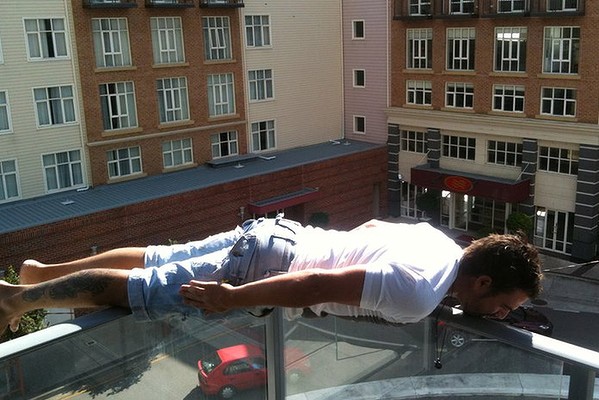
My first issue with the IBC is the notion of "challenge." There has been an increase of challenge and dare activities on the Internet where people are constantly trying to one-up each other. We had planking, for example, where people would try and lie supine on random objects, often in danger. The more dangerous or precarious the planking, the more valuable in terms of Internet clout. Then, came the video challenges by which people were dared to do something inherently dangerous, like jump off a bridge. Not surprisingly, this resulted in the deaths of a few people after drowning trying to meet the dare. Though meant as harmless fun (of which even my lovely siblings have participated in), these challenges raise important questions of safety and what activities the Internet are encouraging off-line. Others have been injured in so-called "cold water plunges" that are often media stunts to raise money for charities or certain causes. These challenges raise questions of agency and the choice of the "dared." When we are really talking about life and death, how can we not see challenge culture as a negative aspect of the Internet that encourages risky and dangerous behavior?

Planking on the edge of a building. Retrieved from this site.
These "I nominate X, X, and X" phrases remind me of the chain letters of the 90s where you had to forward these ridiculous stories (in Yahoo and Hotmail, typically) or someone would come kill you in the evening. What actually happens if you don't accept an IBC, cold water challenge, or forward a chain email? Absolutely nothing. The challenge culture simply takes your unwillingness to do a dare from middle school slumber parties to a global audience. In a word, it's childish. The maintenance of these challenges perpetuates the dangerous culture of one-upping and daring, although not specifically present in the IBC. What we communicate has essentially stayed the same, but how we communicate it has changed. Ong would see the evolving communication technologies as simply offering new forms that communication can take, such as the dare. The IBC has the countdown clock and the threat of non-compliance that email chains (and blackmail, by the way) have to motivate people to act. The dare takes the spirit of altruism out of the donations, because it is reduced to the act of one-upping others, blending in with the crowd, and passing the dare on to others.

My second issue is the notion that this particular charity is particularly worthy, or that I am forced to donate to this particular one. I think that donating to charity is definitely a worthwhile cause and one that the IBC has reminded me that I should do more of. But, why ALS? They have simply come up with this marketing campaign. They, like all charities, are not particularly worthy or more deserving than so many other of the great charities out there that one could donate to. Why should my choice in charity donation be limited because of a "dare" I receive on Facebook? Why shouldn't I donate to a charity that I care about? That I believe does good work? That I feel is not getting enough attention? Perhaps I have been personally affected by close family member having Alzheimer's or diabetes and wish to donate to them. Is this somehow less acceptable because I am not performing the dare made of me? Why should someone else decide where I give my money? This article brings up important concerns about what the money will be used for and the benefits of massive donations to a specific charity (especially one like ALS which focuses on research and impacts very few people).

Retrieved from this site.
My third issue is the performative aspect of the challenge that promotes narcissism and exhibitionism rather than a concern for the charity. Why should I have to dump water on my head to do a good deed? Not to mention the many concerns this has raised in California because of the drought. Why do I have to film it and share it with others? Why isn't donation a private act that doesn't need public display? Because it's not about my donation, it's about me. It's about my public performance of doing good work. Modern culture cannot do a good deed without getting recognized for it. We need public recognition of every A, every act of kindness, every charity. Dumping water is about including myself in the story of ALS and its success, about feeling good about my involvement. The IBC reminds me quite strongly of the "Fitch the Homeless" movement where people donated all of their Abercrombie & Fitch clothes to the homeless. On the surface, just like the IBC, this campaign did provide many donations of much-needing clothing for the homeless. But, this campaign leaves a similarly negative taste in my mouth because of the reasoning behind the actual donations. They were not out of the sake of the good deeds or that the homeless were in need, but that we were getting back at Abercrombie & Fitch CEO would made comments about his clothing being only for "cool kids." Yes, in response to this statement, let's donate all of the Abercrombie & Fitch clothing to the most non-cool kids ever. As this article put it: "what [this campaign] ends up doing is using people experiencing homelessness as pawns to make a political statement." The IBC similarly exploits the narcissism and dare culture of the Internet to encourage donations. Is the end result a positive? Definitely. But should we condone these types of reasons to donate? Absolutely not.

Retrieved from this site.
Donations are not a matter of being dared or used as a way to spite others. Donations should be about caring, giving, appreciating others, working monetarily towards a cause that you believe in. If this is the new way that people donate, then it changes the dynamics of charity, and may shift our thinking so that we require dares and challenges to make a donation. We couldn't act independently or privately for the benefit of a cause, but would need to publicly present ourselves and declare that others must congratulate or copy us in order for the good deed to be meaningful.

I want to reiterate that I think the donations raised about the IBC are absolutely amazing. I never would have thought that reinvigorating the giving spirit (sort of) especially for my generation could be done so successfully (especially after the Kony 2012 disaster). I think that the impassioned speeches of my colleagues on Facebook have been well heard and I do not look down or condemn anyone for doing the IBC. I merely wish to raise questions (albeit rather passionately myself) about the purpose of these type of videos, what they are actually promoting, and the motivations behind the good deeds that make me skeptical of the lasting power of this campaign and others that may try to imitate it.

I will not participate in this if someone challenges me. I've decided that I don't want to perpetuate a culture that made my brother jump off of a bridge, take away people's agency in deciding to donate, or reducing the act of charity to an event in narcissism. I do think that donations are a positive act and this challenge has caused me to see that people don't donate enough. I may donate because of this, I may not. It may be to ALS, it may be to a different charity, or none at all. But, I will not make it a public spectacle or "dare" others to have the giving spirit or shame them into performing for a Facebook audience. Instead, I encourage everyone to see the larger message in the beauty of charity and reject the process by which this challenge is perpetuated.

Sunday, August 31, 2014

Race and Class in The Purge: Anarchy

I've already addressed my opinions on the societal shun of horror films. I think that horror films are much more inventive and experimental than traditional genre films and I wish more of my peers appreciated their subtle depth and creativity. This post is specifically about the second installment of The Purge, which I highly encourage everyone watch. Unlike the original, The Purge: Anarchy is a slick thriller with a moral message about class, race, and oppression. I will briefly discuss the horror aesthetics in this film (and its original) before discussing this interconnected themes of hierarchy and exploitation. The cultural scholar and common person alike would greatly benefit from exploring these themes on the silver screen (even with a bit of gore). It may not need saying, but this post will contain spoilers of both films.

The Purger: Anarchy Trailer. Retrieved from YouTube.

The first film was typical of its genre. There were cliche pop-out-from-behind-a-corner fake scares, misdirection, and a dearth of larger meaning than the human urge to kill. The film centered around the near future where a government has issued a 24-hour lift of all laws allowing society to "purge" through murder, robbery, etc. This results in a lower crime rate through the rest of the year and a boon in sales of home defense systems. The first film followed a family that had a break-in in their home after the young son tried to save a man being hunted in their neighborhood. This film was simply okay, an interesting idea poorly executed and mostly abandoned for the cheap and easy scares. I almost didn't go see the second film because of my disappointment in the first. I'm very glad that I didn't miss it.

Retrieved from this site.
The Purge: Anarchy focuses on the streets that are ravaged by roaming bands of vigilantes and the mysterious presence of military and government forces patrolling the streets. A Malcolm X type figure (Carmelo) becomes a prominent character who preaches that the purge is a government tactic to eradicate the poor (and subsequently, minorities) in order to keep the crime rate down during the year. We find out during the film that the government is targeting low income neighborhoods, kidnapping people, and performing genocides of the lower classes. One black woman and her daughter are saved from this government kidnapping by a (white) purger looking for revenge on the man who killed his son in a car accident.

Retrieved from this site.
Two scenes stand out for me as particularly shocking and expressive. The father of the woman saved from government forces disappears early in the film. The daughter and granddaughter find out that he has sold himself to a rich white family for $100,000 to allow them to purge in the safety of their home. The white family has literally bought a poor, black body as if it were property, to ruthlessly destroy and exploit it without exposing themselves to the risks of the purge. There is a poignant frame where the nuclear family is standing around the father wielding weapons in their pristine suits and plastic-wrapped living room of expensive art. Their massacre of this man will be their new art, their secret expression of white privilege that protects their valuables, status, and domination over the lower class.

Auctioneer before the hunt. Retrieved from this site.
The second powerful scene is shown briefly at the end of the trailer where a woman in a blue dress announces before a seated group of people in fancy dress that they have collected the last purge of the evening. The main characters are released into a pitch black maze where the highest bidders enter with night vision goggles and weapons to hunt them down. There are obvious echoes here about the purchasing of bodies as in the previous scene, but it also echoes themes from Richard Connell's "The Most Dangerous Game." This short story is about a stranded man looking for protection who ends up being hunted down for sport like an animal in a rich man's safari game. Humans being the most cunning (and thus perhaps most satisfying to kill) animal provides an elevated type of sport than the traditional hunt. Indeed, the highest bidders in The Purge: Anarchy wear traditional British fox hunting uniforms as if they were out in a normal hunting activity and not viciously murdering other people. In a quite satisfying ending, I will simply mention that the group manages to get a hold of one of the night vision goggles and weapons, making the hunt more of a fair fight.

Both of these scenes highlight for me the interrelationship between class and race and the exploitative powers of a system that only reifies the lasting order and undervalues the lives of poor and minority bodies. In this film, both the rich and the government specifically target and kill blacks, the homeless, deviants, and youth in an attempt to eradicate and "purge" the society of perceived evils. This movie asks us all to reflect on who is in power, what oppressive acts are they committing, and who does society really serve. Both the murderers and the white families who can afford to lock up and hide are complicit in the exploitation and eradication of people deemed unworthy of life. Just as a police officer in Ferguson made a decision of life and death for Michael Brown, The Purge: Anarchy asks us to consider who is in control and what those consequences are. Who gets to define who is worthy of life? Who gets to define how punishment is laid out? Who is in control of our streets, our livelihoods, our identities as targets or as civilians?

Carmelo, leader of the anti-purge movement. Retrieved from this site.
Carmelo is trying to start a revolt against this system. He targets the rich, white, and off-limits bodies to upend the genocide of the poor and the minorities. His tactics are in part successful, at least in saving the lives of the main characters, but his ultimate goal is left unfulfilled. Will it take violent revolution to change the system? Can violence itself do anything but reify the use of violence as a peace-keeping tactic? If anything can be learned in the current state of Ferguson, it is that the tensions between authority, race, and class run deep, and define for entire groups of people their ability to claim a place on this earth free from fear and death. That is unacceptable and violates the very basics of human rights. The Purge: Anarchy brings these themes to life in an exaggerated thriller that asks us to ponder our own situation: how far off are we from this being our reality?

Monday, June 16, 2014

Dorian's Descent: All Art is Quite Useless

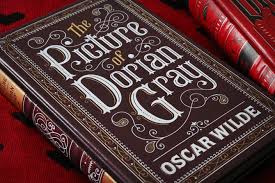
Dorian's Descent is a new stage adaptation of The Picture of Dorian Gray by Oscar Wilde. Dorian's Descent is a musical that has added an element to the story: the Devil. In this article, I wish to explore the narrative elements of The Picture of Dorian Gray through Walter Fisher's narrative probability and narrative fidelity, the Faust trope, and how the character of the Devil is a narrative disaster. Although I did enjoy the show and thought the singing was quite impressive, the actual lyrics, words, and acting were sub-par, especially compared to a few other musicals and adaptations I have seen in Los Angeles. I will be discussing the play and the book in detail (i.e., spoiler alert!), so I encourage readers to read the book or acquaint themselves with the story.
Poster for Dorian's Descent
The Picture of Dorian Gray is about a young man, Dorian Gray, who becomes obsessed with a portrait that Basil Hallward has painted of him. It shows him in his youth and his prime, characteristics that he realizes, once prompted by his friend Lord Henry Wotton, will fade. In a state of hopelessness, Dorian wishes that the painting might age instead of him, for in its current stage it only serves as a reminder of what he would lose. Without explanation, the painting does begin to change as Dorian becomes involved in the hedonism of Lord Henry's lifestyle. Dorian scorns Basil, engages in illicit sexual activity, murders, and experiments with various vices. The picture ages, its face is marred by a snarl, and the brow is furrowed in perpetual anger and disdain. Eventually disgraced by the harm he has caused, Dorian attempts to absolve himself by stabbing the picture. The two reverse, leaving Dorian himself dead, aged, and hideous and the portrait returned to the beauty which Basil painted.

The picture and Dorian from the movie adaptation
Dorian's Descent infuses a rock opera theme onto the story, which pairs nicely with the descent into hedonism and sin. The element of the Devil, however, removes a very powerful and meaningful part of the play: Dorian's agency, choice, and self-mortification. In the play, the Devil appears and makes an explicit Faustian deal with Dorian so that he may stay young and the portrait may age. The character is doubly unnecessary. First, Lord Henry already serves as the Faustian Devil, the foil to Basil between which Dorian must decide. Having the Devil character undermines Lord Henry's role as the tempting, evil character that lives a sinful, yet seemingly fulfilling life. His presence mirrors the Devil, instead of captivating Dorian's attention in his own right. Furthermore, the Devil as a mystical, magical character removes the potential for Dorian's choice. The supernatural can seem to constrain the choices and available actions of humans, making Dorian's descent into hedonism part of the Devil's plan instead of a meaningful choice of evil over good, Sir Henry over Basil, self over others.

The Devil makes a deal
The beauty of The Picture of Dorian Gray is the unspoken Faust trope. Any one might utter an "I wish . . . " or make selfish requests, placing oneself squarely in the shoes of Dorian, connecting and identifying with him in finding himself in a peculiar situation. Walter Fisher described two elements of narrative rationality (or the logic of stories): narrative fidelity and narrative probability. Narrative fidelity is the perception of how faithful a story is to reality (or the audience's world). Although one might think that this would preclude fantasy, science fiction, or non-fiction from having fidelity. On the contrary, stories such as Harry Potter have high narrative fidelity because they seem real and possible, despite their fantasy elements. We could imagine, though we may not have seen or experienced it, a secret world hidden within our own (thus justifying its lack of presence). Though we may not have experienced or believed possible a changing portrait, we can faithfully imagine our lives as confronting something wholly un-explainable and what our reactions to it might be. The element of the Devil fully violates this type of realismo mágico (think Guillermo del Toro) where it could be possible, and makes the subtle Faust trope seem more like a cliche.

Sibyl Vane's forgotten lyrics
Perhaps most disappointing for me was the changes to the Sibyl Vane character, Dorian's brief love. Before his shift into full hedonism, Dorian fell in love with an actress. Her devotion to her art and her skill in bringing love to life in her performances captivates him. In his courtship of her, however, Dorian destroys Sibyl's ability to act. I have copied her confession after a particularly terrible performance of Romeo & Juliet below, which is one of the more beautiful passages in the book.

"Dorian, Dorian," she cried, "before I knew you, acting was the one reality of my life. It was only in the theatre that I lived. I thought that it was all true. I was Rosalind one night and Portia the other. The joy of Beatrice was my joy, and the sorrows of Cordelia were mine also. I believed in everything. The common people who acted with me seemed to me to be godlike. The painted scenes were my world. I knew nothing but shadows, and I thought them real. You came -- oh, my beautiful love! -- and you freed my soul from prison. You taught me what reality really is. To-night, for the first time in my life, I saw through the hollowness, the sham, the silliness of the empty pageant in which I had always played. To-night, for the first time, I became conscious that the Romeo was hideous, and old, and painted, that the moonlight in the orchard was false, that the scenery was vulgar, and that the words I had to speak were unreal, were not my words, were not what I wanted to say. You had brought me something higher, something of which all art is but a reflection. You had made me understand what love really is. My love! My love! Prince Charming! Prince of life! I have grown sick of shadows. You are more to me than all art can ever be. What have I to do with the puppets of a play?"

Sibyl has so greatly fallen for Dorian that she cannot pretend to love as she once did. This confession is made all the more beautiful when she takes her life after Dorian rejects her love. In the play version, Sibyl is a singer whose voices makes Dorian fall in love. Substituting singing for acting makes sense in the musical, but it is the other change that ruins it for me. Instead of falling out of love, causing Sibyl to ruin her craft, the Devil character makes Sibyl forget her lines before a show. The audience loses this beautiful insight into Sibyl's innocence and thus undermines her death as the tipping point in Dorian's sanity. This change further supports my comments below about Dorian's actions being orchestrated and not of his own choice.
Retrieved from this site
Dorian's Descent is an interesting adaptation of The Picture of Dorian Gray, but its creative changes served only to undermine the beauty, simplicity, and complicity of the book in an attempt to be unique. Without our ability to empathize with Dorian's decisions, which we believe are of his own accord, the audience can only observe and cannot be active participants in the narrative. We are not convinced that this could happen to us, that we would make such a deal with the Devil, or that we are only a few steps away from falling into sin ourselves.

Although this is not the shining review that I'm sure the fledgling play is hoping for, I hope that they take to heart the immortal words of Lord Henry: "There is only one thing in the world worse than being talked about, and that is not being talked about." Certainly this adaptation has given me and I hope any readers some food for thought about how narratives are updated, adapted, and changed in the pursuit of artistic creativity and to teach us about issues that plague society.

Sunday, March 16, 2014

Thin Privilege and LGBTQ Issues: Discrimination based on Choice

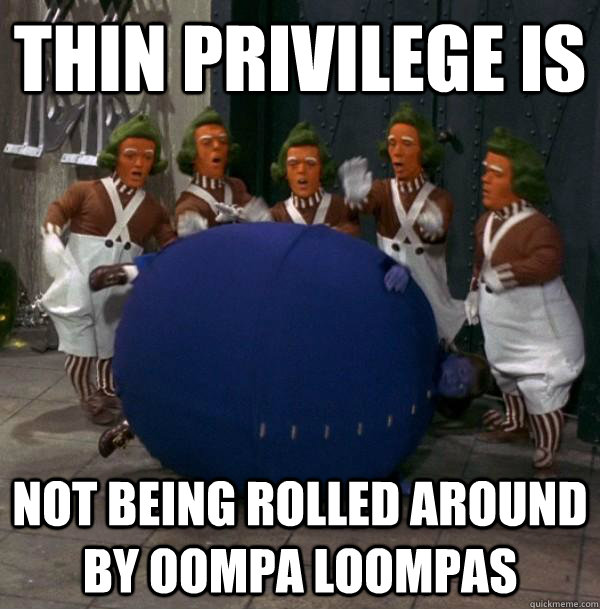
There has been a recent surge in websites, blogs, and tumblrs that deal with "Thin Privilege." These sites have also spawned spoof or parody sites  which have in turn encouraged reaction sites. In the back-and-forth on these websites that I have followed, I would like to comment on a common theme which I think connects issues of health and bodies to the LGBTQ community: choice. First, I will explain these communities then I will draw from examples from each and compare them through Burke's pentad as revolving around agency and choice.

Retrieved from this blog
Thin Privilege reflects the advantages and benefits that come with being thin (or non-fat) in a society that values skinny bodies over large bodies. This has resulted in cultural and institutionally prejudices levied at non-thin people. Thisisthinprivilege.tumblr.com is dedicated to individuals sharing their personal stories of discrimination because of their size. Key themes are the idea that being large in body is associated with unhealthiness (which they argue is not necessarily true), being impacted by a lack of services available to them (such as the size of airplane seats), lacking role models in media, and experiencing fat stigma (e.g., strangers trying to give diet advice or calling names). The stories range from not being able to find clothing sizes in stores to having doctors ignore potential health issues because weight was a perceived larger concern. This site often posts "troll" questions and comments and critiques them as coming from a place of privilege or purposefully trying to undermine their cause. The key take-away from this site is that no one with privilege can deny others their claim to discrimination, police their language, or undermine their cause.

Retrieved from this blog as an example of skewed expectations and a world made for unrealistic body sizes.
From comments on these webpages, I found immense similarities to discussions of LGBTQ rights. The similarities center around the idea of choice. If one believes that being fat or being LGBTQ is a choice, they are more likely to be negative, critical, and dismissive of societal backlash that occurs for them. If one believes that these identifications happen naturally or are a product of the environment (e.g., hereditary/genetic), then one is more sympathetic to the effects experienced. This proclivity to blame the individual (agent) or the environment (scene) can be mapped onto Burke's pentad. The pentad is a tool that critic's can use to analyze situations in terms of its agent, agency, purpose, scene, and act. If the act performed is discrimination against someone, emphasizing the agent may cause one to believe that the recipient caused it themselves. Emphasizing the scene, however, may cause one to believe that society fosters discriminatory attitudes against minority communities. Papers I've been working on, influenced strongly by papers by Brock (1990), argue that these can be directly related to political ideology. Republicans may be more likely to consider the agent responsible (e.g., pull one up by one's bootstraps) and Democrats may be more likely to consider extenuating circumstances (e.g., how scenic factors influence one's actions and treatment).

Retrieved from this site
To consider a large person and a gay person autonomous agents that make choices about their identity is to remove environmental and societal factors from responsibility. This type of view undermines the culpability of institutions and those with normative privilege (e.g., thin and hetero-) for discrimination. Somehow, making a choice to do something as opposed to having it happen to you, makes one more deserving of disdain and scorn. Those who had no choice can be viewed as vulnerable, victims, and innocent. Analyzing these situations as similar help us to connect issues of discrimination and shared experiences of minorities against ableist/cis/hetero/white/male society. From within that community, it is hard to assign oneself culpability and guilt; people would rather blame the individual than admit shared responsibility for discrimination. Just as people were quick to yell "post-race!" with the election of Obama, people are quick to jump to answers that do not include our own or systemic faults.

Retrieved from this site to represent the traditional Barbie size to the new "real proportions" doll

How does society move beyond discrimination? I think it's important for those of us with privilege is to step back and truly listen to the words of those without privilege or those at the intersections. We cannot understand the discrimination not having been privy to it. Trying to deny the stories of others or to argue with our own stories of discrimination only perpetuates structural inequalities. Just consider the backlash that happened when a new Barbie copy with "realistic proportions" came out that would encourage girls to idolize being unhealthy. Instead, why can we not consider these positive steps to creating a more inclusive culture that teaches people to love and respect their own bodies, no matter its size? ThisisThinPrivilege.tumblr.com is fighting against other blogs and the system that devalues fat bodies. Though this article is not meant to be evaluative, it cannot help but reach the conclusion that to reduce people's identities to arbitrary choices is to undermine the perpetual problem of discrimination. As posted on the website, people are fighting a system that "systematically reduces each of us to our dress size, hip measurement, and waist size, then grants favors, opportunities, or simple lack of punishment when the numbers are low enough" and instead fights for a system that treats everyone as equally human.