This is the final installment of my three series set on horror films and sexuality. My first two posts examined Teeth and It Follows. Each of these films embraces female sexuality in different ways that I think deserve scholarly attention. Teeth creates a monstrous feminine that frames female sexuality to be a tool for empowerment that is often suppressed by male domination. It Follows neutralizes sex as an equalizer between the sexes and removes the stigma of promiscuity from female sexual interactions. In this final post, I will unpack the sexual anxieties present in Crimson Peak (2015). As with the last two posts and my other posts about horror films (e.g., The Visit, The Purge: Anarchy), this post will have spoilers and detailed analysis about the film's key ideas.
To be frank, Crimson Peak was an awkward film to see with my brother. The film addresses incest and the blurred lines of familial love and familial violence. I will discuss the use of incest in the film as well as the romantic aspects of this horror film. I think Guillermo Del Toro has created another horror masterpiece. I do not know if it will stand up to the classics of Pan's Labyrinth, the Devil's Backbone, and The Orphanage, but it does embody an aesthetically pleasing and intoxicating horror story. The main character, Edith, is a timid virgin that falls hopelessly in love with Thomas marries him, and goes to live with him in England. Edith can see ghosts, namely the ghost of her mother, and writes ghost stories inspired by her supernatural abilities. This power is at first terrifying as she finds deformed, blood-soaked ghosts wandering her new home. It becomes clear, however, that these ghosts are warning Edith about her fate and imminent death at the hands of her new spouse and his sister, Lucille. It is revealed that Thomas and Lucille are lovers and have conspired to murder Edith for her father's money. Fighting and blood-stained snow occurs before Edith manages to escape the clutches of the incestuous pair. In what follows, I will bring up a few important points where I find female sexuality explored in interesting ways and sexuality's role in horror. I first briefly address the use of romance in the film, examine the taboo nature of incest, then the character of Lucille, and finally the role of women and traditional gender roles.
Lucille, Thomas, and Edith movie poster. Retrieved from this site.
In Edith's first rejection letter from a publisher, the editor laments that her ghost story does not include enough romance. This small scene was brilliantly added by Del Toro because it sets up the entire rest of the film for the audience to expect romance and not horror. Although Del Toro is the King of Horror and the film was marketed as such, this nearly throwaway line redirects the audience's attention from the ghost story to the romantic plot line. The film is really about Edith's love and, arguably more so, about Lucille's love. The two women have competing love stories that tie them together in a fight to death. Yes there are ghosts and yes there is blood, but the story's forward progress is not fear or anger, but love. Love is also an uncommon theme in horror films; more often it is lust, obsession, revenge, and sex that drives the character's actions. In this move, I think Del Toro does a great service to horror films by reminding contemporary audiences that fear and catharsis is but one aspect of a good story. Indeed, his film's often have the unique ability to incite both fear and awe, horror and hope, anger and sadness.
Del Toro immediately sets up the film so that we are suspect of Thomas and Lucille's intentions. There are secret meetings, unscrupulous attempts to raise money and to blackmail others, and an air of suggestive closeness between the two. At first, I thought perhaps they were married and were using a ruse of being siblings to attract dowries from Thomas's future spouses. The audience's mind, even though offered that they are related, first attempts other explanations to explain their lingering hugs, sideways glances, and Lucille's jealousy. When it is revealed in more explicit detail that Thomas and Lucille are sleeping together, Edith at first cannot believe it and shouts that she knew they were not brother and sister. Lucille responds, "but we are!" Confronted with the information directly before her eyes with knowledge of their deformed child, Edith still reconciles her perceptions with anything but incest. Incest becomes the twist, the plot point that was in front of our eyes the entire film, but we could not yet believe it until it is confirmed by Lucille. Incest is a sexual taboo not often addressed in horror films. It emerged in Here Comes the Devil, another film with a Spanish director, but is not a common media trope. Dysfunctional families and families undergoing trauma are often fodder for horror films, such as We Are What We Are, The Devil's Rejects, Red Dragon, The Babadook, and, of course, Psycho. Del Toro's use of incest and elevating the dysfunctional family to the level of incest draws forth interesting thoughts about how society differentiates between sexuality and love. If Lucille had simply loved her brother without having sex with him, perhaps the implications of their relationship would not be so terrifying.
I think that Lucille could have easily been the hero instead of the villain of the film if her sexuality had been removed from the film by either being Thomas's sister and not having sex with him, or not being his sister. Upon reflection, many of Lucille's actions are ones of pure love and adoration - she murders those who might come between her and Thomas, sacrifices her temporary satisfaction in the relationship to help the family financially, and is jealous of those that compete for Thomas's affection. For example, in Del Toro's other films, we don't fault the mother in The Orphanage for jeopardizing her relationship with her husband in her search for her son. In Mama, we don't question the actions of the lead character for protecting her boyfriends nieces. These familial relationships are honored and understandable, but we do not perceive of Lucille in the same way. Instead, Lucille is evil because her brand of love is taboo. I do not condone incest; it's presence caused me to think about the lines that all humans draw through symbols and communication that separate the sacred and profane. Mircea Eliade argued that religious thought is rooted in human separation between what is sacred and thus revered and worshiped, and what profane or filthy. Much like eating cow if you are Hindu, certain actions and rituals are deemed off limits to remain pious to a particular order. I remember talking in sociology class about how eating human flesh and incest are as close to the two most universal taboo actions in human history, and still they are not universal. Incest is close enough to it, however, that its presence in a narrative immediately defines those who are good and those who are evil. I wonder if this particular sexuality were removed from Lucille, however, that we would hate her so much for her actions. She is fighting for the wrong, most profane, most taboo type of love, whereas Edith's virginity and purity are the foil.
Brother and sister. Retrieved from this site.
These two arguments unfold what I think is the most important part of the film - it's not about Thomas. Although he does receive a good portion of screen time, the film is a war between Edith and Lucille with Thomas as merely a chess piece. You are clearly told through the plot that Thomas has been overwhelmingly influenced by his sister to act as he does and you wonder if Thomas is responsible for any of film's terrors. The audience becomes sympathetic to him as he tries to reconcile his sister with Edith, the new woman he loves. Thomas has no control over the action of the film; even in death he is only a brief distraction that Edith uses to kill Lucille. The female leads trump the "hero" doctor, Alan, who comes to save Edith and only ends up a burden to her as she slowly walks his injured self back to town. The men are ancillary characters to the epic battle between empowered and strong women. They fight for their lives and also for love and normalcy. Unlike the traditional story line of multiple men fighting over a woman like an object, it is Thomas who becomes the target of the audience's gaze as he is pushed and pulled between the two women, unable to control his own emotions and unable to act to protect himself, Alan, Lucille, or Edith. Instead it is Lucille and Edith who take strong, decisive action - they break rules to explore passages, they murder men with their bare hands, they beat and chase each other, they sacrifice their own flesh and blood for what they want.
In these three horror films, I find fascinating and interesting themes about female sexuality and how it can be used as a source of power, can be normalized in everyday life, and can be used to invert traditional roles for women. As I've mentioned in a previous post, one aspect that draws me to the horror genre is its penchant for creativity. Many genres become pigeon-holed in cliche plots that never seem to vary from the boy meets girl or person saves someone from place they aren't supposed to be narratives. In horror, however, I find innovation, inversion, and inquiry into the very aspects of what makes us human, and the different ways that people deal with reality and the supernatural. Unlike other genres, I also think horror addresses sexuality and the line between life and death in unique ways. I'm hopeful that the genre will continue to innovate and push our expectations for what we expect films to do.
I had previously started writing a piece in response to the Tal
Fortgang “check your privilege” article.
I wanted to discuss the plethora of space and attention the media (and society)
gives to the white, male, cisgender, able-bodied, heteronormative perspective.
I briefly stopped working on that article when news of UCSB’s campus
attack became public. I immediately thought that Elliot Rodger’s story was perhaps
more deserving of being critiqued. This was when I realized the great
similarities between these two men (albeit very far away on the violence
spectrum) that can be linked to underlying societal de-valuing of trans- and
cis- women. I will address these two situations separately before
critiquing the reinforcement of hegemony that allows us to avoid blaming
ourselves for the rampant presence of continuous threats of rape and death.
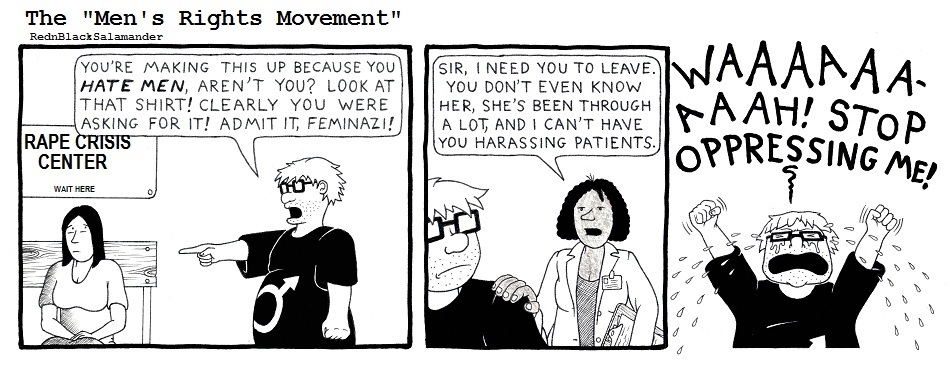
For Tal, being told to “check his privilege” is the worst
part of his college experience. Tal’s rejection of his inherent privilege
denied the negative experiences of others (at college or elsewhere) of racial
discrimination, violence, and sexual assault. The stories of so many women,
especially transwomen and women of color, are forever swept under the rug, but
the whining of a Princeton-educated, non-struggling story of Tal are lauded as
examples of how society is forcing white people to feel guilty “just
for existing.” It is quite disheartening to know that one’s story will not
be believed simply because one does not have the access to media forums in
which to express them. Or, even when those stories are told, they are often the
white, cis-woman perspective. Or, when women are threatened, we still rely on the charity of men to raise the alarm and offer suggestions.
I praise the strong, powerful women at other institutions,
such as USC
and Northeastern
(my current and previous institution of higher education) that have shared
their story and fought back against institutions that deny women the right to
say no, and their legal recourse against perpetrators. I was not strong enough
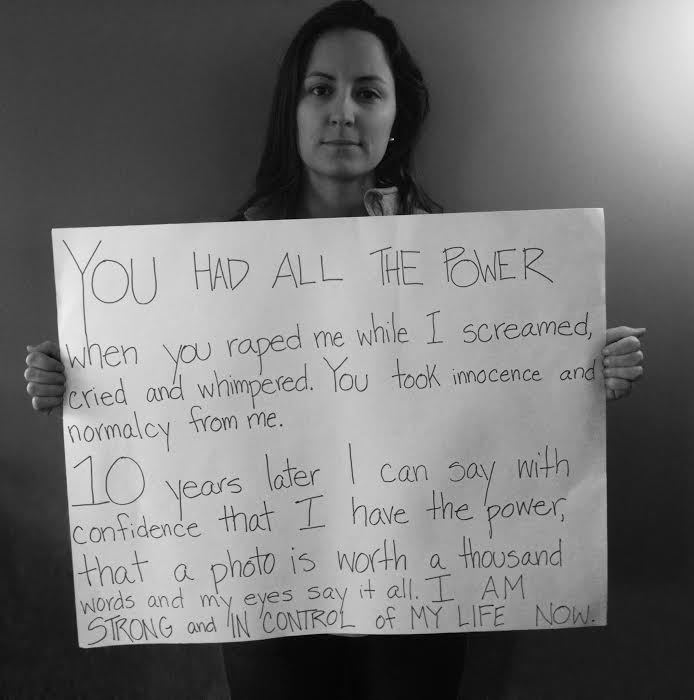
to tell my story. Even with my high level of privilege, I was terrified of the
consequences of reporting my sexual assault by a trusted friend at Northeastern.
The word “survivor” never rang true for me. “Survivor” would imply that I had
faced a natural force, like a tsunami or a disease, and overcame the event and
devastating effects. I didn't, though. I
was faced with a human force, a man in complete control of his actions, a
friend, who I had given my trust to, had made a conscious decision to act,
devalue our friendship, and violate my body. This is, unfortunately, the story
of so many women in collegiate settings, but so few are given the space to
share their stories, or feel that they can freely and without consequence equally
access our rights.
Elliot Rodger’s story is also garnering national attention,
including his manifesto where he declares his hatred of women and need to enact
revenge through murder. Despite such plain, obvious language, some people have
come to Rodger’s defense
by displacing blame from his white, male privilege to mental
illness. One of my colleagues at USC, Francesca Marie Smith, argued that
mental illness can be used as an argumentative strategy to undermine the
culpable of agents in a given situation. Examining the 2011 shooting of Gabby
Giffords, she concluded that a focus on the mental capacity of Jared Lee
Loughner derailed larger conversations about the societal pressures and
political polarization that may have fueled the attack.
Elliot should not be memorialized, lauded, made a hero, or
removed from blame. This was a calculated, terrorist attack on women as a whole because he
had been told “no.” He believed he had a right to the female body as sexual
property and projected his own shortcomings on the failure of (female) others. People
should not watch his videos or read his manifesto: let us not immortalize a misogynist
who decided to take life instead of realize the privilege in his own.
These two stories began and ended very differently. Tal has
certainly upset people with his lack of awareness and care for the stories of
others, but Elliot has murdered. I do not wish to equate these stories; I am
not making claims about “all
men.” I am instead commenting on the attributes that they share and what
this says about our society.
Both are inherently linked to race
and gender, because they laud the white, male perspective over all other bodies. Yes, Elliot was mixed race, but there is no denying his feelings of privilege and superiority that accompany this perspective. Both believe in the power of their privileged body to make decisions and that they have the right to remove of agency from others. Tal and Elliot are not allowed to be told “no,”
especially not by people of color or women. Tal cannot be told to “check his
privilege” and Elliot cannot be denied sex. These are the autonomous decisions
of others that put into question the privilege that Tal and Elliot could not
even recognize they had (being blind to their own condition and the conditions
of others).
These men are just two chapters in the larger story of a society
that allows their privilege to continue unabated, that celebrates and defends
them, and that prevents us from looking inward at our own complicity. If it the
fault of people who question Tal’s struggle, Elliot’s mental condition, or my inebriation,
then society as a whole is declared “not guilty.” We can live in the façade of
a world where these events are mere peppered outliers in a properly functioning
society, instead of symptoms of a diseased organism. Walking down the street or
taking public transportation is an opportunity for women to be yelled at, groped, followed, threatened, or even worse. Even spending time
with trusted friends and family members can lead to the violation of the
female body. Althusser's police officer defines the power structure and everyone's position in it by addressing someone, "Hey you!" When I walk down the street and am called "bitch" while being grabbed from behind, that also defines me without my permission, reaction, or ability to subvert.
We cannot let these stories be drowned out by the mob quick
to defend the current system. We must give space and attention to those that
are fighting for change and awareness of larger issues. We perhaps cannot
change the minds of current misogynists or denialists who will resist at all
costs the crumbling of the society that preferences them. But, with increased
effort, we may be able to usher in new generations brought up in a society that
recognizes the issues that face the majority of us and fosters a culture that
is actively trying to change it.
One article that stuck out to me this year was Kwan Min Lee's "Presence, Explicated" which examines previous typology and definitions of presence for modern society and researchers. Especially when one thinks of online and mobile technologies, the idea of "presence" can be extensively debated and has important implications for relationships, community, and further research. I highly encourage the reading of the full article for more information about the history of the term, but the important part is his concluding definition of presence as "a psychological state in which virtual (para authentic or artificial) objects are experienced as actual objects in either sensory or non-sensory ways". This overarching definition allows for previous separate operationalized versions of "presence" to be unified, allowing for ease of inter-researcher communication.
I found an example of presence that surprised and fascinated me: flat daddies. Flat Daddies is a website that provides a unique service to military families by allowing them to have representation of a missing family member in the home. This site is just one of many sites that provide professional sticker image that can be left in a frame or attached to cardboard or foam board to serve as a tangible family member. The site specifically mentions that the primary purpose of the Flat Daddies is to serve as a comfort for children, but I might argue that the comforting aspect of Flat Daddies are universal to the whole family: normalcy. When a service member is deployed, there are large gaps of time (even upwards of a year) without contact with his or her children, spouses, family, and friends. Although I would like to point out momentarily that the Flat Daddies website genders the role of military service as male despite the inclusiveness of military service for men and women (commentary on sexuality discrimination is withheld for this discussion). In the situation I am familiar with, it is the male who is deployed, leaving a wife and an infant (4 months at present) behind. What is unique about Flat Daddies is the ability for the missing person's presence to still be felt in the household besides a normal 4x6 photograph. Infants and toddlers who are so young as to not have formed a strong relationship or identification with the missing family member can have a physical "para authentic" image of the loved one accompany them in every day life and activities.
I cannot help but think of the cliched line "I never knew my father" to be replaced with "I had a Flat Daddie when my father was away". The image cut-out serves as a placeholder for an actual object, thus becoming the presence and physical representation of the loved one. This can be incredibly important for maintaining normalcy in a family and the website advocates taking the life-sized poster to important events (e.g., weddings, parties) and for use in every day activities (e.g., meals together, bed time stories). Being in a long distance relationship, I originally thought it would be slightly off-putting to have a life-sized cut-out of my significant other accompany me. The differences, though, do create incentive for the product, such as the longer lengths of time in deployment and children as a factor. Is having a photograph cut-out of a deployed family member better or somehow more inclusive of a family structure? Can a family not be whole or "connected" as the Flat Daddie site says, without this physical presence?
I would be interested in researchers picking up this cause to see if family members do cope better, children better recognize their missing family member, and what the differences are between families that have the image or not. As technology connects us to more people around the world, is it really necessary for physical awareness of others? Can these authentic or "real" experiences ever be replaced? I think Kwan Min Lee would argue that there is no difference between families video-chatting with, having a Flat Daddie of, or sending letters and care packages to deployed service members, because they are all "present" for the family.