Showing posts with label Education. Show all posts

Sunday, January 17, 2016

Communicating about Climate Change: The Technical and Public Spheres

This semester, I'm teaching COMM499: Public Controversies, a class that I started as a part of a Provost's Fellowship. As a part of the foundational theory weeks (before we delve into specific topics and controversies), we are discussing sphere theory. Sphere theory involves categorizing different arenas where communication occurs. G. Thomas Goodnight theorized three communication arenas, the public sphere, the private sphere, and the technical sphere. I will first briefly explain these concepts before exploring a recent news article that caught my attention on the complexity of the United Nation's Intergovernmental Panel on Climate Change (IPCC) environmental reports. I argue that these reports are not targetting their intended audience, the public, and are instead retaining too many characteristics of the technical sphere. The UN needs to better bridge the gaps between the technical and the public sphere to increase public understanding of the severity and risks of climate change. Removing jargon and becoming more accessible can help remove the stigma of elitism from science and encourage people to engage themselves more with the science.

For additional discussion of the spheres and climate change, look up Mosley-Jensen's book.
The public, private, and technical spheres have their own standards for engagement with communication and often happen with different scopes, effects, and speakers. The public sphere is so named because it is the arena where the public, people, and politicians communicate about topics in general, accessible language. An example of a communication activity in the public sphere would be President Obama's State of the Union, which is a speech given to the general public about topics of great impact. The private sphere involves more intimate communication between smaller groups of people often not accessible to the public. Conversations between couples, family members, or employees and bosses would be considered private, because they have limited public impact. These conversations may also include situation-specific language, such as inside jokes or personal references. The technical sphere is made up of experts that have a standard, formalized discourse that often includes specified jargon and expectations. Legal jardon and law journals are an example of technical discourse, aimed at a specific, expert audience with advanced knowledge of a particular field.

Cartoon retrieved from this site.
In writing climate reports aimed at the general public, the UN is participating in what I call "bridging," where technical knowledge is translated into public discourse. Information created and anlayzed in the technical sphere is transferred to the public sphere. The article in question summarizes the conclusions of linguistics scholars Barkemeyer, Dessai, Monge-Sanz, Renzi, and Napolitano in their 2015 analysis of UN reports between 1990 and 2014. The analysis focused on the readability of the summary section of the reports aimed at policymakers and the public. The authors focused on the complexity of the vocabulary and sentence structure as potential barriers to public understanding. Compared to the readability of tabloid papers (50+ on their scale) and even scientific magazines (30+ on their scale), no IPCC reports surpassed 30 and the most recent barely hit 15. There is evidence that these reports have become increasingly unreadable, making it difficult for the general public to understand the IPCC's analysis and its implications.

Retrieved from Tollefson from the original article in Nature

The article noted that the IPCC is considering adding more members to the board to improve readability or potentially providing better communication training for the summary's writers. In my graduate research on the rhetoric of science and scientific controversies and membership in the Earth Sciences Communication Intiative, I have found that scientists are often more concerned with their own analysis instead of making the content accessible to the public. The jargon used can be off-putting and even unintentionally misleading. For example, my partner is a graduate student in physics and I am often asked to edit his papers. One example of jargon that has repeatedly stuck out to me is the use of "trivial." When my partner calls a result "trivial," he is indicating a specific standard of statistical impact, whereas I read the term with a disparaging and dismissive tone. Because these articles are often written with experts in mind, they also often gloss over important background knowledge or comparative statements that would elucidate the importance of the results. This writing style is appropriate for the technical sphere, but could potentially lead to misinterpretations by the public and can become fodder for climate skeptics.

Image retrieved from this site.
Scientists should pay more attention to how they communicate. Whether that involves creating stronger bridges and training people to go-between, or including communication courses in science programs, Even including more sign-posting types of summaries, such as the chart above, would help clearly and succintly communicate the important take-a-ways for the reports. I think more problems would be minimized if attention to the ways people understand and process information were increased.

Monday, November 30, 2015

Penn & Teller: Social Comedy and Edutainment

This past week, I was in Las Vegas, Nevada for the National Communication Association conference. I participated in a great pre-conference on sustainable communication, saw fabulous panels in rhetoric, religion, and science, and was honored to see a former student shine at her panel on material space and architecture. In the evening, I was able to explore some of Las Vegas's shows and strip night life. I attended Penn & Teller's show at the Rio Saturday night and knew immediately that I wanted to write a post about it. In this post, I will discuss some of my favorite tricks from the show and also my thoughts about the political, social, and scientific commentary that highlighted for me the importance of educational entertainment. I do not mean to give "spoilers" or to ruin the magic for anyone, so read at your own risk.

Retrieved from this site.
My first observation of the show was how honest and open Penn & Teller were about the art of deception. Many times, they blatantly told us what they doing and yet we were still bamboozled and confused. For example, Penn gave a speech condemning "psychics" who use tactics of cold reading to make audiences think that they have supernatural powers. Penn called out John Edward and Sylvia Browne, for example, for capitalizing on people's pain and misery in giving false hope through magic masquerading as messages from people who have passed. Penn has prepped us then, that what he is doing is really a trick. But, he does the readings so quickly and so spectacularly, it's really a wonder how he does it at all. In fact, being prepped and reminded about how the show is entirely full of tricks elevates one's awe and wonder because it has a natural explanation. If the answer is supernatural, then it is the supernatural power that is impressive, not the artist.

Retrieved from this site.
One of the themes of the show was represented on a sign that Teller held up during one of the tricks: "We aren't doing the trick you think we are doing." He flat out tells the audience that deception is occurring and Penn & Teller cannot be trusted, and yet the audience still falls for the trap, time and time again. My favorite trick was relatively simple in its set-up. Teller chose a woman from the audience and gave her a coin jar. He then began picking water drops from a fish tank and turned them into pennies which he placed in the jar. Even though I was in the very back corner of the mezzanine, I could still see and understand the tricks easily as they happened. The trick ended with Teller picking up a handful of pennies and dumping them back into the water. Instead of the pennies turning back into water, however, they sank to the bottom while dozens of goldfish appeared in the tank - it was truly incredible.

Retrieved from this site.
Part of what I was not expecting was the prevalence of social and political commentary in the show. Penn & Teller are widely known as libertarians and Penn is an outspoken public atheist. One trick included a short speech by Penn about airport security using a TSA metal detector. The trick was, again, amazing, but it also gave the audience an opportunity to reflect on the sacrificing of values and the usefulness of the TSA. Penn noted that the audience member chosen to come up on stage had as much training as a real TSA agent. They also showed how inaccurate and thus unnecessary many of the practices are. My favorite part of the sketch was Penn summarizing that we should all think about how our temporary security is often valued more highly than our eternal liberty. This is the type of comedy that reminds me of Lewis Black, where the jokes are purposeful and cause us to reflect on larger social issues.
Retrieved from this site.
This activism-comedy was also apparent in Penn & Teller's card trick. Teller performed sleight of hand magic while Penn played a guitar and told a story about "The Atheist's Deck of Cards." Based on a song by Tex Ritter, Penn & Teller tell the story about an audience member (Teller) who interrupts a physics lecture by Lawrence Krauss (who helped them write the song) and then tells a story using the cards to justify having them at the lecture. I was blown away by the amount of scientific information (which my partner, who is earning his PhD in Cosmology confirmed for me was accurate) packed into the song. From the four fundamental interactions in nature, the cosmological constant, and the size of the universe, the audience were learning about physics while also being mesmerized by Teller's sleight of hand.

Retrieved from this site.
I highly recommend Penn & Teller's show at the Rio. I'm not trying to advertise for them nor am I getting any reimbursement for this review. I am simply hopeful that Penn & Teller, along with other types of "edutainment" can help everyone learn more when they are not expecting it and give audiences chances for reflection and advocacy. Entertainment has aspects of education and can be harnessed to create a more active, engaged public. In a city known for its debauchery, sinfulness, and extravagance, I felt the simplicity and insight of Penn & Teller's show a welcome change of pace.

Monday, June 1, 2015

Graduate School and Mental Health

I am one day late posting my blog this week, and for good reason. I spent most of Friday, Saturday, and Sunday engaged in family activities (and traveling back home). There has been increased talk at USC about the state of graduate school life and mental health and how current students can improve their quality of life while undergoing an incredibly stressful program of work. During my years on the Graduate Student Government, I worked for 15+ hours as Community Service Director, took three courses which was 9+ hours of in-class time plus reading and homework, worked as a Teaching and Research Assistant for faculty for 20+ hours a week, all while expecting to be doing personal projects, attending conferences, and publishing papers. Now that classes are over, I've passed my qualifying exam, and I am no longer a member of GSG, my time is mostly dominated by working on the dissertation. This is a no less stressful but more flexible academic assignment. I list these responsibilities not to brag about my own accomplishments. Instead, it helps me to reflect on the immense pressure I experience, when I am a graduate student who is not also supporting a family on $30,000 a year, dealing with health issues, or serving as a member of a prolific research team.

Retrieved from this site.
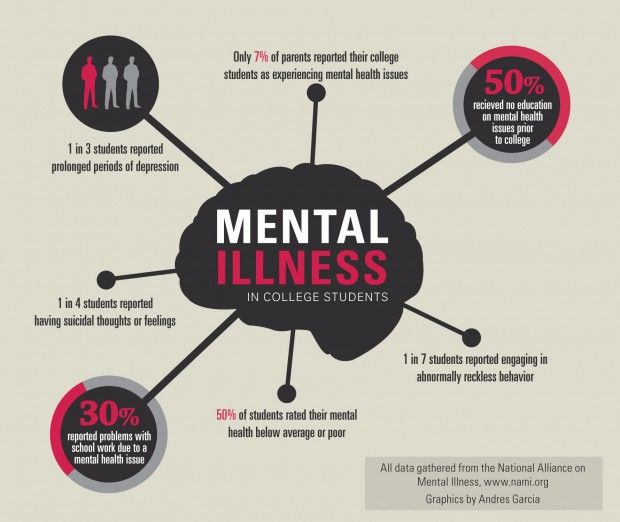
No matter our responsibilities, there is a great amount of pressure of students to succeed in public and suffer in private. It is very uncommon for people to discuss their workloads and admit failure or shortcomings. Instead, they turn into perverse competitions where we compare our workloads to others (I'm guilty of participating in this). When all we are told is "publish or perish," it is difficult to not have some sadness behind congratulatory statements or to take rejections from conferences lightly. To admit failure is to lose the game of PhD life and to express that openly is frowned upon. Research indicates that 60% of graduate students feel hopeless and depressed nearly all the time and 1 in 10 have contemplated suicide. But, there are few, well known resources for these feelings.

Retrieved from this site.
I took up this blog post in response to amazing statements made by my colleagues, Ritesh Mehta and Cynthia Wang, who reflected upon their time at USC. Ritesh made a profound and poignant statement at his dissertation defense about how students should not have to suffer in silence and be afraid to reach out to one another. Although the program is 100+ students in size, it can be quite lonely work staring at a computer screen all day. Cynthia posted similar sentiments on Facebook about sharing failures and talked about being rejected from a journal. I am proud of both of their statements and wanted to make one myself: I recently was rejected from a journal. Although the comments were quite positive, there was a sinking feeling that there was something else back on my plate that was simply unbearable. There was no room to fit it back into the growing list of tasks, assignments, and responsibilities.

Retrieved from PhDComics
I don't think that any of our problems are the result of USC. I would encourage any potential graduate students to consider this amazing and supportive program. I think the problems are deeper, within the PhD experience, and the academic community at large that engages in competitive mentalities and focuses on output instead of the process. Similar to ongoing debates about the requirements placed on medical residents, I think more conversation should begin about the mental well-being of graduate students. Reducing the stigma of sharing is something that I hope will get better as more students create a culture of support rather than judgment. This is something that will ebb and flow with time and does nothing to address institutional expectations. Indeed, when we think about the contributions that we will have as graduate students, it pales in comparison to what we will do as faculty members. Perhaps we need to treat graduate school more as training for academia than a full blown toss into the deep end of academic publishing and stress. This article provides some other potential solutions including increased acknowledgement, specialized training, and more resources.

Retrieved from PhDComics
I took this weekend off, postponed my blog post, and had a friend cover the class that I'm teaching over the summer. I felt guilty for a while for this decision I made, but I think that more of us should be okay with taking more breaks, more mental days off, and enjoying ourselves with family and friends. The computer (and that R&R) will still be there tomorrow.

Sunday, April 5, 2015

Tools for Teaching: Socrative

Retrieved from Socrative.com
I learned about a teaching application called Socrative at this year's Western States Communication Association Convention in Spokane, Washington. It was a serendipitous discovery because I have been struggling in the course Communication and Culture that I had taught in the Fall of 2014 and this current semester, Spring 2015, with student participation. The course has a biweekly lecture (~120 students) and then a discussion section that I host on Monday morning (2 sections of 20 students each). Students are thus exposed to the material in the 3 hours of weekly class time, but I only have 50 minutes on Monday to synthesize, lead discussion, hold student presentations, answer questions, and take care of any housekeeping.

Retrieved from this site
This has led to a lack of conversation when we do get free time to talk. The expectation is set that there may be too much going on for students to have questions or ideas ready. I don't think that the students purposefully avoid participating, but with a limited amount of time, it is easy to let other students handle it. Additionally, the readings for Communication and Culture are theory-heavy and quite challenging, leading to some anxiety about being incorrect or misinterpreting. Some of the topic areas, such as race, sexuality, gender, class, and power can also halt conversation. A student just last week, when we were talking about sexuality, said that she didn't want to participate because she was worried she would offend someone. When I pushed her and asked what ideas she had that might offend, she offered, "Well, everything." Her comment made me think about how challenging it is to embrace talking about pressing social issues and how the norm is to be silent. Breaking political correctness is the modern sin that cannot be committed.

Retrieved from this site.

I do have many students that tend to participate regularly, even on difficult subjects, and I rely heavily on them to help organize and lead discussion. It's hard, however, to consider those students representative and get a good idea about the actual opinions, knowledge, and understanding of all students. I've had many students, especially international students, reveal that they are nervous at the possibility of being called upon and want to avoid participating unless they are really passionate or feel comfortable.

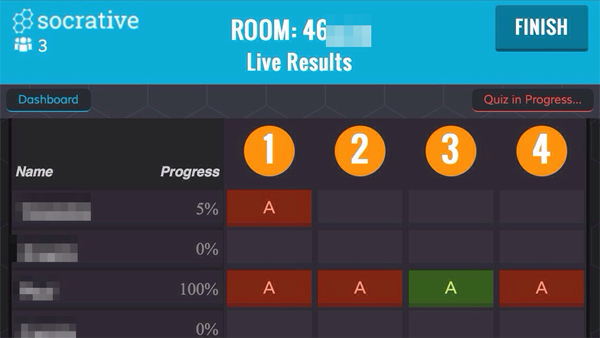
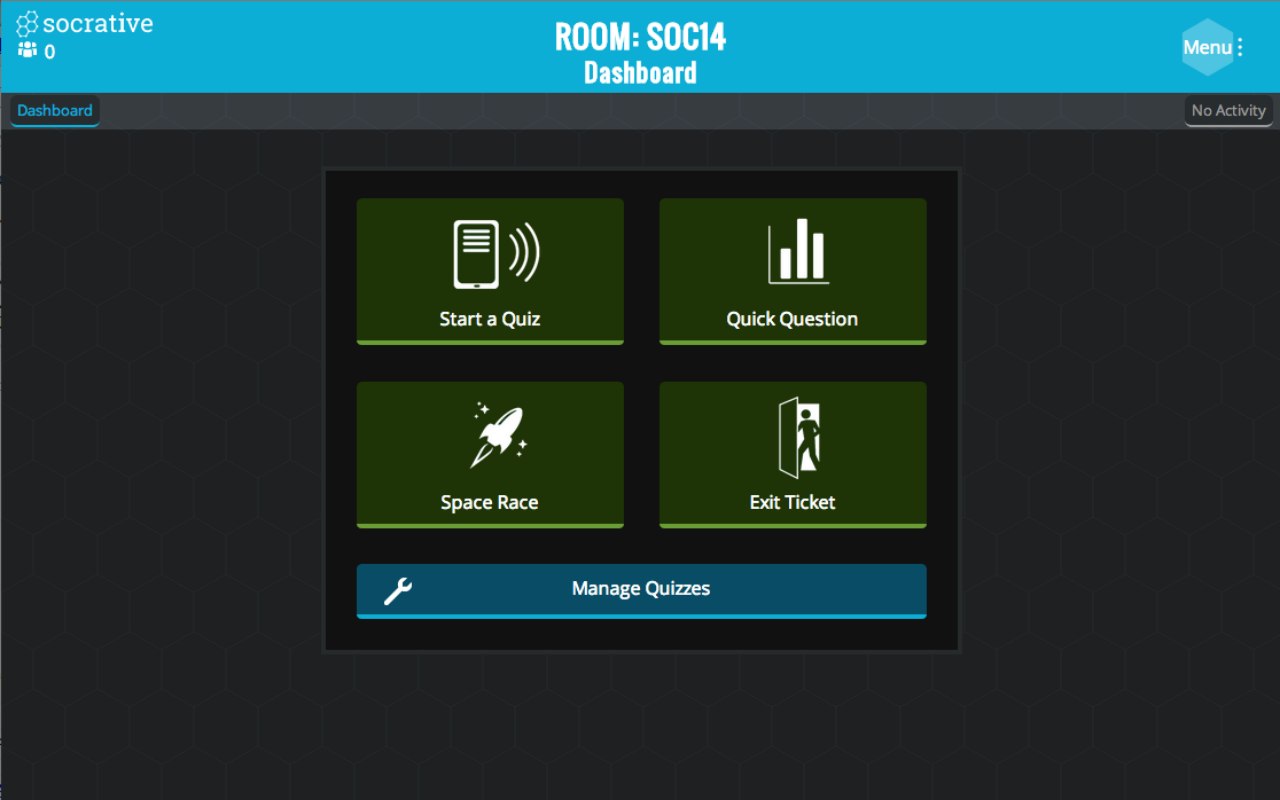
Socrative is an opportunity for students to submit answers and questions through the app without the pressure of initiating conversation or anxiety about being correct. It also solves issues of a lack of time and the ability for only a few students to participate. It's convenience, settings, and functionality have greatly improved conversation in my discussion section this semester.

First of all, our classrooms are becoming a home for all electronic devices. I'm frankly shocked when I see actual notepad and pencils on desks. Instead of fighting the technology (as some teachers who ban computers in classrooms do), Socrative embraces the ubiquity of these tools. Socrative Student is available on all platforms, Apple and Android from tablets and phones, and even within Chrome's web browser as an add-on. All students (notably at the fairly affluent USC) were able to access the app without excuses.
Retrieved from this site.
On the teacher platform, I was able to create a "classroom" with a specific, customized name. Within the app, I can create quizzes for students to take to test their knowledge. In the morning, after announcements, I launch the weekly readings re-cap quiz (from the Tuesday and Thursday content from the week before) which is a series of multiple choice or short answer questions to gauge how much information the students have retained and whether they understood the material. Once I manually close the quiz, I choose how I want to receive the responses, so I can refer back to them later. This also works for teachers who want to do Pop Quizzes and record grades.

Retrieved from this site.
I can also see the students' answers as they come in, so during the quiz time, I can write notes and tailor my lecture to make sure I have the pieces that students are struggling most with covered. Oftentimes, I am surprised that they understand what I consider complicated ideas and struggle with simple definitions or differences between theorists. This helps ensure that the discussion sections do meet the needs of the students without needed a student to volunteer that they did not understand something. Also, when I address these concepts, I can call on students that submitted correct answers and confirm their accuracy before they speak. This reinforces their grasp of the material and takes away some of the uncertainties of participating.

Socrative is very easy to set-up during class if I need a specific response to a question. For example, I often get nothing but blank stares when I ask if we can move on or if students need more explanation. I have a one-question "Check-in" Quiz that I can launch and get immediate feedback if students want to move on or if they would like more information about that topic.

Retrieved from this site.
There are some other app functionality such as "space race" where you can put students in teams and have them race to finish the quiz. I have not tried this functionality yet, but I imagine in a course that I have more time or more control over the content, this would be a fun and engaging activity.

I encourage teachers and teaching assistants to try the app and see if it works in their classroom space. With students already nose down into their computer screens, I found Socrative a positive way to keep them on track and focused on the material. I found that in the few weeks I've used it, it has increased conversation, given me confidence in calling on students and asking for participation, and made for a less stressful atmosphere.

Sunday, October 12, 2014

Dangerous Advertising and Disingenuous Controversy

Students of mine have turned in papers this week that critique different advertisements. Their papers have prompted me to think, as I have before (gender in advertising, political advertisements, religion and advertising, interactive advertising, and exclusionary advertising) about different advertisements that propose a cause or campaign instead of a product. My students had the choice of a traditional product advertisement and one form a non-profit. It was much easier to see the direct purpose of the for-profit advertisement: to sell a product. Oftentimes, however, the advertisements for non-profit groups have to be more creative in order to peddle something far less tangible than a car or a purse. These attempts to be innovative can backfire, causing more attention to the advertisement campaign itself than the message it is trying to convey.

Retrieved from this site.
In rhetorical theory, this is called disingenuous controversy. Fritch, Palczewski, Farrell, and Short proposed the term to describe situations when an ancillary aspect of an event occupies attention and the actual message (which itself could be controversial and counter-hegemonic) is lost. Their example was the comments by Ward Churchill where he compared the workers in the World Trade Center as "little Eichmanns" when describing the justifications for the 9/11 attacks. The purpose was to raise questions about the American economic structure and how it constrained and motivated the actions of the 9/11 terrorists. But, instead of this critique gaining media attention, people focused on his comparison between the Nazi bureaucrat and workers in the World Trade Center as offensive, insensitive, and unpatriotic.

Following the Nazi theme, I first want to discuss the advertising campaign that ran in Germany to promote HIV/AIDS awareness. The campaign features graphic images of infamous leaders such as Adolph Hitler, Joseph Stalin, and Saddam Hussein having sex with women. This campaign was eventually pulled in part because of its graphic nature and outrage over the use of these infamous faces in relations with women. The campaign read, "AIDS is a mass murderer" and encouraged viewers to associate something traditionally thought-of as pleasurable with something inherently disgusting and deadly. The graphic depiction in the advertisement coupled with the unique history in Germany that makes the presentation of Hitler challenging, however, overshadowed the consciousness-raising of re-thinking about the dangers of unprotected sex.

Retrieved from this site.
The second campaign I'd like to present is a campaign by 10:10, which is a climate change advocacy non-profit. The advertisement shows various situations where people are asked about their opinions on climate change. A few that declare that they do not believe in global warming or that we should not act towards it are shown exploding violently. The version that received the most attention featured children exploding in their classrooms. The campaign seemed to be questioning the value of dissenters and how those who do not engage or pay attention are ultimately doomed. The violence, especially towards children, however, became the focus of the campaign instead of the message of the future of humanity.


These "dangerous" advertisements risk an audience backlash in favor of capturing people's attention. When the alternative is complete silence or apathy, perhaps a bit of attention-grabbing is in order. There are certainly risks to this type of advertisement. Non-profits may be more likely to risk these strategies because they are not beholden to shareholders or a bottom line. When attention is at an all time premium, with the variety of options for viewing, being offensive or crude is one way to be sure one gets eyes, if not support.

Sunday, August 24, 2014

Rites of Passage: The Qualifying Exam

I have taken time off from this blog to go through a PhD rite of passage: the qualifying exam. There has been plenty of time for me to reflect on the purpose of the exam and the idea of rite of passage in general. From tests of adulthood to tests of skill to tests of preparation, rites of passage are important rituals in human life. For the past summer, I have been undergoing intensive preparation, reading, memorizing, and note-taking in order to prove my knowledge of my specific areas of expertise. Many schools do the qualifying process differently (and even within a school), but they all share the same goal of measuring knowledge and readiness to achieve the PhD. Now finished the writing process (I still have to defend my answers orally in front of my committee), I have often asked myself why PhD programs require these types of exams and why rites of passage in general are so very important to the maintenance of society.

Define "calm." Retrieved from this site.
I certainly learned a lot about the importance of ritual during my studying. Kenneth Burke argued that rituals reinforce "piety," or the maintenance of an overarching order based on social and role expectations. For example, rituals of marriage reinforce the role that men and women should strive to be husbands and wives. The ritual of confession cleanses sin and reinforces how people perform the role of a good Christian. When I engage in the ritual of the qualifying exam, I reify the order that my knowledge is and should be accurately be measured through my performance on this exam. Considering that the PhD qualifies me to teach students at a university, it would make sense that my exam would try to measure my knowledge, ability to synthesize fields of inquiry, and grasp of my given specialty. But, will I ever truly be asked to perform this type of task again? What does a concentrated burst of studying and writing (without access to notes, materials, or the Internet) really prepare me for?

I think the answer lies in looking at the larger picture of rites of passage and their purpose. There is an episode of "Taboo" where boys undergo extensive body scarification with toothed instruments and razors that bleed profusely all over their bodies. Going through this pain and struggle is part of the child's proof that they are able to understand and undergo the pain of adulthood. Though they may never experience such intensive pain again, this ritual proves that if the child can go through this pain, they can survive everything else.

Warning: This video shows graphic cutting and blood. Retrieved from this site.

The PhD program requires me to undergo a different kind of pain: mental pain. Though comparing this process to extensive tattoos may seem a bit extreme, there are similarities here between pushing oneself to the limit so that all challenges that come afterwards are manageable. Perhaps because of this experience, I will be better able to tackle journal deadlines, advising my own students, preparing for classes, and the myriad of administrative tasks. Not only will I have a base level of understanding of this material to draw from, but I will also be used to the long hours, mental strain, and intense workload. The qualifying exam does not quite measure my ability to succeed in this specific task. It is instead a concentrated and purposefully exaggerated challenge.

On the other side...Retrieved from PhD Comics.
As one of my professors once said, I may thank everyone one day for pushing me to my limits, challenging me, and preparing me for the difficult work ahead of me as a professor. Of course, many people in the PhD program are not interested in continuing into academia. This rite of passage, however, has become a universal part of achieving the PhD, an expected mark of academic excellence that you must achieve to be awarded the degree. As my advisor said, he wouldn't let me take the exam unless he knew I was ready, which perhaps begs the question of whether I am really in danger of failing at all. The point, though, is to undergo the experience and come out a better and well prepared scholar. I remember the pain of running during my first half marathon, but the great feeling of accomplishment after it was over. Of course, the process was extremely difficult, taxing, and exhausting, but now that it is over, I do feel a sense of accomplishment. I hope that this accomplishment is rewarded with a pass in the weeks to come! Best of luck to everyone else going through this rite of passage. See you on the other side!

Sunday, June 8, 2014

Bryan College Controversy: Religion on (Scopes) Trial

In 1925, a small town became the center of national attention. It housed the court case John Thomas Scopes vs the State of Tennessee that addressed the teaching of the Bible in science education. In 2014, this same small town of Dayton, Tennessee is undergoing a similar controversy where science and religion meet in the realm of education.

Image retrieved from Biologos

 Bryan College, founded in memory of Williams Jennings Bryan after the Scopes Trial, has issued a new statement of faith that faculty must sign. This clarification in BC policy is receiving heated backlash from faculty and students. Due to the stricter statement, BC may lose 25% of its faculty. BC students have released a petition against the new statement and BC faculty has voted no confidence on the school’s administrators. This new statement of faith is not changing the stance of BC, which aligns with its namesake’s opinion on the immorality of evolution and the truth of biblical creationism. Instead, this change highlights the literalism of the Bible by further polarizing acceptable belief systems. This article will explore these changes in light of the ever-present dichotomy of science and religion, with the context of the Scopes trial, and the actual teachings of Bryan. In short, BC is working against two of the characteristics of Bryan’s teachings (the potential for interpretation and the importance of populism) and in essence, abandoning its namesake.

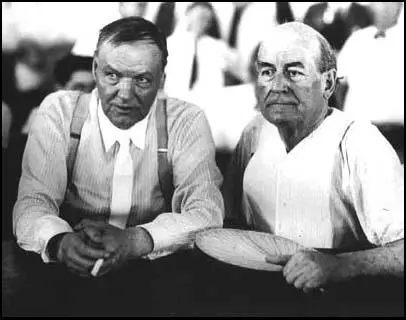
Clarence Darrow (left) sitting with William Jennings Bryan (right) before Scopes Trial. Retrieved from this site.

 Bryan was the prosecutor in the famous 1925 trial, arguing in favor of fining Scopes for teaching that humanity descended from a lower order of animals. The Butler Act, which Scopes was tried for violating, declared the immutability of the Bible and the inerrancy of the Genesis account of Adam and Eve. This was and still is an important element of fundamentalism, the values on which BC was founded. In the cross-examination day of the trial, however, Bryan compromised literalism but noting that “I believe everything in the Bible should be accepted as it is given there: some of the Bible is given illustratively. For instance: "Ye are the salt of the earth." I would not insist that man was actually salt, or that he had flesh of salt, but it is used in the sense of salt as saving God's people.” Bryan also said that the six days of creation were “not six days of twenty-four hours.” For Bryan, the statements in the Bible were accurate descriptions, but what was more important was not individual interpretations but the values that the Bible upheld.

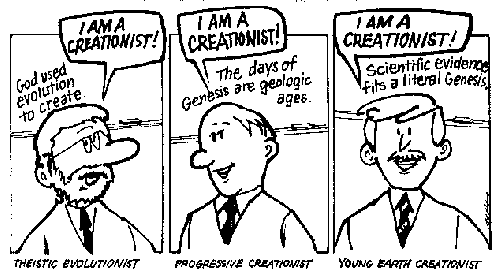
In Bryan’s summation of the trial, he proposed a strict dichotomy between religion and science, saying that one was the path to Christ and the other would crucify Him. In the 1920’s, and perhaps not until the intelligent design movement of the 1990’s, the idea that evolution and creationism could be rectified was perhaps outside of the purview of many Americans. But, many faculty members at BC do ascribe to labels such as “progressive evolutionists and theistic evolutionists and old-Earth creationists.” The previous BC statement of faith noted that “the origin of man was by fiat of God.” Interpreting fiat to be an all-encompassing act of creating the world, some professors at BC married religion and science and incorporating evolutionary theory into their personal beliefs and classroom teachings. They have taken the words of the Bible illustratively, so they are able to stay in line with the statement of faith.

Different forms of creationism. Retrieved from this site.

The new statement of faith, however, undermines these creative interpretations. Now, faculty must agree that “all humanity is descended from Adam and Eve. They are historical persons created by God in a special formative act, and not from previously existing life forms.” This statement puts many jobs at risk because it removes faculty that believe in any evolutionary history of humanity or of Adam and Eve as symbolic placeholders.

Upon a recent trip to Dayton in March, I had a conversation with a priest and an archivist at BC’s library. We were all reading through documents about Bryan, the trial, and the founding of the college. The priest was in the archive reading for clarification on Bryan’s teachings about biblical literalism. He was concerned that many of his closest friends, the best faculty at the school, and devout, loyal Christians would be unable to sign the new, stricter, and, at this point only proposed, new statement of faith. The priest was concerned that many great, Christian teachers would be lost and hard to replace. Although they may have had more creative interpretations of some biblical phrases, the priest considered their marrying of physical observation with biblical teachings as in line with Bryan’s teachings.

Logo of BC student newspaper. Retrieved from the Brian Triangle website.

BC students are also in agreement. They noted in their petition that they are saddened that BC “will alienate faculty, our brothers and sisters in Christ, by requiring them to affirm a negative on an ancillary matter of faith.” For the populous of BC, the tightening of the statement of faith only serves to divide rather than unite people of faith that have the common goal of teaching Bryan’s creationist values.

The archivist gave me a card for her husband’s creationist non-profit and seemed unconcerned with the changes. Although she said that some faculty taught evolution or believed in it, what was important was that the Genesis story was still taught at BC and the values of it were fully ingrained in all parts of its curriculum. She noted that if students had issues with particular professors and their more creative interpretations, they could easily take classes with a more fundamentalist professor. The campus was an open place where at least variations on creationism were discussed freely. The new clarification would place this openness in jeopardy. BC is surely staying within its rights to clarify its statement and to fight for literalism, especially within a threatening, secular environment. This statement is adopted, however, against the wishes of its students and faculty, making the authorities at BC domineering and elite over the wants of its people. Bryan’s values of populism, the will of the people over the elites, were once in opposition to the elitism of science that would remove all mention of Christ from classrooms. Now, BC wishes to do the same, but to strip its students of all access to evolution, despite that it awards biology and environmental science degrees.

What is at issue here is the extreme polarization of science and religion that is shrinking the opportunity for middle ground, mutual respect, and open deliberation. I do not mean to argue that creationism is a valid scientific explanation, but simply that people should not be so quick to judge people for staying true to religious ideals while incorporating scientific and material evidence in their belief systems. As more and more people take note of scientific evidence for evolution, there is more vocal push back from religious fundamentalists that distance themselves from intelligent design perspectives. Adopting new frameworks and stretching current ones is incredibly difficult. Attempts at marrying them and making sense of one’s religious convictions in light of science is something to be valued, not disdained.

BC student protest image. #hearmyvoiceBC. Retrieved from this site.
BC cannot avoid the protests and disagreement from their own students and faculty, nor from the general public about the favoring of religion over science. As the students said themselves, “the clarification promotes factionalism at the cost of honest debate and discussion.”  This decision, perhaps in response to more prominent attention to the issue, is minimizing the space for education about scientific explanation for origins. BC was created when creationism and evolution simply could not be rectified. But, now, it is clear that BC is isolating itself from its students, faculty, the potential partnership of science and religion, and illustrative biblical teachings, in contrast to the teachings of its namesake. We will never know what Bryan would say about this iteration of the human origins controversy. But, I would put money on the will of the people over the BC elites that work risk compromise and biblical values in favor of fervent literalism.