Showing posts with label China. Show all posts

Sunday, September 6, 2015

Food Culture and Masculinity in China: Surviving as a Vegetarian

When I went to live in China for three weeks, I knew that being a vegetarian would be hard. All of the blog posts I read warned me of the lack of options, difficulty in communicating dietary needs, and frustration with the lack of translations on menus and in stores. Only a few articles discussed China's Buddhist history and praised China's openness to vegetarians. With my handy printed copies of Chinese words and characters and pictures of animals with red X'ed circles, I went out prepared to let everyone know "wo chi su" - I eat vegetables. What I wasn't prepared for was how many of my food decisions weren't made for me - and how masculinity and food culture are intertwined in Beijing, China.

Flight into China.
Before I elaborate on the previous statement, I do want to say that I greatly enjoyed my time in China, am grateful for the opportunity, and am deeply indebted to my hosts there and the many friends that I made. This post is not about my overall experience, but about the unique difficulties I had as a lacto-ovo vegetarian (no meat, fish, or poultry, yes to eggs and dairy) in Beijing. The food I did have was delicious and I think future vegetarian travelers (and travelers in general) can benefit from learning more about Chinese food culture.

At many of the restaurants I went to in China, large groups were given private rooms with huge round tables with a rotating plate in the center. Family-style restaurants are usually a niche market in the US, but it was the standard practice for Chinese restaurants. In those settings, the communal nature of China brought me face-to-face with my own individualistic tendencies. Even in the US, family-style means taking food from communal pots and placing it on individual plates. We had personal plates in China, but more often than not, the people at the table would take food directly from the communal plates into the mouth. The most dexterous man I saw would pop individual peanuts covered in sauce from the bowl to his mouth without dropping a single one. Those who use have tried using chopsticks know how difficult this is. The avoidance of personal plates signified that the meal was everyone's. There was no "hoarding" of favorite plates or claiming ownership over food by amassing it in front of you. Instead, everyone was patient, waited for the food to rotate, and grabbed what we needed as it passed.

Picture of fermented egg on tofu, a vegetarian Chinese specialty.

For me, it could be a long wait for what I needed to come around, and a few times I felt compelled to break the personal plate rule and accumulate stray mushrooms and pieces of eggplant. At a communal table, there was no individually-owned items, so everyone took from meat dishes and vegetarian ones, even if I could only take from a few. For the Chinese, this wasn't an issue because over-ordering is the norm. No plates are ever left completely empty - it is considered rude. So instead, the staff will dump the remaining pieces on one shared plate to save space for the many more dishes to come. On many occasions, vegetable dishes that were ordered had meat sauces, chunks, or components. I completely understand the need to be flexible when traveling, but for someone who was raised vegetarian, those dishes can make me extremely sick.

My blog post promised some musings about masculinity and patriarchy - and here it comes. The Chinese food culture was communal, but the head of the table was the boss. During our first meal in China, a fellow American sat at the back seat facing the door. I think this is a common practice in the US, as it is the most difficult seat to get to, so if often taken first to avoid inconveniencing others. Our advisor, however, encouraged him to move, unless he "wanted to pick up the tab" for our table of 15. The host paid the bill for the entire table; "splitting" checks was not common, but sometimes at smaller outings we would throw money into a communal payment pot. For the three weeks I was in China, the host was female one time, when we dined with the director of the school the group was teaching at. The other nights were all male hosts who oftentimes spoke little to no English. This made communicating to them my dietary concerns quite difficult and I sometimes felt that my request was treated flippantly or as unimportant.

Picture of the Night Market in Beijing, where they sold scorpions, snakes, starfish, and many other things on a stick.
What the hosts ordered, we had to eat and drink, including alcohol when it was not desired. We were told when to take food, when to drink, and how much of what we could have. I was offered meat (usually Peking Duck) many, many times, and found it difficult to explain to my hosts why I refused their very generous offers. A few hosts got quite upset and raised their voices while my advisor tried to explain the situation and encouraged me to try "just a little bit" to appease the hosts. I don't fault anyone for the situation; it's really a classic case of cultural clash and miscommunication. It's rude for me to refuse food and drink in Chinese culture; it's rude for people to force food and drink on people who don't want it in American culture. For both cultures, it's a matter of respect, either to the hierarchy of the community, or the power of the individual.

I saw, very often, women at the table, including myself, struggling to refuse alcohol. Chinese dinners, especially business ones, were filled with alcohol. And it was no one's choice when to drink but the host, who would stand, make a speech, and demand that everyone finish their glass. To not follow the call of "gānbēi!" by downing your drink was considered a rejection of the toaster's well-wishes. Furthermore, the host and other guests would often move around the table and toast everyone individually - meaning a toaster could go through a shot of alcohol (caled baiju) for each guest present. The male hosts were often complimentary to the female guests' looks, which emphasized my and my other American female companion's "exoticness." Those hosts would often touch, hug, or try to kiss us, as complete strangers, without warning.

I greatly enjoyed my time in China, but dinners were often wrought with nerves. Would the host order something I could eat? Would this meal have "secret meat" in it? Would we do a lot of toasts? Would I be given baiju instead of something I want to drink? Would the host make advances on myself or my friend? Would the host get angry if I refused his offer of Peking duck? If there were vegetarian food, would other people eat it before I could have any?

Obligatory panda photo
My favorite foods in China were the stewed eggplant, assorted mushrooms (sometimes called tree and ground fungus), and baozi (vegetable filled and steamed buns). I greatly enjoyed their variety of fruits such as jackfruit (inspiration for Juicy Fruit gum) and trying interesting-tasting fruit like durian. It was an adventure that I will never forget and I hope to go back soon. The food culture, in particular, made me reflect on the differences between China and America and the challenges of establishing a global community.

Monday, March 24, 2014

Sticky Reputations by Gary Alan Fine: Book Review

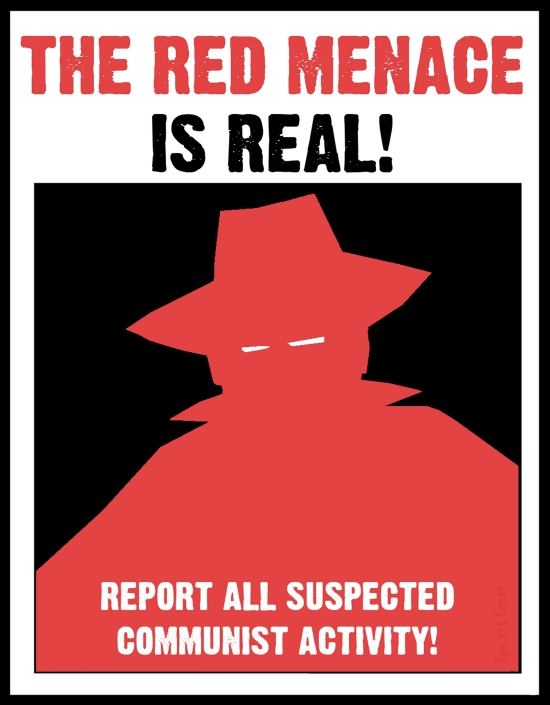
When folk singer Peter Seeger died in late January of this year, people were quick to mourn the loss of an American folk legend and activist. People now fondly remember and honor his legacy, but, in the 1950s, Seeger’s reputation was far from respected. “Seeger’s institutional enshrinement is striking when contrasted with his vilification as a political subversive during the McCarthy era” (p. 92). Though Seeger’s historical associations with the party and his testimony at the House Un-American Activities Committee had not changed, public memory of them has. What accounts for these drastic changes in how society remembers individuals? What do consistency and change in reputations tells us about collective memories and societal values?

Retrieved from ABC News

In Sticky Reputations: The Politics of Collective Memory in Midcentury America, Gary Alan Fine explores these issues of individual reputations, group dynamics, collective memory, and political commemoration. Fine approaches issues of memory from a sociological and historical approach, focusing on descriptions of events and the social and dynamic responses to them. Midcentury America encompasses the years between 1935 and 1955, a time of unease and fears about home-grown terrorism. Often referred to as the “McCarthy era”, this narrow time frame still allows for detailed insight into how memory functions politically. Fine’s main contribution to the study of memory is the reliance on and explicating of reputations as imperative to understanding groups, political maneuverings, and a time period. Representatives of and experts in these categories shape collective memories of history. In some cases, memories live on and affect current policy, such as the pervasive metaphor of the Red Scare. Other memories may be forgotten, such as Seeger’s past or the Brown Scare.  How society remembers individuals is a collective process that reflects the memories of groups, institutions, history, and our roles within society. These reputations outlive the individual attached to them, creating varying levels of “stickiness” that continue to resonate and have influence over time.

Sticky Reputations begins by outlining the major themes of reputation, collective memory, and American politics. Fine argues for the lasting importance of individuals and, more importantly, the memory of them that transcends their material being. He begins by describing the quality of memories as interconnected through time. Memories are chained together and influence one another with varying consequences. How society chooses to remember, or is influenced into remembering by institutions, is often due to previous memory “work” that guides how society can and should remember the past.

The book could roughly be divided by its treatment of shifting and sticky reputations. Shifting reputations are ones that change or are modified over time, while sticky ones are immutable and immune to modification. To represent shifting reputations, Fine explores how the Jewish community was once stereotyped as members of the Communist Party. Despite their original association with communism in the 1930s, by the 1950s, “the perceptual linkage . . .  had largely vanished” (p. 23).  The Jewish community’s reputation also changed as individuals broke patterns of association and revealed discrepancies in perceptions of the group. Although the reputations of individuals shifted Jews away from a negative association, some reputations shift group identifications towards one. Fine explores how the demonization of a prominent American First Committee member, Charles Lindberg, and his actions tainted the entire organization. The explanation for Seeger’s memory transformation did not go from individual to group, but instead was a transformation of the same memory over time. In Seeger’s case, “memory agents” actively worked to adjust his reputation and “purified” his reputation (p. 92). Others, such as Elia Kazan, reveal that reputations are “historically unpredictable” (p. 108).

Fine also notes the dichotomy between presence and absence of memory as oversimplified. Using the Brown Scare and Red Scare, Fine explores how these events are equated through metaphor, but the Brown Scare is often lost in history. Oftentimes, the “presence of absence” still carries meaning in politics and, in this case, perceptions of home-grown terrorism. The borrowing of the term “scare” is meant to draw parallels, in part to equate the situation, severity, and needed reaction to extreme right affiliations as with extreme left ones. The fact that the Brown Scare has been lost in public memory indicates a potential misalignment in naming, or perhaps mirrors the more salient threat that people felt from communism than fascism. Though the Brown Scare was important and legitimate at the time, collective memory has forgotten it and only the Red Scare “has entered into American historical consciousness” (p. 80).

Retrieved from this blog
The final chapter returns to the book’s title and discusses Adolf Hitler as the quintessential sticky reputation. Sticky reputations resist change, argument, and transcend individual actions to encompass entire value systems. These types of reputations can be positive or negative. Fine argues that Dr. Martin Luther King, Jr. represents a positive sticky reputation, where criticisms of him are seen as attacks on his work and civil rights, in general. King is now a stand-in for the larger movement, so one is unable to criticize him without criticizing the legacy of civil rights in America. Similarly, negative reputations mean that one cannot reclaim anything positive from Hitler (such as the Nazi health care system) without risking the glorification of the Holocaust. Sticky reputations mean that the individual cannot be separated from values, groups, and the unfolding of history.

Outside of the shifting and sticky aspects of reputation, Fine also explores the nature of expertise and the role of celebrity in political activism. In analyzing the “Who Lost China?” debate, Fine provides a useful framework for qualifying reputation as a combination of qualifications, influence, and innocence. Innocence is perhaps the most complicated term, as it implies that in order for reputations to be considered “experts,” they must be free of any guilty associations with the parties involved. Instead of using the term “unbiased,” Fine connects the potential influence of institutions and politics on experts as guilty, unclean, and impure practices. Only individuals that can maintain a pure, professional relationship with mitigating factors are experts capable of testifying, such as on the economic and political factors in China. Fine also address the politicization of celebrity through a discussion of Hollywood blacklisting. He questions the validity of considering celebrities as political agents who should be held accountable for opinions to the government, the public, and their industry. Using Lilian Gish as an example, Fine traces her film career with her political activism, noting her shifts in political affiliation as leading to her being blacklisted.

Overall, the thread of reputations could be more strongly connected throughout the chapters. All of the chapters touch upon these themes, but they can be disjointed in their continuation of previous chapters and transition to subsequent ones. The common theme of a time period does not entirely succeed in linking these separate, discrete investigations of collective memory and reputations. The book might better be called Reputations without a qualifier, for the lack of a consistent theme of stickiness. The common themes more closely run between memory, how it is socialized, and how people and groups are remembered. The brevity of chapters also leave less than adequate room for the full discussion of these historical events, which is exacerbated by the occasional enumeration of  potential standards and norms for evaluating collective memories. The scholar interested in collective memory and how exemplars can change the course of history will be quite pleased with Sticky Reputations. This book will also appeal to scholars interested in the political aspects of this era of American history. Though unified by common themes of memory and reputation, this book would also serve well as chapter case studies of how memory, and particular characteristics of it, functioned politically in American history. Fine puts forth many illuminating points about the role of the individual and how their reputation has unforeseen influences on their group memberships, political affiliations, American policy, social movements, and modern memory of history. The narrow time frame does not restrict as much as allows Fine to contextualize an important part of American history and allow the audience to find similarities in today’s heightened terror levels and the unease of political threats.

Retrieved from Photoreading


Although the flowers, young girls, and young men may be gone, their reputations will live on, sticking in varying degrees to public memory of history and American identity. Seeger’s reputation changed, allowing for his songs and activism to become synonymous with American values of protest and freedom. Others cannot be appropriated no matter the amount of memory work performed. These sticky reputations reverberate through time and affect group identification, advocacy of certain policies, and collective memory of American history. America remembers itself and finds a place in society by commemorating its exemplary individuals, their actions, and how they transcended history. Fine argues that these aspects of memory combine and chain together to do more than just influence memory; they affect how society remakes itself in the present through comparison with history. How America remembers itself and how contemporary society functions are directly and irrevocably linked to identity formation in the present. Which reputations stick and which are subject to change is an opportunity for inquiry that Fine prompts all scholars of memory and history to consider. For now, only time will tell what reputations stick in the minds of the American public and which are absent from collective memory, with yet unforeseen consequences.

Wednesday, September 12, 2012

Please Vote for Me: Introducing Democracy to Children

In my media and politics class in the spring, we watched a fascinating documentary called "Please Vote for Me". It is currently available on Netflix and I encourage everyone to watch it as it has interesting implications for systems of government and global politics in addition to being a fun and enjoyable watch.

The premise of the film is that a classroom of young children (8-9 years old) in China is going to implement democratic voting for their class monitor. This position was previously appointed by the teacher, but now a student will be chosen as a representative of the class. Three children decide to run for the position, the previous class monitor (Luo Lei) and a female (Xu Xaoifei) and male challenger (Cheng Cheng).


From nearly the very beginning of the election, Cheng Cheng takes aggressive action in securing votes and manipulating his classmates. Though very young and unfamiliar with democracy and elections, he instinctively employs political tactics. For example, during various stages of the election, Cheng Cheng promises classmates positions if they vote for him, makes a promise to Luo Lei that he will get Cheng Cheng's vote (in order to get Luo Lei to vote for him), fabricates lies about Luo Lei and Xu Xaoifei and tells them to each other, plants students in Xu Xaoifei's audience to yell at her during speech, and overall using language and strategies that one would assume are beyond his 9 years of age. Making promises that cannot be fulfilled is a common tactic of American politics and one that happens near immediately in the classroom election. Catchy slogans such as "read my lips: no new taxes" sounds great and are persuasive, but practically are unlikely and strategic fabrications. Lying about candidate positions or exaggerating negative qualities has become more and more prevalent in negative advertisements and debates. From "swift-boating" to claims of Mormonism being a cult, exaggerations and lies are commonplace in political rhetoric.


I don't want to spoil the ending and who wins the election, but the tactics involved and the strategies that emerge in these three young children are truly fascinating. I believe that this movie speaks to the complications that emerge when people are given a voice, as the temptation to cheat, lie, and manipulate for each vote to power is an unmistakable part of the system. One would hope that politicians would be above the immature attitudes of children, but it is obvious from this film that people of all ages can be consumed by the thought of power in the climb to the top.

A connection that I cannot help but make is the relationship to values, a topic that highly interests me. I have previously discussed values in political speeches, and this topic is also relevant to "Please Vote for Me", because each student appeals to different values when searching for the election. In a tense debate between Cheng Cheng and Luo Lei, the question of honesty versus confidence arises. Previously, in an attempt to guilt Luo Lei into casting a vote for him, Cheng Cheng says that his vote will be for Luo Lei, because that is what is fair (despite his intention to vote for himself). In the debate, Luo Lei asks Cheng Cheng who he will vote for, prepared to either attack Cheng Cheng on his confidence or his honesty. When Cheng Cheng is called out on his lie, the classroom begins to question Cheng Cheng's previously made promises, collapsing his efforts to garner votes.

It brings to mind what values Americans place in their leaders and hope to find. Is the value of loyalty important? Then perhaps there is the explanation for Gingrich's fall, as his series of wives does not paint a loyal husband figure. Is the value of faith important? Then perhaps Romney will be facing a large difficulty convincing the American public that his Mormonism is a Christian faith. Is the value of change as important this time around? Then perhaps Obama still has a chance to be re-elected. What is interesting is the parallel between how values are influential in an American presidential election and a classroom election in China. The act of electing someone draws forth not only their policies, but also their character as an entire person, regardless of situation, location, age, or importance.