Showing posts with label Transgender. Show all posts

Thursday, June 18, 2015

I'm Blacker than Rachel Dolezal: Race, Identity, and Transracial Bodies

I meant to publish this post on Sunday, but I couldn't even remotely wrap my head around the twists and turns in the Rachel Dolezal story to make a coherent blog post. With the extra time to think, this may come closer. As a white, cisgender, able-bodied, heterosexual woman - I know that I fall victim to the same privileges of Dolezal and many people commenting on this story. I hope that my voice comes across as an ally and curious academic instead of offensive.

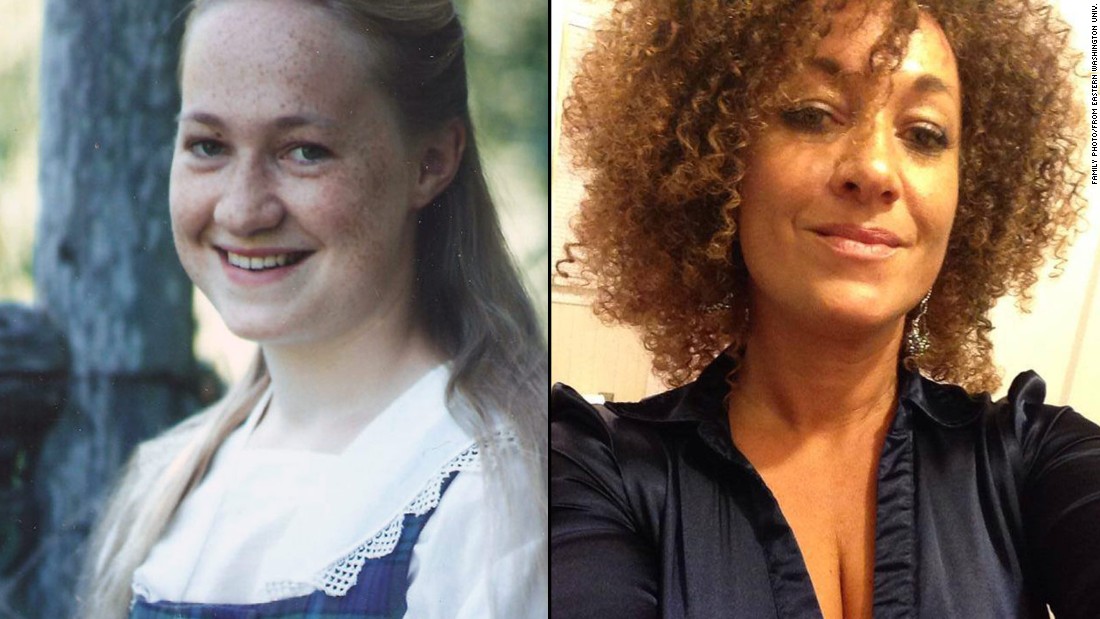
Dolezal as a white and black woman. Retrieved from CNN.
Let's start with the facts (or as close as we can get). Dolezal's parents are Caucasian and her heritage is made up of German, Swedish, and Czech ancestry. She went to Howard University and then got a job in Africana Studies at Eastern Washington University and became a chapter leader in the NAACP in Spokane, Washington. This is a relatively uninteresting history, even for a white person. There are no rules about who is allowed to teach what type of courses and many white people have been prominent actors in the NAACP. White women have taught courses about black women and men have taught feminist theory classes. Academic knowledge about these subjects is not exclusive. Of course, there are benefits to having professors who can address these perspectives from a particular standpoint, but having allies address these topics is also beneficial.

What, then, is the issue? The issue is that Dolezal, despite being a white woman, a blonde-haired, blue-eyed white woman at that, identifies and presented herself as a black woman. Dolezal's birth race did not jibe with the identity that she wished to portray, so she performed the identity of an African American. Many people believe that race, gender, and sexuality are social constructs - they are performed behaviors and identities that communicate to others who and what we are. Dolezal decided to perform and go through life (at least for those ten years) as an African American.

Prince Koyangi's first Tumblr post with profile picture. Retrieved from this site.
For those who were as confused as I was by this discovery of a potentially "transracial" person, I am going to walk through my thought process on the matter. I am aware this term traditionally refers to transracial adoption, where birth parents are of a different race than their children. The term was first brought to my attention, however, through the excellent work of friend and colleague, Alex Sastre. She discussed the transracial/transethnic Tumblr case of Prince Koyangi. For me, this term linguistically matches a similar, but different phenomenon in transgender people. I do not wish to make this comparison, at least in a fully equal sense, but I do want to explain the difficulties for people, and perhaps especially cisgender white people, to unpack the trans* identity.

One thing that I initially noted was a similarity in language between how news sites and people on Facebook were responding to Dolezal's actions. For me, terms like "impostor," "deceived," "pretended," "misleading," "lied," and others echoed claims that transgender people are somehow lying or deceiving people with impure motivations. One need only recall the disgusting words of Mike Huckabee in response to Caitlyn Jenner's announcement: "Now I wish that someone told me that when I was in high school that I could have felt like a woman when it came time to take showers in PE." These accusations assume that people are deceitful in their gender identity for the purpose of advantage in some way.

People began to talk about Dolezal in this same manner - that posing as black would somehow benefit her in her job prospects and appointment in the NAACP. A poignant note here is, as others have pointed out, that Dolezal potentially took that appointment away from a woman of color. There are other reports that Dolezal faked hate crimes against her to garner sympathy. Certainly, these are negative, consequential, and deceitful actions. But does that mean that transracial people do not exist?


A friend and colleague, Kari Storla, emailed me the above video by a black, trans*female vlogger, Kat Blaque. I appreciated the link and spent a lot of time thinking about Blaque's arguments. For me, I couldn't get past the apparent hypocrisy - Blaque was telling her truth, but was denying the possibility that Dolezal was telling hers. Isn't it really a matter of personal identity that is not something that any of us can determine? How is it Blaque's or any of our responsibilities to tell Dolezal that she is in fact lying and we are the ones with truth? When Dolezal says, that she "identifies" as a black woman, why do we not take her at her word? Many trans*people discover their identities later in life and some may never transition in an aesthetically explicit way for many reasons such as safety, finances, or personal choice. Dolezal certainly identified as white when she sued Howard for racial discrimination, but perhaps she discovered her identity later in life?

Any way I sliced it, I couldn't see a tangible difference between transgender and transracial individuals, despite a gut instinct that they were different. There are many times when my personal opinion towards something (that Dolezal is crazy and this can't possibly be a thing) is offset by my intellectual musings. There must be a reason to my nagging doubts, right? A small epiphany occurred during a conversation with my partner. We discussed the idea of privilege and how men transition into women and Dolezal transitioned into a black woman. We discussed ideas of passing and that some people can transition into the other gender more easily than others, can "pass" as something they are not. We discussed how I am a Caucasian woman and would never be mistaken for something else, despite having African ancestry. We discussed how people like Barack Obama, Tiger Woods, and even Stuart Hall, will never be anything but black men.

Cartoon explanation of white privilege. Retrieved from this site.
That's when it clicked - transgender people reflect a spectrum of identities. Trans*people identity as male-to-female, female-to-male, gender fluid, agender, and many other evolving labels. But, the idea of transracial-ness is distinctively a privilege of whites. Whites can "put on" and appropriate the culture of other races, and have for centuries. They are able to do this, as Richard Dyer notes, because they are the center, the normal, the non-race. If a black woman adopts a white hairstyle and bleaches her skin, she will never be anything but a black woman. But, if a white woman adopts a black hairstyle and a tan, she can be (and was) perceived as black. This lack of equality, of cross-racial mobility, solidified my opinion. Dolezal is not transracial, she is not a black woman, but a white woman who has appropriated black culture for personal reasons. There is no trans*ness about being transracial, because the privilege is reserved for those able to adopt the races of others - whites. I am still musing about this topic, but thinking through Dolezal's story has enlightened me about the different ways that white privilege functions in today's society.

This post certainly ignores other complicated aspects of this story such as historical racism, biological determinants of race, and blackface. Those are all important points as well that I do not mean to undermine. They did not, however, play a role in clarifying for me why the Dolezal story is so disturbing and yet simultaneously worthy of philosophical discussion. This story will probably engage more people as more facts are learned and I hope that it culminates in more important conversations about race and its tangible effects on life and society. It also brings attention to the unending struggle between the mind and body and the danger of not conforming with society's expectations.

Sunday, May 3, 2015

The Limits of the Human Body: Horror (and) Marathons

The mind/body dualism continues to captivate the attention of scholars. The inherent separation and differences between the two, and yet their interdependence, creates a constant struggle without end. In the past week, I have been occupied with a similar dilemma of understand the mind and the body. The human body is an amazing thing: simultaneously a hunk of weak flesh and bones, but trained and controlled by the mind to accomplish great feats. In the random collection of thoughts that follow, I will connect ideas from horror films, marathons, and the mind/body dualism.

Image retrieved from this site.
I have been working with a friend and colleague of mine, Kari Storla, on a project about bodily trauma and the Saw franchise. The basis of the film is that the main character, John Kramer, learned the value of human life after trying to commit suicide by driving his car off a cliff. His epiphany about the value of life drove him to test others in a series of "traps." These vary widely and are often related to the trauma that the individuals caused to others or used as substitutes for truly living life.

Amanda's Trap in Saw. Image retrieved from this site.
The tapes that describe the traps often refer to the power of the mind to overcome the impending physical trauma. The people in the traps must make a choice between life and death, lauding the power of the human mind to persevere over the temporary physical pain. To keep the body and mind alive, the body must be sacrificed through a conscious choice. The fate of both are linked, for the mind can only survive if it has a body to inhabit.  In Saw, when Amanda escaped her trap successfully, Jigsaw said, "Congratulations. You are still alive. Most people are so ungrateful to be alive. But not you. Not anymore." For Jigsaw, people are not truly alive unless they value and are grateful for it. The survivors of the traps are now more alive in their physical and mental rebirth.

Image retrieved from this site.
By the time this blog post is published, I will be done (whether finished or disqualified) with my first marathon experience. I vividly remember running track in high school and being, by far, the slowest person. Although I was never told to leave the team, the immense pressure to perform well in track meets and the way I was treated communicated my lack of welcome clearly. I was mentally and physically tormented through running; it is an activity of the body and of the mind. On a two mile loop around the campus one afternoon, it started to rain. I had just started running, I was painfully slow, and hadn't ever run more than the length of a tennis court in a row. Everyone on the track team was forced to wait outside for me to finish as I flailed through the increasingly sticky mud and slogged through 2 miles in an embarrassing 35 minutes. The elite athletes, some who received scholarships to college for running, stood around, in the pouring rain, watching me, and waiting, for 20+ minutes. The horror, embarrassment, and shame followed me through college: I was not a runner.
I need this. Image retrieved from this site.
My physical body was stopped by the mental block in my head. Not until my partner encouraged me to start running again did I realize that my body could do these amazing things, if I only opened my mind to the opportunity. Now, whether I have finished the complete 26.2 miles or not, I have accomplished something that my high school self would have thought impossible and insurmountable. The mind dictates the body's abilities and what it can put upon itself. Of course, no matter how ready the mind is, the body must go through training to complete distances of great lengths. But, with the focus of the mind and of the body, united and together, amazing things are possible.

Image retrieved from this site.
I think of ultra-marathoners who defy odds in multiple day races. I think of the great strength of the trans* community when minds and bodies are aligned. I think of people who survive great losses and turn them into positive and empowering experiences. I think of survivors of tragic events such as the Holocaust, slavery, and Hurricane Katrina. People are strongest when their minds and bodies work together. The mind opens up the possibility for the body to complete them.
Image retrieved from this site.
I want to acknowledge that I am not intending to communicate ableism in this post.  I am certainly not the voice for representative bodies and am not trying to be. I think the body is capable of many amazing things, no matter its state or ability level. The unity of the mind and the body allows for incredible accomplishments and the recognition of all types of bodies. I think more media should represent these bodies, such as the Sports Illustrated Body Issue. Many participants of varying abilities will race with me today. I'm also very excited that the 2015 Special Olympics will be held at USC. Burke argued that humans are always working towards perfection, or teleology. However the body is constructed, people will attempt to reach its limits.

Although scholars may have struggled with the intricacies of the dynamic, scholars such as Susanne Langer, argue that they are never truly separated: “all categories tend to have imperfect boundaries” (In Mind 1988, p. 104).

Edit:

Sunday, June 1, 2014

What do Elliot Rodger and Tal Fortgang have in common?

I had previously started writing a piece in response to the Tal Fortgang “check your privilege” article. I wanted to discuss the plethora of space and attention the media (and society) gives to the white, male, cisgender, able-bodied, heteronormative perspective. I briefly stopped working on that article when news of UCSB’s campus attack became public. I immediately thought that Elliot Rodger’s story was perhaps more deserving of being critiqued. This was when I realized the great similarities between these two men (albeit very far away on the violence spectrum) that can be linked to underlying societal de-valuing of trans- and cis- women. I will address these two situations separately before critiquing the reinforcement of hegemony that allows us to avoid blaming ourselves for the rampant presence of continuous threats of rape and death.

For Tal, being told to “check his privilege” is the worst part of his college experience. Tal’s rejection of his inherent privilege denied the negative experiences of others (at college or elsewhere) of racial discrimination, violence, and sexual assault. The stories of so many women, especially transwomen and women of color, are forever swept under the rug, but the whining of a Princeton-educated, non-struggling story of Tal are lauded as examples of how society is forcing white people to feel guilty “just for existing.” It is quite disheartening to know that one’s story will not be believed simply because one does not have the access to media forums in which to express them. Or, even when those stories are told, they are often the white, cis-woman perspective. Or, when women are threatened, we still rely on the charity of men to raise the alarm and offer suggestions.

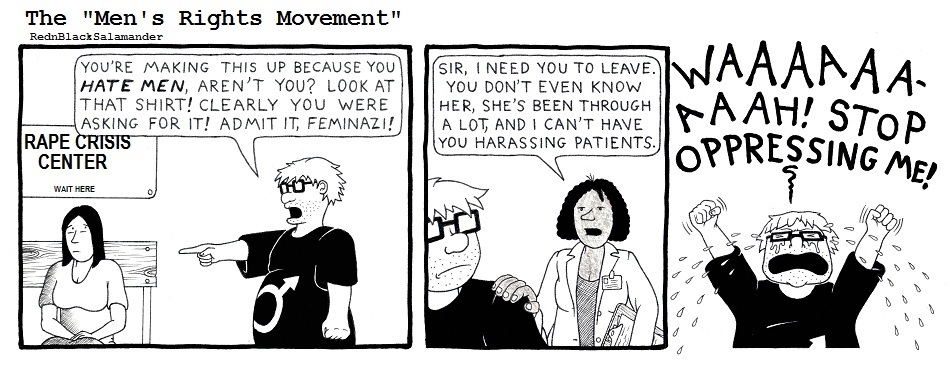
I praise the strong, powerful women at other institutions, such as USC and Northeastern (my current and previous institution of higher education) that have shared their story and fought back against institutions that deny women the right to say no, and their legal recourse against perpetrators. I was not strong enough to tell my story. Even with my high level of privilege, I was terrified of the consequences of reporting my sexual assault by a trusted friend at Northeastern. The word “survivor” never rang true for me. “Survivor” would imply that I had faced a natural force, like a tsunami or a disease, and overcame the event and devastating effects.  I didn't, though. I was faced with a human force, a man in complete control of his actions, a friend, who I had given my trust to, had made a conscious decision to act, devalue our friendship, and violate my body. This is, unfortunately, the story of so many women in collegiate settings, but so few are given the space to share their stories, or feel that they can freely and without consequence equally access our rights.

Retrieved from this site
Elliot Rodger’s story is also garnering national attention, including his manifesto where he declares his hatred of women and need to enact revenge through murder. Despite such plain, obvious language, some people have come to Rodger’s defense by displacing blame from his white, male privilege to mental illness. One of my colleagues at USC, Francesca Marie Smith, argued that mental illness can be used as an argumentative strategy to undermine the culpable of agents in a given situation. Examining the 2011 shooting of Gabby Giffords, she concluded that a focus on the mental capacity of Jared Lee Loughner derailed larger conversations about the societal pressures and political polarization that may have fueled the attack.

Elliot should not be memorialized, lauded, made a hero, or removed from blame. This was a calculated, terrorist attack on women as a whole because he had been told “no.” He believed he had a right to the female body as sexual property and projected his own shortcomings on the failure of (female) others. People should not watch his videos or read his manifesto: let us not immortalize a misogynist who decided to take life instead of realize the privilege in his own.

Retrieved from this site
These two stories began and ended very differently. Tal has certainly upset people with his lack of awareness and care for the stories of others, but Elliot has murdered. I do not wish to equate these stories; I am not making claims about “all men.” I am instead commenting on the attributes that they share and what this says about our society.

Both are inherently linked to race and gender, because they laud the white, male perspective over all other bodies. Yes, Elliot was mixed race, but there is no denying his feelings of privilege and superiority that accompany this perspective. Both believe in the power of their privileged body to make decisions and that they have the right to remove of agency from others. Tal and Elliot are not allowed to be told “no,” especially not by people of color or women. Tal cannot be told to “check his privilege” and Elliot cannot be denied sex. These are the autonomous decisions of others that put into question the privilege that Tal and Elliot could not even recognize they had (being blind to their own condition and the conditions of others). 

Retrieved from this site
These men are just two chapters in the larger story of a society that allows their privilege to continue unabated, that celebrates and defends them, and that prevents us from looking inward at our own complicity. If it the fault of people who question Tal’s struggle, Elliot’s mental condition, or my inebriation, then society as a whole is declared “not guilty.” We can live in the façade of a world where these events are mere peppered outliers in a properly functioning society, instead of symptoms of a diseased organism. Walking down the street or taking public transportation is an opportunity for women to be yelled at, groped, followed, threatened, or even worse. Even spending time with trusted friends and family members can lead to the violation of the female body. Althusser's police officer defines the power structure and everyone's position in it by addressing someone, "Hey you!" When I walk down the street and am called "bitch" while being grabbed from behind, that also defines me without my permission, reaction, or ability to subvert.

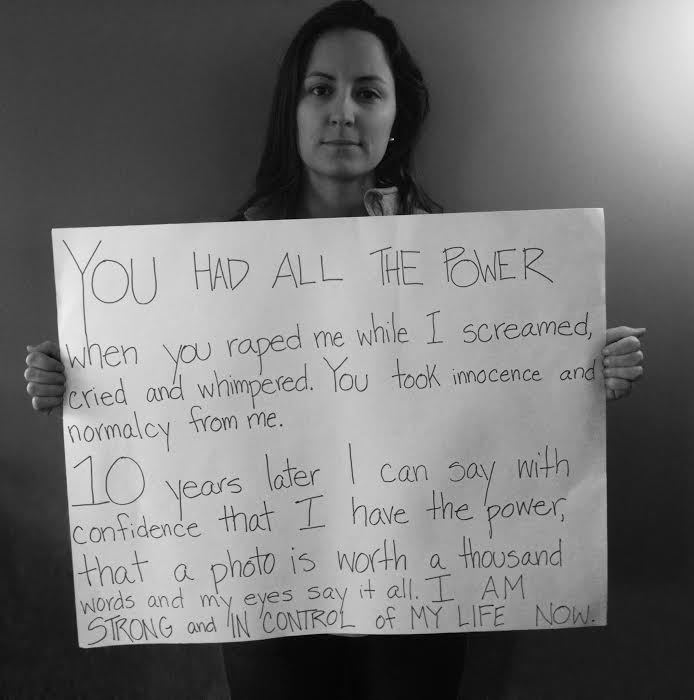
Many more stories of struggle and healing at Project Unbreakable
We cannot let these stories be drowned out by the mob quick to defend the current system. We must give space and attention to those that are fighting for change and awareness of larger issues. We perhaps cannot change the minds of current misogynists or denialists who will resist at all costs the crumbling of the society that preferences them. But, with increased effort, we may be able to usher in new generations brought up in a society that recognizes the issues that face the majority of us and fosters a culture that is actively trying to change it.

Thursday, November 15, 2012

Transgender Awareness Week

In honor of Transgender Awareness Week in Boston, I wanted to discuss some ideas about gender identification. Although there have been great strides in marriage equality and LGBTQ issues, the transgender population and their issues are often left out of the conversation. In part, I find the inclusion of LGB with T a partial misnomer. Whereas lesbian, gay, and bisexual individuals are looking for acceptance based on sexual orientation, the transgender community is more concerned with gender norms and obstacles to identification. For example, the issues each group is concerned with varies greatly. When I lived in Boston, I remember regulations being discussed for allowing transgender people to enter bathrooms that may not correspond with societal norms. This was a large issue at the time, but would not an issue for an LGB individual, who would not be barred from entering a public bathroom.


When I consider issues of gender, I cannot help but think of reading I did for my summer project on the relationship between science and religion. Gender is a scientific and religious construction that defines gender as a binary and by physical characteristics. Even though modern science dictates gender as a more fluid identification, past categories have constricted gender expression into arbitrary labels fueled by religious needs for procreation. The first fact established about a person is their gender. Consider the first knowledge gained by a pregnant couple, even before the name, eye color, or personality, the parents know the child's gender in a male/female dichotomy. This piece of information determines color schemes for bedrooms, gifts for a baby shower, naming conventions and decisions, and expectations for the birth.

Simply put, one's gender is decided for oneself and becomes the defining factor for identity. Incongruity with a personal belief and experience and what has been provided for someone by others can create drastic psychological issues that can lead to destructive behaviors. As seen in the statistics below, transgender people are at risk for certain behaviors and are at risk for being treated differently because of their gender identity. I think it is important to remember how life-changing such an identity crisis may be. People are not simply changing their hair color, but they are undergoing a personal restoration to how they feel is the appropriate, representative, and correct gender, or anywhere along the spectrum.

Image retrieved from this site.
When people do not conform to these gender norms, society's discourse breaks down. Scientific, religious, and public discourse is only beginning to establish terms that break the binary and are truly representative for all people. The inability to express oneself, partially because of hegemonic discursive structures that restrict fluid definitions of gender. The way that society is structurally organized leaves little room for open spaces to discuss the body (e.g., at a doctor's office), naming transitions (e.g., at a university or with the government), or protection (e.g., with the police). The problems that face transgender people are still only on the horizon of LGBTQ concerns, but I hope that in the future, as more strides are made for LGB individuals that transgender issues will become more prominent. Leaders in this area should be lauded as they are paving the way for other people and politicians to become more aware of transgender concerns.