Showing posts with label Classics. Show all posts

Sunday, September 4, 2016

Reclaiming Shakespeare: Bomb-itty of Errors at the Nevada Conservatory Theater

After a long (and busy) summer, I am excited to be back to writing my weekly blog posts. Friday night, I attended the opening of Bomb-itty of Errors at the Nevada Conservatory Theater at UNLV. The play billed itself as the precursor to Hamilton, so I was expecting to hear intricate wordplay and have a great time. Bomb-itty of Errors definitely delivered. I disagree with a recent review of the play by the Review Journal that Shakespeare would not have recognized the source material. On the contrary, I think this adaptation is perhaps more faithful to Shakespeare's plays than faithful reenactments.

Promotional poster. Retrieved from Bomb-itty.com.
While Shakespeare is now considered to be high culture and difficult to understand, but it was once low-class entertainment for the common man. Shakespeare invented words and focused on lyricism and rhythm in his plays. Men played female roles and oftentimes multiple characters. While some people could enjoy the dramatic soliloquy of Lady Macbeth, others could be entertained by a man calling attention to his "woman's breasts." Shakespeare appealed to a variety of audiences in the original performances, not only high society that we sometimes associate with Shakespearean theater.


Bomb-itty of Errors capitalized on these associations and adjusted Shakespeare's play Comedy of Errors to contemporary hip-hop themes. Hip-hop and rap are common vernacular of today, making it a fitting substitute. The flow and rhythm of the rapped dialogues brought back the cadence of the original writing. I was amazed by the amount of information that the 4 actors memorized. They played all of the parts, so memorized at least 1/4 of the 2-hour play's discourse. They also had to remember what position to be in and what outfit they had to be wearing (and sometimes what accent to use) throughout the play. Even with this heavy burden, the actors succeed flawlessly in delivering funny, engaging, and understandable lyrics. Many of the jokes were subtly hidden within the dialogue (such as adding in lines about taming shrews), or in an actor mimicking the style of a famous rapper (I noticed DMX in particular). There were also overt comedic moves, like the overbearing, racist cop and the ditzy sister, Luciana. The variety, however, made this adaptation true to the performances of Shakespeare's days.

Play promotional image. Retrieved from UNLV's Events Calendar.

Three of the male actors played sizable female roles (and the fourth played one momentarily), adjusting their voices, outfits, and demeanor to be good actors but also sources of comedy simultaneously. One of the highlights of the play was the scene where the two Dromios argued about which of the two female characters (played by each of them) was more attractive. The self-awareness was refreshing and elicited a laugh from me even after I thought the play had come to an end. The play highlighted the humor of men playing female roles by creating close contact between the actors and outrageous costumes.

I previously commented on a play adaptation of The Picture of Dorian Gray. That play modeled itself after a rock opera, seeking to emphasize Gray's fall to sin with rock and roll. I found that adaptation fell flat, primarily because of the adjustments made to the story itself. Bomb-itty of Errors, however, seamlessly updated the story to contemporary hip-hop culture, using stereotypes to its comedic advantage. Theater allows for immense creativity and the ephemeral quality of performance. The Bomb-itty of Errors show I watched had many references to Las Vegas and the current election season. The lyrics and jokes could be updated, adapted, even ad-libbed (as many rap battles are) to fit the situation. The play and the actors' words are now lost in the wind, remnants of a contemporary oral culture where lyricism and word play still capture public attention.

Sunday, January 24, 2016

Pride & Prejudice & Zombies, oh my! Literature Classics and Film Appropriation

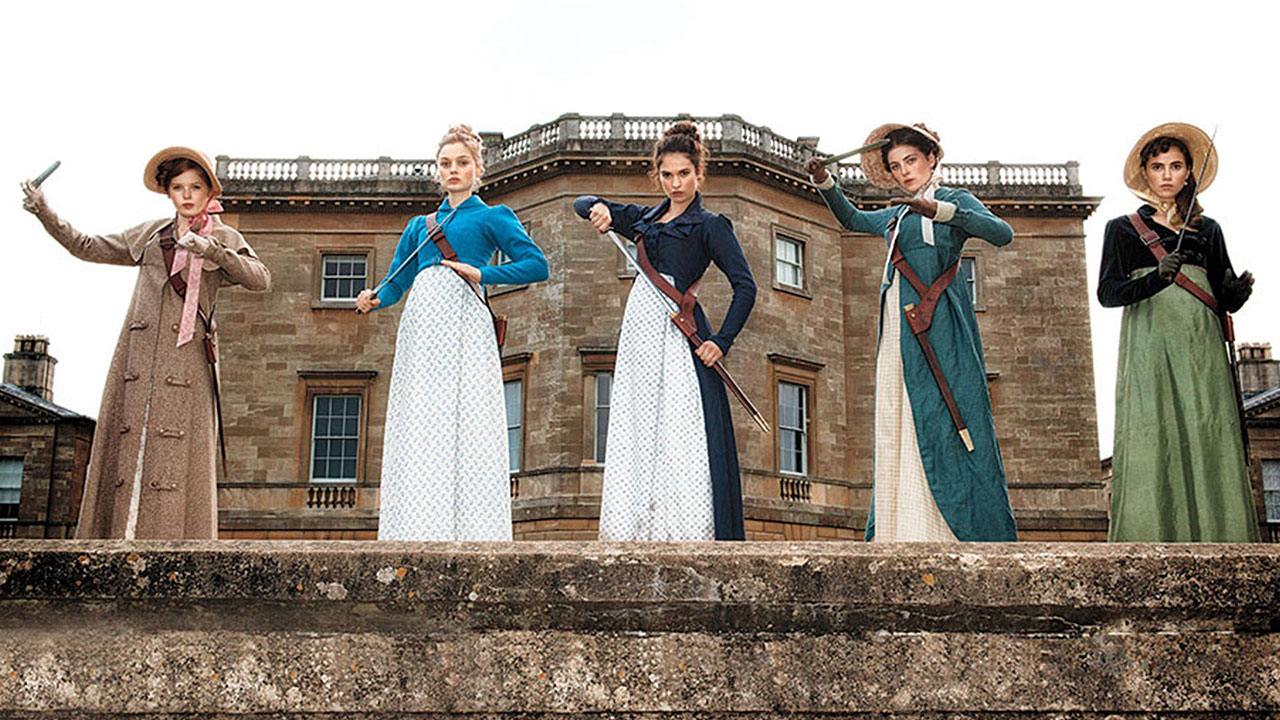
This past Thursday, I attended a film screening of Pride and Prejudice and Zombies, the latest film to be adapted from a book....that was itself adapted from a different book. I remember when the book Pride and Prejudice and Zombies came out, and I thought the book might lure unsuspecting youth into actually enjoying a literary matsterpiece and classic. I greatly enjoyed reading the original and admit that I snubbed the pop culture revival. Upon given the opportunity to go to a screening, however, I put my skepticism aside. As a film, I thought PPZ was excellent, extremely entertaining and just enough of the original to be a humorous homage. I have to say that Lily James and Matt Smith stole the show and created exciting and entertaining characters. This blog is not simply about movie reviews, however, so I feel compelled to discuss some elements of communication and rhetorical theory that, in this case, heightens my enjoyment of the film, and one cautionary note. I will first address what I felt were positive feminist inversions in the film through perspective by incongruity before discussing the future of orality and literacy. Suffice to say, this post will have comments about specific elements of the film. You have been warned.

Image retrieved from this site.
Although many of the fighting scenes became repetitive, I never tired of the many scenes of the Bennet sisters pulling knives out of garter belts or revealing hidden weapons from underneath their dresses. The Bennet sisters were trained as Chinese warriors and often came to the aid of their family and male counterparts. In discussing these scenes, I am reminded of Kenneth Burke's perspective by incongruity, by which two disparate things are united to highlight the differences between them. In PPZ, I found this concept in play along multiple dimensions. The weaponry along the exaggerated feminity of the time period. Large skirts and corsets are made to restrict the movements of ladies, and yet the Bennet sisters move seemingly without pause to eliminate dozens of potential zombie threats. Furthermore, the juxtaposition of 19th century language and style with a contemporary horror fascination reflected the movie's unique narrative. One of my favorite parts was the puppeter-style history book that explained the relationship between the plague and the zombie outbreak - fascinating legitimization of a decidedly impossible occurrence.

Image retrieved from this site.
Perspective by incongruity also laid a stark humor over the entire novel. The imminent zombie horde emphasizes how absurd the choice of husbands for Elizabeth is and the amount of time and attention given to such occasions. Even with zombies attacking and killing people at the balls, Mrs. Bennet and many of the people present are preoccupied with marriage and inheritances. The incongruence of these simultaneous acts highlights the odd traditions of the past and reignites the agency of Elizabeth in choosing her husband, despite the risks. I have recently paid much attention to the rise of feminist themes in horror movies (such as Teeth, It Follows, and Crimson Peak). I am happy to find these themes traversing genres and emerging in a more mainstream film. I hope these themes do not become overblown and trite, and keep their sincerity and calls for reconsidering the roles of women in narratives.
Image retrieved from this site.
I did enjoy PPZ and found many instances of progressive film-making. I do wonder, however, if the creation of such films do not damage readership. When I first encountered the novel, I thought at least people would still be reading - what is there now? I do not mean to undermine film as a medium of communication, but I wonder what the long term effects are of children brought up watching the Lord of the Rings, Pride and Prejudice, Roald Dahl novels, the Great Gatsby, and Bride to Teribithia. Furthermoe, what happens when these film adaptations are perversions of the original text? Excellent movies, to be sure, but I wonder what components of visuality and literacy, minus orality, are lost on the current generation.