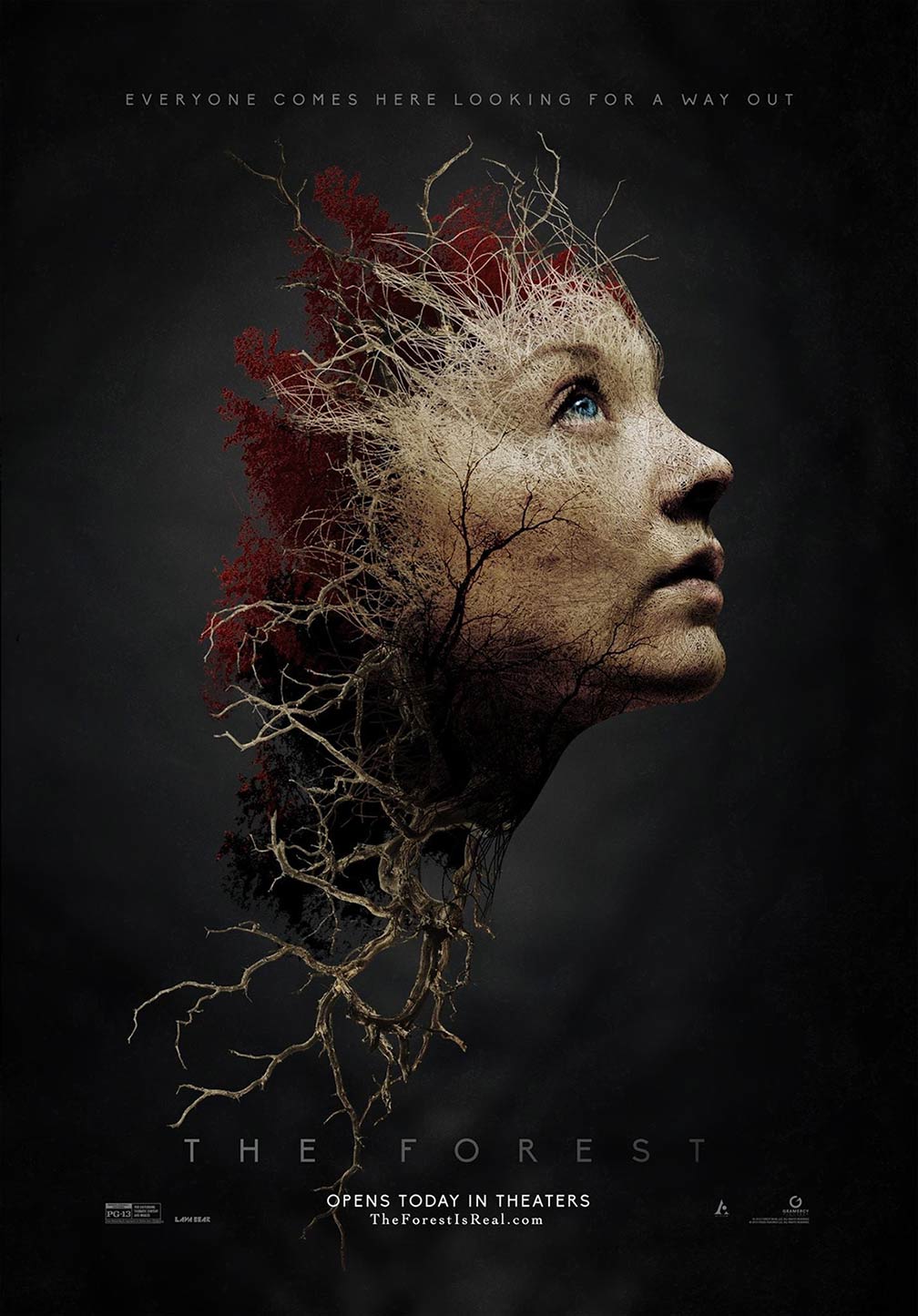
I recently saw "The Forest," a horror movie that discusses the Aokigahara Forest in Mount Fuji, Japan. The forest is known for its association with people committing suicide in the forest. The forest is said to be haunted by yurei, or the ghosts of those who have taken their lives in the forest. As with other horror films that I have analyzed (The Purge: Anarchy, Teeth, Crimson Peak, It Follows, The Visit, and Pride + Prejudice + Zombies), I will first summarize the film and then discuss some elements of the film that bear further critique. For "The Forest," I'd like to address issues of exoticism and Orientalism, responses to trauma, as well as issues of agency and explanation. This review will contain spoilers of the movie's key moments and plot developments.
The movie focuses on Sara and her twin sister, Jess. Sara travels to Japan to look for Jess once notified by police that her sister is missing in the Aokigahara Forest. Convinced that her twin bond tells her that Jess is alive, Sara disregards the warnings of pretty much everyone in the film and goes into the forest. With this incredibly long build-up and character development, Sara finally enters the forest and camps out with Aiden, a man she met hours earlier in a local bar. This is where the visions start happening and Sara is confronted with haunting images of dead bodies, ghosts, and people she isn't quite sure are alive or not. The climax of the film comes when she becomes suspicious enough of Aiden to stab him and leave herself alone in the forest. A final vision consumes her and she re-enacts finding her parents dead in her house with Jess. In this vision, Sara and Jess's father comes back to life and attacks Sara with a death-grip on her arm. Sara slices at her father's hand to free herself from his grasp. At this point, the continuity is not clear to me, so I will piece together what I think happened. Sara, in her mind, escapes her father's grasp and runs through the forest, trying to get back to the path. But, she's actually sliced her own wrists instead of her father's non-existent hands and has bled out. Her soul, or perhaps spirit, running through the forest alerts her sister, who had been camping the entire movie and seemingly unaffected by the yurei, and starts her running towards the path. Jess is eventually led back to the forest's entrance (in part by her sister's yurei?) and is reunited with Sara's fiance, who at first thinks it is Sara that has emerged from the forest. As the two look into the forest, they see Sara's yurei with glowing eyes.
Sara and Aiden in the forest. Image retrieved from this site.
Overall, I was not wowed by the film and would rate it as below average compared to other horror films, although not quite as awful as The Visit. In watching it, however, I was struck by a few details that stood out to me as unique in films I've recently watched and unique to my usual blog analysis. First, I'll address issues of Orientalism and exoticism. Edward Said argued that Western culture patronizes and infantilizes Eastern culture. Western media portrayals of Asia exoticizes Eastern culture and provides them no personal value or consideration beyond gross stereotypes. These inaccurate representations undermine the ability of the West and Western people to understand or value Eastern culture. When The Forest came out, there was backlash in the press that the film painted Japanese culture in a negative light. Many reviewers noted the distinct lack of any Japanese main characters, despite the film happening in Japan (why couldn't Aiden have been Japanese?), and the odd behaviors of many of those that were highlighted. When Sara enters her sister's classroom in Japan, one of the schoolgirls literally freaks out and cannot be consoled at the sight of seeing her teacher again. Although Jess is presumably there to teach children English, the girl is unable to communicate at all in English and instead stammers with cliche wide-eyes and a schoolgirl uniform about the supernatural and ghost stories. Every Japanese person appears to be an expert on local folklore and preoccupied with death. From the woman who keeps dead bodies in her basement and the tour guide who seems numb to cutting down hanged bodies, the movie portrays Japanese people as uncaring and obsessed with death. Many reviewers pointed out the potential for racism and mischaracterization. I must agree that the film engaged in white-washing of a Japanese health epidemic and used the Aokigahara Forest as nothing more than a foreign, exotic backdrop for foregrounding the important, tragic lives of white Americans.
Sara being dragged away by the yurei. Image retrieved from this site.
Reviews also condemned the film for ignoring an important mental health crisis and making light of a serious epidemic in Japan. One review asked, what if a similar film was made about the Golden Gate Bridge in San Francisco, another location that experiences many suicides. Borrowing from my previous points, this conceptualization of Japanese sites as specifically "haunted," exoticizes Japanese culture as being odd, occult, or unnatural. The suicide forest is not addressed as meaningful or an issue for the protagonist to tackle. The forest is merely a "creepy" location for the protagonist to search for her sister. In ignoring the mental health issues inherent in the forest, the movie does touch upon the trauma that Sara and Jess went through in their parents death. The distinction drawn between them is that Jess actually saw her parents' dead bodies while Sara did not. Sara frequently mentions that in not looking, she was not fully there for her sister and could not help her bear that burden. It is then Sara and not Jess who is repeatedly told that she is "filled with sadness," and should not enter the forest. Having seen her parents' bodies, Jess is somehow more fully able to cope with her parents' death. I do not wish to make grand conclusions about what is appropriate and not, but it does strike me as an incredibly interesting statement on trauma and coping mechanisms. There are many different ways to respond with losing loved ones, this case in a murder-suicide. The film seems to argue, or at least, imply that in not fully seeing and acknowledging her trauma, Sara has set herself up for her own suicide. Jess is much stronger against the yurei and the influences of the forest, because she has "faced" her trauma and has overcome it. The messages, however coded and unapparent, may send harmful messages to people coping with their own trauma, who may or may not be seeking actual medical and professional advice to counter or correct media images. While many reviewers advocated boycotting the film for its damaging portrayal of the forest and mental illness, others noted that "art should not be censored."
The very first analytical thought I had about the movie was about the lack of agency given to the people who enter the forest. I was struck by the fact that in showing Sara killing herself based on a "trick" of the yurei, that they were removing agency from everyone else who entered the forest. Perhaps they didn't really want to die, but were similarly tricked. Suicide is truly an awful act, and one that I have familiarity with, but minimizing the decision-making power of those who engage in it left me with a bad taste in my mouth. For the film to pawn off the responsibility from individuals to ghosts and supernatural trickery is to provide an explanation that denies the need for broad consideration of mental health and depression. To invoke Burke's pentadic ratio, the film removes agency from individuals and instead focuses on the scene, the Aokigahara Forest, as mitigating the individual's responsibility for their actions. I'm not saying that we should be blaming individuals for taking their lives, there are oftentimes many influencing factors at play. But, I am wary of a film that seems to reduce suicide to the hallucinations caused by the supernatural. I am reminded of Aaron Mahnke's podcast, Lore. In episode 11, Black Stockings, Mahnke discusses myths about fairies who would kidnap children and adults and replace them with "changelings." In his description of the podcast, Mahnke's describes the human need to create stories "to explain the unexplainable." Faced with mental illness and physical disability, it was easier for people to see others as less-than-human and others, instead of caring for fellow humans who were different. Instead of working to solve the issues that lead to suicide sites, like the Aokigahara Forest, people may excuse the actions using supernatural circumstances. This removes agency from individuals, particularly those with mental illness, and ignores larger societal problems.
As far as horror movies go, I thought this film was full of cliches and added nothing to the genre. It also brought up some interesting rhetorical implications for its depictions of Asian cultures, trauma, and mental illness. I hope that in the future that horror films might take more caution in subject matter selection and treatment of sensitive subjects. I agree with one blogger that art should not be censored, but I do think that in making films, people should be concerned with how their treatment might influence audiences and make statements about other cultures and mental illnesses.
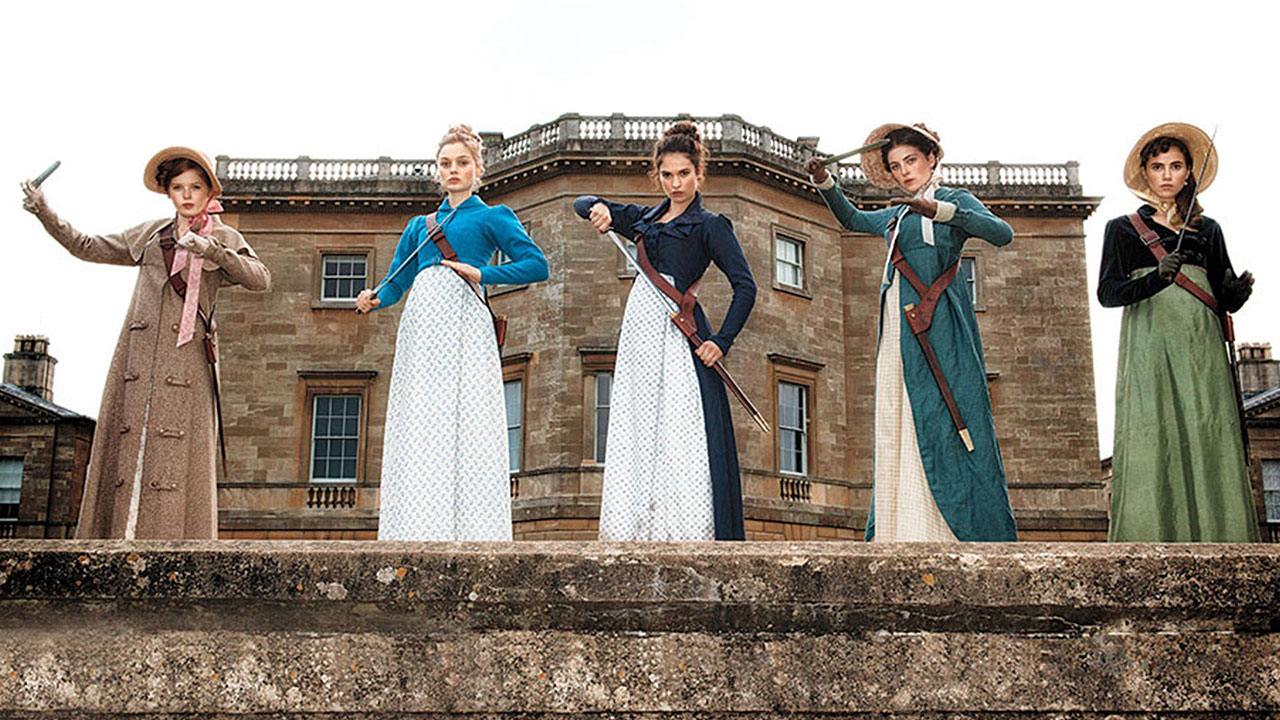
This past Thursday, I attended a film screening of Pride and Prejudice and Zombies, the latest film to be adapted from a book....that was itself adapted from a different book. I remember when the book Pride and Prejudice and Zombies came out, and I thought the book might lure unsuspecting youth into actually enjoying a literary matsterpiece and classic. I greatly enjoyed reading the original and admit that I snubbed the pop culture revival. Upon given the opportunity to go to a screening, however, I put my skepticism aside. As a film, I thought PPZ was excellent, extremely entertaining and just enough of the original to be a humorous homage. I have to say that Lily James and Matt Smith stole the show and created exciting and entertaining characters. This blog is not simply about movie reviews, however, so I feel compelled to discuss some elements of communication and rhetorical theory that, in this case, heightens my enjoyment of the film, and one cautionary note. I will first address what I felt were positive feminist inversions in the film through perspective by incongruity before discussing the future of orality and literacy. Suffice to say, this post will have comments about specific elements of the film. You have been warned.
Although many of the fighting scenes became repetitive, I never tired of the many scenes of the Bennet sisters pulling knives out of garter belts or revealing hidden weapons from underneath their dresses. The Bennet sisters were trained as Chinese warriors and often came to the aid of their family and male counterparts. In discussing these scenes, I am reminded of Kenneth Burke's perspective by incongruity, by which two disparate things are united to highlight the differences between them. In PPZ, I found this concept in play along multiple dimensions. The weaponry along the exaggerated feminity of the time period. Large skirts and corsets are made to restrict the movements of ladies, and yet the Bennet sisters move seemingly without pause to eliminate dozens of potential zombie threats. Furthermore, the juxtaposition of 19th century language and style with a contemporary horror fascination reflected the movie's unique narrative. One of my favorite parts was the puppeter-style history book that explained the relationship between the plague and the zombie outbreak - fascinating legitimization of a decidedly impossible occurrence.
Perspective by incongruity also laid a stark humor over the entire novel. The imminent zombie horde emphasizes how absurd the choice of husbands for Elizabeth is and the amount of time and attention given to such occasions. Even with zombies attacking and killing people at the balls, Mrs. Bennet and many of the people present are preoccupied with marriage and inheritances. The incongruence of these simultaneous acts highlights the odd traditions of the past and reignites the agency of Elizabeth in choosing her husband, despite the risks. I have recently paid much attention to the rise of feminist themes in horror movies (such as Teeth, It Follows, and Crimson Peak). I am happy to find these themes traversing genres and emerging in a more mainstream film. I hope these themes do not become overblown and trite, and keep their sincerity and calls for reconsidering the roles of women in narratives.
I did enjoy PPZ and found many instances of progressive film-making. I do wonder, however, if the creation of such films do not damage readership. When I first encountered the novel, I thought at least people would still be reading - what is there now? I do not mean to undermine film as a medium of communication, but I wonder what the long term effects are of children brought up watching the Lord of the Rings, Pride and Prejudice, Roald Dahl novels, the Great Gatsby, and Bride to Teribithia. Furthermoe, what happens when these film adaptations are perversions of the original text? Excellent movies, to be sure, but I wonder what components of visuality and literacy, minus orality, are lost on the current generation.
This is the final installment of my three series set on horror films and sexuality. My first two posts examined Teeth and It Follows. Each of these films embraces female sexuality in different ways that I think deserve scholarly attention. Teeth creates a monstrous feminine that frames female sexuality to be a tool for empowerment that is often suppressed by male domination. It Follows neutralizes sex as an equalizer between the sexes and removes the stigma of promiscuity from female sexual interactions. In this final post, I will unpack the sexual anxieties present in Crimson Peak (2015). As with the last two posts and my other posts about horror films (e.g., The Visit, The Purge: Anarchy), this post will have spoilers and detailed analysis about the film's key ideas.
To be frank, Crimson Peak was an awkward film to see with my brother. The film addresses incest and the blurred lines of familial love and familial violence. I will discuss the use of incest in the film as well as the romantic aspects of this horror film. I think Guillermo Del Toro has created another horror masterpiece. I do not know if it will stand up to the classics of Pan's Labyrinth, the Devil's Backbone, and The Orphanage, but it does embody an aesthetically pleasing and intoxicating horror story. The main character, Edith, is a timid virgin that falls hopelessly in love with Thomas marries him, and goes to live with him in England. Edith can see ghosts, namely the ghost of her mother, and writes ghost stories inspired by her supernatural abilities. This power is at first terrifying as she finds deformed, blood-soaked ghosts wandering her new home. It becomes clear, however, that these ghosts are warning Edith about her fate and imminent death at the hands of her new spouse and his sister, Lucille. It is revealed that Thomas and Lucille are lovers and have conspired to murder Edith for her father's money. Fighting and blood-stained snow occurs before Edith manages to escape the clutches of the incestuous pair. In what follows, I will bring up a few important points where I find female sexuality explored in interesting ways and sexuality's role in horror. I first briefly address the use of romance in the film, examine the taboo nature of incest, then the character of Lucille, and finally the role of women and traditional gender roles.
Lucille, Thomas, and Edith movie poster. Retrieved from this site.
In Edith's first rejection letter from a publisher, the editor laments that her ghost story does not include enough romance. This small scene was brilliantly added by Del Toro because it sets up the entire rest of the film for the audience to expect romance and not horror. Although Del Toro is the King of Horror and the film was marketed as such, this nearly throwaway line redirects the audience's attention from the ghost story to the romantic plot line. The film is really about Edith's love and, arguably more so, about Lucille's love. The two women have competing love stories that tie them together in a fight to death. Yes there are ghosts and yes there is blood, but the story's forward progress is not fear or anger, but love. Love is also an uncommon theme in horror films; more often it is lust, obsession, revenge, and sex that drives the character's actions. In this move, I think Del Toro does a great service to horror films by reminding contemporary audiences that fear and catharsis is but one aspect of a good story. Indeed, his film's often have the unique ability to incite both fear and awe, horror and hope, anger and sadness.
Del Toro immediately sets up the film so that we are suspect of Thomas and Lucille's intentions. There are secret meetings, unscrupulous attempts to raise money and to blackmail others, and an air of suggestive closeness between the two. At first, I thought perhaps they were married and were using a ruse of being siblings to attract dowries from Thomas's future spouses. The audience's mind, even though offered that they are related, first attempts other explanations to explain their lingering hugs, sideways glances, and Lucille's jealousy. When it is revealed in more explicit detail that Thomas and Lucille are sleeping together, Edith at first cannot believe it and shouts that she knew they were not brother and sister. Lucille responds, "but we are!" Confronted with the information directly before her eyes with knowledge of their deformed child, Edith still reconciles her perceptions with anything but incest. Incest becomes the twist, the plot point that was in front of our eyes the entire film, but we could not yet believe it until it is confirmed by Lucille. Incest is a sexual taboo not often addressed in horror films. It emerged in Here Comes the Devil, another film with a Spanish director, but is not a common media trope. Dysfunctional families and families undergoing trauma are often fodder for horror films, such as We Are What We Are, The Devil's Rejects, Red Dragon, The Babadook, and, of course, Psycho. Del Toro's use of incest and elevating the dysfunctional family to the level of incest draws forth interesting thoughts about how society differentiates between sexuality and love. If Lucille had simply loved her brother without having sex with him, perhaps the implications of their relationship would not be so terrifying.
I think that Lucille could have easily been the hero instead of the villain of the film if her sexuality had been removed from the film by either being Thomas's sister and not having sex with him, or not being his sister. Upon reflection, many of Lucille's actions are ones of pure love and adoration - she murders those who might come between her and Thomas, sacrifices her temporary satisfaction in the relationship to help the family financially, and is jealous of those that compete for Thomas's affection. For example, in Del Toro's other films, we don't fault the mother in The Orphanage for jeopardizing her relationship with her husband in her search for her son. In Mama, we don't question the actions of the lead character for protecting her boyfriends nieces. These familial relationships are honored and understandable, but we do not perceive of Lucille in the same way. Instead, Lucille is evil because her brand of love is taboo. I do not condone incest; it's presence caused me to think about the lines that all humans draw through symbols and communication that separate the sacred and profane. Mircea Eliade argued that religious thought is rooted in human separation between what is sacred and thus revered and worshiped, and what profane or filthy. Much like eating cow if you are Hindu, certain actions and rituals are deemed off limits to remain pious to a particular order. I remember talking in sociology class about how eating human flesh and incest are as close to the two most universal taboo actions in human history, and still they are not universal. Incest is close enough to it, however, that its presence in a narrative immediately defines those who are good and those who are evil. I wonder if this particular sexuality were removed from Lucille, however, that we would hate her so much for her actions. She is fighting for the wrong, most profane, most taboo type of love, whereas Edith's virginity and purity are the foil.
Brother and sister. Retrieved from this site.
These two arguments unfold what I think is the most important part of the film - it's not about Thomas. Although he does receive a good portion of screen time, the film is a war between Edith and Lucille with Thomas as merely a chess piece. You are clearly told through the plot that Thomas has been overwhelmingly influenced by his sister to act as he does and you wonder if Thomas is responsible for any of film's terrors. The audience becomes sympathetic to him as he tries to reconcile his sister with Edith, the new woman he loves. Thomas has no control over the action of the film; even in death he is only a brief distraction that Edith uses to kill Lucille. The female leads trump the "hero" doctor, Alan, who comes to save Edith and only ends up a burden to her as she slowly walks his injured self back to town. The men are ancillary characters to the epic battle between empowered and strong women. They fight for their lives and also for love and normalcy. Unlike the traditional story line of multiple men fighting over a woman like an object, it is Thomas who becomes the target of the audience's gaze as he is pushed and pulled between the two women, unable to control his own emotions and unable to act to protect himself, Alan, Lucille, or Edith. Instead it is Lucille and Edith who take strong, decisive action - they break rules to explore passages, they murder men with their bare hands, they beat and chase each other, they sacrifice their own flesh and blood for what they want.
In these three horror films, I find fascinating and interesting themes about female sexuality and how it can be used as a source of power, can be normalized in everyday life, and can be used to invert traditional roles for women. As I've mentioned in a previous post, one aspect that draws me to the horror genre is its penchant for creativity. Many genres become pigeon-holed in cliche plots that never seem to vary from the boy meets girl or person saves someone from place they aren't supposed to be narratives. In horror, however, I find innovation, inversion, and inquiry into the very aspects of what makes us human, and the different ways that people deal with reality and the supernatural. Unlike other genres, I also think horror addresses sexuality and the line between life and death in unique ways. I'm hopeful that the genre will continue to innovate and push our expectations for what we expect films to do.
Sexuality and horror films often go together. They represent the promise of new life, the pleasure of intimacy coupled with the fear of death and the terror of isolation. Beginnings and endings are ideas I am pursuing in my dissertation. I'm interested in how these concepts emerge together in many contemporary controversies. Horror films are another place where beginnings and endings are merged seamlessly. In this three-post series, I take a comparative look at three horror films, Teeth, It Follows, and Crimson Peak. I find a pattern of sexual anxiety and sexual exploration that pushes boundaries of "normal" sexual behavior. If people haven't seen these films, or don't want to be "spoiled," this is a warning that I will be talking about film details and plot elements. These films have captured my imagination because they play with and expand on the agency and power of females, which I think is a positive (and at the very least interesting) trend in contemporary film.
Post image retrieved from this website.
This poster brings up an interesting correlation between Dawn's last name, O'Keefe, and the
association between flowers and vaginas in Georgia O'Keefe's paintings.
Teeth (2007) is about Dawn, an advocacy speaker for the purity movement at her church. When she is raped by a fellow church member, she discovers that she has vagina dentata or a "toothed vagina." These teeth act on their own accord and work to protect Dawn from her rapist, castrating him in a gruesome scene. At first, she is understandably frightened and considers her plight a result of her sin. After research about herself and these teeth, Dawn has an epiphany. Her enlightenment, as indicated by her name and frequent references to the sun, comes in the form of sexual empowerment, where she can use her teeth to her advantage. Although the teeth are not under Dawn's direct control, they do not attack in a scene where Dawn is enjoying consensual sex. When the same sex scene invites Dawn's scorn and rage, the teeth attack and emasculate him. There are certainly problems in this film that disempower Dawn. Dawn does not preemptively attack or fend off potentially negative sexual encounters. For Dawn to fight back in her unique way, she must first be penetrated and submit herself to the sexual advances of men. At the end of the film, Dawn takes refuge in a man's car, who begins licking his lips and making sexual advances towards Dawn. Knowledgeable that the imminent sexual encounter will result in his castration, she smiles.
Dawn at the end of the film. Image retrieved from Rotten Tomatoes.
This film blurs lines of consent in the sense that Dawn "willingly" engages in certain sexual encounters with the knowledge that her teeth would attack her sexual partner. Despite these issues, Teeth does show a sexual empowered female who explores her own sexuality and comes to terms with her unique strength and eroticism. In Audre Lorde's "The Uses of the Erotic," she argues, "the erotic is a resource within each of us that lies in a deeply female and spiritual plan, firmly rooted in the power of our unexpressed or unrecognized feeling" (p. 87). The erotic is a power that is oppressed and corrupted by dominant power structures to keep women from realizing its power. For Dawn, the religious group is the source of oppression, where her sexual power is "vilified, abused, and devalued" (p. 88). Issues of purity and virginity are non-identities, where a lack of participation (such as atheism or vegetarianism) in an action indicates membership. Lorde argues that this oppression keeps women "in the service of men" as "a distant/inferior" person (p. 88). Teeth offers Dawn the opportunity to reclaim her sexuality and eroticism from men who take advantage of her and only see her as a sexual object. Dawn transforms from a meek virgin to an empowered crusader throughout the film, in part from her increased knowledge about sexuality and the body. In one scene, Dawn removes a sticker (shaped liked a golden sun) from her sex ed textbook covering the anatomy of the vagina. The film makes a strong statement that her religious upbringing and lack of accurate and complete sexual education directly leads to her vulnerable, naive condition. It is through knowledge and an enlightenment religion that Dawn becomes a more powerful female. Lorde argues that when women embrace the erotic, they "rise up empowered" (p. 88).
With that empowerment, however, comes scorn. Lorde said, "women so empowered are dangerous" (p. 88). Women who claim power and dare to challenge the system, as seen in the new movie Suffragette, they receive backlash. The contemporary feminist movement is often accused of grasping for more than women are due, that attempts at "equality" are really clothed attempts at dominance. Similar to arguments about affirmative action, those that oppose feminism truly fear losing their place in the system or damaging what is deemed "normal," and thus the desired order. In a recent r/ChangeMyView post on Reddit, a female redditor claimed that "Men are superior to women." Her reasons were because of men and women's physical differences and also the presence of men in more challenging/intellectual jobs. It's clear to me that even disturbances in an order that disadvantages women receives scorn from women themselves. If everyone is equal, perhaps there is no reason other than our own shortcomings to blame on our failures. Or, if everyone is equal, then perhaps our successes are not as meaningful as others. In a powerful article by Carole Blair, Julie R. Brown, and Leslie A. Baxter, they argue that the academic review process, filled with intelligent and intellectual women, is also a biased space. They respond to an article that ranks the publication count of female communication scholars and rejection letters they received on an earlier version of the article. Their attempt to challenge the ranking article was met with scorn and rejection from both male and female reviewers. They argue that the original report "is a thematic marker of a masculinist ideology and that the anonymous reviews of our original essay are unusually explicit manifestations of the apparatuses that sustain and enable those ideological themes" (p. 384).
Teeth brings up these important issues of female agency and how sexuality can be used as a force of attraction but also creating fear. This film puts an interesting spin on how female sexuality can itself be a weapon, the monstrous female fighting back with the strength of her form. I see many movies that laud the adjusted or upgraded female, such as Aeon Flux and Ultraviolet, but less often do I see films that empower the everyday female to fight back. There are definitely a notable few which I hope to address in a later post. As recent articles have suggested, it is oftentimes females who end up surviving horror films, oftentimes with the help and intervention of others. Teeth, however, empowers the female protagonist to use not only her self, but her sexual self, to survive.
It has been a few weeks since my last post. I've been hard at work at job applications and this post has been particularly difficult to write. This post is about a movie screening of "It Happened Here" held at USC. The movie addresses issues of sexual assault on college campuses and the effects on students there. "The Hunting Ground" is another recent movie that addresses these concerns and I recommend both of them to people interested in delving more into real life experiences and stories of those affected by sexual assault and rape. I will first summarize the reasons why I find films like these extremely important and the rhetorical techniques they used to communicate their message. Then, I will discuss the prevalence of rape myths and why I had to walk out of the Q&A at the movie screening.
IHH and THG tell the larger story of rape and sexual assault that plagues women across the country through the individual stories of a handful of women. The startling statistics that 1 in 5 women are victims of sexual assault during their time in college are presented through the voices of the few. These exemplars add detail, nuance, and a face to the victims of this particular crime. Statistics can often feel cold or unpersuasive - especially if people do not (think they) know anyone affected. There are many reasons why people may not want to share their story, so these crimes may appear anonymously in public discourse - or we only hear the amplified stories of the very few that are false. Kenneth Burke argued that the "circumference" of an event affects its communicative influence. The circumference is related to what counts as the event or environment for an action. For example, if we expand the circumference of "bullying" from only in person to also online and cyber-bullying, the term can take on a whole new meaning. In these films, they seem to be narrowing the circumference, and showing only a few campuses and a few women as stand-ins, or synecdoche, for all college-aged women. The audience is forced to engage and experience the narratives of each woman and, at least in part, sympathize with their situation.
Angie Epifano - one of the storytellers in IHH. Image retrieved from the IHH website.
The two films showed a variety of people affected by sexual assault and rape. There were women who had been drunk, those sober. Some women were at a party, some were victims in their own dorm rooms. Some didn't know their attacker, others were assaulted by friends and significant others. The variation in stories gave the impression that rape and sexual assault happen in many different ways to many different types of people. THG contained a few stories from men who had experienced rape or sexual assault. Overall, the individual narratives united to create a holistic view of sexual assault and college life. The films could have easily focused on the past and fetishized the experiences of the story-tellers. Both films, however, emphasized the present and even the future, choosing to spend most of the films engaged in the reactions of the college administrators and the steps the women were taking to combat future sexual assaults at their universities and across the nation. Descriptions of the assaults were left in the victim's own words and comprised very little of the movie's time. Instead, the films focused on the larger impact of these occurrences and how the women were working to reclaim their voice through campus events and protests (like Take Back the Night) and Title IX lawsuits. I have previously argued, among many others, that documentary films have an immense power to shift public discourse. These films are certainly persuasive and advance an argument, but they also provide real life examples packaged for public consumption. I hope that films like this will help to shift how people talk about sexual assault and rape.
My optimism upon seeing this film and reflecting upon it and THG was almost immediately tempered during the Q&A. I first want to thank Director Lisa F. Jackson for attending the screening and handling two audiences members with aplomb and respect. It was far better than I would have done in that position. There was a couple in the back of the auditorium that dominated the Q&A session. As I told people of the event and even as I write it now, I am convinced no one will believe me. They presented a startling cliche of rape myths and expressed my greatest fear - that the film could not soften the hardened distrust of women and rape victims in the public. This is a warming that the following description of the Q&A may be triggering.
The gentleman in the back of the room raised his hand and was called on with the first question. He started his question with a preface about how he was the eldest brother of four sisters. Thinking back, this should have been an immediate red flag a la "I have a lot of black friends" before racists start talking. He asked Jackson why she didn't include any stories of false reporters and those who lied about their assault. He noted that this would have been more "fair" to share "both sides" of the story. Media representations of controversial events are often framed as debates, where there are two equally balanced sides. Similar to John Oliver's report on global warming, Jackson argued that there are so few false reports that giving them space in the film would not be reflective of the overarching narrative. Indeed, the number of false rape reports mirrors the false reports for other crimes. I groaned a bit at his question and I saw a few people shifting in their seats, but so far, it was bearable.
A few other people asked questions, but my friend in the back wasn't done. He raised his hand and asked whether women don't "disassociate" themselves from the event while its happening and then "forget" in the morning that the activity was consensual. Perhaps, when reflecting on the event, women "make up" a story to make themselves feel better. It was "obvious" from the film that some of the women couldn't remember a lot of details, and that was an indicator that they were lying as opposed to those that would have a factually accurate and complete story. The women had "wanted" the attention initially, but then regretted the potential effect it would have on their "reputation" and thus cried rape afterwards. Everyone had turned to look at him, and I asked, "Are you serious?" The woman a few seats away from me said, "You're victim blaming." This person, sitting through the entire film, seeing women share their painful stories, hearing the statistics about the frequency of this crime, and learning about how the system fails victims, held fast to his beliefs that it was the victim who was at fault.
In response, a brave woman in the front of the room shared her story of assault and noted that there were probably more women like her in the audience as well. She wondered whether it was the larger culture that encouraged this type of behavior and rewarded men for aggressive behaviors. Our friend raised his hand once more and it was all I could do not to interrupt and claim the microphone back for the female voices in the room. As he received the microphone again, a handful of women left the room. The man echoed the concerns of the previous speaker and talked about the powerful force of masculinity over the mind. He argued that men are not at fault at all and it is really their sexual drives, natural to all men, that are at fault. This man was truly a sight to behold. Some of the most common rape myths that pervade our culture and insidiously undermine the stories of those brave enough to speak out. In retrospect, I'm surprised that he didn't ask what the women in the film were wearing when they were assaulted.
Lady Gaga's music video, "Til it Happens to You" about sexual assault
I mentioned that this person was a part of a couple because at this point, she spoke up. She asked Jackson why more women don't go to the cops right away to have their story verified. She said that the issue of lying and false reporting would be eliminated by lie detector tests. I applaud Jackson for ignoring the absurd part of this question and focused on the many reasons why women may not feel comfortable going to the police and how we might create changes in police protocols. The response I wanted to give, but could not muster the strength to, was to say that all women experience trauma differently. Expecting anyone to submit themselves to being tied up in a chair being asked probing questions about their assault shortly afterwards is completely illogical. Furthermore, lie detector tests measure nervousness and heart rate to detect lying, two things basically guaranteed to happen after an assault. There is a reason why they aren't used in criminal justice systems - they are not accurate enough. This woman echoed her partner's concerns that the victim should be analyzed and be on trial for being assaulted.
I was deeply hurt but this couple's comments and had to leave the audience when the man raised his hand again. He was overpowering all of our collective voices and challenging the basic tenets of what I felt was an excellent film. The Q&A experience highlighted for me that there is still a lot of work to be done to change the minds of many members of the public. This films are making important strides, but rape myths and dominating ideologies can be intractable parts of culture.
I've already addressed my opinions on the societal shun of horror films. I think that horror films are much more inventive and experimental than traditional genre films and I wish more of my peers appreciated their subtle depth and creativity. This post is specifically about the second installment of The Purge, which I highly encourage everyone watch. Unlike the original, The Purge: Anarchy is a slick thriller with a moral message about class, race, and oppression. I will briefly discuss the horror aesthetics in this film (and its original) before discussing this interconnected themes of hierarchy and exploitation. The cultural scholar and common person alike would greatly benefit from exploring these themes on the silver screen (even with a bit of gore). It may not need saying, but this post will contain spoilers of both films.
The Purger: Anarchy Trailer. Retrieved from YouTube.
The first film was typical of its genre. There were cliche pop-out-from-behind-a-corner fake scares, misdirection, and a dearth of larger meaning than the human urge to kill. The film centered around the near future where a government has issued a 24-hour lift of all laws allowing society to "purge" through murder, robbery, etc. This results in a lower crime rate through the rest of the year and a boon in sales of home defense systems. The first film followed a family that had a break-in in their home after the young son tried to save a man being hunted in their neighborhood. This film was simply okay, an interesting idea poorly executed and mostly abandoned for the cheap and easy scares. I almost didn't go see the second film because of my disappointment in the first. I'm very glad that I didn't miss it.
The Purge: Anarchy focuses on the streets that are ravaged by roaming bands of vigilantes and the mysterious presence of military and government forces patrolling the streets. A Malcolm X type figure (Carmelo) becomes a prominent character who preaches that the purge is a government tactic to eradicate the poor (and subsequently, minorities) in order to keep the crime rate down during the year. We find out during the film that the government is targeting low income neighborhoods, kidnapping people, and performing genocides of the lower classes. One black woman and her daughter are saved from this government kidnapping by a (white) purger looking for revenge on the man who killed his son in a car accident.
Two scenes stand out for me as particularly shocking and expressive. The father of the woman saved from government forces disappears early in the film. The daughter and granddaughter find out that he has sold himself to a rich white family for $100,000 to allow them to purge in the safety of their home. The white family has literally bought a poor, black body as if it were property, to ruthlessly destroy and exploit it without exposing themselves to the risks of the purge. There is a poignant frame where the nuclear family is standing around the father wielding weapons in their pristine suits and plastic-wrapped living room of expensive art. Their massacre of this man will be their new art, their secret expression of white privilege that protects their valuables, status, and domination over the lower class.
Auctioneer before the hunt. Retrieved from this site.
The second powerful scene is shown briefly at the end of the trailer where a woman in a blue dress announces before a seated group of people in fancy dress that they have collected the last purge of the evening. The main characters are released into a pitch black maze where the highest bidders enter with night vision goggles and weapons to hunt them down. There are obvious echoes here about the purchasing of bodies as in the previous scene, but it also echoes themes from Richard Connell's "The Most Dangerous Game." This short story is about a stranded man looking for protection who ends up being hunted down for sport like an animal in a rich man's safari game. Humans being the most cunning (and thus perhaps most satisfying to kill) animal provides an elevated type of sport than the traditional hunt. Indeed, the highest bidders in The Purge: Anarchy wear traditional British fox hunting uniforms as if they were out in a normal hunting activity and not viciously murdering other people. In a quite satisfying ending, I will simply mention that the group manages to get a hold of one of the night vision goggles and weapons, making the hunt more of a fair fight.
Both of these scenes highlight for me the interrelationship between class and race and the exploitative powers of a system that only reifies the lasting order and undervalues the lives of poor and minority bodies. In this film, both the rich and the government specifically target and kill blacks, the homeless, deviants, and youth in an attempt to eradicate and "purge" the society of perceived evils. This movie asks us all to reflect on who is in power, what oppressive acts are they committing, and who does society really serve. Both the murderers and the white families who can afford to lock up and hide are complicit in the exploitation and eradication of people deemed unworthy of life. Just as a police officer in Ferguson made a decision of life and death for Michael Brown, The Purge: Anarchy asks us to consider who is in control and what those consequences are. Who gets to define who is worthy of life? Who gets to define how punishment is laid out? Who is in control of our streets, our livelihoods, our identities as targets or as civilians?
Carmelo, leader of the anti-purge movement. Retrieved from this site.
Carmelo is trying to start a revolt against this system. He targets the rich, white, and off-limits bodies to upend the genocide of the poor and the minorities. His tactics are in part successful, at least in saving the lives of the main characters, but his ultimate goal is left unfulfilled. Will it take violent revolution to change the system? Can violence itself do anything but reify the use of violence as a peace-keeping tactic? If anything can be learned in the current state of Ferguson, it is that the tensions between authority, race, and class run deep, and define for entire groups of people their ability to claim a place on this earth free from fear and death. That is unacceptable and violates the very basics of human rights. The Purge: Anarchy brings these themes to life in an exaggerated thriller that asks us to ponder our own situation: how far off are we from this being our reality?
Sitting in on a class on media and religion, I was shocked to hear student responses to the question, "how would you describe this atheist?' The responses such as sad, angry, evil, cynical, and confused described Dr. House on the TV show House. We had just watched an episode where Dr. House is faced with a potential miracle where someone comes into the hospital hallucinating that an angel told him to go to the hospital. Finding that the illness he had did not include hallucinations as a side effect, there are implied themes of potential truth behind the patient's visions. Throughout the episode, House remarks negatively towards religion and the patient's employment as a priest. His cynicism and complete disdain for even considering religious explanations is highlighted prominently. I cannot fault the students for describing Dr. House in these ways. On the show, he is portrayed as a curmudgeon who is cynical and removed from meaningful relationships. What hadn't occurred to me until that moment is that this TV show may be communicating that these are qualities of atheists as a whole, with Dr. House serving as synecdoche.
I began to see this cynical portrayal as a pattern. I attended a play titled, "Freud's Last Session" which details a fictional therapy session between Sigmund Freud (a prominent atheist) and C. S. Lewis (the author of the Chronicles of Narnia and converted Christian). Freud is presented as a old, cynical man who has little left to live for and takes much pleasure in undermining Lewis's belief. Lewis, on the other hand, is presented as youthful, moving quickly around the stage, and speaks with hope and optimism about the world. The two are foils, dichotomies of one another, religious belief only one aspect of this dichotomy. Though they are presented in a type of balance, the implication is that when Lewis leaves, he leaves Freud to die, set in his ways, and without religious comfort in his final hours.
I would also like to point my readers to this film (trailer below), which presents a fictionalization of an encounter of a student with a professor who asks students to argue against God's existence. When the student challenges the professor, he makes the student debate him. What is most revealing about this trailer (in addition to the appearance of the stars of Duck Dynasty) is the exclamation from the student, "Why do you hate Him? Why do you hate God?" This exclamation reveals a disconnect between actual atheism and the perceived attributes of atheists. If someone is an atheist, they do not hate or have emotions towards God; He does not exist. It would be very hard at me to be mad at a unicorn, Big Foot, or people yet unborn. These things do not exist, so emotions cannot be directed towards them. People who believe in God or religion sometimes perceive atheists as jilted followers who have somehow been wronged and now take vengeance upon God by being atheist.
These three examples provide evidence of a potential theme of representing atheists as stereotypes of what we might call the Scrooge trope. Curmudgeons, only concerned with the material, dismissing happy emotions, hope, and relationships in favor of cynicism, solitude, and pessimism. Media effects literature might encourage me to conclude that these pervasive themes may be influencing the general public in their repeated and frequency consumption of media messages. Though these are fictionalizations that cannot be faulted for narrative short-cuts or simplifying characters. I believe it is harmful, however, to creating a more integrated and open space for people to "come out" as atheists. Though atheism is on the rise and secular humanism is becoming a prominent philosophical worldview, much of the perceived "Culture War" is really Christian and faith-based groups trying to isolate and legislate against non-believers. In a country where some states still hold laws against atheists holding public office and a world where they can be killed for not believing (Oh, look! It may have even happened in Texas), these media representations are performing even more harm upon the image and presence of atheists.
Many great scholars before me and currently have performed more extensive inquiries into the nature of cyborgs and the growing intersection of humankind with technology. My interest has been piqued in this topic tangentially, as I have interests in the use of technology for information gathering, dissemination, validation, and power. Inf/using technology in our daily lives is simply an inevitability that communication scholars must address, and cyborgs are an interesting "end product" in my mind. The cyborg represents a unity between humans and technology, faults and flaws permanently mended by technological advancements and prowess.
Because the cyborg, for the most part, only exists in fiction, much of the cyborg's mythology comes from media representations. The relationship between humans and technology range from fully robotic operation with human appearance (e.g., The Stepford Wives) to humans with technological modifications (e.g., Planet Terror) with traditional definitions of "cyborgs" operating near the halfway point (e.g., the Six Million Dollar Man). They key appears to be integration, where a character has equal or mostly equal human and technological parts that operate as parts of a unified whole. Someone using a gun (i.e., picking it up and using it) is quite different from having one functioning as a leg and being able to fire it from internal signals instead of pulling the trigger.
After some pondering (and heated discussion with my significant other) about the nature of cyborgs, we also reached a conclusion that cyborgs are not merely people with technological parts (e.g., a person with a pacemaker), but this technological addition must perform a fundamentally inhuman task. Iron Man, though he has a metallic plate protecting his heart, the addition of this technology does not provide him inhuman strength, power, or wit (that's just Robert Downey Jr.). Will Smith, however, in I-Robot, does have robotic additions that give him extra strength and powers, like the superhero that Iron Man is. Instead of a suit that can be taken on and off, true cyborgs have integrated technology with their human bodies to advance the form beyond what was previously possible.
The thinking about cyborgs began with my viewing of The Amazing Spiderman, where the antagonist has lost a limb and pines for its re-growth and repair. Whereas he believes the solution lies in cross-species DNA, the attempt to achieve this ends spectacularly well, a la The Fly. When I think of his pining over perfection, and yet the inability to consider a prosthetic arm, it echoes my feelings above that the functionality of the cyborg is the key. A prosthetic arm would perform basic functionality of an arm, but to replicate it perfectly and to extend its strength, a robotic replacement would be needed. What Dr. Collins realizes is that in his search for perfection, he must replace the entirety of the human body, for it is weak and vulnerable. In his transition to a lizard-human hybrid, he becomes similar to a cyborg in that his human form has been replaced with stronger and more powerful parts to complement the human form.
A live example of the cyborg may be found in Neil Harbisson, a color blind person who used a prosthetic eye piece to hear colors. Though he sees colors in shades of grey, the eye piece translates each types of color, including its shade and vibrancy, into sounds that he can understand. He is attempting to have the eye piece surgically attached to his spine, fully integrating the eye piece to his human form. There's no need for me to define him as a cyborg, he's done that already.
The Cyborg Foundation that he founded is the first organization working to defend cyborg rights and indeed encourages people to embrace technological additions. One of their listed aims is "to extend human senses and abilities by creating and applying cybernetic extensions to the body" and they describe their missions statement as "helping people to become cyborgs." This is quite a radical step in theory but these changes are already beginning. Consider the Futurama episode "Eye-Phone" that made fun of the attachment that people have to their technology by implanting one's phone behind the eye socket. Now, Google Glass is in its "explorer" mode and may soon become a normalized part of our technological experience.
In the future, cyborgs may become the new human rights campaign. Whereas in the past, people have been dehumanized based on the color of their skin, their choice of religion, and their sexuality and partner preferences, the future may hold civil rights battles on behalf of cyborgs and their definition as more than/human. If the past battles were about defining humanity in terms of property, voting, and marriage, then future definitions of humanity will surely be tested.