Showing posts with label Zombies. Show all posts

Wednesday, September 26, 2012

The Apocalypse is Near, the Only Question is How?

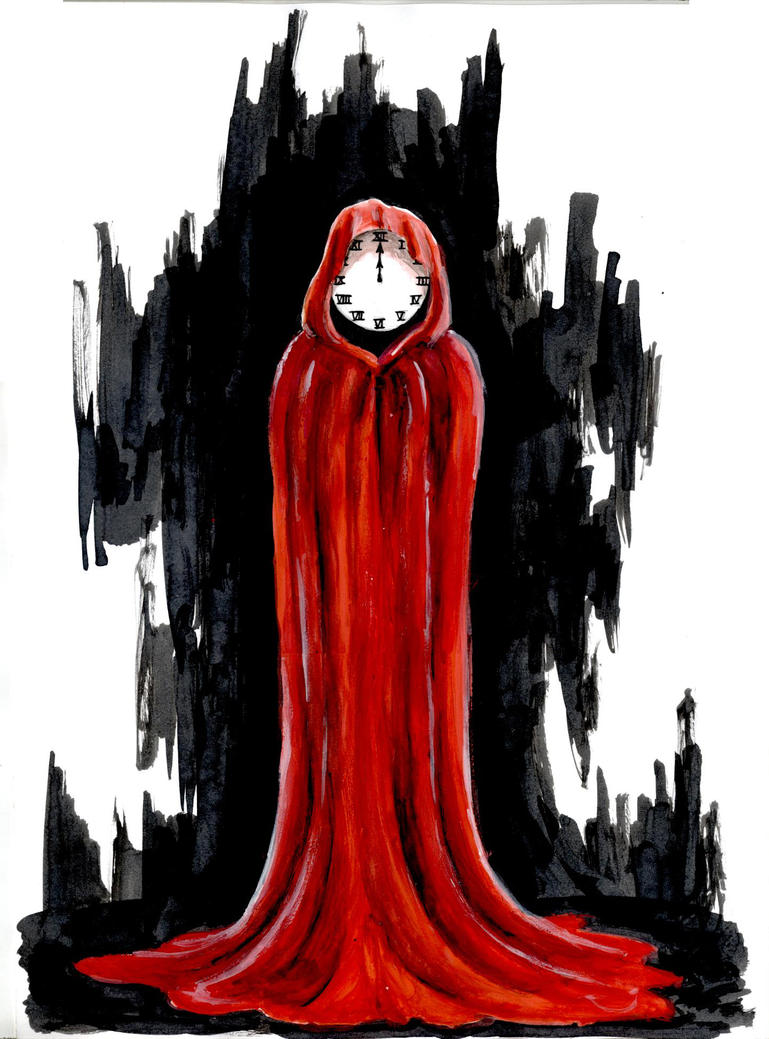
Tick tock, tick tock, tick tock. The clock has been an immutable symbol of life, with each second passing signifying the unstoppable journey towards death. When our time will run out is a mystery, but its inevitability is universally known. In the classic Edgar Allen Poe tale, "The Masque of the Red Death", even the rich and powerful Prince Prospero cannot hide from the ticking black clock of death. For time ends for all of us, and the fear of death, the unknown, the uncertainty of its timing, has played an important role in the creation of laws, social structures, and mythologies.


One representation of the connection between time and death can be found in the Doomsday Clock. This large, symbolic clock is a measurement for how close the world is to destruction, annihilation, and the apocalypse. Its initial intention in 1947 (created by the Bulletin of Atomic Scientists) was to measure the likelihood of nuclear war with 7 minutes to midnight the original time. Using midnight and the tolling of the clock as the endpoint to the countdown, the clock does not move constantly as a normal clock would. Instead, the hands are moved closer and farther away in response to certain actions and occurrences in the world. For example, the clock moved to two minutes to midnight in 1953, during the height of the Cold War. Despite its original symbolism, the Doomsday Clock now responds and moves in accordance to not only nuclear threats, but other apocalyptic threats such as nuclear energy, climate change and malicious technologies. The most recent move from seventeen minutes to five minutes to midnight reflects a topic previously discussed on this blog: climate change. Citing research about the consequences of climate change, the Doomsday Clock moves nearly as close to imminent destruction as under the threat of nuclear war.

The symbolism and rhetoric of the Doomsday Clock makes the comparison of climate change to nuclear war, legitimizing the threat by equating them. To consider the threat from climate change as equal to as as dangerous as nuclear war is a powerful rhetorical statement being made by the BAS. Whether one agrees that climate change should be included in the Doomsday Clock or not, the idea that the end is near is a belief held by many people worldwide. A recent poll shows that 15% of the world population believes that the world will end during their lifetime. Interesting to note is that one's belief in the apocalypse happening in our lifetime is negatively associated with education level. The implications of this could be as simple as those with less education are more likely to be persuaded by alarmist or apocalyptic rhetoric that answers their questions about life and death. This is a relationship that might need further explication and research in another post, but the finding in this study is an intriguing point. Overall, one in seven people believe in the impending apocalypse, and though these percentages fluctuate across nations, the tendency towards apocalyptic thoughts is a global phenomenon. That is to say, it is human to worry and be anxious about death, believing that the end is always near. The range of how the apocalypse will occur varies.


Some believe that the earth will eventually be consumed by the sun.

Some believe that the rapture will occur, saving religious believers and turning the world into a war-torn wasteland.

Some believe that climate change will become unstoppable, with massive flooding, displacement, famine, extreme weather, and war.

Some believe that a disease or virus will infect the world's population causing massive chaos and death.

Some believe that militant groups or governments may obtain nuclear weapons and begin a domino effect of nuclear war.

These beliefs range widely from the scientific to the religious to the fantastical, but the interesting point is that the end is not debated, only when and how. Just as no one can stop the ticking clock in the velvet room, humankind is aware of its eventual destruction, whether personal or global.


Wednesday, June 20, 2012

Zombie Apocalypse, Religion, and Psychosis

As much as I would want to put all of my Left 4 Dead training to practice on a real zombie apocalypse, the CDC reports that the recent zombie-like behaviors nationwide have no discernible cause. In other words: there is no zombie apocalypse, there are no walking dead, just people acting out currently inexplicable cannibalistic urges. But where do these urges come from? What spurs and incites people to commit such actions? I cannot help but recall St. Augustine's infamous words, "Whence evil?" Furthermore, where does the fascination with the walking dead come from? What do their recent re-emergence in popular culture (possible replacing or undermining the vampire trend) symbolize for the current generation?

The solutions to these questions can be found in the psychology and philosophy that form the base of human action. Although there cannot always be a single answer to all questions, neither do all questions have unique answers. In finding the roots of the zombie rumors, I'd like to explore the news articles covering the events and then propose Freud's neurosis theory as an interesting intersection between religion and madness.

The first news story broke in May 2012 when a naked man, later identified as Rudy Eugene, attacked a homeless man and began to eat his face. Only after being shot by police officers did the attack end with reports of him snarling and acting like an animal in his attack and consumption. The culprit was drugs, hallucinogens such as LSD and "bath salts" can raise body temperatures and cause intense delirium. Drug-induced psychosis, then, is to blame for this zombie-like attack, where a human acts distinctively inhuman and consumes flesh. Traditionally, zombies are considered the "living dead", a person resurrected in a type of half-life after death. The mythology of the zombie has been altered in film, particularly. Whereas traditional representations (Shaun of the Dead, Night of the Living Dead, Zombieland) are still made, there are more plausible (used loosely) variations that are becoming more common. Virus-induced zombie-like behavior is showcased in 28 Days Later and I Am Legend, where people are still alive and human but a disease that alters behavior and attitude. These types of interpretations make the drug-induced actions in Miami a relevant and palpable occurrence of zombies. At least, zombies in the modern interpretation, where anger and disease plague the mind, not the results of re-animation.


Later in that same week, a news story broke about a student at Morgan State University, Alexander Kinyua, who had murdered his roommate and had eaten his brains and heart. The scapegoat in this case was insanity, as documented on the student's Facebook page. Not only did he mention murder and killing in the time before and after the murder, but he was often referring to himself as a warrior and marking himself with war paint. Insanity is thus the culprit for his actions, driving his consumption of the roommate. Information about his past are still unknown, but perhaps inquiry will reveal past trauma or rationale for his obsession with murder that drove him to kill.

Another zombie news story shocked the nation not a week later, where a San Antonio woman, Otty Sanchez, killed her infant son, eating his brains and a few of his toes. Probably the most disturbing part of this story was the report that her actions were taken at the devil's behest. Motivated perhaps from fear, loyalty, confusion, or paranoia, her belief in the devil and his power killed her son by guiding her actions.

The "boy who cried zombie" aspect of these news stories is not the only aspect that links them. Freud would argue that they are all linked by an even stronger, guiding force: repression. Freud argued that underlying, repressed trauma and urges linked from sexual frustration (the stereotypical "Oedipus Complex") causes all forms of neurosis and abnormal behavior in humans. All actions, including religious convictions, are all aberrational behaviors caused by insanity and mental distress. The third story surely supports this case, as her request from the devil was a form of hallucination or psychosis to imagine spiritual callings to commit a heinous act. Instead of religion, the first and second stories were motivated by drugs and perhaps mental instability and obsession with death. Freud would categorize all of these actions (taking drugs, mental distress, and belief in religion) as the same problem: psychotic behaviors. This psychosis spurred these individuals to action because of past trauma and events that encouraged them to engage in abnormal behaviors. The results, a similar urge to cannibalism, are justifiably  linked because of irrational, obsessional neurosis.*

Without the link between them, as argued by Freud, these three events look dangerously dissimilar. Different parts of the country (Miami, Baltimore, San Antonio), different ages (22-33), and different races (2 black and 1 Latina) made up the current zombie/cannibal line-up. The great disparity places different faces and people on the same problem; it is possible for it to happen to anyone, so who could be next? The speculation online and in the general public was so severe that the CDC had to release a report denying the existence of re-animating the dead or a disease that could cause such behaviors. The attention paid to these attacks by the CDC glorifies and recognizes the events, their link, and provides support for speculators.

If zombie-like events continue to occur, the CDC might receive pressure to investigate more intensely, however absurd the idea of it may seem. One thing is for certain, though. If these events happened to multiple people across the nation, from different backgrounds, and different ages, then the link between them is simply humanity. From humanity we have Freud's psychoanalytic approach to the human mind and the relationship between psychotic actions and mental trauma that explains these occurrences. Is the zombie potential within all of us, then?
*I urge anyone interested in learning more about Freud's opinions on religion and mental distress to turn to Daniel L. Pals's "Eight Theories of Religion" (2006). 2nd Edition, Oxford University Press where the above insights were gleaned.