Showing posts with label Climate Change. Show all posts

Sunday, January 17, 2016

Communicating about Climate Change: The Technical and Public Spheres

This semester, I'm teaching COMM499: Public Controversies, a class that I started as a part of a Provost's Fellowship. As a part of the foundational theory weeks (before we delve into specific topics and controversies), we are discussing sphere theory. Sphere theory involves categorizing different arenas where communication occurs. G. Thomas Goodnight theorized three communication arenas, the public sphere, the private sphere, and the technical sphere. I will first briefly explain these concepts before exploring a recent news article that caught my attention on the complexity of the United Nation's Intergovernmental Panel on Climate Change (IPCC) environmental reports. I argue that these reports are not targetting their intended audience, the public, and are instead retaining too many characteristics of the technical sphere. The UN needs to better bridge the gaps between the technical and the public sphere to increase public understanding of the severity and risks of climate change. Removing jargon and becoming more accessible can help remove the stigma of elitism from science and encourage people to engage themselves more with the science.

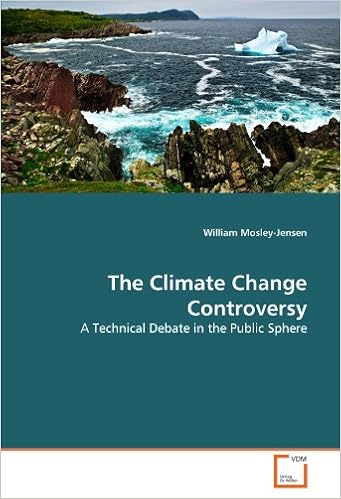
For additional discussion of the spheres and climate change, look up Mosley-Jensen's book.
The public, private, and technical spheres have their own standards for engagement with communication and often happen with different scopes, effects, and speakers. The public sphere is so named because it is the arena where the public, people, and politicians communicate about topics in general, accessible language. An example of a communication activity in the public sphere would be President Obama's State of the Union, which is a speech given to the general public about topics of great impact. The private sphere involves more intimate communication between smaller groups of people often not accessible to the public. Conversations between couples, family members, or employees and bosses would be considered private, because they have limited public impact. These conversations may also include situation-specific language, such as inside jokes or personal references. The technical sphere is made up of experts that have a standard, formalized discourse that often includes specified jargon and expectations. Legal jardon and law journals are an example of technical discourse, aimed at a specific, expert audience with advanced knowledge of a particular field.

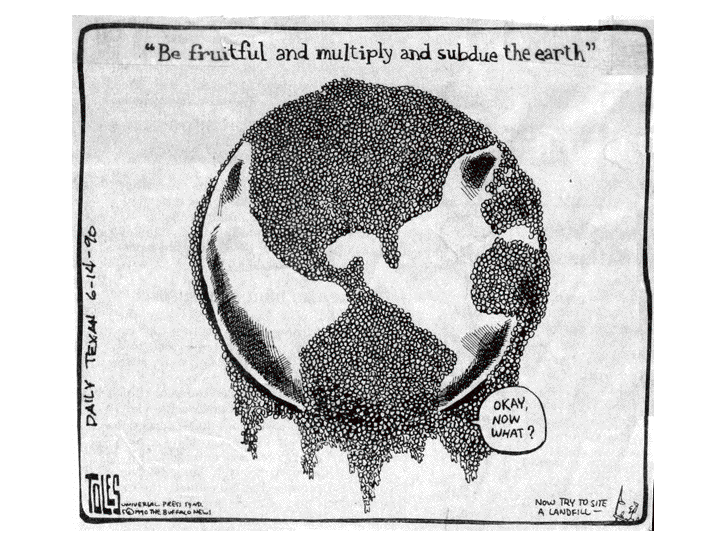
Cartoon retrieved from this site.
In writing climate reports aimed at the general public, the UN is participating in what I call "bridging," where technical knowledge is translated into public discourse. Information created and anlayzed in the technical sphere is transferred to the public sphere. The article in question summarizes the conclusions of linguistics scholars Barkemeyer, Dessai, Monge-Sanz, Renzi, and Napolitano in their 2015 analysis of UN reports between 1990 and 2014. The analysis focused on the readability of the summary section of the reports aimed at policymakers and the public. The authors focused on the complexity of the vocabulary and sentence structure as potential barriers to public understanding. Compared to the readability of tabloid papers (50+ on their scale) and even scientific magazines (30+ on their scale), no IPCC reports surpassed 30 and the most recent barely hit 15. There is evidence that these reports have become increasingly unreadable, making it difficult for the general public to understand the IPCC's analysis and its implications.

Retrieved from Tollefson from the original article in Nature

The article noted that the IPCC is considering adding more members to the board to improve readability or potentially providing better communication training for the summary's writers. In my graduate research on the rhetoric of science and scientific controversies and membership in the Earth Sciences Communication Intiative, I have found that scientists are often more concerned with their own analysis instead of making the content accessible to the public. The jargon used can be off-putting and even unintentionally misleading. For example, my partner is a graduate student in physics and I am often asked to edit his papers. One example of jargon that has repeatedly stuck out to me is the use of "trivial." When my partner calls a result "trivial," he is indicating a specific standard of statistical impact, whereas I read the term with a disparaging and dismissive tone. Because these articles are often written with experts in mind, they also often gloss over important background knowledge or comparative statements that would elucidate the importance of the results. This writing style is appropriate for the technical sphere, but could potentially lead to misinterpretations by the public and can become fodder for climate skeptics.

Image retrieved from this site.
Scientists should pay more attention to how they communicate. Whether that involves creating stronger bridges and training people to go-between, or including communication courses in science programs, Even including more sign-posting types of summaries, such as the chart above, would help clearly and succintly communicate the important take-a-ways for the reports. I think more problems would be minimized if attention to the ways people understand and process information were increased.

Sunday, October 18, 2015

Pope Francis and the Environmental Movement: "The Pope is Pando"

On Friday, September 25th, I attended an event at the USC Caruso Catholic Center hosted by many organizations including Pando Populus. This organization takes it name from the pando tree and describes its significance on its website: "Above ground, Pando appears to be a vast grove of individual trees. Underground they are all interconnected through a single root system. Each part is affected by and nourishes the other. It has survived this way for as long as 80,000 years." The pando tree is a synecdoche for the interconnectedness of all life and an analogy for how we must work together to correct the damage done to our environment.

Image retrieved from this site.
The event was held in support of Pope Francis's visit to Washington D.C. and the release of his encyclical "Laudato Si." The event was religious-themed with the Bishop Mary Douglas Glasspool representing the Episcopal Diocese of Los Angeles, held in a Catholic Church, with speakers from the Muslim Public Affairs Council, Faith2Green, and Interfaith Power and Light. The theme, "The Pope is Pando" lauded the work of Francis as a figurehead and representative of how religion can be a uniting force for environmental activism. I've previously discussed the rhetoric of creation care as an emerging social movement with the potential power to tip the scales in favor of larger influence. While the group I studied was primarily evangelical rhetoric, it's clear that many religions are finding common ground in the spiritual to influence their view of the natural.

Logo for the Pope is Pando event. Retrieved from this site.
In Francis's encyclical, he made repeated mention of an "integral ecology" where life is integrated in a familial metaphor. Common to Catholic and Christian rhetoric, the familial metaphor connects people and faith leaders as fathers, mothers, sisters, and brothers. Francis incorporates the environment in the familial metaphor as shared children in God's creation. He argued that the Earth and nature are female family members: "our common home is like a sister with whom we share our life and a beautiful mother who opens her arms to embrace us" (p. 3). The feminization of "Mother Earth" is a phenomenon I would like to explore in a different blog post. For now, I will say that emphasizing the femininity of nature implies vulnerability in need of our protection and to motivate us to save her as one might a damsel in distress. Francis argued, "This sister now cries out to us because of the harm we have inflicted on her by our irresponsible use and abuse of the goods with which God has endowed her" (p. 3). If we are all interconnected - a united organism - then a threat to one part of it is a threat to the whole. Faith appears to be one way that people are transcending differences in order to focus attention away from economics and politics and onto justice, morality, and the environment.

Sunday, November 9, 2014

Denialism Studies and Re-claiming History

Image retrieved from this site.
I have been a little behind on my blog posts because I have been focusing on my prospectus. Also, last weekend, I attended a conference called, "Manufacturing Denial" which took up time with some great presentations and discussions. I was honored to be invited by the Strassler Center to take part. At the conference, I gave a paper on the similar argument patterns and rhetorical strategies in Holocaust-denial, climate change denial, and evolution denial. The three forms appeal to a unifying framework of conspiracy that allows them to construct enemies, discredit evidence, and shift the burden of proof onto historians and scientists. The article that served as the launching point for this larger piece can be read here. Summarizing comments from the conference can be read here by Dr. Massimo Pigliucci, who I had the pleasure to meet and discuss evolution with at the conference.


Presenting on my panel at the Strassler Center at Clark University. Photo credit to Khatchig Mouradian.
This post will address some important themes that emerged and will place them in conversation with a speech by Martin Luther King, Jr. who spoke out against the Vietnam War. His words echo in the present conflict as relevant and insightful. Similar to the foreign war sanctioned by government with dire, material consequences, denialism is often a pervasive, legitimized, and powerful force that begs us look at history and important rhetorical moments for guidance. 
The series of panels addressed many instances of denial, such as the genocide during World War II, the Armenian genocide, genocide in Rwanda and Cambodia, climate change, evolution, health effects of tobacco, autism vaccines, GMOs, political myths, and others. The variety of opinions ranged between questioning the worth of focusing and responding to denial to trumpeting the great work of exposing denial in its various forms. Some even went as far as to advocate for criminalizing denialism, as some European countries have done with the Holocaust, in all of its forms. They argued that not only are the memories of victims tarnished and 'the truth' being re-written, but also the mental and emotional well-being of descendants and citizens are affected by denialism.

Image retrieved from this site.
In the case of climate change, scholars argued that denialism promotes gridlock in the political system and stymies preventative action. Denialism, thus, is paramount to leading to thousands (and even millions) of preventable deaths. One scholar argued that the genocide of both humans and nature may have more casualties than any genocides in the past. Though I appreciate the candor of these scholars and respect that they are elevating issues such as climate change to the level of genocide in its consequences, criminalization is not the answer. It is quite easy for denialists to take advantage of criminalization as silencing the truth. The University of Utah Press, who came under fire repeatedly for published books that denied the Armenian genocide, has recently published a book by Lewy called "Outlawing Genocide Denial: The Dilemmas of Official Historical Truth" about the dangers of outlawing. Any type of law against denialism must somehow avoid issues of freedom of speech, specifically in America, and that everyone has opinions, however seemingly irrational or misguided they are.  In his speech, King argued that "communism will never be defeated by the use of atomic bombs or nuclear weapons." Taking firm, violent action against those with differing opinions is rarely a way to change people's minds or completely quash those opinions. In fact, a common theme at the conference was the likelihood that being faced with opposing information may encourage a backfire effect that heightens the original belief. War and violence conquers; it does not convince.
One common theme that came up among the panelists and my own paper were that although literal and blatant denial is often most studied by academics and heard about by the public, denial in its implicit and subtle forms can be the most insidious. In the Q&A, an audience member asked if scholars were not misplacing their time and efforts by trying to combat denialists instead of working on other research. I argue with King, Jr., however, who argued that "silence is betrayal." To not address important points of deception and denial is to remain passive and allow for evil to flourish. One of my co-panelists argued that "sunlight is the best disinfectant." Scholarship, in part, is based off of the very values that we are decrying: skepticism. Scholars look critically at the state of reality, question norms, and expose constructed and often subtle workings of power. Denialists occupy an extreme version of this healthy skepticism to where even basic evidence, consensus of truth, and facts are discounted, seen as fabricated, and are questioned. How do we negotiate and foster healthy skepticism and critical analysis without invoking cynicism and isolation?

Image retrieved from this site.
Although King was met with resistance to his speaking out against the Vietnam War and his advocacy for peace in the Civil Rights movement he felt obligated to fulfill his duty, follow his path, and oppose the evils that he saw. King argued that "men do not easily assume the task of opposing their government's policy." At the conference, the Armenian genocide and the Turkish government's attempt to rename the genocide as "the events of 1915" and paint the Armenian victims as insurgents speaks to a national, government-supported policy to change the past and rewrite history. It is not easy to oppose the government and break out of the "apathy of conformist thoughts." It is certainly much easier for many of us as scholars to turn the other cheek and focus on other issues. But when denial of facts and the subsequent gridlock and inaction occurs that threatens knowledge, public deliberation, and the future stability of the world, how can we not act?

Sunday, October 12, 2014

Dangerous Advertising and Disingenuous Controversy

Students of mine have turned in papers this week that critique different advertisements. Their papers have prompted me to think, as I have before (gender in advertising, political advertisements, religion and advertising, interactive advertising, and exclusionary advertising) about different advertisements that propose a cause or campaign instead of a product. My students had the choice of a traditional product advertisement and one form a non-profit. It was much easier to see the direct purpose of the for-profit advertisement: to sell a product. Oftentimes, however, the advertisements for non-profit groups have to be more creative in order to peddle something far less tangible than a car or a purse. These attempts to be innovative can backfire, causing more attention to the advertisement campaign itself than the message it is trying to convey.

Retrieved from this site.
In rhetorical theory, this is called disingenuous controversy. Fritch, Palczewski, Farrell, and Short proposed the term to describe situations when an ancillary aspect of an event occupies attention and the actual message (which itself could be controversial and counter-hegemonic) is lost. Their example was the comments by Ward Churchill where he compared the workers in the World Trade Center as "little Eichmanns" when describing the justifications for the 9/11 attacks. The purpose was to raise questions about the American economic structure and how it constrained and motivated the actions of the 9/11 terrorists. But, instead of this critique gaining media attention, people focused on his comparison between the Nazi bureaucrat and workers in the World Trade Center as offensive, insensitive, and unpatriotic.

Following the Nazi theme, I first want to discuss the advertising campaign that ran in Germany to promote HIV/AIDS awareness. The campaign features graphic images of infamous leaders such as Adolph Hitler, Joseph Stalin, and Saddam Hussein having sex with women. This campaign was eventually pulled in part because of its graphic nature and outrage over the use of these infamous faces in relations with women. The campaign read, "AIDS is a mass murderer" and encouraged viewers to associate something traditionally thought-of as pleasurable with something inherently disgusting and deadly. The graphic depiction in the advertisement coupled with the unique history in Germany that makes the presentation of Hitler challenging, however, overshadowed the consciousness-raising of re-thinking about the dangers of unprotected sex.

Retrieved from this site.
The second campaign I'd like to present is a campaign by 10:10, which is a climate change advocacy non-profit. The advertisement shows various situations where people are asked about their opinions on climate change. A few that declare that they do not believe in global warming or that we should not act towards it are shown exploding violently. The version that received the most attention featured children exploding in their classrooms. The campaign seemed to be questioning the value of dissenters and how those who do not engage or pay attention are ultimately doomed. The violence, especially towards children, however, became the focus of the campaign instead of the message of the future of humanity.


These "dangerous" advertisements risk an audience backlash in favor of capturing people's attention. When the alternative is complete silence or apathy, perhaps a bit of attention-grabbing is in order. There are certainly risks to this type of advertisement. Non-profits may be more likely to risk these strategies because they are not beholden to shareholders or a bottom line. When attention is at an all time premium, with the variety of options for viewing, being offensive or crude is one way to be sure one gets eyes, if not support.

Monday, July 21, 2014

Intergenerational Arguments about Climate Change

The consequences of climate change have become more prominent, but many of the harsher, more extreme consequences will not be felt by this generation. Part of the difficulty in crafting persuasive climate change arguments is about "jumping" the inter-generational gap. An intergenerational argument encourages people to act not in their own interest, but in the interest of future generations. Though most of us alive today will likely avoid most of the harshest effects of climate change, our children and certainly our grandchildren, will not be as lucky. People tend to be fickle, however. They are many things vying for our attention, pulling us in different directions, so anything further off than right NOW seems too far off to be worthy of our time. As Burke noted in Permanence and Change: “A philosopher, if he has a toothache, is more likely to be interested in dentistry than in mathematical symbolism. Communication cannot be satisfactory unless the matter discussed bears in some notable respect upon the interests of the auditor” (p. 37).

Retrieved from this site
How do we get people to care for youth? For animals? For anyone but ourselves? It is not simply a matter of narcissism or selfishness; it is just far easier for people to react based on their immediate surroundings. Thinking ahead requires much more energy than simple observation, putting oneself in a different mindset is difficult, and there can be other, conflicting loyalties that stop one from accepting long-term arguments. One of these arguments is economic: short-term business and profits may suffer when making long-term environmentally friendly decisions. Another complicating factor may be religious beliefs about human's dominion over the earth. Or, it might simply be a political affiliation that often denies science and climate arguments in deliberative spaces (Gauchat, 2012).

Author and activist Zadie Smith. Retrieved from this site
One of the ways to spread intergenerational messages is online. When public spaces may be held to standards of balance or may receive denialist backlash, the internet can serve as a location for the expression of information. A recent article by author Zadie Smith called, "Elegy for a Country's Seasons" addresses the current apathy in the climate change debate and how she might explain our inaction to her granddaughter. This excerpt from the piece is particularly important as the excuses given seem to pale in comparison to the burden that we will leave this young girl and all children as we bicker over money and politics.

"This will no doubt look very peculiar to my seven-year-old granddaughter. I don’t expect she will forgive me, but it might be useful for her to get a glimpse into the mindset, if only for the purposes of comprehension. What shall I tell her? Her teachers will already have explained that what was happening to the weather, in 2014, was an inconvenient truth, financially, politically—but that’s perfectly obvious, even now. A global movement of the people might have forced it onto the political agenda, no matter the cost. What she will want to know is why this movement took so long to materialize. So I might say to her, look: the thing you have to appreciate is that we’d just been through a century of relativism and deconstruction, in which we were informed that most of our fondest-held principles were either uncertain or simple wishful thinking, and in many areas of our lives we had already been asked to accept that nothing is essential and everything changes—and this had taken the fight out of us somewhat" Smith, para. 11.

Written articles may take time to read through and may not offer direct and easy consumption of information (however beautiful and engaging Smith's article is). Another potential solution is to create videos that craft intergenerational arguments. This video is from the Australian Coal Mining Company that has a unique intergenerational plan for halting the effects of climate change.


This humorous video has an important point. It mirrors the argument by Smith about passing the buck onto future generations when we could have done something about it. When we stand back and look at the potential consequences, what are our excuses? Is it really enough to look at dollar signs or listen to denialists when we are faced with the guilt of harming all future life? Dramatic? Maybe. Accurate? Certainly. These arguments are not always successful, but people should try to become more attuned to them. Focusing on the current effects now can be an entryway in to discussing how it will only get worse, and our children will suffer for it.

Sunday, June 29, 2014

Earth Sciences Communication Initiative

I am traveling for the next few weeks to attend the International Society for the Study of Argumentation Conference in Amsterdam. Instead of a longer, more in-depth piece, I hope that you may read a few blog pieces that I've written for the Earth Sciences Communication Initiative. This is a long-running research partnership that I've had that focuses on the intersection of the environment, politics, communication, rhetoric, and advocacy. More information on the group can be found on ESCInitiative.org.

Harm to Animal and Plant Life as Motivation
This article explores the potential threats of climate change to animal and plant life. More specifically, it addresses how these threats are conceptualized as motivation for taking action towards environmental protection. These might not be as successful rhetorical strategies as appealing to direct threats to ourselves or future generations, but they still reflect a potential opportunity for change.

Polarizing/Politicizing the Climate Change Debate
This is a topic I've written about a few times before. The article addresses how political loyalties can trump considerations of environmental protection, making short term benefits more convincing than long term ones.

Creation Care: Uniting Science with Moral Imperatives
In response to Pope Francis I's recent discussions of climate change and environmental stewardship, this article addresses the creation care movement and how it marries environmental concern with a moral imperative to act. You can read my four part, intensive critique of this movement here (Part 1, Part 2, Part 3, Part 4).

Climate Change is No Joke. . . or Is It?
This article interrogates the use of humor as a potential tactic in promoting forgiveness and action. Instead of condemning and punishing people for environmental crimes, the comic frame could allow for a more positive, productive engagement with environmental topics.

Sunday, May 25, 2014

Creation Care Part 4: Where do we go from here?

There have been scholarly discussions over the purpose/value/potential impact that the creation care movement might have. It is tempting to be pessimistic in a political culture that seems to be stuck in the constant polarization between affirmation and denial instead of focusing on efficacy to action. I see some potential in the creation care movement, however. Although the loudest voices we hear are focused on denialism and their detractors who try to debate them, most Americans lie in the middle. I am not concerned with convincing the denialists, but with changing the debate. Creation care could potentially be an avenue to speak the (religious) language of many Americans and people around the globe. The movement shifts the conversation from quibbling over scientific data, undermining science as a field of inquiry, and valuing money over people, to intergenerational arguments about charity, and a deep concern for the poor and nature.

Though I agree that too much optimism will only lead to disappointment, I feel that there are positive steps being taken and creation care messages being presented in the media. Recently, Pope Francis I made a strong statement in support of creation care. This was perhaps his most prominent and widely covered statement directly about the environment. Francis has repeatedly spoken out about the values of charity, has decried the poverty specifically relative to the wealth of some priests. It may come as no surprise, then, that Francis links these values to caring for the environment “because if we destroy Creation, Creation will destroy us.” The full remarks can be heard here, which outline Francis’s emphasis on balance between humans, humans and the environment, and humans and their spirituality.

St. Francis of Assisi, retrieved from this site
Referencing his namesake (St. Francis of Assisi), Francis encouraged his followers, and indeed all of humanity, to be “custodians of creation.” This phrase is interchangeable with the “stewardship” of creation that reflects Genesis 2:15 which calls for humans to “work and take care of” the Garden of Eden (New International Version). The story of Genesis is often considered to be in contradiction with itself, as it contains phrases that seem to laud the role of humanity as having dominion over the world and also phrases that support taking care of cultivating the earth. This reflects a difference in interpretation, which Francis is trying to push towards the latter view where Creation is a gift rather than property to be exploited.

You can order Hayhoe's book on Amazon
Creation care has also been in the news with the works of Katharine Hayhoe, a climatologist from Texas Tech and an outspoken evangelical Christian. She was named to Time's 100 Pioneers list with an article written about her by Don Cheadle. They worked together on Years of Living Dangerously, a Showtime TV series that used celebrities as correspondents to investigate issues surrounding climate change. The episode "Preacher's Daughter," specifically addresses creation care as a movement that could impact policies and public opinion about the environment. At an event with Ian Somerhalder (a correspondent in the Preacher's Daughter episode), he noted that the more people who watch the show, the more the media networks will understand that this is an important issue that real people want real answers to, instead of just pundits and talking heads.


There is certainly language a plenty to indicate despair, irreparable damage, and apathy. But, there is also hope. Hope may live in the gaps of these contradictions, between science and religion as incompatible frameworks, comfort and sacrifice as dichotomous values, and the future versus the end of the world as motivating eschatologies.

Monday, May 19, 2014

Creation Care Part 3: Where Bible Verses Intersect

To continue the discussion of creation care, I will discuss the fluidity of Bible verses. There are many, ongoing discussions about interpretations of certain phrases with sometimes a wide range of translations based on different versions of the Bible. Concerns over contradictions in the Bible can lead to difficulties in creating a coherent picture of one's religious beliefs and identity. McCammack (2007) argued that the differing interpretations of the Bible are not trivial, for adherence to biblical accuracy is of the utmost importance for evangelicals, who make up a growing percentage of the creation care movement, "green evangelicals." 


Retrieved from this blog

A few prominent phrases that appear to contradict one another are Genesis 1:26 and Genesis 2:15. Genesis 1:26 reads, "Then God said, 'Let us make mankind in our image, in our likeness, so that they may rule over the fish in the sea and the birds in the sky, over the livestock and all the wild animals, and over all the creatures that move along the ground'" (New International Version). This verse makes use of "rule over," an equivalent of Genesis 1:28's "dominion" or "subdue", to place humanity in a hierarchical position over that of animals and others living creatures in the world. If humanity (Adam and Eve) were God's most important creations, then it may logically follow that everything else in the world is not worthy of protection or keeping.

On the other hand, Genesis 2:15 reads "The LORD God took the man and put him in the Garden of Eden to work it and take care of it" (NIV). Other versions swap out these verbs for "tend and watch over it" (New Living Translation), "cultivate it and keep it" (New American Standard Bible), "work it and guard it" (International Standard Version), and "care for it and maintain it" (NET Bible). These verse, only a few after the ones above, appear to place humanity within its scene, not over it. Humanity has been given the divine charge of maintaining and caring for the Earth as another of God's creations. There are many more verses that address the relationship of humanity to nature, but these might be the best known.
Retrieved from this blog
Another respondent noted that "dominion is so often misinterpreted as carte blanche permission to do what we want with creation." Dominion implies "that we will be held to account by God for how we manage his creation." Humans will thus be judged for their treatment of the Earth and how kind they were as rulers as one might expect God to be. These responses further support the ability of creation care members to fill in gaps and overcome contradictions where others may perceive them.


Respondents were asked about the apparent contradictions between these two verses in the study and to describe their meaning and compatibility. A frequent response was that people took "rule over" and other verbs of domination too literally, and it might better be translated as calling for stewardship, a kind and tender position of power that cares for the Earth. One respondent noted, "God has created us in His image, and it is this image we are to reflect in our dominion. The second verse describes what this Godly dominion can look like, tending and keeping a garden." For this respondent, the phrases are not contradictory, but complementary. Humanity can rule over animals but also tend to and take care of the Earth; a position of power does not have to be an oppressive one.

Sunday, May 11, 2014

Creation Care Part 2: Where Apocalypse and Action Intersect

This post is part 2 of my discussion of a survey I performed of creation care members. Last week's post focused on the compatibility of science and religion and this week will discuss apocalypticism. Before analyzing answers about member's beliefs, I will describe the phenomenon of eschatology and human belief in end times.

Kenneth Burke discusses the immense importance of beginnings and endings as creating the coherent drama of one's life. Similar to a novel or a poem, the ending makes sense because of the beginning and every beginning implies its ending. Oftentimes, there are clues, patterns, and events along one's life that provide insight into its potential endings. Looking back, people want to have their life make sense, justify choices, and being they took the road less traveled. People have always been interested in human origins even to the point of intense controversy and debate. Endings as well, have been of great interest of public concern. It seems, that people are more interested in the far past and the far future, instead of what's right in front of them.

Looking forward and backward, but not at the present. Retrieved from this blog.
Creation care members, however, do not often focus on the future. They certainly believe in the apocalypse, but they do not have an established eschatology (or vision of how the world will end) that occupies their time or attention. One respondent noted, "speculations about an apocalyptic war and all the rest of this only detract us from the real issues of the world in which we have been placed by God." Nearly half of respondents discussed the purposeful vagueness of the Bible in leaving out specifics. Many responses referenced Matthew 24:36 which reads "But about about that day or hour no one knows, not even the angels in heaven, nor the Son, only the Father." "That day" references the day of apocalypse, or the day of revelation when the return of Christ will occur. This verse is often used when apocalyptic prophecies are unconfirmed.

Billboard after Camping's May 21, 2011 predicted rapture did not happen. Retrieved from this blog.

These respondents noted discomfort in discussing the details of their beliefs. One respondent said, "I don't like to speculate on this. I believe Jesus will return, and He will renew all things. That's all I'm comfortable saying." They all, however, expressed that they had a personal eschatology and were trusting in God to save them. One respondent noted, "I have no idea and Scripture calls on me not to worry or guess when it will end." These responses indicate a shared commitment to the present and an awareness but lack of concern for the future. This appreciation of apocalypse may be in part how creation care members can unite religious belief in (potentially environmental) apocalypse and motivation for action. One respondent argued that thinking about the apocalypse is wasted time: " I'd rather spend my energy trying to make it a better place--a place where life can flourish, rather than focusing on an end that seems unclear."

A few respondents directly linked climate change with the apocalypse. "I do wonder whether climate change will be the physical change to the earth that will usher in Christ's return, simply because it has the potential to make the planet uninhabitable for humans and many other things," said one respondent. Another responded, "I think the climate crisis could end the world as we know it, with life reduced to a much more basic level in various parts of the world, and with great loss of life." A few respondents argued that the Rapture would occur and Christ would judge his followers based on how they treated the world. One noted, "I am committed to the idea that if or when Jesus comes back, there will be plenty of clean power technology around for helping humanity here on earth." This respondent believes in the rapture, but wants to leave the earth in a better environmental condition for those that are left behind.

Cartoon retrieved from the Huffington Post.
Creation care members have somehow captured the idea of apocalypse and used it as motivation to act. Not only do they believe that Christ may judge them, but they are also concerned with those who will not be raptured to Heaven. Although belief in apocalypse is often associated with a lack of action or even the welcoming of climate change, creation care members appear to fall in a unique category. As discussed last week, creation care members have found a way to unite science and religion in a modern natural theology. Now, it appears that they have also managed to unite a belief in the apocalypse with an urge to mobilize and act.

Sunday, April 27, 2014

Creation Care Part 1: Where Religion and the Environment Intersect

Given the tumultuous and often contradictory natures of religion and the environment, the creation care movement has arisen in an unusual predicament. Guided by religion and undeterred by previous difficulties, creation care members seek to unite a moral obligation to the environment with climate change advocacy. This new movement operates in an important gap, often appealing to the youth, that could offer appealing solutions and arguments for grassroots progress on the environment. Interested in the opinions and demographics of this group, I performed an online survey of members on a few creation care mailing lists. In this post, I will discuss a few of the open-ended answers that were particularly interesting. This week, I am examining answers to one question about the compatibility of science and religion. Future posts will look at apocalypticism, interpretation of biblical verse, and optimism about the future.


Political cartoon retrieved from this blog

60 participants completed the survey and 52 submitted complete responses. A few prominent patterns emerged that provide insight into the beliefs of creation care members. These responses could not be generalized to the entire creation care movement, and the Judeo-Christian creation care movements are certainly far different from other iterations such as Muslim or Hindu creation care. But, the prominence of these patterns do indicate the possibility of shared opinions and frameworks for future inquiries. Overall, survey takers were confident about their knowledge of climate change and its consequences. They also expressed a mix of worry and hope towards the possibility of mitigating climate change's consequences.

Creation Care logo from Climate Progress

Survey takers were asked about the compatibility of science and religion. After coding for compatibility, unsure, and incompatibility, there was a consensus among the 52 surveys. All participants responded that they saw science and religion as compatible. Although it is common for scientific and religious frameworks to be in competition with one another, these creation care members viewed them as completely compatible. There are some religiously-oriented climate denial groups, such as the Cornwall Alliance, that undermine efforts to protect the environment. Oftentimes, a belief in climate change is associated with denying God's ultimate power over the apocalypse. Associations with religious identity and conservative politics often encourage thinking monetarily instead of environmentally.

The respondents, though, who identity as members of creation care groups, do not fall along traditional correlations. Participants identified across the political spectrum, but they all agreed on the importance of protecting the environment because of underlying religious identifications. Science and religion both support the potential risks and encourage action. Skepticism and doubt can cause pervasive apathy and negative consequences that creation care has found a way to overcome.

Image retrieved from this blog

One respondent noted that "science and religion are best friends." One commented that "they are completely compatible and if they appear to not be, then there is an error in the interpretation of the religious truth or of the scientific data." This respondent believes that it is not possible for science and religion to be contradictory. Many respondents echoed similar themes about finding God's work within scientific inquiry. "Science is an explanation of how God works and allows me to become more deeply rooted in Him and his beauty." Another simply wrote, "Science is Man's search for God in Nature." The closest a respondent got to noting incompatibility was the statement, "sometimes they are cranky with each other."

Sunday, March 9, 2014

Energy Darwinism: Substituting Economic Benefits with Moral Imperatives

Concerns over climate change has pushed the delicate relationship between short term benefits and long term risks and economic and environmental balance. Recent reports published by Citi (and subsequent national commentary on them) have focused on the idea of "Energy Darwinism." In this post, I hope to explicate this term, relate it to evolution and natural selection as the metaphor implies, and what this says about moral and religious obligations to the environment. 


Retrieved from this blog
As a brief point of introduction, natural selection, or "Darwinism" is the basic mechanism of evolution. From the assemblage of single-celled organisms to humanity, genetic variations accumulate over time and create branches of descendants and all of the life on earth today. The basic tenets of natural selection is that mutations occur in DNA to produce variations which are then competitively selected by the environment, mating preferences, and predator/prey relationships. Interpretations of evolution often forgo the opportunity for supernatural or divine intervention, making it a materialist theory of origins. Thus, evolutionary theory has often been opposed by religious adherents who regard it as immoral and too largely focused on the environment as a guiding force. Alternative narratives often find a role for a deity such as creationism or intelligent design. Labeling evolution "Darwinism" is in part a rhetorical strategy to reduce the explanatory power of evolution to the worship of an individual.


Retrieved from this blog
Although natural selection was not meant to be applied to other areas of life, especially not human life, many people have demonized the competitive spirit of natural selection as damaging to humanity. Social Darwinism is an attempt to label philosophies of human competition with evolutionary characteristics. Energy Darwinism is a new application of evolutionary theories to industry reactions to environmental protection. The concept refers to the economic benefits of businesses becoming more eco-friendly. As carbon becomes more expensive as demand remains (or increases) and supply decreases, businesses themselves will move towards alternative sources in order to remain competitive. There is an irony in professing that Darwinism, which is often levied as a negative descriptor of human competition, aggression, and exploitation is used as industry competition that may drive down prices, encourage innovation for selfish needs for profit/money. Energy Darwinism may seem a simple, logical concept, but there are sinister implications and consequences for such thinking.

If the changing economic environment will change naturally to encourage better business practices, this removes the responsibility of industry to be purposeful actors and the government from intervening in environmental protection. There would be no need for regulations, national laws, and international agreements about reducing carbon and encouraging change because industries will naturally adjust to environmental pressures. Industries are reduced to the world of motion (such as the basic functions of animals), incapable of rational and symbolic action (such as the functioning of humans) that would require thoughtful reflection and intervention. Furthermore, the discussion of environmental protection is reduced to economic benefits, arguably the reason why the environment has been harmed to such extent. Energy Darwinism removes economic structures from culpability and instead worships it as the source of salvation. The system will correct itself, so there is no need for activism or change.


Retrieved from this blog
A better motivation for environmental protection perhaps lies in moral arguments instead of economic ones. Though Energy Darwinism provides hope that businesses might be motivated to act, economic motivations are certainly questionable for immediate actions. Especially considering the Key Stone Pipeline and other important changes happening now, it seems that waiting for industries to succumb to pressures in the economic system will be too little, too late. Religious arguments, however, often propose moral obligations to protect the Earth for future generations and appeals to charity to help those in less developed countries accommodate environmental change. These arguments are certainly more appealing on a basic level of caring for fellow humanity, but it is perhaps overly optimistic to think that these arguments might ever have the persuasive power of dollar signs. 

Sunday, February 2, 2014

The Dangers of Pervasive Skepticism: Creationism, Anti-Vaccines, and Climate Deniers

A recent LA Times op-ed by Pat Morrison addressed importance similarities between science-deniers that affect more people than just believers. Creationists and anti-vaccine advocates affect the collective intellectual and physical health of those around them due to their rejection of scientific evidence. Though this is an important point, it only scrapes the surface of larger issues surrounding pervasive skepticism and the borrowing of scientific authority.

In associating science with faith, deniers of current scientific knowledge present themselves as "true" science. These groups portray themselves as fighting against hegemonic elites that wish to silence minority opposition. Anti-vaxxers claim the right to abstain, equating scientific practice with replacing parental control. Creationists point to gaps in scientific research and claim that science requires a greater leap of faith than religious explanations.

Retrieved from Ape, Not Monkey

 By appealing to scientific standards of skepticism, re-testing, and a progressive search for knowledge, science-deniers can pose as legitimate scientific inquiry. Creationists use this platform to enter science textbooks, school boards, and even university faculty. Anti-vaxxers use this platform to flood public spaces with literature, websites, and non-profits.

Other skeptical groups, such as climate deniers, also appeal to “scientific” facts and gaps in evidence to forestall legislative action. Democratic Senator (CA) Barbara Boxer held a committee about the President’s Action Plan that was met with much controversy over Dr. Judith Curry’s testimony. In this testimony, Dr. Curry misrepresented Intergovernmental Panel on Climate Change’s reports on current scientific evidence and cherry-picked statements of uncertainty about current predictions.

Morrison’s original comparison begins to uncover this larger, pervasive issue of skepticism that ignores scientific evidence and authority, and replaces it with a facade of scientific inquiry. The key mistake in the piece however, is the piece’s ending that states, “Ignorance is curable by education, but willfully ignoring the facts can be contagious — and even fatal.” To assume that education is the missing link between science accepters and deniers is to oversimplify the argumentative frameworks that each occupies.

Those who believe in creationism tie their beliefs to every action of their lives as a guiding force. The origin of humanity is not merely an issue of fact, but of the definition and explanation for one’s entire life. Rejecting creationism or not fighting for its inclusion in schools is viewed as a betrayal of faith and submission to the elites of science that denies alternative explanations.

Retrieved from Vaccine Truth

 Anti-vaxxers are focused on protecting their children and the children of others, an extremely powerful motivating factor. Simply presenting new information or facts may not deter strongly held beliefs influenced by celebrity moms or one’s peers.

Those who deny climate change may find themselves more fiercely loyal to a political party or economic influences than long-term environmental protection. More science and data may fall on deaf ears, as other priorities overshadow and complicate accepting new information.

Kenneth Burke, rhetorician and scholar, wrote in Attitudes Towards History, “The shift to another attitude, requiring a different rationalization, does involve ‘conflict.’ Insofar as we do not ‘travel light,’ we thus assemble much intellectual baggage, and the attempt to reshape this to new exigencies may require considerable enterprise” (p. 184). To replace the baggage collected over one’s entire life with new, contradictory exigencies nearly requires rejection. Introducing new information or repeating old information through education is rarely enough to shift rationalizations for action and behavior.

Skeptics do not “ignore the facts;” they simply do not respect the facts lauded by scientific frameworks. Instead, they replace with their own facts such as the importance of God’s role in human origins, the autonomy of parents over children, and the benefits of short term party loyalty over long term environmental protection. The issue is not, then, ignorance, but of warring frameworks that are currently empowered by a skeptical culture to reject scientific authority. Instead, the focus should be on separating what is science and what is not, giving skeptics a voice, but not allowing that voice to be labeled scientific.

The culture of skepticism is damaging scientific enterprise and Morrison is right to point out the wide effects that skepticism has. The conclusion, however, is not to rely on education, but acknowledging alternative viewpoints while minimizing their influence.

Wednesday, March 6, 2013

Climate Change Skepticism as a Roadblock to Progress

I have previously discussed climate change from the perspective of science and extrapolation to future consequences of global warming. Not only are the predictions highly varied, but the consequences of them range from changing in weather patterns to massive displacement, war, and global food insecurity. The Intergovernmental Panel on Climate Change (IPCC) is often considered the foremost authority on climate change and uses amassed scientific data to create a consensus surrounding climate change, urging countries and politicians to act.


Here is where the problems occur, because policies to limit the effects of climate change are not occurring, especially not in the United States. But why? The answer to this question lies in the polarization of politics and the divide between Republicans and Democrats on the climate change issue. Gauchat (2012) proposed the politicalization of science where over time, the issue of scientific authority has become inextricably tied to political loyalties. Consequently, Republicans and frequent church-goers have significantly lost faith and trust in science as the authority of truth. To accept science as the authority is to abandon other methods of explanation, such as faith, and become disloyal to party lines.

The evidence for this claim is seen not only in the polls that Gauchat analysed, but also from the actions of Congress and the Republicans in it. Funding for climate change research under the Republican chairs of committees and subcommittees has been debated and in some cases cut. In defense of removing National Science Foundation funding for climate change projects, Chairman Ralph Hall (R-TX) said, “the reluctance to engage in conversations with people who have doubts or question the veracity of climate science is at the heart of the wrong doing that undermines trust in climate change science”, thereby legitimating climate contrarians by placing them at even footing with scientists (“Witnesses Highlight Flawed Processes Used to Generate Climate Change Science, Inform Policy,” 2011).

Perhaps most shocking and incredible is the recent ruling by North Carolina that scientists are no longer allowed to use extrapolations to predict future implications of climate change, but can only use past data. This is an exemplar of politics directly interfering with scientific integrity, capabilities, and validity with no justification. Stephen Colbert mocked this bill excellently by noting that North Carolina are blocking scientific inquiry in attempts to hide data that would force them to act in favor of the scientific consensus. Literally restricting science's ability to chart and model future climate change implications further undermines science's ability to predict problems and urge political action. For without powerful, scientifically accurate, and frankly, worrisome data, how are politicians to be convinced to action?

Herein lies another complication: the urgency of climate change and in fact its very existence is wholeheartedly rejected by many politicians, making any attempt to convince them quite fruitless. Climate change skeptics or contrarians simply will not be persuaded by any scientific plea for action, no matter how urgent or convincing. The situation is remarkably quite similar to the idea of the religious apocalypse: for no matter how urgent or persuasive a prophet of the rapture is, non-religious, agnostic, or atheistic people will simply not be persuaded. Faith to them, just as science appears to be for Republicans and church-goers, does not hold any persuasive clout.


The result of this skepticism is the questioning of all scientific data to support policy ideas. Instead of taking action, politicians wait for "conclusive" scientific evidence, which threatens the world's ability to ever fully prepare for the consequences of climate change. Soon, it may be too late to act, and we will reach the tipping point, where there is no longer the opportunity for preventative measures, but only response. How serious these consequences will be revealed only through time, but we know now that the longer we wait, the worse it will be. Soon, it will be too late to act, but the world will cry out the famous words of Macbeth (Act 3, Scene 4):


"I am in blood, stepped in so far that, should I wade no more,
Returning were as tedious as go o'er"

Wednesday, February 20, 2013

The Best of Larry List

After not checking my mail.com account for a few months, I was shocked to find over 3000 emails from Dr. Larry Gross as a subscriber to his infamous "Larry List". These emails are all fascinating and interesting articles that Dr. Gross shares to this email list and can number in the dozens per day. Going through them all finally, I wanted to share my favorite articles. There is really no rhyme or reason to them besides that I found them interesting. Enjoy!


Atmosphere of Distortion
This article discusses the relationship between climate change and daily temperatures. Though climate change  is reflective of long term changes and patterns, skeptics often point to snow and cold weather as arguments against climate change.


DOLLY Data
This map represents aggregated Twitter data on the presence of "beer" (blue) and "church" (red) by frequency and quantity. This is an interesting use of Twitter which echoes my involvement with the Twitter sentiment project at the Annenberg Innovation Lab. Twitter is still a new arena for communication scholars, so I find these endeavors into how to operationalize the data fascinating.


Infinity
This article interests me because of the interesting connection math has between sciences and humanities. Theoretical math has inextricable ties to both physics and philosophy, which this article explores. Especially when one thinks about why we are here, where did we come from, and how do things function, areas such as physics, communication, religion, mathematics, and philosophy all find space to explore the answers.


Sky Monsters
These images are not interesting from a research perspective, but simply because they are beautiful representations of what might otherwise be a normal storm cloud.


Movies in Miniatures
This portfolio of pictures represents (as the artist describes) an intersection between Eastern art with Western film. My interests in narrative make these photographs interesting. Without captioning or explaining, viewers can instantly recognize the scene and thus, the film that the pictures are representatives and icons of the narratives themselves. Despite the difference in style and presentation, the image above is instantly recognizable as the scene from Alien where the creature emerges from the character's chest.


Singapore Airport Art
There have been many attempts at airport art, as a distraction from the banality of airport travel and inevitable delays and lost baggage. This one might be the most successful. It is reminiscent of a lava lamp, with its simple shapes and movements, but hypnotizing and enticing.

Prius Features
This video is just hilarious. The irony in adopting environmentally friendly policies is that you can never truly offset the carbon one produces from being alive. Massive deaths (a la Soylent Green) could be advocated for on behalf of the environment. Funny and philosophical, the perfect Onion piece.


*Images retrieved from websites listed