Showing posts with label History. Show all posts

Sunday, September 4, 2016

Reclaiming Shakespeare: Bomb-itty of Errors at the Nevada Conservatory Theater

After a long (and busy) summer, I am excited to be back to writing my weekly blog posts. Friday night, I attended the opening of Bomb-itty of Errors at the Nevada Conservatory Theater at UNLV. The play billed itself as the precursor to Hamilton, so I was expecting to hear intricate wordplay and have a great time. Bomb-itty of Errors definitely delivered. I disagree with a recent review of the play by the Review Journal that Shakespeare would not have recognized the source material. On the contrary, I think this adaptation is perhaps more faithful to Shakespeare's plays than faithful reenactments.

Promotional poster. Retrieved from Bomb-itty.com.
While Shakespeare is now considered to be high culture and difficult to understand, but it was once low-class entertainment for the common man. Shakespeare invented words and focused on lyricism and rhythm in his plays. Men played female roles and oftentimes multiple characters. While some people could enjoy the dramatic soliloquy of Lady Macbeth, others could be entertained by a man calling attention to his "woman's breasts." Shakespeare appealed to a variety of audiences in the original performances, not only high society that we sometimes associate with Shakespearean theater.


Bomb-itty of Errors capitalized on these associations and adjusted Shakespeare's play Comedy of Errors to contemporary hip-hop themes. Hip-hop and rap are common vernacular of today, making it a fitting substitute. The flow and rhythm of the rapped dialogues brought back the cadence of the original writing. I was amazed by the amount of information that the 4 actors memorized. They played all of the parts, so memorized at least 1/4 of the 2-hour play's discourse. They also had to remember what position to be in and what outfit they had to be wearing (and sometimes what accent to use) throughout the play. Even with this heavy burden, the actors succeed flawlessly in delivering funny, engaging, and understandable lyrics. Many of the jokes were subtly hidden within the dialogue (such as adding in lines about taming shrews), or in an actor mimicking the style of a famous rapper (I noticed DMX in particular). There were also overt comedic moves, like the overbearing, racist cop and the ditzy sister, Luciana. The variety, however, made this adaptation true to the performances of Shakespeare's days.

Play promotional image. Retrieved from UNLV's Events Calendar.

Three of the male actors played sizable female roles (and the fourth played one momentarily), adjusting their voices, outfits, and demeanor to be good actors but also sources of comedy simultaneously. One of the highlights of the play was the scene where the two Dromios argued about which of the two female characters (played by each of them) was more attractive. The self-awareness was refreshing and elicited a laugh from me even after I thought the play had come to an end. The play highlighted the humor of men playing female roles by creating close contact between the actors and outrageous costumes.

I previously commented on a play adaptation of The Picture of Dorian Gray. That play modeled itself after a rock opera, seeking to emphasize Gray's fall to sin with rock and roll. I found that adaptation fell flat, primarily because of the adjustments made to the story itself. Bomb-itty of Errors, however, seamlessly updated the story to contemporary hip-hop culture, using stereotypes to its comedic advantage. Theater allows for immense creativity and the ephemeral quality of performance. The Bomb-itty of Errors show I watched had many references to Las Vegas and the current election season. The lyrics and jokes could be updated, adapted, even ad-libbed (as many rap battles are) to fit the situation. The play and the actors' words are now lost in the wind, remnants of a contemporary oral culture where lyricism and word play still capture public attention.

Sunday, November 9, 2014

Denialism Studies and Re-claiming History

Image retrieved from this site.
I have been a little behind on my blog posts because I have been focusing on my prospectus. Also, last weekend, I attended a conference called, "Manufacturing Denial" which took up time with some great presentations and discussions. I was honored to be invited by the Strassler Center to take part. At the conference, I gave a paper on the similar argument patterns and rhetorical strategies in Holocaust-denial, climate change denial, and evolution denial. The three forms appeal to a unifying framework of conspiracy that allows them to construct enemies, discredit evidence, and shift the burden of proof onto historians and scientists. The article that served as the launching point for this larger piece can be read here. Summarizing comments from the conference can be read here by Dr. Massimo Pigliucci, who I had the pleasure to meet and discuss evolution with at the conference.


Presenting on my panel at the Strassler Center at Clark University. Photo credit to Khatchig Mouradian.
This post will address some important themes that emerged and will place them in conversation with a speech by Martin Luther King, Jr. who spoke out against the Vietnam War. His words echo in the present conflict as relevant and insightful. Similar to the foreign war sanctioned by government with dire, material consequences, denialism is often a pervasive, legitimized, and powerful force that begs us look at history and important rhetorical moments for guidance. 
The series of panels addressed many instances of denial, such as the genocide during World War II, the Armenian genocide, genocide in Rwanda and Cambodia, climate change, evolution, health effects of tobacco, autism vaccines, GMOs, political myths, and others. The variety of opinions ranged between questioning the worth of focusing and responding to denial to trumpeting the great work of exposing denial in its various forms. Some even went as far as to advocate for criminalizing denialism, as some European countries have done with the Holocaust, in all of its forms. They argued that not only are the memories of victims tarnished and 'the truth' being re-written, but also the mental and emotional well-being of descendants and citizens are affected by denialism.

Image retrieved from this site.
In the case of climate change, scholars argued that denialism promotes gridlock in the political system and stymies preventative action. Denialism, thus, is paramount to leading to thousands (and even millions) of preventable deaths. One scholar argued that the genocide of both humans and nature may have more casualties than any genocides in the past. Though I appreciate the candor of these scholars and respect that they are elevating issues such as climate change to the level of genocide in its consequences, criminalization is not the answer. It is quite easy for denialists to take advantage of criminalization as silencing the truth. The University of Utah Press, who came under fire repeatedly for published books that denied the Armenian genocide, has recently published a book by Lewy called "Outlawing Genocide Denial: The Dilemmas of Official Historical Truth" about the dangers of outlawing. Any type of law against denialism must somehow avoid issues of freedom of speech, specifically in America, and that everyone has opinions, however seemingly irrational or misguided they are.  In his speech, King argued that "communism will never be defeated by the use of atomic bombs or nuclear weapons." Taking firm, violent action against those with differing opinions is rarely a way to change people's minds or completely quash those opinions. In fact, a common theme at the conference was the likelihood that being faced with opposing information may encourage a backfire effect that heightens the original belief. War and violence conquers; it does not convince.
One common theme that came up among the panelists and my own paper were that although literal and blatant denial is often most studied by academics and heard about by the public, denial in its implicit and subtle forms can be the most insidious. In the Q&A, an audience member asked if scholars were not misplacing their time and efforts by trying to combat denialists instead of working on other research. I argue with King, Jr., however, who argued that "silence is betrayal." To not address important points of deception and denial is to remain passive and allow for evil to flourish. One of my co-panelists argued that "sunlight is the best disinfectant." Scholarship, in part, is based off of the very values that we are decrying: skepticism. Scholars look critically at the state of reality, question norms, and expose constructed and often subtle workings of power. Denialists occupy an extreme version of this healthy skepticism to where even basic evidence, consensus of truth, and facts are discounted, seen as fabricated, and are questioned. How do we negotiate and foster healthy skepticism and critical analysis without invoking cynicism and isolation?

Image retrieved from this site.
Although King was met with resistance to his speaking out against the Vietnam War and his advocacy for peace in the Civil Rights movement he felt obligated to fulfill his duty, follow his path, and oppose the evils that he saw. King argued that "men do not easily assume the task of opposing their government's policy." At the conference, the Armenian genocide and the Turkish government's attempt to rename the genocide as "the events of 1915" and paint the Armenian victims as insurgents speaks to a national, government-supported policy to change the past and rewrite history. It is not easy to oppose the government and break out of the "apathy of conformist thoughts." It is certainly much easier for many of us as scholars to turn the other cheek and focus on other issues. But when denial of facts and the subsequent gridlock and inaction occurs that threatens knowledge, public deliberation, and the future stability of the world, how can we not act?

Sunday, September 28, 2014

Using Religion as a Negative Characteristic

Due to my prospectus deadline looming, this week will have to be a short introduction to a topic that has been on my radar for some time. This trend that I have noticed, mainly in denialist rhetoric, uses religion as a negative characteristic that typifies history or science as "fantastic," "not to be trusted," or based solely on "belief" instead of fact.

Image retrieved from this site.
I am currently working on a paper that links the denialist strategies of Holocaust-denialists, climate-deniers, and creationists (evolution-deniers). This paper will explore the strategic arguments made by each group and the potential means to address them. Although it will not directly address this phenomenon, the frequent presence of "religion" as a negative characteristic has prompted my attention. I hope that this brief inquiry, which will be continued in another post or paper, will delve into these characteristics and this odd, recurrent rhetorical pattern.

One Holocaust-denial page (http://expeltheparasite.com/2013/10/28/the-holocaust-hoax-it-never-happened/) argued that Holocaust-confirmers are wedded to their story of history with a religious fervor. The website argued:
"My guess is that people believe the hoax because they want to believe. It fills some deep emotional need—perhaps to overcome a sense of inferiority compared to the Germans, or to somehow join the dominant group in society. The exact answer is beyond any understanding of this writer—but it is an enormously important question nonetheless in the same way that one should try to understand why people believe in religion. Holocaust belief is a kind of new religion—as irrational and ridiculous as any other religion but enormously appealing. For those who have not totally lost their minds, the following reasons for rejecting the hoax may have meaning" (para. 8).
Belief in religion is characterized as "irrational and ridiculous" despite the author's many Christian symbols, crosses, and references to Christ's sacrifice for the good of the white race.

Image retrieved from this site.
Climate deniers are also quite often religious and base their opposition to environmental protection on Christian teachings. The Cornwall Alliance (CA) is a religiously motivated group that denies the importance of climate change and its consequences as distracting from God's true work. Dr. Calvin Beisner, founder of the CA wrote, “religion is the root of any culture, and environmentalism has become a full-fledged religion in its own right. It is the most comprehensive substitute in the world today for Christianity so far as worldview, theology, ethics, politics, economics, and science are concerned” (Beisner, 2013, p. 1). He described environmentalism, or a focus and care on the environment, as a religion, based not on science, but on faith.

I've written about the Institute for Creation Research (ICR) before regarding a conference paper. The paper focused on ICR's magazine, Acts & Facts, that presents research done in their institute that proves creationism. They advertise their magazine as a tool “to counter the lies of evolution” and include education as one of the three prongs of their mission (along with research and communication). ICR undermines evolutionary science as “conflicting with biblical Christianity” and “detractors” to the true worldview (“Creationist Worldview,” para. 4; 6). They publish research articles that support creationism and also interest pieces about political, social, and cultural issues. In an article about education, author Henry Morris  (1973) wrote, “One of the most amazing phenomena in the histoy of education is that a speculative philosophy based on no true scientific evidence could have been universally adopted and taught as scientific fact” (para. 1). He described evolution as a philosophy that worships that religion of naturalism and humanism. Evolution is “the established religion of the state” that has excluded competing voices because they fear the truth (Morris, 1973, para. 4). Evolution, often called "Darwinism," is a religion that worships Darwin as a deity that scientists follow blindly.

Image retrieved from this site.


The extreme irony here is that groups who deny history or science (such as Neo-Nazis, creationists, and climate-deniers) are often themselves deeply religious, namely Christian. What is the logic in using religion as a negative characteristic when one follows religion oneself? It seems hypocritical for religious groups to undermine their opponents by trying to paint them as religious. In one sense, this places both sides on an equal playing field, treated both as beliefs that should be respected. Another possibility is that by reducing the opposing side to religion, the deniers can claim scientific superiority. Though they may rely on religion in their own beliefs, many groups understand the persuasive and authoritative power of evidence, models, and rationality.

Monday, March 24, 2014

Sticky Reputations by Gary Alan Fine: Book Review

When folk singer Peter Seeger died in late January of this year, people were quick to mourn the loss of an American folk legend and activist. People now fondly remember and honor his legacy, but, in the 1950s, Seeger’s reputation was far from respected. “Seeger’s institutional enshrinement is striking when contrasted with his vilification as a political subversive during the McCarthy era” (p. 92). Though Seeger’s historical associations with the party and his testimony at the House Un-American Activities Committee had not changed, public memory of them has. What accounts for these drastic changes in how society remembers individuals? What do consistency and change in reputations tells us about collective memories and societal values?

Retrieved from ABC News

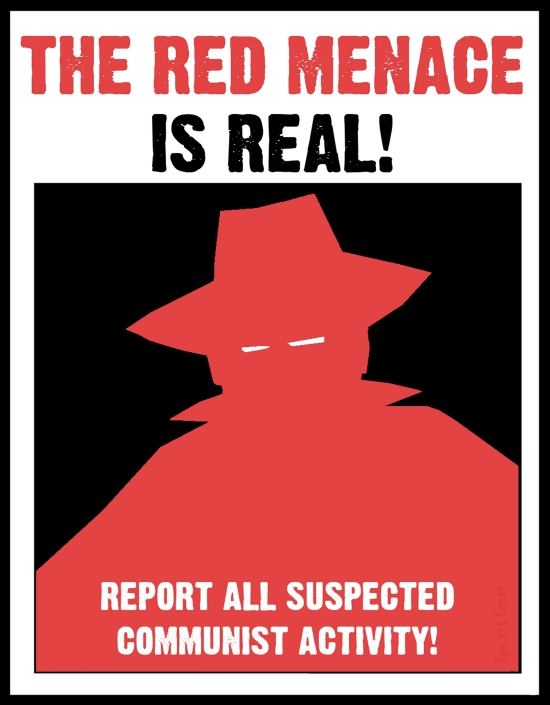
In Sticky Reputations: The Politics of Collective Memory in Midcentury America, Gary Alan Fine explores these issues of individual reputations, group dynamics, collective memory, and political commemoration. Fine approaches issues of memory from a sociological and historical approach, focusing on descriptions of events and the social and dynamic responses to them. Midcentury America encompasses the years between 1935 and 1955, a time of unease and fears about home-grown terrorism. Often referred to as the “McCarthy era”, this narrow time frame still allows for detailed insight into how memory functions politically. Fine’s main contribution to the study of memory is the reliance on and explicating of reputations as imperative to understanding groups, political maneuverings, and a time period. Representatives of and experts in these categories shape collective memories of history. In some cases, memories live on and affect current policy, such as the pervasive metaphor of the Red Scare. Other memories may be forgotten, such as Seeger’s past or the Brown Scare.  How society remembers individuals is a collective process that reflects the memories of groups, institutions, history, and our roles within society. These reputations outlive the individual attached to them, creating varying levels of “stickiness” that continue to resonate and have influence over time.

Sticky Reputations begins by outlining the major themes of reputation, collective memory, and American politics. Fine argues for the lasting importance of individuals and, more importantly, the memory of them that transcends their material being. He begins by describing the quality of memories as interconnected through time. Memories are chained together and influence one another with varying consequences. How society chooses to remember, or is influenced into remembering by institutions, is often due to previous memory “work” that guides how society can and should remember the past.

The book could roughly be divided by its treatment of shifting and sticky reputations. Shifting reputations are ones that change or are modified over time, while sticky ones are immutable and immune to modification. To represent shifting reputations, Fine explores how the Jewish community was once stereotyped as members of the Communist Party. Despite their original association with communism in the 1930s, by the 1950s, “the perceptual linkage . . .  had largely vanished” (p. 23).  The Jewish community’s reputation also changed as individuals broke patterns of association and revealed discrepancies in perceptions of the group. Although the reputations of individuals shifted Jews away from a negative association, some reputations shift group identifications towards one. Fine explores how the demonization of a prominent American First Committee member, Charles Lindberg, and his actions tainted the entire organization. The explanation for Seeger’s memory transformation did not go from individual to group, but instead was a transformation of the same memory over time. In Seeger’s case, “memory agents” actively worked to adjust his reputation and “purified” his reputation (p. 92). Others, such as Elia Kazan, reveal that reputations are “historically unpredictable” (p. 108).

Fine also notes the dichotomy between presence and absence of memory as oversimplified. Using the Brown Scare and Red Scare, Fine explores how these events are equated through metaphor, but the Brown Scare is often lost in history. Oftentimes, the “presence of absence” still carries meaning in politics and, in this case, perceptions of home-grown terrorism. The borrowing of the term “scare” is meant to draw parallels, in part to equate the situation, severity, and needed reaction to extreme right affiliations as with extreme left ones. The fact that the Brown Scare has been lost in public memory indicates a potential misalignment in naming, or perhaps mirrors the more salient threat that people felt from communism than fascism. Though the Brown Scare was important and legitimate at the time, collective memory has forgotten it and only the Red Scare “has entered into American historical consciousness” (p. 80).

Retrieved from this blog
The final chapter returns to the book’s title and discusses Adolf Hitler as the quintessential sticky reputation. Sticky reputations resist change, argument, and transcend individual actions to encompass entire value systems. These types of reputations can be positive or negative. Fine argues that Dr. Martin Luther King, Jr. represents a positive sticky reputation, where criticisms of him are seen as attacks on his work and civil rights, in general. King is now a stand-in for the larger movement, so one is unable to criticize him without criticizing the legacy of civil rights in America. Similarly, negative reputations mean that one cannot reclaim anything positive from Hitler (such as the Nazi health care system) without risking the glorification of the Holocaust. Sticky reputations mean that the individual cannot be separated from values, groups, and the unfolding of history.

Outside of the shifting and sticky aspects of reputation, Fine also explores the nature of expertise and the role of celebrity in political activism. In analyzing the “Who Lost China?” debate, Fine provides a useful framework for qualifying reputation as a combination of qualifications, influence, and innocence. Innocence is perhaps the most complicated term, as it implies that in order for reputations to be considered “experts,” they must be free of any guilty associations with the parties involved. Instead of using the term “unbiased,” Fine connects the potential influence of institutions and politics on experts as guilty, unclean, and impure practices. Only individuals that can maintain a pure, professional relationship with mitigating factors are experts capable of testifying, such as on the economic and political factors in China. Fine also address the politicization of celebrity through a discussion of Hollywood blacklisting. He questions the validity of considering celebrities as political agents who should be held accountable for opinions to the government, the public, and their industry. Using Lilian Gish as an example, Fine traces her film career with her political activism, noting her shifts in political affiliation as leading to her being blacklisted.

Overall, the thread of reputations could be more strongly connected throughout the chapters. All of the chapters touch upon these themes, but they can be disjointed in their continuation of previous chapters and transition to subsequent ones. The common theme of a time period does not entirely succeed in linking these separate, discrete investigations of collective memory and reputations. The book might better be called Reputations without a qualifier, for the lack of a consistent theme of stickiness. The common themes more closely run between memory, how it is socialized, and how people and groups are remembered. The brevity of chapters also leave less than adequate room for the full discussion of these historical events, which is exacerbated by the occasional enumeration of  potential standards and norms for evaluating collective memories. The scholar interested in collective memory and how exemplars can change the course of history will be quite pleased with Sticky Reputations. This book will also appeal to scholars interested in the political aspects of this era of American history. Though unified by common themes of memory and reputation, this book would also serve well as chapter case studies of how memory, and particular characteristics of it, functioned politically in American history. Fine puts forth many illuminating points about the role of the individual and how their reputation has unforeseen influences on their group memberships, political affiliations, American policy, social movements, and modern memory of history. The narrow time frame does not restrict as much as allows Fine to contextualize an important part of American history and allow the audience to find similarities in today’s heightened terror levels and the unease of political threats.

Retrieved from Photoreading


Although the flowers, young girls, and young men may be gone, their reputations will live on, sticking in varying degrees to public memory of history and American identity. Seeger’s reputation changed, allowing for his songs and activism to become synonymous with American values of protest and freedom. Others cannot be appropriated no matter the amount of memory work performed. These sticky reputations reverberate through time and affect group identification, advocacy of certain policies, and collective memory of American history. America remembers itself and finds a place in society by commemorating its exemplary individuals, their actions, and how they transcended history. Fine argues that these aspects of memory combine and chain together to do more than just influence memory; they affect how society remakes itself in the present through comparison with history. How America remembers itself and how contemporary society functions are directly and irrevocably linked to identity formation in the present. Which reputations stick and which are subject to change is an opportunity for inquiry that Fine prompts all scholars of memory and history to consider. For now, only time will tell what reputations stick in the minds of the American public and which are absent from collective memory, with yet unforeseen consequences.