Showing posts with label Research problems. Show all posts

Sunday, January 17, 2016

Communicating about Climate Change: The Technical and Public Spheres

This semester, I'm teaching COMM499: Public Controversies, a class that I started as a part of a Provost's Fellowship. As a part of the foundational theory weeks (before we delve into specific topics and controversies), we are discussing sphere theory. Sphere theory involves categorizing different arenas where communication occurs. G. Thomas Goodnight theorized three communication arenas, the public sphere, the private sphere, and the technical sphere. I will first briefly explain these concepts before exploring a recent news article that caught my attention on the complexity of the United Nation's Intergovernmental Panel on Climate Change (IPCC) environmental reports. I argue that these reports are not targetting their intended audience, the public, and are instead retaining too many characteristics of the technical sphere. The UN needs to better bridge the gaps between the technical and the public sphere to increase public understanding of the severity and risks of climate change. Removing jargon and becoming more accessible can help remove the stigma of elitism from science and encourage people to engage themselves more with the science.

For additional discussion of the spheres and climate change, look up Mosley-Jensen's book.
The public, private, and technical spheres have their own standards for engagement with communication and often happen with different scopes, effects, and speakers. The public sphere is so named because it is the arena where the public, people, and politicians communicate about topics in general, accessible language. An example of a communication activity in the public sphere would be President Obama's State of the Union, which is a speech given to the general public about topics of great impact. The private sphere involves more intimate communication between smaller groups of people often not accessible to the public. Conversations between couples, family members, or employees and bosses would be considered private, because they have limited public impact. These conversations may also include situation-specific language, such as inside jokes or personal references. The technical sphere is made up of experts that have a standard, formalized discourse that often includes specified jargon and expectations. Legal jardon and law journals are an example of technical discourse, aimed at a specific, expert audience with advanced knowledge of a particular field.

Cartoon retrieved from this site.
In writing climate reports aimed at the general public, the UN is participating in what I call "bridging," where technical knowledge is translated into public discourse. Information created and anlayzed in the technical sphere is transferred to the public sphere. The article in question summarizes the conclusions of linguistics scholars Barkemeyer, Dessai, Monge-Sanz, Renzi, and Napolitano in their 2015 analysis of UN reports between 1990 and 2014. The analysis focused on the readability of the summary section of the reports aimed at policymakers and the public. The authors focused on the complexity of the vocabulary and sentence structure as potential barriers to public understanding. Compared to the readability of tabloid papers (50+ on their scale) and even scientific magazines (30+ on their scale), no IPCC reports surpassed 30 and the most recent barely hit 15. There is evidence that these reports have become increasingly unreadable, making it difficult for the general public to understand the IPCC's analysis and its implications.

Retrieved from Tollefson from the original article in Nature

The article noted that the IPCC is considering adding more members to the board to improve readability or potentially providing better communication training for the summary's writers. In my graduate research on the rhetoric of science and scientific controversies and membership in the Earth Sciences Communication Intiative, I have found that scientists are often more concerned with their own analysis instead of making the content accessible to the public. The jargon used can be off-putting and even unintentionally misleading. For example, my partner is a graduate student in physics and I am often asked to edit his papers. One example of jargon that has repeatedly stuck out to me is the use of "trivial." When my partner calls a result "trivial," he is indicating a specific standard of statistical impact, whereas I read the term with a disparaging and dismissive tone. Because these articles are often written with experts in mind, they also often gloss over important background knowledge or comparative statements that would elucidate the importance of the results. This writing style is appropriate for the technical sphere, but could potentially lead to misinterpretations by the public and can become fodder for climate skeptics.

Image retrieved from this site.
Scientists should pay more attention to how they communicate. Whether that involves creating stronger bridges and training people to go-between, or including communication courses in science programs, Even including more sign-posting types of summaries, such as the chart above, would help clearly and succintly communicate the important take-a-ways for the reports. I think more problems would be minimized if attention to the ways people understand and process information were increased.

Monday, June 1, 2015

Graduate School and Mental Health

I am one day late posting my blog this week, and for good reason. I spent most of Friday, Saturday, and Sunday engaged in family activities (and traveling back home). There has been increased talk at USC about the state of graduate school life and mental health and how current students can improve their quality of life while undergoing an incredibly stressful program of work. During my years on the Graduate Student Government, I worked for 15+ hours as Community Service Director, took three courses which was 9+ hours of in-class time plus reading and homework, worked as a Teaching and Research Assistant for faculty for 20+ hours a week, all while expecting to be doing personal projects, attending conferences, and publishing papers. Now that classes are over, I've passed my qualifying exam, and I am no longer a member of GSG, my time is mostly dominated by working on the dissertation. This is a no less stressful but more flexible academic assignment. I list these responsibilities not to brag about my own accomplishments. Instead, it helps me to reflect on the immense pressure I experience, when I am a graduate student who is not also supporting a family on $30,000 a year, dealing with health issues, or serving as a member of a prolific research team.

Retrieved from this site.
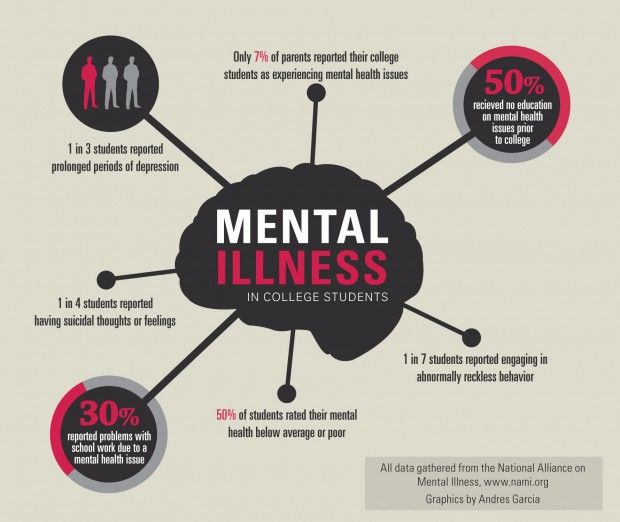
No matter our responsibilities, there is a great amount of pressure of students to succeed in public and suffer in private. It is very uncommon for people to discuss their workloads and admit failure or shortcomings. Instead, they turn into perverse competitions where we compare our workloads to others (I'm guilty of participating in this). When all we are told is "publish or perish," it is difficult to not have some sadness behind congratulatory statements or to take rejections from conferences lightly. To admit failure is to lose the game of PhD life and to express that openly is frowned upon. Research indicates that 60% of graduate students feel hopeless and depressed nearly all the time and 1 in 10 have contemplated suicide. But, there are few, well known resources for these feelings.

Retrieved from this site.
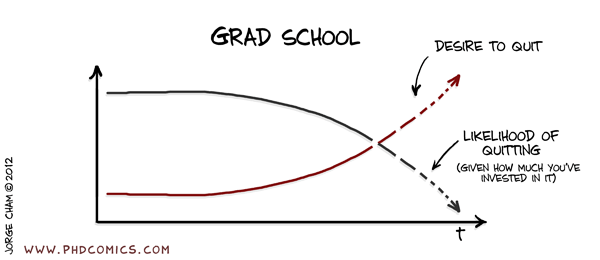
I took up this blog post in response to amazing statements made by my colleagues, Ritesh Mehta and Cynthia Wang, who reflected upon their time at USC. Ritesh made a profound and poignant statement at his dissertation defense about how students should not have to suffer in silence and be afraid to reach out to one another. Although the program is 100+ students in size, it can be quite lonely work staring at a computer screen all day. Cynthia posted similar sentiments on Facebook about sharing failures and talked about being rejected from a journal. I am proud of both of their statements and wanted to make one myself: I recently was rejected from a journal. Although the comments were quite positive, there was a sinking feeling that there was something else back on my plate that was simply unbearable. There was no room to fit it back into the growing list of tasks, assignments, and responsibilities.

Retrieved from PhDComics
I don't think that any of our problems are the result of USC. I would encourage any potential graduate students to consider this amazing and supportive program. I think the problems are deeper, within the PhD experience, and the academic community at large that engages in competitive mentalities and focuses on output instead of the process. Similar to ongoing debates about the requirements placed on medical residents, I think more conversation should begin about the mental well-being of graduate students. Reducing the stigma of sharing is something that I hope will get better as more students create a culture of support rather than judgment. This is something that will ebb and flow with time and does nothing to address institutional expectations. Indeed, when we think about the contributions that we will have as graduate students, it pales in comparison to what we will do as faculty members. Perhaps we need to treat graduate school more as training for academia than a full blown toss into the deep end of academic publishing and stress. This article provides some other potential solutions including increased acknowledgement, specialized training, and more resources.

Retrieved from PhDComics
I took this weekend off, postponed my blog post, and had a friend cover the class that I'm teaching over the summer. I felt guilty for a while for this decision I made, but I think that more of us should be okay with taking more breaks, more mental days off, and enjoying ourselves with family and friends. The computer (and that R&R) will still be there tomorrow.

Sunday, September 21, 2014

The Danger and Opportunity in Speaking for/with Others

There are many issues that I feel compelled to address as a rhetorician and social agent of change (Klumpp and Hollihan argue). Engaging with these issues, however, requires reflexivity about my own status as a privileged, white, heterosexual, cisgender, able-bodied, female and how that type of person/body can speak for others. Can I speak for others? Perhaps literally, yes, I could use my platform on this blog and as an academic to speak for others. It wouldn't be well or with full knowledge, but I could. Thus, the better question would be should I speak for others?

On one hand, attention to these important issues of transgender rights, racial inequalities, gender equality, and equality more broadly should have as many advocates as possible. People of all description can be allies and amplify the voices and stories of those who can speak more genuinely about these problems.

Image retrieved from this site.
On the other hand, speaking for others complicates issues of voice, could serve to isolate the voices of others, and reifies a system in which certain voices are more valuable than other voices. In an academic exchange in a journal, Campbell and Biesecker addressed the issue of speaking for women in rhetorical history and how the "canon" of rhetoric that is studied systematically removes female voices. Though Campbell erred on the side of including as many voices as possible into the current canon, Biesecker was in favor of rejecting the canon as a system of tokenization.

The rhetoric of tokenism highlights certain voices that triumph against an oppressive system as evidence that the system is not oppressive. The lauded status of certain individuals (Cloud has an excellent article on Oprah as exemplar) is unique and worthy of note, and their success is linked to their individual qualities. If others simply embodied these same qualities, they could also rise above the system, meaning that change is unnecessary.

This is the token black character on South Park, literally named "Token." Retrieved from this site.
Part of the problem in speaking for others is this dynamic of visibility, voice, invisibility, and silence. To speak for others is to reify that certain voices are not being paid attention to, but it also silences their actual message in favor of a conduit. To remain silent, though, is to allow and passively participate in the maintenance of the status quo.

I am still working through these problems and try to keep them in mind in the work that I address and the comments that I make. I try to always be reflective and aware of the position from which I consume information and process opinions. For now, I err on the side of commenting from my limited position, especially when certain issues are prevalent and pressing.

One issue that has recently emerged, and one which I am reluctant to rehash considering the wishes of my colleagues, has been the Annenberg Innovation Lab Black Twitter project. I wish only to comment on this situation's similarities to the issues of authorship, voice, and who is allowed/should study others as a researcher. A summary of the incident can be read here and an excellent response by my colleague Dayna Chatman can be read here. This incident helped me reflect more on my status as a researcher and how academia as a whole can be more reflexive of how our personal situations affect our approaches to certain issues.

Sunday, November 10, 2013

Important Questions for Communication Scholars

These are questions that guide my research and I believe they are important for all researchers and communication scholars. Feel free to add questions in the comments and debate the value of these questions. Within my interests in politics, policy formation, and the negotiation of power, I try to consider:

General Research Questions
What is my object or artifact of inquiry?
Is this artifact "interesting" or valuable to the academic community?
What questions operationalize and analyze my artifact?
How do I answer these questions?
Whose shoulders can I stand on?

Topic Specific Questions
Why do people believe some things over others?
What influences information consumption?
How are people accessing and processing information and data?
What are the effects of technology on social, political, and cultural activities?
Who has power, how did they obtain it, and how do they use it?
Who are the privileged/marginalized voices and what do they say?
What elements of speeches, advertisements, images, and narratives make them persuasive?
What arguments are believed and why?

Sunday, September 22, 2013

Underestimating the Enemy: Creationism vs Evolution

At the beginning of August, I attended the Alta Argumentation Conference in Alta, Utah. There I was presenting a paper titled, "The Institute for Creation Research as a case study of scientific and religious argument: Revisiting argumentation fields in a postmodern context." The paper was presented on a panel of other papers about "religious argument." To summarize the points of my argument, I was discussing the ICR as an example of postmodern and contemporary creationism discourse. ICR is attempting to blur the lines between science and religion in order to present the illusion that science proves the story of Genesis.


The Logical Process of Science and Creationism: Source
My paper interrogated why creationism is still so persuasive to many people and why scientific consensus has not squashed this alternative story. In addition to this argument, I also stretched communication and argumentation theory by introducing a new term "deceptive controversy" and expanding the role of argument fields to creative normative standards. After finishing my speech and waiting for the Q&A, I thought about the theoretical implications for my argument and had prepped myself to defend my new term and the application of argument fields. Instead the first question I got was roughly paraphrased as: Aren't you giving ICR too much credit? They are obviously non-scientific, so what is the point of your paper?
To say I was shocked was an understatement. My extension of argument theory was not being questioned, but the very purpose and need for my intervention was. Unfortunately, I reacted more passionately and unprofessionally than I would have liked, feeling defensive of my research. I would like to take this blog post to react more professionally than I did then.
It is imperative that scholars and scientists take opposition from creationists seriously. Although science and logic show the truth of natural selection and evolutionary mechanics, that is unconvincing to more than half of the nation's population. The power of these narratives and the hold that biblical accounts have on the American public are underestimated at the risk of knowledge and innovation. There still remain issues of creationists gaining position on school boards, colleges accepting creationists on their staff, and the steady dominance of creationist thinking in the US.
Steady maintenance of science denial: Source
My inquiry was not to suggest that one should consider ICR scientific, but to examine how and why ICR does say that it is scientific. What is it about ICR's discourse that convinced hundreds of thousands of subscribers each month to read and examine its arguments? That was the point of my inquiry: to examine the patterns, rhetoric, and argument style that keep creationists relevant in modern society. Armed with this knowledge, how do we address and restrict its presence in areas of society it does not belong?
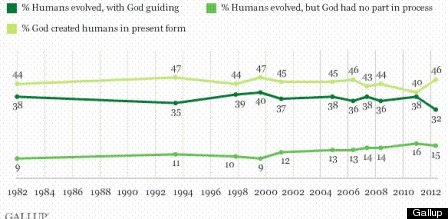
My paper took samples of ICR's discourse and broke the arguments down to their basic elements to determine if they really were scientific or not. Recent polls show only 15% of Americans believe in the occurrence of evolution without supernatural intervention, with 46% believing the in the Biblical account of origins with God (a Judeo-Christian one). That's nearly a majority of Americans who deny a scientific consensus of evolutionary mechanisms explaining origins. Groups such as ICR receive millions of dollars in charitable donations, run talking tours, sponsor museums and even a award degrees from an accredited school. Creationism discourse is alive and well in the United States, at least in the public sphere.


It is a mistake to assume that everyone approaches the creation/evolution controversy with the knowledge and capacity of intellectuals. What my questioner was really saying was that "isn't everyone in America as smart as I am? Only fools would believe in creationism." Because he saw the truth in evolution, he immediately discredited the possibility of creationism as being a valid threat. But it is. It has been and remains a threat to scientific standards, classroom education, and the knowledge of millions of Americans. To discredit their opposition is to err as many scientists have done before. To simply say "look at the science", "look at the consensus" is not enough. These facts are not convincing in the way that many academics and scholars wish that they were.


Wednesday, January 23, 2013

Open Access Journals: Information for/by everyone?

I had previously scheduled a different topic, but in light of a few well-reasoned and interesting blog posts by my colleagues at USC, I've decided to throw my own hat into the ring about open-access journals and the future of publishing. I encourage you to read Alex Leavitt's initial post and Andrew Schrock's response post before reading my response below.

First, I wish to declare my support for Alex and Andrew in their praise of open-access. In theory, the term is a sign of open information, shared meanings, and enlightenment. I find, however, that such thinking is, at least in current iterations, overly optimistic. In this vein, I agree more closely with Andrew's caution towards open-access in that there are other things to consider before launching a personal crusade. Alex has taken a more hard-line approach, calling for the complete abstention of "closed access", not only for himself, but for all scholars.  Below I will enumerate issues that I have with such a declaration and why I would urge scholars to question the implications and consequences of such actions. I will also explain why I find Andrew's response and the continuation of some of his ideas as a more practical compromise.

I would call attention to the overarching idea of the initial post: that open-access is moral and hortatorical/obligatory for scholars. This is known as the fallacy by composition, or the logical reasoning that assumes that something true of part of a whole must also be true of the whole. I completely agree that pursuing open access and supporting it is a noble goal for scholars, but I do not agree with its universal application. The implication in making such generalizations is that for all scholars, no matter their discipline or situation, that this is the correct or moral move. This, I believe, excludes the work of other scholars who may not study new technologies, be passionate about open-access and the share of information, or have the same gain by making such an announcement. The community in which and the topics which Alex studies uniquely positions him to make this declaration. Rhetorical scholars would have no interest in my admission to do the same. Creating a blanket statement by definition ignores scholarly differences that may prohibit and inhibit one from making the same choice. Although this would merit another blog post entirely, I will mention here briefly the notion of "white male privilege" that creates a hegemonic structure that rewards those in power for taking risks and penalizes others for not conforming. Whereas a great media and Internet scholar like danah boyd can "get away with" avoiding closed-access publishing, others without such clout or experience could have their careers dashed for making the same choice. This is also inherently linked to one's name/mark in a field and one's youth (read newness) to academia.

This brings me to the issue of "choice" in general. I have previously written about this in regards to the Taylor Cotter incident, and the topic emerges here again. The truth is that although "open access" is a laudable goal, who is this information really "open" to? As Andrew mentions, scholars live in  "privileged media and spaces that are not open to everyone" by definition, because our work is shared not necessarily to the general public, but for the purposes of academic advancement, theory, and methodology. This is not applicable to all scholars, of course, but I feel that for the majority, it is. For example, my current RAship with the Earth Science Communication Initiative is working on helping combine multiple voices (scientists, politicians, religious leaders, and activists) in working towards climate change. Will the people we work with and access be interested in the theory papers I write on apocalyptic rhetoric and political inaction? Probably not. Will they be interested in plans for action, evaluations of the conversations  and solutions? Most likely. That distinction for me is the clear divide between open and closed access, simply not everything has to be or is somehow better because it can (but won't) be accessed by non-scholars. Andrew makes this point as well, noting that few people have ever denied him copies of papers he has wished to read. I have also never been denied and I have emailed copies of my papers after conferences when asked even if in theory they reside only in closed-accessed spaces. As a side note, aren't all universities closed systems of information? How many people get to see the paper I wrote for Randy Lake's "Social Movements as Rhetorical Form" class unless I publish it? Wasn't the creation of journals and online publications for this very reason?

The ultimate goal of "open access", I would assume, is for the free and open sharing of information, an online Habermasian coffee shop of academic intellect. But, I think one of the best places for this to happen is at conferences and meet-ups. Of course, this brings me back to the idea of choice and the access related to money/wealth that some scholars do not have. Conferences, especially inter/national ones are not affordable for everyone, though I think academics are creating solutions to this such as local conferences (my VisComm conference in Utah was more engaging than the national ones I've been to) and creating tiers of payment for cheaper options of registration. Those issues aside, conferences are more personal and expressive points of interaction that online spaces (for now). I am sure that the capabilities will continue to grow, but for now, there is no equivalent to the panel experience. For example, my past panel at NCA gained me new colleagues, gave me new insights into the topic (Romney's Mormonism), and I exchanged numerous business cards from panel attendees. This most likely would not have been possible if I had merely posted this paper online. Part of the problem is in the bog of online scholarship, where does one begin? How to sift through all of the information accessible? Again, it comes down to one's name in the field. Whereas Alex may be receiving much attention for his post, this one will most likely go unnoticed. How does one get to the place where open-access is recognized, lauded, and meaningful? After participating in the current system.

Andrew also praises the networking opportunities that come from associations and conferences that may not be hosting everything online, as spaces for expression and exchanging of ideas. These are possible because of communication associations that host them. These associations are also responsible for the publishing issues that we have. As a previous employee of a journal publishing company, I will first say that vilifying the publishing company for the state of academic research is not only unwarranted, but it is also counterproductive. Without going into too much detail about the process, I would merely say this: how successful would a publishing company be that placed restrictions on its clients? Publishing companies provide printing and online service at the request of the association/organization, nothing more. It is that group's decision for how to have journals accessed and available to members. These prices increase with options and there may be monetary royalties per subscriber or journal downloaded, but overall, these are restrictions and choices placed by the organizations themselves. Are we now to boycott any type of scholarly communication organization? Do we become lone wolf scholars trapped in an online bubble? Either way, the publishing company is simple providing a service, information and access is not for them to decide.

In conclusion, though I admire Alex's passion for the open-access movement, I find it highly problematic to engage with at the exclusion of associations, journals, and other scholars. I find myself agreeing with Andrew, more or less and his more measured approach, that praises free and open publication, but does not demonizes those who do not engage, as there are many  reasons for doing so. To think that I could not approach my friend and colleague to work on a paper, conference submission, or journal saddens me because those ideas/collaborations will be fully lost to the academic community, as opposed to being slightly restricted. I suppose that I will not be co-authoring anything with Alex in the future, but perhaps Andrew and I may.

To summarize, TL;DR
  • Open access in theory is a moral no-brainer, but in application, it is problematized by issues of choice, universality, and execution
  • Female, minority, or any combination of intersectionality may not have the same "choice" that Alex made
  • Scholars who are young, at lower ranked universities, or not in technology/new media studies may be unduly hurt by restricting their publishing
  • The current system is changing to encompass more of these demands for online access (why destroy and boycott the system that is already attempting to do what we ask of it?)
  • Shouldn't we be opening access to those we know will read/are interested, as opposed to the general public out of principle? (obviously this depends on one's field/research)
  • There is no substitute currently for the in-person exchange of information
  • Associations/organizations that obtain/release information are to blame, not publishing companies
  • Currently, these associations provide scholars with more benefits that restrictions

Tuesday, October 23, 2012

Netvibes: Research tools for students and scholars

Netvibes is a great research tool for scholars and a news tool for people alike. There are various types of RSS feed dashboards, but this one has the features and ease of use that works for me. Coupling this tool with the PagetoRSS functionality, creates a one-stop research location.

I have the Netvibes dashboard load as one of my homepages, making sure that I see the headlines in my research areas of interest. Because the dashboard is full of RSS feeds (as well as other widgets), it automatically updates, making my research time more efficient and easy. As opposed to an iGoogle homepage, the Netvibes dashboard allows for tabbed feeds, where dozens of tabs organize feeds by topic area. The set-up and organize of each tab can be changed in terms of columns and how many headlines the feeds draw. The site advertises "limitless personalization" from background art to widgets and apps, custom layouts, and RSS feed options.


This is the homepage of my dashboard, which has a weather app, general news feeds, a to-do list, and notepad. Each tab has a different research interest and toggling between tabs brings up new feeds and apps that I've loaded to the page. Adding the feeds are as easy as copying the link to the RSS feed on a website and pasting it in the "Add Content" tab at the top left corner of the dashboard. This adds a box to the page that updates with headlines and articles. I primarily use GoogleNews, JSTOR updates, and professional blogs to populate my tabs. My background is a nice, relaxing beach as a personal touch to the dashboard. 

The benefits of this tool (similar to other dashboards) are multiple. I find Netvibes the most convenient and intuitive to use, but the salient point is that these dashboard and RSS feeds can deliver relevant news and journal articles in various topics to one location.
  • With minimal set-up, the RSS feeds automatically pull in information
  • Dashboard can be accesses anywhere with an internet connection
  • Apps and widgets, such as weather, notepads, and to-do lists (with hundreds of others) are easily added through the "add content" link
  • Tabs organize and separate different research topics with no limit in the number of tabs
  • Adding content is as easy as copying and pasting links
  • Easily delete and modify feeds
  • PagetoRSS makes sites without RSS feeds easily accessible on a dashboard
The Netvibes's dashboards are automatically private, but people can publish their dashboards or share them with others. Additionally, premium features are available for those who are willing or for some reason need extra features and functionality.


There is an overwhelming amount of information online. Checking one location instead of multiple locations helps save time and sanity for scholars of any discipline. Whichever dashboard works best for you, make sure to update it and routinely check it, so you will always be up-to-date on timely, important, and relevant news for your research interests.

Wednesday, August 29, 2012

Graduate School Best Practices: First Year in Review

With my first year of graduate school over and my second year fully started, I felt that a reflective piece about my first year would help serve both me and current/incoming students. It is cliché , but I learned just as much about myself as a person than content as a scholar. Below I have outlined a list of the best practices that I think would serve graduate students well to keep in mind. Most of them are obvious, organizational skills, but they truly helped me, and maybe they can serve as guidelines for others.


Best practices:

  • experiment with citation, note-taking, and to-do list tools
    • Not everyone works in the same way, so the "standard" or most popular tool may not mesh perfectly with your style. Compromise being mainstream and explore all of the options. Read blogs, gather information, and experiment before completely adopting a tool. Once you find it, stick with it, make sure it is updated and you can have access to it when needed.
  • find your "zone" location where you can really get down to work
    • I found that I was more productive in the office at my cubicle than anywhere else. When I really had deadlines to meet, I would only go there and stay there. I would bring snacks and drinks with me and stay there as long as I needed to be there. When my work was not as pressing or I was getting ahead, I let myself work from home, and be distracted every so often. These clear distinctions between work and home helped me stay on track.
  • plan ahead (at least 6 months)
    • This may seem a bit like an Emma-ism, because I am a planner, obsessed with making lists, placing things on my calendar, and working ahead. But, I think that this statement still has merit for all graduate students, simply because the 5 years (as I know from this first year) will go by quickly. Begin to plan out where you want to be, what you want your C.V. to look like, and how you can get there. Considering that conference deadlines are usually 6 months out, the publication process takes years in some cases (my senior thesis was published this April after 1 year), and students go on the job market as early as their fourth year, you cannot plan ahead enough. I recommend placing important events (such as conference deadlines and dates) on your calendar tool as soon as you know them to keep them in mind.
  • prioritize (be specific)
    • Continuing from the planning ahead idea, in order to do so, you must be able to keep organized and prioritize successfully. I keep a "pipeline" on my whiteboard at my desk which shows the stages that my current projects are in. This is a good template for making sure that there is progress and projects in the works. My pipeline has 6 categories (some more quantitative people have more for data collection): Ideas, Background research, Writing, Finalizing, Under Review, In Press. I also have a separate off-shoot under finalizing where I have "conference ready" papers. This is a poor "to-do" list, however, because it only lists large projects. Instead, I recommend making lists of specific, detailed next steps for the projects, prioritized by deadlines. I enjoy variety, so I like to mix up the order of the steps between projects to say engaged. For example, instead of "perform content analysis for Mormon project", I would write, "write code sheet", "find coders", and "perform LexisNexis search". Not only does this break the project up into more manageable sized chunks, but it also feels great to check off many things from your list!
  • find your balance
    • One of the most difficult parts of graduate school so far has been balancing how much I would like to do and how much I am physically capable of doing. I have dozens of projects in the "ideas" column that will probably never get to the "background research" stage, but that is okay. No one can fulfill every project idea (that's what tenure is for, I've heard) and it will probably only lead to sub-par papers anyway. Instead, keep track of ideas, reach out to colleagues and partners, and balance your time between the most fruitful project ideas and classwork, teaching, research assistant work.
  • be social, find your hangout spot
    • Your peers in your year (cohort as USC calls them) are your best allies. They are in the same boat, taking many of the same classes, dealing with the same requirements and school/program nuances, so they can relate to you better than anyone else. Be open to socializing outside of the office, make time to relax, get to know your colleagues, and have fun! Not only will you be calmer, more relaxed, and have a better quality of life, but you may also be lucky enough to realize that your particular cohort rocks out loud:
Case in Point: USC Anneberg '16

Wednesday, June 6, 2012

Evernote: Research Tools for Students and Faculty

One of the most important skills for students, faculty, and academics in general to learn is that of note-taking. We are in classes, at meetings, attending conferences, and critically reading as a part of our daily activities, not to mention keeping dozens of important ideas, projects, and things-to-do in mind. A solution to this problem that I have used (and has saved me a few times) is Evernote. This program can be downloaded and synced across all devices (including tablets and phones) keeping primarily lists of things available for viewing and editing anywhere at anytime (syncing across all devices occurs when there is a wireless signal).


Evernote is organized as "notebooks" that I like to use as overarching labeling for types of notes and lists. Within the notebooks are a series of "notes" that can be edited as if it is one large text box. I have notebooks for each class, conferences, guest lectures, and individual projects. My personal notebook (the one that is create default when you start using Evernote) is full of brainstorming, random notes for project ideas, and important contact information. The notebooks are listed on the farthest left side and once one is selected, a new column opens with that notebook's notes. Select a note and it will appear in the rest of the screen on the right. Creating a new notebook or note is as easy as clicking the Notebook drop down menu or the New Note button at the top of the currently selected note. When you open an already created note, it automatically opens in view mode so you can easily read and look up saved information. Editing is done by clicking the "Edit" button at the top, which allows for regular type editing.

There are many tools and formatting styles for the notes that can be customized to how you work best. Perhaps the most useful is the ability to attach files to the note (i.e., brainstorming a content analysis methodology and attaching the LexisNexis search output). There are other options that I use less, but are definitely worthwhile:
  • record verbal notes/reminders on top of written notes (if you are somewhere where typing is difficult or inconvenient)
  • easily change title and move into different notebooks (good if projects are constantly changing or you have variable tastes in academic organization)
  • associate a URL with the text 
    • if you find a relevant website, copy and paste the article text and put the link to the article in the URL box
    • if you want to cite an article, write a note about the relevant information you want to include and put the link in the URL box for easy reference later when creating a bibliography
  • tag and label your document so you can search for particular notes or parts of notes later
    • I do not use this, simply because I prefer to rely on specific titles and clear organization within notebooks, but if you were a prolific note-writer and needed to find information quickly, this is definitely a good option
  • send notes to Facebook, Twitter, through email (as a PDF), or create a link to the note
    • good for sharing information for group projects or turning notes during class into a PDF'ed study guide
  • keep track of to-do lists organized chronologically, by class, topic, activity, etc.
  • keep track of funding, reimbursements, grant budgets, etc.
Evernote's Introductory Video

Final food for thought: Evernote saved me during my final exams this semester, so I am definitely in debt to it. Both of my final exams allowed for computer use during the final to type up responses, but my computer (both days) was having screen issues where it would randomly turn off. This occurred five minutes into my first final and panic set in, so I reached for my iPad with case/keyboard and opened Evernote. I typed my entire final on the Evernote and sent it via email to my professor and his teaching assistant easily. Knowing that my computer was acting up, I did not bother with it for my second final and again typed that and emailed it in through Evernote, avoiding the stress of working with a dysfunctional computer. Without this program installed on my iPad, I would not have been able to send in my finals this semester, so I owe Evernote a big thanks.

The best part of the Evernote software is its integration on multiple devices, making it ideal for installation on everything you own, so important lists, contact information, brainstormed ideas, or simple to-do lists are kept with you at all times, internet optional. For me, having it on my iPad was immeasurably helpful, so I recommend installing it and seeing what uses you find for it. Because for academic use or not, it is a powerful and useful program.

Friday, November 25, 2011

Dead Crabs and Bike Stealing

Everyone is shaped by their personal backgrounds and experiences that construct their opinions, 
knowledge, and capabilities. Within the world of methods and research, these contexts should be 
taken into account because of their drastic effects on data outcomes. There are multiple categories 
of experience and evidence that are explained that are possible influences on data for which 
researchers should try and be aware. Bourdieu explains the importance of people’s experiences 
especially in the terms of culture, Igo proposes the phenomenon of the over-saturation of survey 
data in modern culture, and Pager discusses ethical and methodological concerns in obtaining 
valid data (particularly in audit research).

One of Bourdieu’s main ideas was that people’ socio-economic class has a profound effect on 
people’s knowledge of culture. People who are born into higher classes are much more likely 
(as indicated by the study performed) to appreciate, understand, and seek out fine art. Because 
of socio-economic status, people are able to enroll in more and higher quality education, 
experiencing a wider array of cultural knowledge reserved for the elite. Exposure to art museums 
and classical music are luxuries usually afforded only to the rich. The survey indicated that the 
knowledge of composers increases dramatically with higher paying jobs and conversely, knowledge 
of mainstream music increases with lower paying, more menial jobs. Thus, if a survey conductor 
or researcher wanted to understand the calming effects of certain types of music or a comparison 
of art pieces, a representative sample of social classes should be maintained as to mimic accurately 
all of the American population.

On the other hand, if a museum or particular company is looking for specific types of people 
socio-economic status would be an important factor to consider when selecting or targeting 
survey-takers. The survey pitfall that comes to find is that of “The Literary Digest” in 1936 that 
predicted Landon would beat FDR in a landslide election. What actually occurred, of course, was 
FDR’s landslide victory that was incorrectly predicted due to bad survey practices. Only those who 
subscribed to the magazine were polled, aka those who had disposable income during the Great 
Depression, which was a niche of Americans more likely to vote for Landon that FDR.

In Igo’s article, the topic shifts to the massive amounts of survey data available to the public. With 
this massive amount of survey data, there are many opportunities for misinterpretations and slanted 
results. One of the reasons Igo listed is when over-saturation occurs is that people become so 
comfortable with questions and can begin to answer the way that they think the survey should be 
answered. Another negative consequence is people become overly sensitive to their lives being 
recorded in the form of ethnographies, surveys, and interviews as indicated by the example of 1920’s 
Indiana. One parody example is that of Monty Python and their “infommercial” of Whizzo butter.


Pager discusses the pitfalls and difficulties of audit research, or research that involves an experiment 
in real-world situations. The study in question was one of job applicants and discrimination of race in 
entry-level job positions. One of the more important issues that arrived was one of ethical concerns. 
Should people be allowed to perform research when people are not aware that they are being tested? 
Obviously, there is some research that cannot be performed without this ignorance, because participants 
would otherwise skew data (no one wants to be viewed as racist/sexist/etc.). But then, what rights do 
these participants have in regards to possible ramifications of participation and how can these rights be 
protected? Practically, research performed that can provide valuable information are given passes by the 
IRB for the purpose of the research, but ethically, should these be allowed to happen? One example of 
this same type of discrimination audit research is the TV show, “What Would you Do?” where the set-up 
is a pair of men stealing a bike, one white and one black, and who gets approached more often by bystanders.


The people on the tape are seen as participating in high levels of racial discrimination, so often want to 
keep their faces blurred. What responsibility do the producers have to exposing the frequency of racist 
behavior versus the privacy rights of the people unaware of their participation? The example of audit research 
is just one type of research that has its drawbacks and confounding variables for which researchers should 
remain vigilant.


These are ideas that I carry with me when performing research. There are always issues of confounding 
evidence or finding ways to have evidence to support your points. All researchers should be wary of different 
ways that research can be compromised in order to produce good quality research that does not violate ethical 
or ideological concerns.