Showing posts with label Literature. Show all posts

Sunday, January 24, 2016

Pride & Prejudice & Zombies, oh my! Literature Classics and Film Appropriation

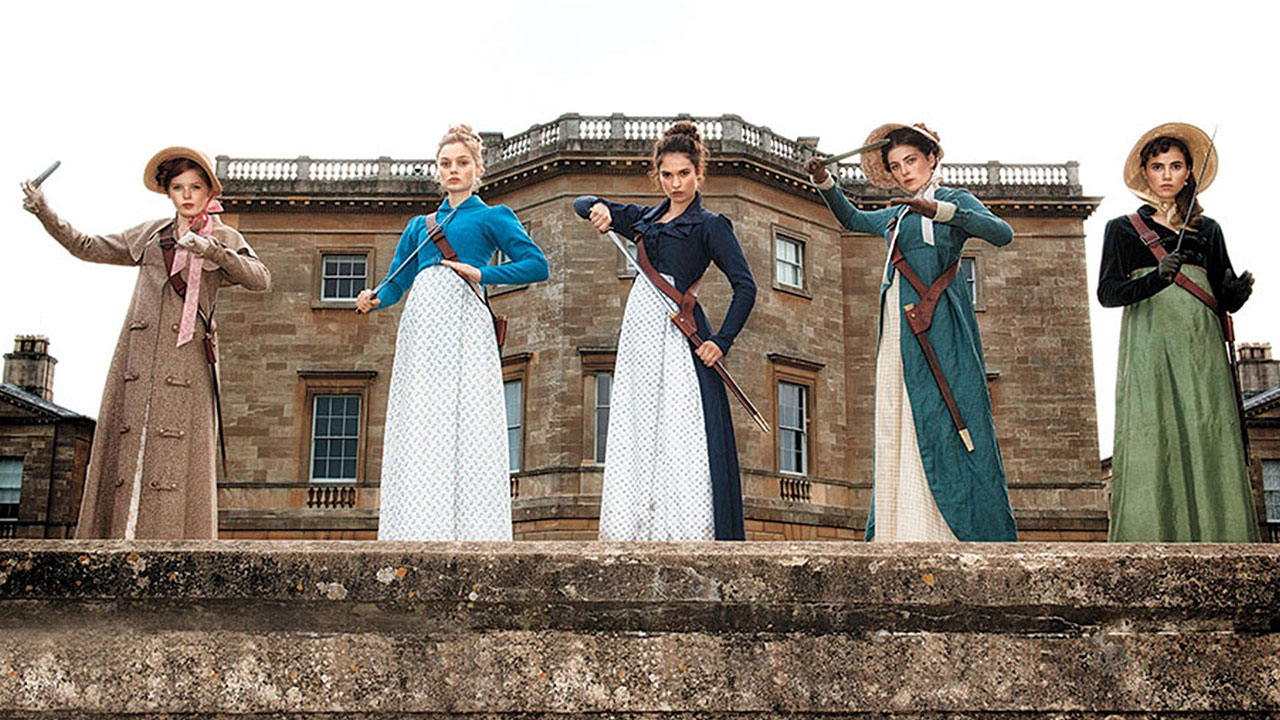
This past Thursday, I attended a film screening of Pride and Prejudice and Zombies, the latest film to be adapted from a book....that was itself adapted from a different book. I remember when the book Pride and Prejudice and Zombies came out, and I thought the book might lure unsuspecting youth into actually enjoying a literary matsterpiece and classic. I greatly enjoyed reading the original and admit that I snubbed the pop culture revival. Upon given the opportunity to go to a screening, however, I put my skepticism aside. As a film, I thought PPZ was excellent, extremely entertaining and just enough of the original to be a humorous homage. I have to say that Lily James and Matt Smith stole the show and created exciting and entertaining characters. This blog is not simply about movie reviews, however, so I feel compelled to discuss some elements of communication and rhetorical theory that, in this case, heightens my enjoyment of the film, and one cautionary note. I will first address what I felt were positive feminist inversions in the film through perspective by incongruity before discussing the future of orality and literacy. Suffice to say, this post will have comments about specific elements of the film. You have been warned.

Image retrieved from this site.
Although many of the fighting scenes became repetitive, I never tired of the many scenes of the Bennet sisters pulling knives out of garter belts or revealing hidden weapons from underneath their dresses. The Bennet sisters were trained as Chinese warriors and often came to the aid of their family and male counterparts. In discussing these scenes, I am reminded of Kenneth Burke's perspective by incongruity, by which two disparate things are united to highlight the differences between them. In PPZ, I found this concept in play along multiple dimensions. The weaponry along the exaggerated feminity of the time period. Large skirts and corsets are made to restrict the movements of ladies, and yet the Bennet sisters move seemingly without pause to eliminate dozens of potential zombie threats. Furthermore, the juxtaposition of 19th century language and style with a contemporary horror fascination reflected the movie's unique narrative. One of my favorite parts was the puppeter-style history book that explained the relationship between the plague and the zombie outbreak - fascinating legitimization of a decidedly impossible occurrence.

Image retrieved from this site.
Perspective by incongruity also laid a stark humor over the entire novel. The imminent zombie horde emphasizes how absurd the choice of husbands for Elizabeth is and the amount of time and attention given to such occasions. Even with zombies attacking and killing people at the balls, Mrs. Bennet and many of the people present are preoccupied with marriage and inheritances. The incongruence of these simultaneous acts highlights the odd traditions of the past and reignites the agency of Elizabeth in choosing her husband, despite the risks. I have recently paid much attention to the rise of feminist themes in horror movies (such as Teeth, It Follows, and Crimson Peak). I am happy to find these themes traversing genres and emerging in a more mainstream film. I hope these themes do not become overblown and trite, and keep their sincerity and calls for reconsidering the roles of women in narratives.
Image retrieved from this site.
I did enjoy PPZ and found many instances of progressive film-making. I do wonder, however, if the creation of such films do not damage readership. When I first encountered the novel, I thought at least people would still be reading - what is there now? I do not mean to undermine film as a medium of communication, but I wonder what the long term effects are of children brought up watching the Lord of the Rings, Pride and Prejudice, Roald Dahl novels, the Great Gatsby, and Bride to Teribithia. Furthermoe, what happens when these film adaptations are perversions of the original text? Excellent movies, to be sure, but I wonder what components of visuality and literacy, minus orality, are lost on the current generation.


Monday, June 16, 2014

Dorian's Descent: All Art is Quite Useless

Dorian's Descent is a new stage adaptation of The Picture of Dorian Gray by Oscar Wilde. Dorian's Descent is a musical that has added an element to the story: the Devil. In this article, I wish to explore the narrative elements of The Picture of Dorian Gray through Walter Fisher's narrative probability and narrative fidelity, the Faust trope, and how the character of the Devil is a narrative disaster. Although I did enjoy the show and thought the singing was quite impressive, the actual lyrics, words, and acting were sub-par, especially compared to a few other musicals and adaptations I have seen in Los Angeles. I will be discussing the play and the book in detail (i.e., spoiler alert!), so I encourage readers to read the book or acquaint themselves with the story.
Poster for Dorian's Descent
The Picture of Dorian Gray is about a young man, Dorian Gray, who becomes obsessed with a portrait that Basil Hallward has painted of him. It shows him in his youth and his prime, characteristics that he realizes, once prompted by his friend Lord Henry Wotton, will fade. In a state of hopelessness, Dorian wishes that the painting might age instead of him, for in its current stage it only serves as a reminder of what he would lose. Without explanation, the painting does begin to change as Dorian becomes involved in the hedonism of Lord Henry's lifestyle. Dorian scorns Basil, engages in illicit sexual activity, murders, and experiments with various vices. The picture ages, its face is marred by a snarl, and the brow is furrowed in perpetual anger and disdain. Eventually disgraced by the harm he has caused, Dorian attempts to absolve himself by stabbing the picture. The two reverse, leaving Dorian himself dead, aged, and hideous and the portrait returned to the beauty which Basil painted.

The picture and Dorian from the movie adaptation
Dorian's Descent infuses a rock opera theme onto the story, which pairs nicely with the descent into hedonism and sin. The element of the Devil, however, removes a very powerful and meaningful part of the play: Dorian's agency, choice, and self-mortification. In the play, the Devil appears and makes an explicit Faustian deal with Dorian so that he may stay young and the portrait may age. The character is doubly unnecessary. First, Lord Henry already serves as the Faustian Devil, the foil to Basil between which Dorian must decide. Having the Devil character undermines Lord Henry's role as the tempting, evil character that lives a sinful, yet seemingly fulfilling life. His presence mirrors the Devil, instead of captivating Dorian's attention in his own right. Furthermore, the Devil as a mystical, magical character removes the potential for Dorian's choice. The supernatural can seem to constrain the choices and available actions of humans, making Dorian's descent into hedonism part of the Devil's plan instead of a meaningful choice of evil over good, Sir Henry over Basil, self over others.

The Devil makes a deal
The beauty of The Picture of Dorian Gray is the unspoken Faust trope. Any one might utter an "I wish . . . " or make selfish requests, placing oneself squarely in the shoes of Dorian, connecting and identifying with him in finding himself in a peculiar situation. Walter Fisher described two elements of narrative rationality (or the logic of stories): narrative fidelity and narrative probability. Narrative fidelity is the perception of how faithful a story is to reality (or the audience's world). Although one might think that this would preclude fantasy, science fiction, or non-fiction from having fidelity. On the contrary, stories such as Harry Potter have high narrative fidelity because they seem real and possible, despite their fantasy elements. We could imagine, though we may not have seen or experienced it, a secret world hidden within our own (thus justifying its lack of presence). Though we may not have experienced or believed possible a changing portrait, we can faithfully imagine our lives as confronting something wholly un-explainable and what our reactions to it might be. The element of the Devil fully violates this type of realismo mรกgico (think Guillermo del Toro) where it could be possible, and makes the subtle Faust trope seem more like a cliche.

Sibyl Vane's forgotten lyrics
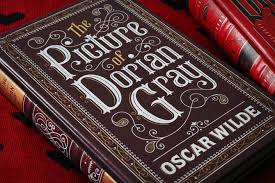
Perhaps most disappointing for me was the changes to the Sibyl Vane character, Dorian's brief love. Before his shift into full hedonism, Dorian fell in love with an actress. Her devotion to her art and her skill in bringing love to life in her performances captivates him. In his courtship of her, however, Dorian destroys Sibyl's ability to act. I have copied her confession after a particularly terrible performance of Romeo & Juliet below, which is one of the more beautiful passages in the book.

"Dorian, Dorian," she cried, "before I knew you, acting was the one reality of my life. It was only in the theatre that I lived. I thought that it was all true. I was Rosalind one night and Portia the other. The joy of Beatrice was my joy, and the sorrows of Cordelia were mine also. I believed in everything. The common people who acted with me seemed to me to be godlike. The painted scenes were my world. I knew nothing but shadows, and I thought them real. You came -- oh, my beautiful love! -- and you freed my soul from prison. You taught me what reality really is. To-night, for the first time in my life, I saw through the hollowness, the sham, the silliness of the empty pageant in which I had always played. To-night, for the first time, I became conscious that the Romeo was hideous, and old, and painted, that the moonlight in the orchard was false, that the scenery was vulgar, and that the words I had to speak were unreal, were not my words, were not what I wanted to say. You had brought me something higher, something of which all art is but a reflection. You had made me understand what love really is. My love! My love! Prince Charming! Prince of life! I have grown sick of shadows. You are more to me than all art can ever be. What have I to do with the puppets of a play?"

Sibyl has so greatly fallen for Dorian that she cannot pretend to love as she once did. This confession is made all the more beautiful when she takes her life after Dorian rejects her love. In the play version, Sibyl is a singer whose voices makes Dorian fall in love. Substituting singing for acting makes sense in the musical, but it is the other change that ruins it for me. Instead of falling out of love, causing Sibyl to ruin her craft, the Devil character makes Sibyl forget her lines before a show. The audience loses this beautiful insight into Sibyl's innocence and thus undermines her death as the tipping point in Dorian's sanity. This change further supports my comments below about Dorian's actions being orchestrated and not of his own choice.
Retrieved from this site
Dorian's Descent is an interesting adaptation of The Picture of Dorian Gray, but its creative changes served only to undermine the beauty, simplicity, and complicity of the book in an attempt to be unique. Without our ability to empathize with Dorian's decisions, which we believe are of his own accord, the audience can only observe and cannot be active participants in the narrative. We are not convinced that this could happen to us, that we would make such a deal with the Devil, or that we are only a few steps away from falling into sin ourselves.

Although this is not the shining review that I'm sure the fledgling play is hoping for, I hope that they take to heart the immortal words of Lord Henry: "There is only one thing in the world worse than being talked about, and that is not being talked about." Certainly this adaptation has given me and I hope any readers some food for thought about how narratives are updated, adapted, and changed in the pursuit of artistic creativity and to teach us about issues that plague society.

Sunday, February 23, 2014

Book of Mormon: A Latter Day for the Latter Day Saints?

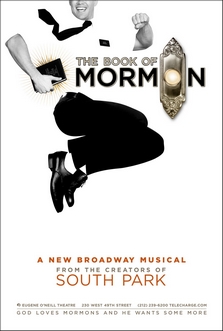
Book of Mormon has recently come to Los Angeles and I have now seen the musical twice. There are a few important notes that I would like to make regarding the musical. I won't have too many spoilers or descriptions of the musical, but if you haven't seen it or would like to remain in mystery, then turn back now!

Retrieved from Wikipedia

The first point I'd like to make about the musical is the various reactions it has received due to its concentrated treatment of the Mormon faith. Based on an episode of South Park where the Mormon faith is described in song, including a chorus calling it "dumb," the Book of Mormon primarily follows Elder Price on his missionary trip. Matt Stone and Trey Parker are comedians and the musical follows the comedic and often offensive style of their TV show and movies. Though the show has received much praise including Tony awards and nominations, there has been much backlash from the Mormon community that the show paints their faith as something to laugh at, and not seriously consider as a legitimate faith. I have previously written about the Mormon faith and how it complicated Mitt Romney's run for presidency. Part of its problem is its youth where "ancient upstate New York" is a biblical location and the Garden of Eden is located in Missouri. The relative "all-American" prophet is something foreign and different from the traditional Middle Eastern locations.

The backlash that it has received overestimates the exclusivity of Stone and Parker's critique. What the Book of Mormon does is present the Mormon faith as similar to other faiths, not distinct. When one considers the equally occult and supernatural forces that define other religions, laughing at the Mormon faith means that people are laughing at all faiths. In the song "I Believe" Elder Price sings about all the things that he believes in as a part of his faith. The first two lines are quite Christian in nature: "I believe that the Lord God created the universe" and "I believe that he sent his only son to die for my sins." Not until line three is a marked changed expressed where he sings, "I believe that ancient Jews built boats and sailed to America" that elicits much laughter from the audience. The chorus notes that "I am a Mormon and a Mormon just believes." In a sense, this is a critique of all religions that just believe the doctrines put forth by their faith. Is it any less funny or unbelievable for their to be a Christian version that statements "I believe that Christ turned water into wine"? Or "I believe that Mary gave a virgin birth?" Or "I believe that Christ resurrected after being crucified?"


This song touches on the key component of all religions: faith. There is little to no evidence of all of these supernatural and religious occurrences, so for Mormon doctrine is equally as legitimate and believable as all other faiths. Even if the audience does not catch onto the criticism, the Book of Mormon expertly causes everyone to consider the beliefs that they hold as true and examine why their faith holds weight, if any, over others. The Book of Mormon also expresses other similarities to faiths such as missionary trips, studying the Bible, guilt over sinning, and uncertainties about its teachings. As an atheist, it was clear to me upon watching the show that this was a critique of all religions, their systems of beliefs, and the arbitrary hierarchy and discrimination directed towards Mormonism.

Perhaps the Mormon Church understood the great potential in the play as an avenue to reach new members. In the playbill for Book of Mormon, the Church took out three full page advertisements. The first is a white male noting "I read the book." The second is a Latina female with the text, "the book is always better." The final page is a black male who notes, "you've seen the play, now read the book." All three advertisements contain three methods to learn more information: a QVC, website address, and instructions to text "BOOK" to 33733. The faces of the individuals are highlighted to reveal their diversity and the power of the individual to find more information. The play centers around the "Book" of Mormon, so the advertisements push viewers to explore the book through its original text instead of simply through the play version. For the first advertisement, having read the book is a point of pride, a way for savvy-going theater-goers can engage with the play more fully. The advertisements take advantage of a captive audience that is engaging, perhaps for the first time, with the Mormon faith and gives them the opportunity to learn more.

Retrieved from this review
Those who may be visiting the show and preparing to laugh may not be the best audience to find converts. I thought similarly after seeing street preachers in Las Vegas. But, the places where there may be the most resistance are also perhaps the areas with the most potential and opportunity. Just as Elder Price entered a missionary location in a poor town in Africa, the Mormon Church is braving hostile territory with an unlikely chance of success. But just as Elder Price and Elder Cunningham attempt to change the landscape for Mormon missionaries, the Church also attempts to affect the narrative of attendees by offering its own version. Either way, this musical has people discussing the faith and has exposed many people worldwide to its teachings and doctrines. The Church is smart to see this as an opportunity instead of a threat and everyone would be best served by appreciating the critical nature of the play not as anti-Mormon, but as inquiry of the role of faith in general.

Thursday, February 9, 2012

Born Evil


Last night, I attended a University of Southern California event where author Jeff Mudgett of Bloodstains, discussed human nature and the idea that some people are born evil.
Picture
When asked at the discussion, Mudgett responded strongly that some men were born evil and there was no hope for people like his ancestor, H. H. Holmes, when they are looked in prison forever, the important part is to have them separated from the population. In this discussion, I could not help but think of Foucault's structure of "madness" and what it truly means for someone to be considered psychotic, a menace to society, and unfit for a normal life. As far as Mudgett and scholars can tell, Holmes was a normal, functioning member of society who may have had the highest IQ score ever recorded. Not only was he intelligent, charming, and charismatic, he had a flair for hypnotism and had a fascination with the human body and the ageing process. These obsessions and talents led him to be on record for killing 27 people, with the possibility (and estimated amounts from researchers) to be up to 1,000 people. He might have been the most prolific serial killer of all times, and Mudgett, his great-great grandson, believes he was born that way. He was born to kill, born to be evil, and that there was no hope or retribution that society could offer to this man. What are the implications for people being capable of these atrocities, simply because of their genetic code? Is there a "serial killer" gene that lays dormant in Holmes' bloodline and may live in other seemingly functioning members of society? Perhaps, once isolated, women may be able to test for the gene in their unborn children, just as many diseases and genetic disorders (such as Down's syndrome or other chromosome deficiencies) are detected and chose to abort them. Can there be a genetic predisposition that we can code for, eliminating all serial killers those born to be evil before they have a chance to manifest? Should genetic predispositions guide our choices to presume those guilty before proven so? This brings to mind the current news story I saw about a 15-year old girl (now 18 at the sentencing) who was given life in person with the possibility for parole after torturing and killing her 9-year old neighbor.
http://antonia-monacelli.hubpages.com/hub/Murderous-Children-Alyssa-Bustamante
The most damning evidence of all was her diary that revealed her calculated plan to kill the neighbor just to see what it felt like to kill another person. Could this child's predispositions to murder been tested and controlled before this incident? How many lives would/could be at risk if such a risk were isolated? It makes one think of the idea that we are all masters of our own destiny, but are we really if our genetic make-ups have decided for us? Did Holmes truly have a chance to correct or downplay the "devil inside" him, or was his future and the bodies in his wake predestined from the moment that he was born?

These types of questions make me ponder how society constructs madness and how one defines "evil", "madness", and "unfit for society" in modern terms. People can be deemed sex offenders and remain on a list for the rest of their lives, whether they were convicted of rape to peeing in a public location. The wide variety of ways that indiscretions and transgressions of the law are defined as one penalty draws to mind sentencing laws that degree minimum penalties for crimes, no matter the mitigating circumstances. Is our definition of evil/madness incorrect, or merely how we punish/attempt to correct it misguided?

How many of us are born with evil inside us? How many of us cannot change our stars, our paths in lives, the lot that we were dealt because of something far beyond our control? Can humans who are truly capable of the most heinous crimes, still be considered human?