Showing posts with label Crime. Show all posts

Sunday, June 1, 2014

What do Elliot Rodger and Tal Fortgang have in common?

I had previously started writing a piece in response to the Tal Fortgang “check your privilege” article. I wanted to discuss the plethora of space and attention the media (and society) gives to the white, male, cisgender, able-bodied, heteronormative perspective. I briefly stopped working on that article when news of UCSB’s campus attack became public. I immediately thought that Elliot Rodger’s story was perhaps more deserving of being critiqued. This was when I realized the great similarities between these two men (albeit very far away on the violence spectrum) that can be linked to underlying societal de-valuing of trans- and cis- women. I will address these two situations separately before critiquing the reinforcement of hegemony that allows us to avoid blaming ourselves for the rampant presence of continuous threats of rape and death.

For Tal, being told to “check his privilege” is the worst part of his college experience. Tal’s rejection of his inherent privilege denied the negative experiences of others (at college or elsewhere) of racial discrimination, violence, and sexual assault. The stories of so many women, especially transwomen and women of color, are forever swept under the rug, but the whining of a Princeton-educated, non-struggling story of Tal are lauded as examples of how society is forcing white people to feel guilty “just for existing.” It is quite disheartening to know that one’s story will not be believed simply because one does not have the access to media forums in which to express them. Or, even when those stories are told, they are often the white, cis-woman perspective. Or, when women are threatened, we still rely on the charity of men to raise the alarm and offer suggestions.

I praise the strong, powerful women at other institutions, such as USC and Northeastern (my current and previous institution of higher education) that have shared their story and fought back against institutions that deny women the right to say no, and their legal recourse against perpetrators. I was not strong enough to tell my story. Even with my high level of privilege, I was terrified of the consequences of reporting my sexual assault by a trusted friend at Northeastern. The word “survivor” never rang true for me. “Survivor” would imply that I had faced a natural force, like a tsunami or a disease, and overcame the event and devastating effects.  I didn't, though. I was faced with a human force, a man in complete control of his actions, a friend, who I had given my trust to, had made a conscious decision to act, devalue our friendship, and violate my body. This is, unfortunately, the story of so many women in collegiate settings, but so few are given the space to share their stories, or feel that they can freely and without consequence equally access our rights.
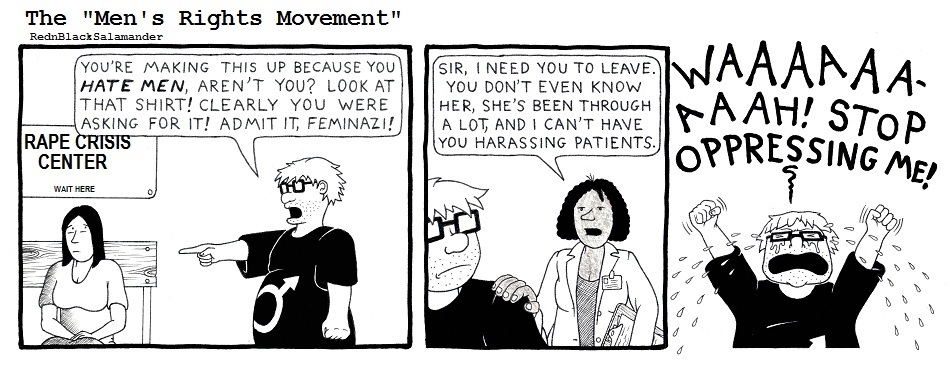
Retrieved from this site
Elliot Rodger’s story is also garnering national attention, including his manifesto where he declares his hatred of women and need to enact revenge through murder. Despite such plain, obvious language, some people have come to Rodger’s defense by displacing blame from his white, male privilege to mental illness. One of my colleagues at USC, Francesca Marie Smith, argued that mental illness can be used as an argumentative strategy to undermine the culpable of agents in a given situation. Examining the 2011 shooting of Gabby Giffords, she concluded that a focus on the mental capacity of Jared Lee Loughner derailed larger conversations about the societal pressures and political polarization that may have fueled the attack.

Elliot should not be memorialized, lauded, made a hero, or removed from blame. This was a calculated, terrorist attack on women as a whole because he had been told “no.” He believed he had a right to the female body as sexual property and projected his own shortcomings on the failure of (female) others. People should not watch his videos or read his manifesto: let us not immortalize a misogynist who decided to take life instead of realize the privilege in his own.

Retrieved from this site
These two stories began and ended very differently. Tal has certainly upset people with his lack of awareness and care for the stories of others, but Elliot has murdered. I do not wish to equate these stories; I am not making claims about “all men.” I am instead commenting on the attributes that they share and what this says about our society.

Both are inherently linked to race and gender, because they laud the white, male perspective over all other bodies. Yes, Elliot was mixed race, but there is no denying his feelings of privilege and superiority that accompany this perspective. Both believe in the power of their privileged body to make decisions and that they have the right to remove of agency from others. Tal and Elliot are not allowed to be told “no,” especially not by people of color or women. Tal cannot be told to “check his privilege” and Elliot cannot be denied sex. These are the autonomous decisions of others that put into question the privilege that Tal and Elliot could not even recognize they had (being blind to their own condition and the conditions of others). 

Retrieved from this site
These men are just two chapters in the larger story of a society that allows their privilege to continue unabated, that celebrates and defends them, and that prevents us from looking inward at our own complicity. If it the fault of people who question Tal’s struggle, Elliot’s mental condition, or my inebriation, then society as a whole is declared “not guilty.” We can live in the façade of a world where these events are mere peppered outliers in a properly functioning society, instead of symptoms of a diseased organism. Walking down the street or taking public transportation is an opportunity for women to be yelled at, groped, followed, threatened, or even worse. Even spending time with trusted friends and family members can lead to the violation of the female body. Althusser's police officer defines the power structure and everyone's position in it by addressing someone, "Hey you!" When I walk down the street and am called "bitch" while being grabbed from behind, that also defines me without my permission, reaction, or ability to subvert.
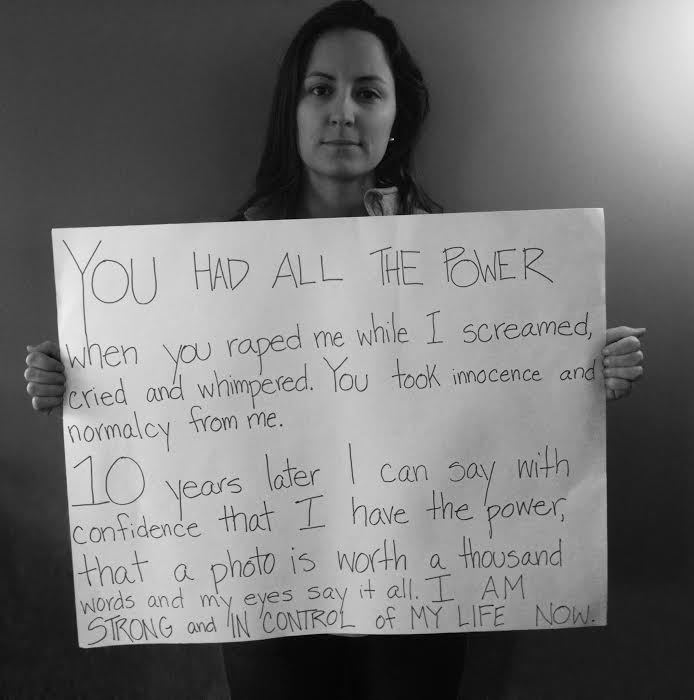
Many more stories of struggle and healing at Project Unbreakable
We cannot let these stories be drowned out by the mob quick to defend the current system. We must give space and attention to those that are fighting for change and awareness of larger issues. We perhaps cannot change the minds of current misogynists or denialists who will resist at all costs the crumbling of the society that preferences them. But, with increased effort, we may be able to usher in new generations brought up in a society that recognizes the issues that face the majority of us and fosters a culture that is actively trying to change it.

Sunday, February 9, 2014

USC Fence and Visibility Politics

Retrieved from Change.org
Responding to security concerns regarding an on-campus shooting in the fall of 2012, the University of Southern California (USC) built a chain-link fence around its campus for the start of the 2013 spring semester. The main section of USC’s University Park Campus was enclosed and ushered in with it new security protocols. Previously, the campus was a free space to walk through at any time of day. Now, anyone wishing to enter campus must negotiate the new openings around the fence. USC affiliates and visitors alike are subject to the gaze of security guards who check identification at specified gate entrances after 9pm. In spite of USC’s presence that extends outside of the main campus area, community members and non-USC affiliates are restricted from accessing campus spaces. The previously unfettered access of the community to campus spaces has been replaced by prominent visual and physical barrier to movement and agency.

The fence has been justified as a security measure to protect students on campus during certain hours. USC does have a primary importance in protecting its students, but choosing to isolate community members because of a few representatives influences the entire community. The consequence of such a symbolic action is to conflate a few violent individuals with the community and to reinforce narratives that off-campus spaces are not safe. This physical division operates as a linguistic turn from the USC community to USC vs. the community. This “us vs. them” mentality occurs through labeling the community as separate from USC affiliates. Carrying a USC ID card provides one access; without it, bodies are turned away and disciplined from entering. In creating this distinction, the community is labeled as violent, criminals, trespassers, unwelcome, and the other. “These names shape our relations with our fellows. They prepare us for some functions and against others, for or against the persons representing these functions. The names go further: they suggest how you shall be for or against” (Burke, 1984, p. 4). The fence helps establish hierarchies in naming that teach USC affiliates how to respond to and treat community members. These rules only operate between 9pm and 6am, but the labels last longer. Symbolic naming reconstructs the relationship between the community and USC that cannot be changed by the hour of the day.           
Foucault's Panopticon as surveillance
In restricting the movement of the body, USC also controls when those bodies can be seen, have a presence, and occupy certain spaces. Control over the body, or biopower and biopolitics, is a power over the movement of the body, its ability to be seen, and to be heard (Foucault, 1982; Hollinshead, 1999). Casper and Moore (2009) refer to “hysterical blindness” where institutions or people either choose not to or are somehow restricted from seeing or being seen (p. 10). “Hypervisuality” is this opposite, where people are targeted, heavily observed, and monitored (Casper & Moore, 2009, p. 10). This “complex system” of sight and obstruction means that powerful political entities can control who can see and who is seen (Casper & Moore, 2009, p. 10). At USC, bodies of students become marked, by carrying a marked ID, and those of community members unmarked as the “other,” not welcome within campus spaces (Phelan, 2004). Visitors to campus can apply for single-entry access for a specific purpose, creating a temporary mark of approval and access by institutions of power. The body receives either acceptance or denial at the fence border based on its membership in the Trojan Family. As Greg Dickinson (2002) notes, “the subject comes to known itself in some more or less coherent way depends on an ability to locate itself” (p. 7). Locating oneself either inside or outside of the campus borders changes how one defines membership, identity, and body autonomy. Knowledge of surveillance by guards also contributes to one’s ability to locate oneself within the political power structure as a target or threat worth monitoring.

There are concerns that these policies endanger community members while offering little extra protection for USC. Vice President of Student Affairs Michael Jackson published an updated campus policy online that said, “We are taking these steps because we care about the security and safety of our students, faculty, staff, guests and neighbors” (para. 4). It is an interesting rhetorical decision to separate “guests” of USC from its “neighbors,” but certainly these are fluctuating categories. The real importance in this statement is that somehow the construction of the fence will not only add protection for USC affiliates but also to the community members. To the contrary, the Los Angeles Times reported on January 13th, 2013, that blocking the USC campus off from non-students, faculty, and staff poses a risk to community members. For example, community members exiting the Exposition/USC stop on the new Metro Expo line used to be able to walk through “the safe, well-lit shortcut through campus” to catch buses at prominent Jefferson Boulevard stops (Jennings & Xia, 2013, para. 9). Now, community members have to circle the entire USC campus or change their regularly traveled public transportation routes home. The construction of the fence not only places the community under additional surveillance, but it also directly influences the movements of the community, with yet unseen benefits for USC. A Daily Trojan letter to the editor echoed these concerns noting that “as a university we should not sacrifice freedom of movement for relatively little or no added security” (Brown, 2013, para. 4).

Though erected and implemented for supposed safety and benefit, borders oftentimes exacerbate economic, class, and racial divides by establishing rhetorical divisions in identity and membership. How bodies are restricted in their movement, displaced, or undervalued also restricts voice and visibility in terms of the powerful and the powerless. Surveillance, monitoring, and the construction of boundaries are all ways that bodies are disciplined and controlled. These barriers to full cooperation and integration, both physical and symbolic, construct an environment where identity is defined through one’s relationship with institutions of power. USC’s fence highlights the modern implications of race, borders, and visibility, where hierarchies still enact biopower and violate political autonomy. 
Retrieved from Mutual Responsibility
A Change.org petition has been started to “Take down the USC gates.” This petition notes the importance of welcoming, opening spaces, and condemn the “us vs them” mentality that the fence represents. The petition includes a space for comments and a letter addressed to USC President Max Nikias and the Provost Elizabeth Garrett. The petition is nearing the 500 signatures needed to be sent to Nikias and Garrett. The power of such a petition may be limited in terms of practical changes, but the petition is itself symbolic that the USC community is in part against the policy instituted by the administration. A lack of student support and involvement, however, many indicate that many are already accustomed to the surveillance and limitations that it imposes. Some may be optimistic about the future of surveillance, but it appears that great action and effort to shift notions of visibility are needed to reclaim privacy and personal autonomy.

References
Brown, N. (2013, January 22). In response to security measures. Daily Trojan. Retrieved from http://dailytrojan.com/2013/01/22/letter-to-the-editor-75/
Burke, K. (1984). Attitudes toward history. Berkeley, CA: University of California Press.
Casper, M. J., & Moore, L. J. (2009). Missing bodies: The politics of visibility. New York, NY: New York University Press.
Dickinson, G. (2002). Joe’s rhetoric: Finding authenticity at Starbucks. Rhetoric Society Quarterly, 32(4), 5–27. doi:10.1080/02773940209391238
Foucault, M. (1982). The subject and power. Critical inquiry, 8(4), 777–795.
Foucault, M. (2012). The history of sexuality: An introduction. New York, NY: Random House Digital, Inc.
Hollinshead, K. (1999). Surveillance of the worlds of tourism: Foucault and the eye-of-power. Tourism Management, 20(1), 7–23. doi:10.1016/S0261-5177(98)00090-9
Jennings, A., & Xia, R. (2013, January 15). USC rolls out the unwelcome mat. Los Angeles Times. Retrieved from http://articles.latimes.com/2013/jan/15/local/la-me-usc-safety-20130116
Phelan, P. (2004). Unmarked: The politics of performance. New York, NY: Routledge.

Wednesday, July 11, 2012

Visual Communication Reflection 3: Testimony

The panel concluded with an evaluation of two types of eyewitness testimony: serial and sequential. Although the presentation looked at media representations of suspect identification and the preliminary results of an ongoing experiment, the researcher (and apparently the scholarly community) are inconclusive about which is best.


When selecting an image of a potential suspect, eye-witnesses are either shown images one after the other in separate pages or screens, or are presented as a part of a line-up with multiple faces present simultaneously. The issues surrounding these two methods is which is the most accurate for selecting a suspect. Each method has its own positives and negatives. The serial method allows for comparison of faces and features, but also forces the witness into a choice to select someone on the page when the suspect may not be present. The sequential method allows for less distractions and full recognition of a face or person, but also makes witnesses hesitate to pick someone if they are not completely certain. The first makes it more likely for an innocent man to be convicted, the second more likely to release a suspect. The researcher hopes to continue experimentation with eye-gaze tracking software to see how serial and sequential identification methods change the participant's gaze, speed, and accuracy.


The media representation that came to my mind first was the debate over testimony accuracy in 12 Angry Men. The eyewitness testimony claims to have seen the act of murder occur through a passing train car. This testimony is severely discredited, however, when a juror notices her eye glasses marks, indicating that her eyesight and its quality was in question. One could have 20/20 vision, however, and still provide inaccurate testimony. The jurors, especially #2 and #3, make the case that the shaky memory of the boy on trial is evidence on his inability to recall the movie he'd seen the previous day. Unfortunately, these lapses in memory are common for humans, even in immediate short term tasks. Remembering something from a previous day, especially under duress and extreme emotion, can be exponentially difficult. It was for the boy in 12 Angry Men and it is also the case for many who identify suspects after a crime. They are under pressure to select a suspect, are emotionally stressed, and may still be coping with the trauma of the crime. Under such circumstances, how could anyone expect accuracy? Yet, some court rooms and convictions still rely on it.


This movie originally came out in 1957, so the accuracy of such visual memory has been contested for many years. In many ways the eyes are the most easily deceived, yet are considered the best representations of truth. For example, even the hand is faster than the eye, making slight of hand and trivial magic appear miraculous to the naked eye. Yet, there is also the axiom, "seeing is believing." So how does one vision, eyes, sight become a dichotomous reality and deception? The key here is in negotiating the history of communication. All communication between people is a dilution of the subject being discussed. I may tell you about an elephant, but until you see one, the word does not have the proper referent. Seeing, thus, creates the connection between a word, symbol, icon, and the reality. Because of this connection, people often stop analyzing, critiquing, and evaluating once sight is confirmed. This leaves an opening for manipulation and deceit that can be left unchecked.


What is the future of eyewitness testimony? The researcher at the conference discussed the hundreds of scholars currently working on the issue and how it is unlikely to be solved soon. Some states are beginning to legislate eyewitness testimony and it has even been mentioned in Supreme Court cases, but until overarching research, data, and conclusions are achieved, there may continue to be mis-identifications and innocent people behind bars.