Showing posts with label Public. Show all posts

Sunday, September 7, 2014

The Online Activist: Making Charity Cold as Ice

There have been many commentaries on the ALS Ice Bucket Challenge, hereafter IBC, including some by my colleagues at Annenberg. I have very mixed feelings about the challenge and they are quite scattered. I will attempt, then, to parse some of my more scholarly opinions on the matter in my overall criticism of the challenge as an event in narcissism and exploitation that has ultimately generated a lot of money for a great cause. In this sentence, I want it to be clear that the process by which these donations are raised is where my primary concern lies and not with the cause itself. Certainly, encouraging donations is a positive enterprise, but I am not completely deontological in that I feel that a critical look at the process and means by which these are obtained are necessary.
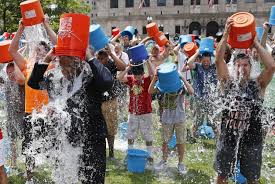
Retrieved from this site.
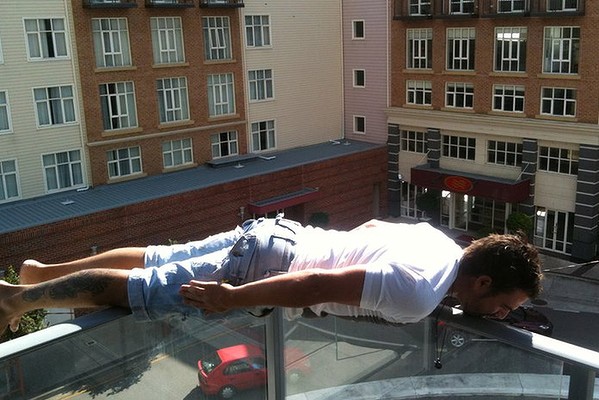
My first issue with the IBC is the notion of "challenge." There has been an increase of challenge and dare activities on the Internet where people are constantly trying to one-up each other. We had planking, for example, where people would try and lie supine on random objects, often in danger. The more dangerous or precarious the planking, the more valuable in terms of Internet clout. Then, came the video challenges by which people were dared to do something inherently dangerous, like jump off a bridge. Not surprisingly, this resulted in the deaths of a few people after drowning trying to meet the dare. Though meant as harmless fun (of which even my lovely siblings have participated in), these challenges raise important questions of safety and what activities the Internet are encouraging off-line. Others have been injured in so-called "cold water plunges" that are often media stunts to raise money for charities or certain causes. These challenges raise questions of agency and the choice of the "dared." When we are really talking about life and death, how can we not see challenge culture as a negative aspect of the Internet that encourages risky and dangerous behavior?

Planking on the edge of a building. Retrieved from this site.
These "I nominate X, X, and X" phrases remind me of the chain letters of the 90s where you had to forward these ridiculous stories (in Yahoo and Hotmail, typically) or someone would come kill you in the evening. What actually happens if you don't accept an IBC, cold water challenge, or forward a chain email? Absolutely nothing. The challenge culture simply takes your unwillingness to do a dare from middle school slumber parties to a global audience. In a word, it's childish. The maintenance of these challenges perpetuates the dangerous culture of one-upping and daring, although not specifically present in the IBC. What we communicate has essentially stayed the same, but how we communicate it has changed. Ong would see the evolving communication technologies as simply offering new forms that communication can take, such as the dare. The IBC has the countdown clock and the threat of non-compliance that email chains (and blackmail, by the way) have to motivate people to act. The dare takes the spirit of altruism out of the donations, because it is reduced to the act of one-upping others, blending in with the crowd, and passing the dare on to others.

My second issue is the notion that this particular charity is particularly worthy, or that I am forced to donate to this particular one. I think that donating to charity is definitely a worthwhile cause and one that the IBC has reminded me that I should do more of. But, why ALS? They have simply come up with this marketing campaign. They, like all charities, are not particularly worthy or more deserving than so many other of the great charities out there that one could donate to. Why should my choice in charity donation be limited because of a "dare" I receive on Facebook? Why shouldn't I donate to a charity that I care about? That I believe does good work? That I feel is not getting enough attention? Perhaps I have been personally affected by close family member having Alzheimer's or diabetes and wish to donate to them. Is this somehow less acceptable because I am not performing the dare made of me? Why should someone else decide where I give my money? This article brings up important concerns about what the money will be used for and the benefits of massive donations to a specific charity (especially one like ALS which focuses on research and impacts very few people).

Retrieved from this site.
My third issue is the performative aspect of the challenge that promotes narcissism and exhibitionism rather than a concern for the charity. Why should I have to dump water on my head to do a good deed? Not to mention the many concerns this has raised in California because of the drought. Why do I have to film it and share it with others? Why isn't donation a private act that doesn't need public display? Because it's not about my donation, it's about me. It's about my public performance of doing good work. Modern culture cannot do a good deed without getting recognized for it. We need public recognition of every A, every act of kindness, every charity. Dumping water is about including myself in the story of ALS and its success, about feeling good about my involvement. The IBC reminds me quite strongly of the "Fitch the Homeless" movement where people donated all of their Abercrombie & Fitch clothes to the homeless. On the surface, just like the IBC, this campaign did provide many donations of much-needing clothing for the homeless. But, this campaign leaves a similarly negative taste in my mouth because of the reasoning behind the actual donations. They were not out of the sake of the good deeds or that the homeless were in need, but that we were getting back at Abercrombie & Fitch CEO would made comments about his clothing being only for "cool kids." Yes, in response to this statement, let's donate all of the Abercrombie & Fitch clothing to the most non-cool kids ever. As this article put it: "what [this campaign] ends up doing is using people experiencing homelessness as pawns to make a political statement." The IBC similarly exploits the narcissism and dare culture of the Internet to encourage donations. Is the end result a positive? Definitely. But should we condone these types of reasons to donate? Absolutely not.

Retrieved from this site.
Donations are not a matter of being dared or used as a way to spite others. Donations should be about caring, giving, appreciating others, working monetarily towards a cause that you believe in. If this is the new way that people donate, then it changes the dynamics of charity, and may shift our thinking so that we require dares and challenges to make a donation. We couldn't act independently or privately for the benefit of a cause, but would need to publicly present ourselves and declare that others must congratulate or copy us in order for the good deed to be meaningful.

I want to reiterate that I think the donations raised about the IBC are absolutely amazing. I never would have thought that reinvigorating the giving spirit (sort of) especially for my generation could be done so successfully (especially after the Kony 2012 disaster). I think that the impassioned speeches of my colleagues on Facebook have been well heard and I do not look down or condemn anyone for doing the IBC. I merely wish to raise questions (albeit rather passionately myself) about the purpose of these type of videos, what they are actually promoting, and the motivations behind the good deeds that make me skeptical of the lasting power of this campaign and others that may try to imitate it.

I will not participate in this if someone challenges me. I've decided that I don't want to perpetuate a culture that made my brother jump off of a bridge, take away people's agency in deciding to donate, or reducing the act of charity to an event in narcissism. I do think that donations are a positive act and this challenge has caused me to see that people don't donate enough. I may donate because of this, I may not. It may be to ALS, it may be to a different charity, or none at all. But, I will not make it a public spectacle or "dare" others to have the giving spirit or shame them into performing for a Facebook audience. Instead, I encourage everyone to see the larger message in the beauty of charity and reject the process by which this challenge is perpetuated.

Wednesday, November 21, 2012

Negative Narratives: Obama is a Muslim

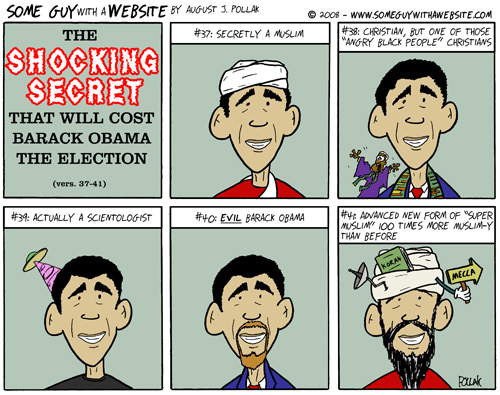
Although commonly known as false, 17% of registered voters still think that Obama is a Muslim. Carefully placed and constructed media and political narratives have created this false, yet influential narrative. I bring up this specific example because of a question posed to me at the NCA conference on the Romney and Mormonism panel. The panel was questioned why voters would consider a Muslim more “mainstream” than a Mormon. After a few stunned moments and a brief corrective response, I wondered as to the likelihood of finding a well-educated academic asking such a question to me at a panel specifically addressing the intersection of religion and politics at a competitive national conference.
The reality that such narratives can gain traction in the public sphere demonstrate who damaging unregulated political advertising and web presence can be. Though Geer argues for the benefit of negative advertising in "In Defense of Negativity", there appears to be more evidence to the contrary. Increased levels of personal attacks, deceptive and manipulated information, and subtle racial comments have become commonplace in American politics. Even though Obama can counter such narratives on his web sites and in media statements, for those who doubt Obama or are looking for confirmation of their skepticism can cling to relevant narratives and ignore contradictory information. Is Obama the most adamant and vocal Christian ever? No. Does he incorporate religion and traditional Judeo-Christian values into his politics as strongly as others? No. But does that mean that people have the right to doubt his Christianity? Furthermore, what does this say about our country when being a Muslim is a derogatory identification that precludes one from the presidency?
The truth is that negative campaigning increases cynicism, allows for the spread of misleading or outright false information, and creates a culture of division. My NCA experience represents for me the negative effects that I have studied being realized. It is one thing to read about the racial connotations of the William "Willie" Horton advertisement and it is another to encounter someone who truly believes what is nothing more than a conspiracy theory that survives only through the radical echo chambers that exist online. With low voter turnout and vicious character attacks from SuperPACs and 527s, I hope that negative campaigning will eventually reach its peak and disappear. For the sake of democracy, a healthy public sphere, and unity in the face of elections, the fostering of a negative political culture must end.

Wednesday, September 26, 2012

The Apocalypse is Near, the Only Question is How?

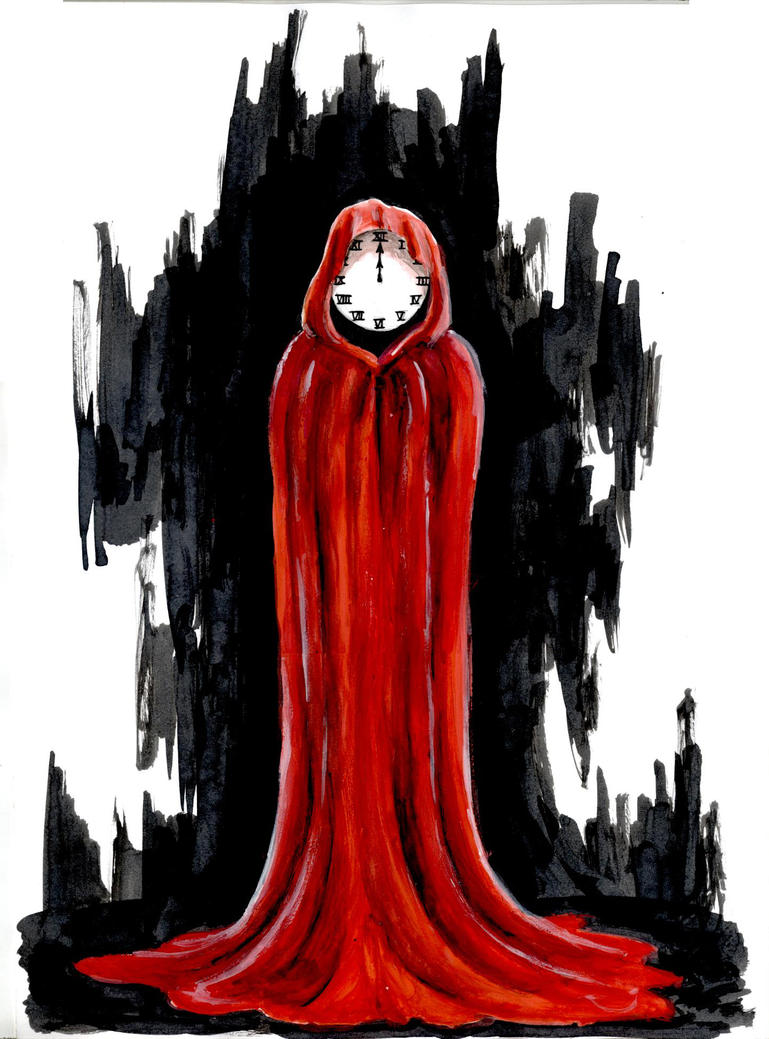
Tick tock, tick tock, tick tock. The clock has been an immutable symbol of life, with each second passing signifying the unstoppable journey towards death. When our time will run out is a mystery, but its inevitability is universally known. In the classic Edgar Allen Poe tale, "The Masque of the Red Death", even the rich and powerful Prince Prospero cannot hide from the ticking black clock of death. For time ends for all of us, and the fear of death, the unknown, the uncertainty of its timing, has played an important role in the creation of laws, social structures, and mythologies.


One representation of the connection between time and death can be found in the Doomsday Clock. This large, symbolic clock is a measurement for how close the world is to destruction, annihilation, and the apocalypse. Its initial intention in 1947 (created by the Bulletin of Atomic Scientists) was to measure the likelihood of nuclear war with 7 minutes to midnight the original time. Using midnight and the tolling of the clock as the endpoint to the countdown, the clock does not move constantly as a normal clock would. Instead, the hands are moved closer and farther away in response to certain actions and occurrences in the world. For example, the clock moved to two minutes to midnight in 1953, during the height of the Cold War. Despite its original symbolism, the Doomsday Clock now responds and moves in accordance to not only nuclear threats, but other apocalyptic threats such as nuclear energy, climate change and malicious technologies. The most recent move from seventeen minutes to five minutes to midnight reflects a topic previously discussed on this blog: climate change. Citing research about the consequences of climate change, the Doomsday Clock moves nearly as close to imminent destruction as under the threat of nuclear war.

The symbolism and rhetoric of the Doomsday Clock makes the comparison of climate change to nuclear war, legitimizing the threat by equating them. To consider the threat from climate change as equal to as as dangerous as nuclear war is a powerful rhetorical statement being made by the BAS. Whether one agrees that climate change should be included in the Doomsday Clock or not, the idea that the end is near is a belief held by many people worldwide. A recent poll shows that 15% of the world population believes that the world will end during their lifetime. Interesting to note is that one's belief in the apocalypse happening in our lifetime is negatively associated with education level. The implications of this could be as simple as those with less education are more likely to be persuaded by alarmist or apocalyptic rhetoric that answers their questions about life and death. This is a relationship that might need further explication and research in another post, but the finding in this study is an intriguing point. Overall, one in seven people believe in the impending apocalypse, and though these percentages fluctuate across nations, the tendency towards apocalyptic thoughts is a global phenomenon. That is to say, it is human to worry and be anxious about death, believing that the end is always near. The range of how the apocalypse will occur varies.


Some believe that the earth will eventually be consumed by the sun.

Some believe that the rapture will occur, saving religious believers and turning the world into a war-torn wasteland.

Some believe that climate change will become unstoppable, with massive flooding, displacement, famine, extreme weather, and war.

Some believe that a disease or virus will infect the world's population causing massive chaos and death.

Some believe that militant groups or governments may obtain nuclear weapons and begin a domino effect of nuclear war.

These beliefs range widely from the scientific to the religious to the fantastical, but the interesting point is that the end is not debated, only when and how. Just as no one can stop the ticking clock in the velvet room, humankind is aware of its eventual destruction, whether personal or global.


Tuesday, April 24, 2012

Eliminating the Electoral College: A Solution to Voter Skepticism

Voter skepticism and overall political aversion is a staggering problem for American political life. Where more people chose not to vote than do and where college students do not even know many prominent political figures (see further discussion here), how do we overcome these issues to create a more aware, active, and optimistic public?


One can always link the importance of emotions over reason to modern day cynicism. This has been a constant theme as the transition from logical fidelity to narrative fidelity requires a shift from analyzing arguments logically to evaluating stories emotionally. If the story of American politics conjures up feelings of regret, shame, disgust, and anger, one is more likely not to participate in that story or that it is not faithful to their picture of themselves or the country. In light of decreased political participation across all groups, perhaps there is less voter participation at the polls, but that the venting of frustrating has moved elsewhere. As more and more people turn to the Internet to express frustrations, remix images for humor, and participate in online interactions, voter participation has dipped over nearly all age groups and educational levels (Hollihan, 2008, Uncivil Wars, chapter 12).

I do not feel that the skepticism in society can be controlled or diminished until politicians change their methods of garnering support, reaching out to voters, and campaigning. Considering that the money and the votes are found more prevalently today in public opinion polls, name recognition, and negative advertising and debating, I do not have confidence that this will change in the future, but perhaps there is hope in some new legislation that can influence these decisions.

One important way I feel that people can be more empowered is by eliminating the electoral college. Although this has been a proposition for a long time and many efforts have been thwarted, I feel that this is one of the most important ways that people can feel reinvigorated by the power of their vote. If a direct popular vote is enacted, then candidates could no longer (or at least to a lesser extent) preference certain states for advertising and visiting. More of the public would have greater access to political information and engagement opportunities. In addition, I believe that voting numbers would increase as Republicans in “blue” states and Democrats in “red” states could still attend the polls and be confident that their vote was going to the candidate of their choosing instead of being lost in the electoral votes.


Many voters were undervalued in the elections in 2000 and 2004, when the popular vote gave the opposing candidate the win, but the electoral college (and the US Supreme Court) gave George W. Bush the presidency. How supportive of the governmental system can the public be expected to be when the direct voting will of the public is denied? When people in safe states can go an entire political campaign without hearing much at all from candidates but when swing states are inundated with information, advertising, and messages, how politically knowledgeable and active can we expect our nation to be? I believe that by removing the electoral college from presidential elections, more people will feel empowered to vote for candidates, much of the attention from candidates will be dispersed to all states, and people will not feel left out or cheated by the system.


Although there are many more steps that can and should be taken to make politics more engaging and equal for the public, the suggestion above is obviously an overly optimistic account of how easily politics can change. Part of the issue, of course, is that those in the system are the ones with the power and that make the decision to change the system. So, any type of legislation that will disadvantage incumbents is likely to fail. Fortunately, there has been legislation in the past and a current movement that has been ratified by 9 states with bills still moving through state legislatures, so perhaps this change is on the horizon.


What other changes would you be interested in seeing? Changes to campaign finance reform? Easy of access to voter registration? Increased civics requirements in public schools? There are many ways that the political system can be changed for the better, and I hope that more gain traction in the years to come.