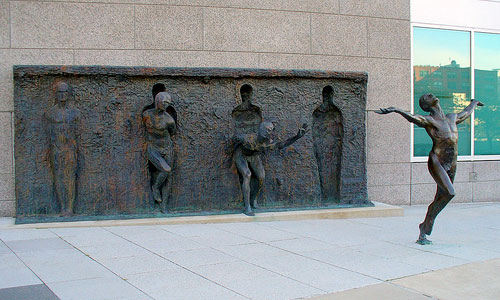
I have taken time off from this blog to go through a PhD rite of passage: the qualifying exam. There has been plenty of time for me to reflect on the purpose of the exam and the idea of rite of passage in general. From tests of adulthood to tests of skill to tests of preparation, rites of passage are important rituals in human life. For the past summer, I have been undergoing intensive preparation, reading, memorizing, and note-taking in order to prove my knowledge of my specific areas of expertise. Many schools do the qualifying process differently (and even within a school), but they all share the same goal of measuring knowledge and readiness to achieve the PhD. Now finished the writing process (I still have to defend my answers orally in front of my committee), I have often asked myself why PhD programs require these types of exams and why rites of passage in general are so very important to the maintenance of society.
I certainly learned a lot about the importance of ritual during my studying. Kenneth Burke argued that rituals reinforce "piety," or the maintenance of an overarching order based on social and role expectations. For example, rituals of marriage reinforce the role that men and women should strive to be husbands and wives. The ritual of confession cleanses sin and reinforces how people perform the role of a good Christian. When I engage in the ritual of the qualifying exam, I reify the order that my knowledge is and should be accurately be measured through my performance on this exam. Considering that the PhD qualifies me to teach students at a university, it would make sense that my exam would try to measure my knowledge, ability to synthesize fields of inquiry, and grasp of my given specialty. But, will I ever truly be asked to perform this type of task again? What does a concentrated burst of studying and writing (without access to notes, materials, or the Internet) really prepare me for?
I think the answer lies in looking at the larger picture of rites of passage and their purpose. There is an episode of "Taboo" where boys undergo extensive body scarification with toothed instruments and razors that bleed profusely all over their bodies. Going through this pain and struggle is part of the child's proof that they are able to understand and undergo the pain of adulthood. Though they may never experience such intensive pain again, this ritual proves that if the child can go through this pain, they can survive everything else.
Warning: This video shows graphic cutting and blood. Retrieved from this site.
The PhD program requires me to undergo a different kind of pain: mental pain. Though comparing this process to extensive tattoos may seem a bit extreme, there are similarities here between pushing oneself to the limit so that all challenges that come afterwards are manageable. Perhaps because of this experience, I will be better able to tackle journal deadlines, advising my own students, preparing for classes, and the myriad of administrative tasks. Not only will I have a base level of understanding of this material to draw from, but I will also be used to the long hours, mental strain, and intense workload. The qualifying exam does not quite measure my ability to succeed in this specific task. It is instead a concentrated and purposefully exaggerated challenge.
As one of my professors once said, I may thank everyone one day for pushing me to my limits, challenging me, and preparing me for the difficult work ahead of me as a professor. Of course, many people in the PhD program are not interested in continuing into academia. This rite of passage, however, has become a universal part of achieving the PhD, an expected mark of academic excellence that you must achieve to be awarded the degree. As my advisor said, he wouldn't let me take the exam unless he knew I was ready, which perhaps begs the question of whether I am really in danger of failing at all. The point, though, is to undergo the experience and come out a better and well prepared scholar. I remember the pain of running during my first half marathon, but the great feeling of accomplishment after it was over. Of course, the process was extremely difficult, taxing, and exhausting, but now that it is over, I do feel a sense of accomplishment. I hope that this accomplishment is rewarded with a pass in the weeks to come! Best of luck to everyone else going through this rite of passage. See you on the other side!
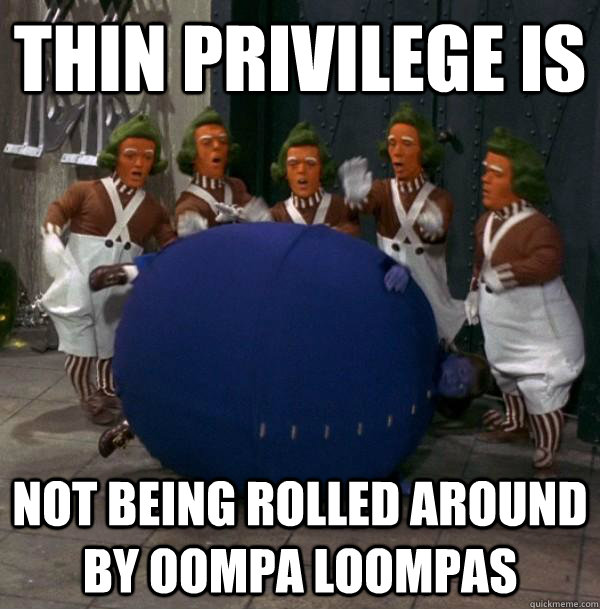
There has been a recent surge in websites, blogs, and tumblrs that deal with "Thin Privilege." These sites have also spawned spoof or parody sites which have in turn encouraged reaction sites. In the back-and-forth on these websites that I have followed, I would like to comment on a common theme which I think connects issues of health and bodies to the LGBTQ community: choice. First, I will explain these communities then I will draw from examples from each and compare them through Burke's pentad as revolving around agency and choice.
Thin Privilege reflects the advantages and benefits that come with being thin (or non-fat) in a society that values skinny bodies over large bodies. This has resulted in cultural and institutionally prejudices levied at non-thin people. Thisisthinprivilege.tumblr.com is dedicated to individuals sharing their personal stories of discrimination because of their size. Key themes are the idea that being large in body is associated with unhealthiness (which they argue is not necessarily true), being impacted by a lack of services available to them (such as the size of airplane seats), lacking role models in media, and experiencing fat stigma (e.g., strangers trying to give diet advice or calling names). The stories range from not being able to find clothing sizes in stores to having doctors ignore potential health issues because weight was a perceived larger concern. This site often posts "troll" questions and comments and critiques them as coming from a place of privilege or purposefully trying to undermine their cause. The key take-away from this site is that no one with privilege can deny others their claim to discrimination, police their language, or undermine their cause.
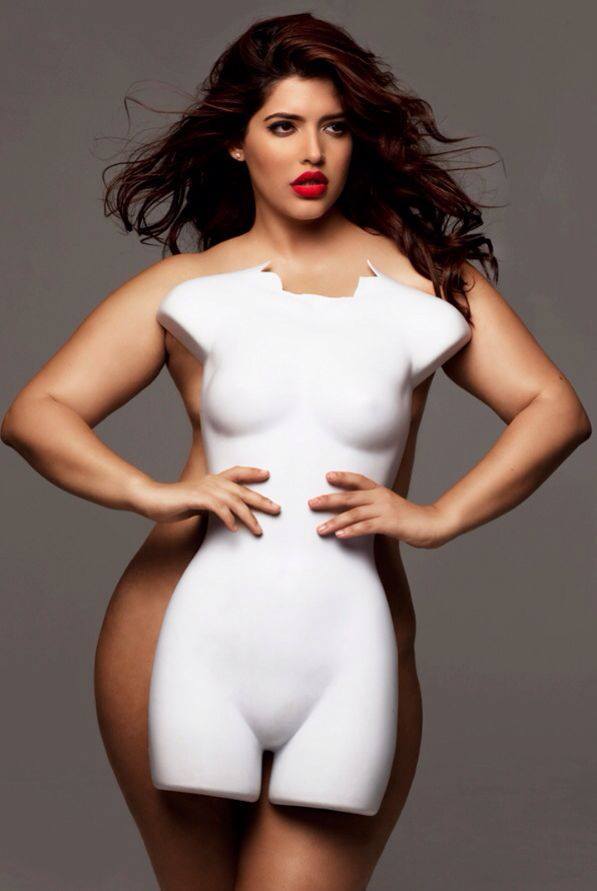
Retrieved from this blog as an example of skewed expectations and a world made for unrealistic body sizes.
From comments on these webpages, I found immense similarities to discussions of LGBTQ rights. The similarities center around the idea of choice. If one believes that being fat or being LGBTQ is a choice, they are more likely to be negative, critical, and dismissive of societal backlash that occurs for them. If one believes that these identifications happen naturally or are a product of the environment (e.g., hereditary/genetic), then one is more sympathetic to the effects experienced. This proclivity to blame the individual (agent) or the environment (scene) can be mapped onto Burke's pentad. The pentad is a tool that critic's can use to analyze situations in terms of its agent, agency, purpose, scene, and act. If the act performed is discrimination against someone, emphasizing the agent may cause one to believe that the recipient caused it themselves. Emphasizing the scene, however, may cause one to believe that society fosters discriminatory attitudes against minority communities. Papers I've been working on, influenced strongly by papers by Brock (1990), argue that these can be directly related to political ideology. Republicans may be more likely to consider the agent responsible (e.g., pull one up by one's bootstraps) and Democrats may be more likely to consider extenuating circumstances (e.g., how scenic factors influence one's actions and treatment).
To consider a large person and a gay person autonomous agents that make choices about their identity is to remove environmental and societal factors from responsibility. This type of view undermines the culpability of institutions and those with normative privilege (e.g., thin and hetero-) for discrimination. Somehow, making a choice to do something as opposed to having it happen to you, makes one more deserving of disdain and scorn. Those who had no choice can be viewed as vulnerable, victims, and innocent. Analyzing these situations as similar help us to connect issues of discrimination and shared experiences of minorities against ableist/cis/hetero/white/male society. From within that community, it is hard to assign oneself culpability and guilt; people would rather blame the individual than admit shared responsibility for discrimination. Just as people were quick to yell "post-race!" with the election of Obama, people are quick to jump to answers that do not include our own or systemic faults.
Retrieved from this site to represent the traditional Barbie size to the new "real proportions" doll
How does society move beyond discrimination? I think it's important for those of us with privilege is to step back and truly listen to the words of those without privilege or those at the intersections. We cannot understand the discrimination not having been privy to it. Trying to deny the stories of others or to argue with our own stories of discrimination only perpetuates structural inequalities. Just consider the backlash that happened when a new Barbie copy with "realistic proportions" came out that would encourage girls to idolize being unhealthy. Instead, why can we not consider these positive steps to creating a more inclusive culture that teaches people to love and respect their own bodies, no matter its size? ThisisThinPrivilege.tumblr.com is fighting against other blogs and the system that devalues fat bodies. Though this article is not meant to be evaluative, it cannot help but reach the conclusion that to reduce people's identities to arbitrary choices is to undermine the perpetual problem of discrimination. As posted on the website, people are fighting a system that "systematically reduces each of us to our dress size, hip measurement, and waist size, then grants favors, opportunities, or simple lack of punishment when the numbers are low enough" and instead fights for a system that treats everyone as equally human.
A recentLA Times op-ed by Pat Morrison addressed importance
similarities between science-deniers that affect more people than just
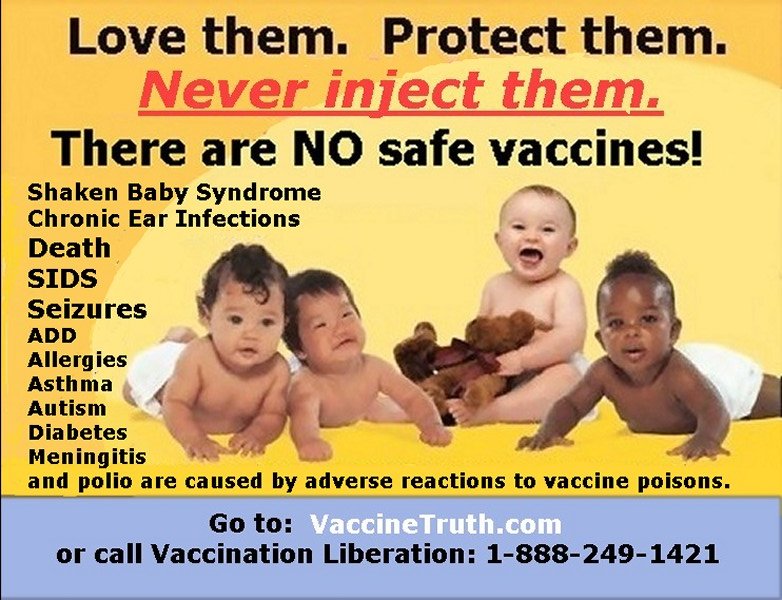
believers. Creationists and anti-vaccine advocates affect the collective
intellectual and physical health of those around them due to their rejection of
scientific evidence. Though this is an important point, it only scrapes the
surface of larger issues surrounding pervasive skepticism and the borrowing of
scientific authority.
In associating science with faith, deniers of current
scientific knowledge present themselves as "true" science. These
groups portray themselves as fighting against hegemonic elites that wish to
silence minority opposition. Anti-vaxxers claim theright to abstain, equating scientific practice with
replacing parental control. Creationists point to gaps in scientific research
and claim that science requires a greaterleap of faith than religious explanations.
By appealing to scientific standards of skepticism,
re-testing, and a progressive search for knowledge, science-deniers can pose as
legitimate scientific inquiry. Creationists use this platform to enter science textbooks,
school boards,
and even university faculty.
Anti-vaxxers use this platform to flood public spaces withliterature,websites, andnon-profits.
Other
skeptical groups, such as climate deniers, also appeal to “scientific” facts
and gaps in evidence to forestall legislative action. Democratic Senator (CA)
Barbara Boxer held a committee about the President’s
Action Plan that was met with much controversy over Dr. Judith Curry’s
testimony. In this testimony, Dr. Curry misrepresented Intergovernmental Panel
on Climate Change’s reports on current scientific evidence and cherry-picked
statements of uncertainty about current predictions.
Morrison’s
original comparison begins to uncover this larger, pervasive issue of
skepticism that ignores scientific evidence and authority, and replaces it with
a facade of scientific inquiry. The key mistake in the piece however, is the
piece’s ending that states, “Ignorance is curable by education, but willfully
ignoring the facts can be contagious — and even fatal.” To assume that
education is the missing link between science accepters and deniers is to
oversimplify the argumentative frameworks that each occupies.
Those who
believe in creationism tie their beliefs to every action of their lives as a
guiding force. The origin of humanity is not merely an issue of fact, but of the
definition and explanation for one’s entire life. Rejecting creationism or not
fighting for its inclusion in schools is viewed as a betrayal of faith and
submission to the elites of science that denies alternative explanations.
Anti-vaxxers
are focused on protecting their children and the children of others, an extremely
powerful motivating factor. Simply presenting new information or facts may not
deter strongly held beliefs influenced by celebrity moms or one’s peers.
Those who
deny climate change may find themselves more fiercely loyal to a political
party or economic influences than long-term environmental protection. More
science and data may fall on deaf ears, as other priorities overshadow and
complicate accepting new information.
Kenneth
Burke, rhetorician and scholar, wrote in Attitudes
Towards History, “The shift to another attitude, requiring a
different rationalization, does involve ‘conflict.’ Insofar as we do not ‘travel
light,’ we thus assemble much intellectual baggage, and the attempt to reshape
this to new exigencies may require considerable enterprise” (p. 184). To replace
the baggage collected over one’s entire life with new, contradictory exigencies
nearly requires rejection. Introducing new information or repeating old
information through education is rarely enough to shift rationalizations for
action and behavior.
Skeptics do not “ignore the facts;”
they simply do not respect the facts lauded by scientific frameworks. Instead,
they replace with their own facts such as the importance of God’s role in human
origins, the autonomy of parents over children, and the benefits of short term party
loyalty over long term environmental protection. The issue is not, then,
ignorance, but of warring frameworks that are currently empowered by a
skeptical culture to reject scientific authority. Instead, the focus should be
on separating what is science and what is not, giving skeptics a voice, but not
allowing that voice to be labeled scientific.
The culture of skepticism is damaging
scientific enterprise and Morrison is right to point out the wide effects that
skepticism has. The conclusion, however, is not to rely on education, but
acknowledging alternative viewpoints while minimizing their influence.
These are questions that guide my research and I believe they are important for all researchers and communication scholars. Feel free to add questions in the comments and debate the value of these questions. Within my interests in politics, policy formation, and the negotiation of power, I try to consider:
General Research Questions
What is my object or artifact of inquiry?
Is this artifact "interesting" or valuable to the academic community?
What questions operationalize and analyze my artifact?
How do I answer these questions?
Whose shoulders can I stand on?
Topic Specific Questions
Why do people believe some things over others?
What influences information consumption?
How are people accessing and processing information and data?
What are the effects of technology on social, political, and cultural activities?
Who has power, how did they obtain it, and how do they use it?
Who are the privileged/marginalized voices and what do they say?
What elements of speeches, advertisements, images, and narratives make them persuasive?
I'd previously wanted to title this: Words you shouldn't say anymore, but I changed the title to reflect how my opinions aren't those of everyone. Prescribing language changes for all people, though I believe that these are respectful and accurate changes, is problematic for many reasons. These suggestions are more for people who are already in line with my beliefs, namely liberal ones, and how to adjust your language choices to be more respectful of others and values.
Racial slurs: First of all, my previous post on Django referenced this briefly, but racial slurs are not appropriate in every day use. This primarily applies to the non-African American, black, brown, or identifying groups that may use racial slurs in jest, for shock value, or as a political statement. They are not words that most of us should or can say, by re-appropriating them into white vernacular, they lose their political meaning and importance. Simply put, these words can be used to reinforce power hierarchies and should not be used lightly or at all by dominant groups.
Tarantino Responding to Criticism about Django
Pro-life: This term has bothered me for a long time. What exactly is pro-life about banning women from having abortions? Abortions can be a life-saving procedure and refusing one can lead to complications and death. The idea that a fetus is alive is based on religious definitions that life begins at conception. For non-believers or those that operate under a different definition of when life begins, the life of the mother is the life that needs to be protected. The life of the mother is not always immediately in physical danger, as was Savita Halappanavar's, but there is always emotional and psychological life to worry about. Although many pregnancies are intentional, women do become pregnant for many reasons accidental or through force. Denying these women the right to closure and healing from rape, incest, or other emotional traumas can be damaging to a woman's life as well. Instead of "pro-life" which I have described as very misleading, I endorse the term "anti-choice" to emphasize the true issue: deciding for women what they wish to do with their bodies. If life were really the issue, then the woman's life would weigh importance as well, which for many anti-choice groups, though not all, it is of secondary importance, if that. Perhaps the most disturbing part of the anti-choice movement is that by equating the fetus with a child, they respond to abortion clinics and places like Planned Parenthood as if they were attacking murderers. Abortion practitioners have been threatened and killed (pro-life, huh?) and funding for PP has been cut in many states.
Savita Halappanavar
English in general: I recently read an amazing chapter from bell hooks who discussed the emphasis on clean, pure English as a means of stripping people (primarily former slaves and their descendants) from keeping in touch with their roots through dialect. She quoted a poem by Adrienne Rich saying, "this is the language of my oppressor, but I need it to talk to you". This statement is powerful and I feel needs no explanation or extrapolation except to say that the hegemony of the English language is not something always laudable. We should all try to learn other languages and encourage others (as bell hooks describes in a teaching role) whether they be friends, family, or students to speak how they feel comfortable speaking and encourage expression in multiple voices.
Boy/girlfriend, wife/husband: I think that these words should be replaced with the gender neutral counterparts of "significant other", "partner", "spouse", etc. Assigning and using these terms reinforces heteronormative definitions of marriage that use the binary gender terms, male and female, as the standard. Despite setbacks, such as Proposition 8, marriage is on its way to being redefined as open to homosexual couples. To reflect this openness and one's agreement with the changes, more gender neutral terms should be used to describe couples. Some homosexual couples may prefer the girl/girl friend or boy/boy friend terms, and that should be respected. For general conversation, however, the gender neutral terms are more encompassing and respectful. This gender neutrality follows for trans* and members of the queer community. Pronoun and name usage is something that I am still struggling with, but I find that simply asking for one's preferred gender pronoun is the best option. For some, their outward appearance may not reflect where they are on their personal journey of identification and which gender pronoun they would prefer. One's sexual organs does not adequately describe most people's gender identities and can be restricting in terms of expression. I remember hearing a quotation from a friend at an LGBTQ event at Northeastern: "I wish I had been born a girl, instead of just having this vagina." This statement highlights the struggle of many people attempting to realign their physical gender with one's felt gender and how sexual organs should be not be defining characteristic of a human being.
These are a few suggestions for different word choices that I think might be helpful for more open, liberal-minded people. For people who are anti-choice, pro-heteronormativity, and perhaps unconcerned with issues of race, these suggestions may fall on deaf ears. For others, I hope that these at least spark some thinking about the power of the words that we use, what context we use them, and who we use them with in defying hierarchies and promoting equality.
I have previously discussed climate change from the perspective of science and extrapolation to future consequences of global warming. Not only are the predictions highly varied, but the consequences of them range from changing in weather patterns to massive displacement, war, and global food insecurity. The Intergovernmental Panel on Climate Change (IPCC) is often considered the foremost authority on climate change and uses amassed scientific data to create a consensus surrounding climate change, urging countries and politicians to act.
Here is where the problems occur, because policies to limit the effects of climate change are not occurring, especially not in the United States. But why? The answer to this question lies in the polarization of politics and the divide between Republicans and Democrats on the climate change issue. Gauchat (2012) proposed the politicalization of science where over time, the issue of scientific authority has become inextricably tied to political loyalties. Consequently, Republicans and frequent church-goers have significantly lost faith and trust in science as the authority of truth. To accept science as the authority is to abandon other methods of explanation, such as faith, and become disloyal to party lines.
The evidence for this claim is seen not only in the polls that Gauchat analysed, but also from the actions of Congress and the Republicans in it. Funding for climate change research under the Republican chairs of committees and subcommittees has been debated and in some cases cut. In defense of removing National Science Foundation funding for climate change projects, Chairman
Ralph Hall (R-TX) said, “the reluctance to engage in conversations with people
who have doubts or question the veracity of climate science is at the heart of
the wrong doing that undermines trust in climate change science”, thereby
legitimating climate contrarians by placing them at even footing with
scientists (“Witnesses Highlight Flawed Processes Used to Generate Climate Change Science, Inform Policy,” 2011).
Perhaps most shocking and incredible is the recent ruling by North Carolina that scientists are no longer allowed to use extrapolations to predict future implications of climate change, but can only use past data. This is an exemplar of politics directly interfering with scientific integrity, capabilities, and validity with no justification. Stephen Colbert mocked this bill excellently by noting that North Carolina are blocking scientific inquiry in attempts to hide data that would force them to act in favor of the scientific consensus. Literally restricting science's ability to chart and model future climate change implications further undermines science's ability to predict problems and urge political action. For without powerful, scientifically accurate, and frankly, worrisome data, how are politicians to be convinced to action?
Herein lies another complication: the urgency of climate change and in fact its very existence is wholeheartedly rejected by many politicians, making any attempt to convince them quite fruitless. Climate change skeptics or contrarians simply will not be persuaded by any scientific plea for action, no matter how urgent or convincing. The situation is remarkably quite similar to the idea of the religious apocalypse: for no matter how urgent or persuasive a prophet of the rapture is, non-religious, agnostic, or atheistic people will simply not be persuaded. Faith to them, just as science appears to be for Republicans and church-goers, does not hold any persuasive clout.
The result of this skepticism is the questioning of all scientific data to support policy ideas. Instead of taking action, politicians wait for "conclusive" scientific evidence, which threatens the world's ability to ever fully prepare for the consequences of climate change. Soon, it may be too late to act, and we will reach the tipping point, where there is no longer the opportunity for preventative measures, but only response. How serious these consequences will be revealed only through time, but we know now that the longer we wait, the worse it will be. Soon, it will be too late to act, but the world will cry out the famous words of Macbeth (Act 3, Scene 4):
"I am in blood, stepped in so far that, should I wade no more,
I previously mentioned delving into the relationship between belief in the apocalypse and intelligence. An article from Reuters reported, "Gottfried [author of the study] also said that people with lower education or household income levels, as well as those under 35 years old, were more likely to believe in an apocalypse during their lifetime or in 2012, or have anxiety over the prospect". Although the apocalypse came and went in 2012, new predictions emerge just as quickly as they pass. There is a seemingly societal need and urge to respect an "end times" or create an eschatology that justifies actions. For example, the Westboro Baptist Church has created a pre-millenialist view of Christ's second coming, where God is angered by the support of and equality given to members of the LGBTQ community, as well as other "sinful" actors. Once the world delves into too much sin, Christ will return and usher in the rapture, new millennium, and punish the sinners and all who aided them. Not all views of the apocalypse are religious, but many religions include their own "end times" stories as a foil to their creation myths. Climate change is an interesting complement to echatological views of the end of the world, as damage and degradation of the environment are popular "signs". Furthermore, the consequences predicted as the most severe or "worst case scenario" for climate change could bring the Earth into irreversible global catastrophe. Yale's Project on Climate Change Communication published a study about the six types of Americans from the "alarmed" to the "dismissive". Despite a scientific consensus on anthropogenic global warming/climate change, nearly equal percentages of the population are highly concerned (12%) as least concerned (10%). Though most Americans fall in the middle categories from generally concerned to disengaged (62%), all groups except for the dismissive group felt like they needed more information about climate change. The dismissive group, though science would indicate that they are wrong or perhaps the least accurately informed felt that they were the most informed about climate change (91% of dismissives said they were very or fairly well-informed).
Graph from Yale's Project on Climate Change Communication (2011)
Gauchat and the Pew Poll on Values would indicate that the politicalization of science has created a large divide between Democrats and Republicans on the environment. Gauchat (2012) discussed the correlation between religious service attendance and conservatism with an increased doubt in the authority of science. Doubting the scientific evidence or predictions for the environment could greatly affect one's opinion of climate change, a environmental future that is difficult to see or completely grasp. Although knowledge and concern for global warming is polarizing around political parties, there is hope that more people overall are concerned or at least a majority is concerned with the changes occurring in current temperatures and future risks around the globe.
I had previously scheduled a different topic, but in light of a few well-reasoned and interesting blog posts by my colleagues at USC, I've decided to throw my own hat into the ring about open-access journals and the future of publishing. I encourage you to read Alex Leavitt's initial post and Andrew Schrock's response post before reading my response below. First, I wish to declare my support for Alex and Andrew in their praise of open-access. In theory, the term is a sign of open information, shared meanings, and enlightenment. I find, however, that such thinking is, at least in current iterations, overly optimistic. In this vein, I agree more closely with Andrew's caution towards open-access in that there are other things to consider before launching a personal crusade. Alex has taken a more hard-line approach, calling for the complete abstention of "closed access", not only for himself, but for all scholars. Below I will enumerate issues that I have with such a declaration and why I would urge scholars to question the implications and consequences of such actions. I will also explain why I find Andrew's response and the continuation of some of his ideas as a more practical compromise. I would call attention to the overarching idea of the initial post: that open-access is moral and hortatorical/obligatory for scholars. This is known as the fallacy by composition, or the logical reasoning that assumes that something true of part of a whole must also be true of the whole. I completely agree that pursuing open access and supporting it is a noble goal for scholars, but I do not agree with its universal application. The implication in making such generalizations is that for all scholars, no matter their discipline or situation, that this is the correct or moral move. This, I believe, excludes the work of other scholars who may not study new technologies, be passionate about open-access and the share of information, or have the same gain by making such an announcement. The community in which and the topics which Alex studies uniquely positions him to make this declaration. Rhetorical scholars would have no interest in my admission to do the same. Creating a blanket statement by definition ignores scholarly differences that may prohibit and inhibit one from making the same choice. Although this would merit another blog post entirely, I will mention here briefly the notion of "white male privilege" that creates a hegemonic structure that rewards those in power for taking risks and penalizes others for not conforming. Whereas a great media and Internet scholar like danah boyd can "get away with" avoiding closed-access publishing, others without such clout or experience could have their careers dashed for making the same choice. This is also inherently linked to one's name/mark in a field and one's youth (read newness) to academia. This brings me to the issue of "choice" in general. I have previously written about this in regards to the Taylor Cotter incident, and the topic emerges here again. The truth is that although "open access" is a laudable goal, who is this information really "open" to? As Andrew mentions, scholars live in "privileged media and spaces that are not open to everyone" by definition, because our work is shared not necessarily to the general public, but for the purposes of academic advancement, theory, and methodology. This is not applicable to all scholars, of course, but I feel that for the majority, it is. For example, my current RAship with the Earth Science Communication Initiative is working on helping combine multiple voices (scientists, politicians, religious leaders, and activists) in working towards climate change. Will the people we work with and access be interested in the theory papers I write on apocalyptic rhetoric and political inaction? Probably not. Will they be interested in plans for action, evaluations of the conversations and solutions? Most likely. That distinction for me is the clear divide between open and closed access, simply not everything has to be or is somehow better because it can (but won't) be accessed by non-scholars. Andrew makes this point as well, noting that few people have ever denied him copies of papers he has wished to read. I have also never been denied and I have emailed copies of my papers after conferences when asked even if in theory they reside only in closed-accessed spaces. As a side note, aren't all universities closed systems of information? How many people get to see the paper I wrote for Randy Lake's "Social Movements as Rhetorical Form" class unless I publish it? Wasn't the creation of journals and online publications for this very reason? The ultimate goal of "open access", I would assume, is for the free and open sharing of information, an online Habermasian coffee shop of academic intellect. But, I think one of the best places for this to happen is at conferences and meet-ups. Of course, this brings me back to the idea of choice and the access related to money/wealth that some scholars do not have. Conferences, especially inter/national ones are not affordable for everyone, though I think academics are creating solutions to this such as local conferences (my VisComm conference in Utah was more engaging than the national ones I've been to) and creating tiers of payment for cheaper options of registration. Those issues aside, conferences are more personal and expressive points of interaction that online spaces (for now). I am sure that the capabilities will continue to grow, but for now, there is no equivalent to the panel experience. For example, my past panel at NCA gained me new colleagues, gave me new insights into the topic (Romney's Mormonism), and I exchanged numerous business cards from panel attendees. This most likely would not have been possible if I had merely posted this paper online. Part of the problem is in the bog of online scholarship, where does one begin? How to sift through all of the information accessible? Again, it comes down to one's name in the field. Whereas Alex may be receiving much attention for his post, this one will most likely go unnoticed. How does one get to the place where open-access is recognized, lauded, and meaningful? After participating in the current system. Andrew also praises the networking opportunities that come from associations and conferences that may not be hosting everything online, as spaces for expression and exchanging of ideas. These are possible because of communication associations that host them. These associations are also responsible for the publishing issues that we have. As a previous employee of a journal publishing company, I will first say that vilifying the publishing company for the state of academic research is not only unwarranted, but it is also counterproductive. Without going into too much detail about the process, I would merely say this: how successful would a publishing company be that placed restrictions on its clients? Publishing companies provide printing and online service at the request of the association/organization, nothing more. It is that group's decision for how to have journals accessed and available to members. These prices increase with options and there may be monetary royalties per subscriber or journal downloaded, but overall, these are restrictions and choices placed by the organizations themselves. Are we now to boycott any type of scholarly communication organization? Do we become lone wolf scholars trapped in an online bubble? Either way, the publishing company is simple providing a service, information and access is not for them to decide. In conclusion, though I admire Alex's passion for the open-access movement, I find it highly problematic to engage with at the exclusion of associations, journals, and other scholars. I find myself agreeing with Andrew, more or less and his more measured approach, that praises free and open publication, but does not demonizes those who do not engage, as there are many reasons for doing so. To think that I could not approach my friend and colleague to work on a paper, conference submission, or journal saddens me because those ideas/collaborations will be fully lost to the academic community, as opposed to being slightly restricted. I suppose that I will not be co-authoring anything with Alex in the future, but perhaps Andrew and I may. To summarize, TL;DR
Open access in theory is a moral no-brainer, but in application, it is problematized by issues of choice, universality, and execution
Female, minority, or any combination of intersectionality may not have the same "choice" that Alex made
Scholars who are young, at lower ranked universities, or not in technology/new media studies may be unduly hurt by restricting their publishing
The current system is changing to encompass more of these demands for online access (why destroy and boycott the system that is already attempting to do what we ask of it?)
Shouldn't we be opening access to those we know will read/are interested, as opposed to the general public out of principle? (obviously this depends on one's field/research)
There is no substitute currently for the in-person exchange of information
Associations/organizations that obtain/release information are to blame, not publishing companies
Currently, these associations provide scholars with more benefits that restrictions
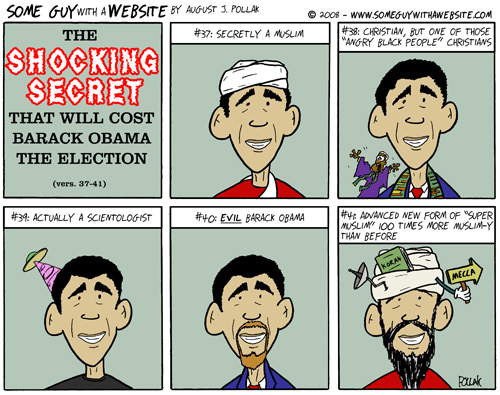
Although commonly known as false, 17% of registered voters still think that Obama is a Muslim. Carefully placed and constructed media and political narratives have created this false, yet influential narrative. I bring up this specific example because of a question posed to me at the NCA conference on the Romney and Mormonism panel. The panel was questioned why voters would consider a Muslim more “mainstream” than a Mormon. After a few stunned moments and a brief corrective response, I wondered as to the likelihood of finding a well-educated academic asking such a question to me at a panel specifically addressing the intersection of religion and politics at a competitive national conference.
The reality that such narratives can gain traction in the public sphere demonstrate who damaging unregulated political advertising and web presence can be. Though Geer argues for the benefit of negative advertising in "In Defense of Negativity", there appears to be more evidence to the contrary. Increased levels of personal attacks, deceptive and manipulated information, and subtle racial comments have become commonplace in American politics. Even though Obama can counter such narratives on his web sites and in media statements, for those who doubt Obama or are looking for confirmation of their skepticism can cling to relevant narratives and ignore contradictory information. Is Obama the most adamant and vocal Christian ever? No. Does he incorporate religion and traditional Judeo-Christian values into his politics as strongly as others? No. But does that mean that people have the right to doubt his Christianity? Furthermore, what does this say about our country when being a Muslim is a derogatory identification that precludes one from the presidency?
The truth is that negative campaigning increases cynicism, allows for the spread of misleading or outright false information, and creates a culture of division. My NCA experience represents for me the negative effects that I have studied being realized. It is one thing to read about the racial connotations of the William "Willie" Horton advertisement and it is another to encounter someone who truly believes what is nothing more than a conspiracy theory that survives only through the radical echo chambers that exist online. With low voter turnout and vicious character attacks from SuperPACs and 527s, I hope that negative campaigning will eventually reach its peak and disappear. For the sake of democracy, a healthy public sphere, and unity in the face of elections, the fostering of a negative political culture must end.
Ever since I gave a lecture on Foucault to the undergraduates at USC, I have begun to link my interests in politics with issues of power, gender, the body, the environment, and religion. Each of these areas has their own discourse, language, and regulations. When these discourses begin to mix and gain voices in each other's spheres, problems can emerge. Consider the mixing of religion in the educational system, where scientific and religious discourses collide in how to teach the origin of humanity. Some would argue that religion should be separate from education and has no role to play, where others would defend its inclusion and right to be there wholeheartedly. Whichever side one would fall on, the reality is that the mixing of discourses complicates ideas of knowledge, power, and truth.
This specific example explores the relationship between religion and science/politics that has been a sordid affair for centuries. From recent debates about abortion, birth control to the nomination of Paul Ryan as the vice presidential nominee, religion and political regulation has risen to prominence. Whereas political discourse relies on the participation of the people and elected politicians to craft and decide regulations, religious discourse (primarily Judeo-Christian in America) places knowledge and truth within the Bible and religious leaders. The problem when they become mixed is that people who are atheists or follow a different faith are subjugated to non-universal laws. Religious discourses are better suited to personal or community spheres for those who believe, whereas political discourses are better suited to federal and governmental policies.
I was surprised at the proposed mixing of the two advocated at a sermon I attended in Pittsburgh. The overall theme of the sermon was to redefine freedom to be less self-centered and more inclusive of community, family, and religious purposes. The preacher discussed the traditional definition of freedom as "doing what you want whenever you want" as a participant in the sin of pride. He instead argued for freedom meaning the opportunity to follow God's plan and do what we were designed to do in life. While seemingly a plea for people to help others and avoid what can sometimes become a self-centered, navel-gazing activity of "I want", I found more sinister and underlying ideologies.
In a world, in a discourse where freedom doesn't mean free to choose or free to follow one's own actions, freedom is actually replaced with restriction, regulation, and oppression. When we sacrifice individual liberties in order to follow God's design, we ignore the 16% of people in the United States with no religious affiliation, those not part of the Christian majority religion, and those who do not wish to mix their religion and politics in favor, we lose freedom. I define freedom as the elusive ability to choose, to have options, to serve oneself as one desires as long as one does not harm, silence, or oppress others. Following God's law means that people do not have the freedom to choose, especially when one thinks of women's rights over their own bodies.
An inquiry into the complications and fears surrounding the female form would be a whole blog post in and of itself to fully address the issue. Suffice to say for this post that religious discourse has traditionally treated the female body as a sexual instrument, subordinate to and property of men. Even in current times, women are being denied their right to regulate their bodies, control becoming pregnant, and accessing services such as Planned Parenthood. The message that bothered me in the previously mentioned service was that by allowing for the discourses to mix, to take the personal focus out of freedom, fosters a community and ideology where restrictions on personal choice flourish. I imagine that women listening to sermons like these when they were younger (e.g., Sarah Palin and Ann Coulter) begin to believe that their rights should be restricted and they do not deserve the choice over their own body. Whether one would choose to have an abortion or not is not the issue, it is the right to be able to choose. If someone, for religious reasons, decides to keep an accidental pregnancy, they are equally without choice if it is mandated so by law.
Sermons and ideas such as these foster a culture comfortable with religious lessons and teachings leaving the Church, personal values, and family life and becoming commonplace in political discourse. When the voices of some are oppressed on the journey to power, freedom is distorted, and ultimately lost. Politicians and the general public should fight against these inclusions and keep the discourses separate. When there is freedom, true choice involved, those who wish to follow God's laws can do so as a personal choice, not a legal mandate.
Just like in American History X, I will defer to the words of others to summarize and inspire my words on freedom. I hope that in the future, human behavior, biopower, and personal choice can be left mostly unregulated, giving people true freedom over themselves and relinquishing them from the ideology of others.
Those who deny freedom to others deserve it not for themselves.
-Abraham Lincoln
Freedom is never voluntarily given by the oppressor; it must be demanded by the oppressed
-Martin Luther King, Jr.
For to be free is not merely to cast off one's chains, but to live in a way that respects and enhances the freedom of others.
This article has received much coverage and critique over the past month, but I wish to add my opinions on the matter of struggle, privilege, and hegemony.
It is not lost on me that this critique of Taylor Cotter's article is hypocritical as she is almost my complete double: Northeastern graduate, female, white, employed, and journalism/communication focused. In spite of these similarities, I would like to dissect Taylor's article and view it as a communication scholar would: in terms of issues of power. The ideas in her article, "A Struggle of Not Struggling" have been met with much contention, minimal but loud support, and debate over her intentions. The article is short so I recommend reading it, but to summarize, the main point of the article is that, for Taylor, having been successful has kept her from experiencing life from a different perspective: the struggling, freelancing journalist. Overall, she imagines what a different life might have been had she not been successful, or, as she describes, if she had fallen on the other side of the statistics.
In part, I can empathize with a general life feeling of uncertainty of making the right choice, wondering about making different decisions, or planning for the worst case scenario. These are natural feelings of anxiety, worry, and preparation that most people experience. The difference, then, is what the topic of anxiety is and what the side the grass is greener on. For Taylor, she pines for the less green side of the fence, the struggle and character-building that comes from falling on the other side of the statistics. Though Taylor could easily change her situation and decide that she wanted to leave her job and move to New York to live her dream lifestyle, she does not. In keeping the job and complaining about it, she denies herself the dreams she pines for, and further insults others who might not have been as fortunate.
The key issue for me is choice. At the end of the day, Taylor chose her life and could easily change her decision. "I chose the path of a full-time job and an adult life. I gave up on the adventures, on freedom, on youth. " Her pining for the other side mistakenly equates a part-time job, living at home, and financially struggling with adventure, freedom, and youth. There is nothing inherently adult about having a job and there is nothing inherently youthful about having adventures. Condemning oneself to a boring, full time job is simply that: a mistake has been made and one has the opportunity to change it. Those who are not as lucky are not necessarily in a different situation, but are trapped, cannot choose. Working a part-time job, living at home, and eating ramen may seem a glamorous, enviable life to one in a higher, more entitled position. To those for which it is daily life, a necessity to survive, the glamor fades quickly. I may not know what it means to be anything but a privileged, Caucasian, heterosexual, and middle-class ciswoman, but I would not pretend to know anything else. I would not claim to look through the lens of others, understand others, or envy others (at least not intentionally). I, therefore, see the hypocrisy in writing this article and critiquing Taylor, not knowing her full story. But from the article, the only easy-accessible evidence in which she is explicit about her situation, I feel that a character-evaluation and full opinion can be made. The underlying narrative of the greener grass always being on the other side is undermined by hegemonic, pompous overtones.
Hegemony and power are important concepts in communication, especially in gender and cultural studies, where issues of power define all relationships and communication. Whether one believes in the Marx or Foucault brand of hegemony and power, one could argue that Taylor is a representative of the top or ruling class because of her self-reported situation (e.g., in terms of economy, race, opportunity, and social status). Marx would argue that power is held in the top and oppresses those beneath whereas Foucault argued that power is found in every level of society. The power of Marx is oppressive and top-down, but Foucault's power is flexible and multi-directional. Those in the top have the choice to abandon their post, the factory owner could leave power and become employed at the factory, Taylor could quit and pursue a different life. Those in the bottom, however, have no such independent, personal choice, the factory worker cannot simply become the owner, part-time workers cannot simply obtain a full time, well-paying job. The different positions are inherently issues of freedom, choice, and independence. While Taylor "often laments" her life were not different, she does not take the action to change it that others have no power to do. Instead, her lamentations of the path not taken appear as navel-gazing whining of an unnecessary quarter-life crisis. Nothing is permanent about her life, nothing is permanent about anyone's life when one has power. When one lacks power, however, they would not write such an article, for there would have been no choice to be made and thus no opportunity for regret.
Why this article offends, upsets, and bothers people is because by pining for the "other" life, Taylor denies her privilege as a benefit, insults those who have no choice, and embarrass those in her same position that must now justify and defend the hegemonic claims to entitlement by those who are so ungrateful. This is not a question of wishing better decisions had been made, regretting mistakes, or pondering other avenues. This article puts under scrutiny the very definitions of sacrifice, success, hegemony, power, and personal freedom. When choice is stripped from you, you are not free, a fact that Taylor takes for granted.
My first year of graduate school has taught me more than I could have thought possible in terms of research, education, communication, and the world in general. The most important lesson, perhaps, is not to overestimate the abilities of anyone, including yourself.
This sentiment is mirrored in my quantitative methods final project where I conducted a quasi-experimental survey to assess visual framing effects on opinions of international leaders. This is currently being revised for submission to a journal, but I feel that part of the study is of separate interest for inclusion here.
After exposure to an international leader (Kim Jong-il, Muammar Gaddafi, Mahmoud Ahmadinejad, Vladimir Putin, Saddam Hussein, and Osama bin Laden), participants were asked to complete Likert scales on their likelihood to agree with certain statements about the leader. There was also an open-ended question where survey-takers could justify their responses. Whereas the initial intention was to see if the image provided of the leader influenced responses, the answers to the open-ended questions showed many patterns in participant opinions.
The most startling responses and overall most frequent responses were the admission by the survey-taker that he or she did not know who the person whose image was shown was. Re-read the list above and think about college students in two prestigious undergraduate universities who are unaware of important and (in some ways) infamous world leaders. Each of these leaders were unknown to at least one person who took the survey (N=157) with the relative percentages listed below. These numbers reflect the percentage of people who did not know who the person was, even though they were given the leader's name, their image, and a brief description.
Saddam Hussein: .08% (1 person)
Osama bin Laden: 2.5% (4 people)
Kim Jong-il: 22.8% (36 people)
Muammar Gaddafi: 23.5% (37 people)
Mahmoud Ahmadinejad: 43.6% (68 people)
Vladimir Putin: 47% (74 people)
Here is the element of overestimation: I assumed that college students at competitive universities would be aware of prominent world leaders. A wild assumption? Probably not, but an assumption nonetheless about my survey population that greatly affected the outcome of my survey.
Additionally, a pattern emerged regarding negative, slanderous, and crude remarks about the leaders. For example, Osama bin Laden received many descriptions such as "MONSTER!", "terrorist!", and "evil man" with similar, but not quite as aggressive comments towards Saddam Hussein, among other disparaging remarks about the other leaders. The emerging dichotomy became that participants either knew nothing or only knew that they were "evil". Very few respondents (20) answered the open-ended question section with any semblance of policy knowledge, global awareness, or political savvy. Although the survey was not meant to measure that, there was the assumption made that the population selected would be more knowledgeable about these world leaders.
These patterns of ignorance, limited knowledge, and negative descriptions reinforce stereotypes of the "dumb, navel-gazing American" who has no interest in global study and is not involved in the political system. I previously discussed the current problems in voter skepticism and lack of participation, which is only exacerbated by a lack of information. Without knowledge about world politics, people are less likely to be involved or interested in domestic politics, creating an uninformed electorate that is unwilling to be involved. Take, as an example, one survey response that echoes this withdrawal from political participation: "I don't care about politics. I believe governments are corrupt and I don't care to talk about them." Silencing discussion, purposefully blocking out new information and insights is damaging to a healthy public sphere that can hold representatives accountable and lead to meaningful actions.
Who is at fault? The dissolving of social networks in favor of individualism? Obstacles to voting and registration? The growing wealth gap? The failing education system? Waiting for Superman is a documentary film that addresses the educational system as leading to increased high school drop-outs who are 50% less likely to vote.
In the survey responses, I found cynicism, skepticism, ignorance, and a failure in American democracy to produce and cultivate passionate and informed citizens. There was, however, one survey response that made me dare to hope for a brighter tomorrow and a new generation of Americans that will reinvent the xenophobic, egotistical stereotype of the country. One respondent wrote, "sorry, but I feel really bad that I don't know enough about these leaders, even when I consider myself relatively more aware about social issues, and I think I will learn more." My survey may have brought to light the lack of information this person had about world leaders and has inspired him or her to learn more. Perhaps with more education, in a regulated school system or personally acquired, American democracy can be strengthened.