Showing posts with label Class. Show all posts

Sunday, April 19, 2015

Capitalism and Entertainment: Show me the Money

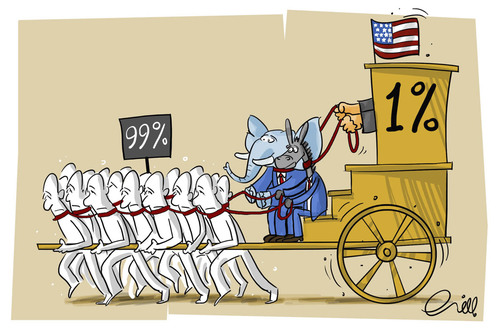
In Communication and Culture, a class I teach at USC, we've been discussing themes of the intersection of capitalism, globalization, and culture. Something that immediately came to mind was the prevalence of capitalist themes within entertainment, particularly on reality television. Reality shows run the gamut from dating, cooking, tattoos, adventure, weight loss, and competition. Some of my favorite shows, and those that I've seen become increasingly popular and varied, are investment shows. These shows perpetuate and valorize the values of the American Dream and bring the token successes to national attention. While I enjoy these shows and generally think they are positive and helpful to participants, I worry about the larger implications of the show outcomes.

Retrieved from this site
My issues with these shows are twofold. First, I worry that they revere money over all other elements. The dollar is still key to any measure of success and is the bottom line for the happiness of the participants, investors, and the way the participants "win." Even good ideas, which are often acknowledged on the shows, are turned aside if they cannot be executed, shown to be scalable, or have reasonable time limits on returns. I also worry that the success and proliferation of these types of shows reinforce that these experiences are commonplace and plentiful. This type of mentality may blind us to the structural and societal barriers that do exist.

Retrieved from ABC
Perhaps the largest and most profitable of the capitalist entertainment shows is "Shark Tank." Based on the British version "Dragon's Den," "Shark Tank" shows a series of sharks, successful entrepreneurs, as they vet potential investment opportunities. Participants on the show pitch their idea, explain their process, and talk profits. Oftentimes, it is only established businesses that have track records of success and profit receive deals. People who come in only with ideas are often dismissed as too new, untested, or risky. On this show, people who have in some sense already "made it" are given investments to become more profitable with the help of investments. Sometimes, the sharks offer mentorship and experience beyond the monetary contribution, but the ultimate goal of the show is to receive their ask at a reasonable valuation. The "About Shark Tank" page has this to say, "The Sharks will once again give people from all walks of life the chance to chase the American dream, and potentially secure business deals that could make them millionaires." Shark Tank is not discriminatory, but then again, it has an intense vetting process which means not everyone can appear on the show. They are also only given a "chance to chase" success because that power is ultimately not in the hands of the everyday American, but by the always already profitable and successful elites.

Restaurant Startup investor Joe Bastianich

A spin-off of "Shark Tank" is "Food Fortunes," a new shop that specifically focuses on food-related innovations. This show adds the element of audience participation, where a live audience tests the food concepts and provides real-time feedback on the product. Also in the food category, "Restaurant Startup" gives people the opportunity to run a pop-up restaurant and get an investment to open a long-standing one. These shows follow the "Shark Tank" model where there are proven elites that have the power over the financial success of the participants. In "Restaurant Startup," the participants have some autonomy over their styling, logo, food, aesthetic, and supplies in creating the restaurant. But, they are still at the whims of the investors to change elements that are not amenable to them in order to open a real restaurant. In the interview above, Bastianich notes that a "business without profit is a hobby," again reinforcing the bottom line of profits over innovation, creativity, and even good quality food.

Retrieved from this site
Dana Cloud argued that token success stories, such as Oprah Winfrey, are harmful to the understanding of how power structures work and the barriers that exist to equality. When people see the success of Winfrey or others the myth of the American Dream, the self-made man, and Horatio Alger come alive. People are presented with proof "of the American Dream, implying the accessibility of this dream to black Americans despite the structural economic and political obstacles to achievement and survival posed in a racist society" (p. 116). This is not just race, however, but that the success of people who have overcome barriers in place are applicable to everyone. If anyone can succeed, everyone can. Winfrey's success is certainly something to be lauded, but it should not be generalized to the larger public. To do so is to blame individual agents for their positions and ignore larger social, cultural, and political issues that are beyond individual control.

Retrieved from this site
Many of my students tell me that it is hard to look at media the same way after taking Communication and Culture. There are many things to be cynical of in the contemporary media landscape. Where it is gender issues in advertising, racial stereotypes in movies, or the proliferation of questionable tropes, how are scholars supposed to genuinely enjoy media? I will say that I do enjoy the shows I have discussed and think there are great lessons to be learned and fun to be had in watching them. I cannot fault the investors on these shows for doing what the show encourages them to do, or even being business-oriented. It's their money, after all. But, I wholeheartedly hope that people become active instead of passive consumers of media. To watch The Bachelor and understand the questionable gender elements is much better than avoiding it completely or to accept its messages passively. Scholars, critics, and everyday people should be immersed in contemporary society and also interested in its workings.

Sunday, August 31, 2014

Race and Class in The Purge: Anarchy

I've already addressed my opinions on the societal shun of horror films. I think that horror films are much more inventive and experimental than traditional genre films and I wish more of my peers appreciated their subtle depth and creativity. This post is specifically about the second installment of The Purge, which I highly encourage everyone watch. Unlike the original, The Purge: Anarchy is a slick thriller with a moral message about class, race, and oppression. I will briefly discuss the horror aesthetics in this film (and its original) before discussing this interconnected themes of hierarchy and exploitation. The cultural scholar and common person alike would greatly benefit from exploring these themes on the silver screen (even with a bit of gore). It may not need saying, but this post will contain spoilers of both films.

The Purger: Anarchy Trailer. Retrieved from YouTube.

The first film was typical of its genre. There were cliche pop-out-from-behind-a-corner fake scares, misdirection, and a dearth of larger meaning than the human urge to kill. The film centered around the near future where a government has issued a 24-hour lift of all laws allowing society to "purge" through murder, robbery, etc. This results in a lower crime rate through the rest of the year and a boon in sales of home defense systems. The first film followed a family that had a break-in in their home after the young son tried to save a man being hunted in their neighborhood. This film was simply okay, an interesting idea poorly executed and mostly abandoned for the cheap and easy scares. I almost didn't go see the second film because of my disappointment in the first. I'm very glad that I didn't miss it.

Retrieved from this site.
The Purge: Anarchy focuses on the streets that are ravaged by roaming bands of vigilantes and the mysterious presence of military and government forces patrolling the streets. A Malcolm X type figure (Carmelo) becomes a prominent character who preaches that the purge is a government tactic to eradicate the poor (and subsequently, minorities) in order to keep the crime rate down during the year. We find out during the film that the government is targeting low income neighborhoods, kidnapping people, and performing genocides of the lower classes. One black woman and her daughter are saved from this government kidnapping by a (white) purger looking for revenge on the man who killed his son in a car accident.

Retrieved from this site.
Two scenes stand out for me as particularly shocking and expressive. The father of the woman saved from government forces disappears early in the film. The daughter and granddaughter find out that he has sold himself to a rich white family for $100,000 to allow them to purge in the safety of their home. The white family has literally bought a poor, black body as if it were property, to ruthlessly destroy and exploit it without exposing themselves to the risks of the purge. There is a poignant frame where the nuclear family is standing around the father wielding weapons in their pristine suits and plastic-wrapped living room of expensive art. Their massacre of this man will be their new art, their secret expression of white privilege that protects their valuables, status, and domination over the lower class.

Auctioneer before the hunt. Retrieved from this site.
The second powerful scene is shown briefly at the end of the trailer where a woman in a blue dress announces before a seated group of people in fancy dress that they have collected the last purge of the evening. The main characters are released into a pitch black maze where the highest bidders enter with night vision goggles and weapons to hunt them down. There are obvious echoes here about the purchasing of bodies as in the previous scene, but it also echoes themes from Richard Connell's "The Most Dangerous Game." This short story is about a stranded man looking for protection who ends up being hunted down for sport like an animal in a rich man's safari game. Humans being the most cunning (and thus perhaps most satisfying to kill) animal provides an elevated type of sport than the traditional hunt. Indeed, the highest bidders in The Purge: Anarchy wear traditional British fox hunting uniforms as if they were out in a normal hunting activity and not viciously murdering other people. In a quite satisfying ending, I will simply mention that the group manages to get a hold of one of the night vision goggles and weapons, making the hunt more of a fair fight.

Both of these scenes highlight for me the interrelationship between class and race and the exploitative powers of a system that only reifies the lasting order and undervalues the lives of poor and minority bodies. In this film, both the rich and the government specifically target and kill blacks, the homeless, deviants, and youth in an attempt to eradicate and "purge" the society of perceived evils. This movie asks us all to reflect on who is in power, what oppressive acts are they committing, and who does society really serve. Both the murderers and the white families who can afford to lock up and hide are complicit in the exploitation and eradication of people deemed unworthy of life. Just as a police officer in Ferguson made a decision of life and death for Michael Brown, The Purge: Anarchy asks us to consider who is in control and what those consequences are. Who gets to define who is worthy of life? Who gets to define how punishment is laid out? Who is in control of our streets, our livelihoods, our identities as targets or as civilians?

Carmelo, leader of the anti-purge movement. Retrieved from this site.
Carmelo is trying to start a revolt against this system. He targets the rich, white, and off-limits bodies to upend the genocide of the poor and the minorities. His tactics are in part successful, at least in saving the lives of the main characters, but his ultimate goal is left unfulfilled. Will it take violent revolution to change the system? Can violence itself do anything but reify the use of violence as a peace-keeping tactic? If anything can be learned in the current state of Ferguson, it is that the tensions between authority, race, and class run deep, and define for entire groups of people their ability to claim a place on this earth free from fear and death. That is unacceptable and violates the very basics of human rights. The Purge: Anarchy brings these themes to life in an exaggerated thriller that asks us to ponder our own situation: how far off are we from this being our reality?