Showing posts with label Race. Show all posts

Sunday, September 13, 2015

"The Visit," Race, and Disability

I recently saw a pre-screening of M. Night Shyamalan's "The Visit" at USC. I was excited to see the film because the trailer looked creepy and, as others have noted, this was potentially a epic comeback for the director. I am a fan of horror movies, so even without the hype, I probably would have gone to see it. I have to say that while it is better than many of Shyamalan's movies, I was very disappointed with the film. I am not going to "spoil" the cliché Shyamalan twist, but address the three main problems I had with the film.  First, I will address my small concerns about the flow of the movie and its stylistic choices. I also was concerned by its attempts to corner the "comedy horror" genre through racial appropriation. Finally, I find problematic the use of disability as the catalyst for shock moments. Although there are no spoilers, I will discuss some scenes of the film in detail.


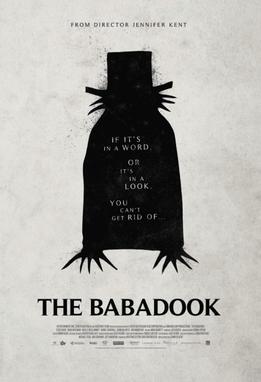
The appeal of the first-person, found footage horror films has waned for me. Original uses, such as the Blair Witch Project, were pioneers in filmmaking style. Other films made great use of the medium, such as the V/H/S series. I also found that this style worked for the gritty and entertaining As Above So Below. For most movies, however, I feel that the found footage genre reduces the thrills that it tries to engage. The camera angles and the following of the drama is completely limited by one of the characters moving it or its placement in a fixed position. Thus, the camera is either a static frame or is missing a character. Because the camera reacts with the character, frightening sequences are often cut short. In The Visit, the two children often interrupt or come across their grandma in various aggressive or startling actions. The audience, however, gets barely a glimpse before the main characters run away in fear. What could be longer, thrilling scenes turn into brief "shock" moments where the music amps up and something flashes before the screen. This type of horror tricks seems quite overplayed, where there are far more intriguing moments of horror in present day films. I hope to discuss It Follows more in an upcoming post, but I will note briefly here that it makes fabulous use of every day activities and long scenes where there is immense building of terror and suspense. Another great contemporary example is The Babadook, where the female protagonist bravely encounters the ghoul in her home in long, terrifying battle, instead of a brief flash in a window or doorway.

Image retrieved from Wikipedia
Image retrieved from this site.

Now that I've indulged my pure opinions on the horror genre, I will now engage more theoretically motivated concerns. While I did find The Visit funny (Katy Perry!), the humor was mostly nested in appropriating black culture and the juxtaposition between freestyle culture and a young, white boy. The younger brother in the film, Tyler, adopts the style, mannerisms, and attitude of black culture for the purpose of comedic relief. Comedy and horror often go together. For example, the iconic Evil Dead series could seamlessly make you laugh while you were terrified and a bit uneasy. This is epitomized in the Evil Dead 2 (my favorite of the series) scene in which the items in the cabin start laughing along with Ash - frightening and yet you cannot help but laugh along. Another one of my favorite horror films, Cabin in the Woods, makes you pause for reflecting at our own fascination with horror. The office party scene epitomizes the movie's brilliant satire work (and its opening is delightfully Funny Games-esque). Instead, the comedy in The Visit is pure relief, with no purpose behind it but to distract from what we just saw (brief as it already was) or poke fun at the disabled grandparents. I will discuss more about the grandparents later, but first I want to further discuss Tyler's character.

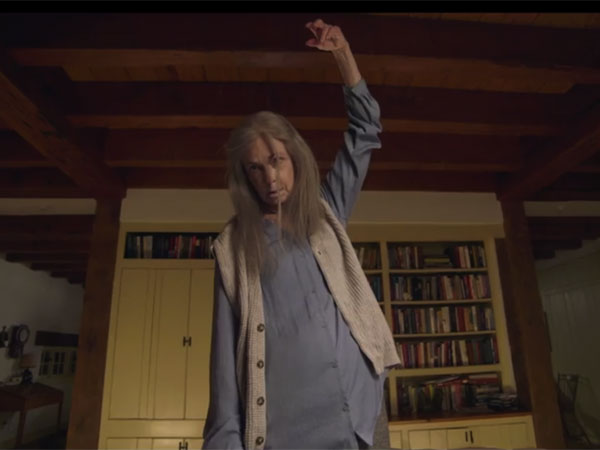
Image of Tyler in The Visit. Retrieved from this site.
The character is quite sweet and has his vulnerable moments where he seeks his sister's comfort. More often than not, Tyler draws his strength through his impersonation of black culture. As The Wrap's review noted, scenes where Tyler raps about women and sex are "burp[s] of coarse comedy." They seem out of place and forced, as if the only thing funny about the situation is that a young white boy might imitate gangster culture. This imitation, however, appropriates a different culture and undermines its history and purpose. The scene where Tyler raps on the train next to a black men, who is a worker on the train, is truly cringe-worthy. Kenneth Burke called this "perspective by incongruity" - where a word is applied in a completely new context and given a new meaning. What was once a unique part of black culture is now applied in a different context - a juxtaposition that creates humor. The humor is crude and appropriates black culture and further distracts from what could have been intriguing horror scenes.

Terror - supposedly, from a scene in The Visit. Retrieved from this site.
More central to the plot of the film is the mental and physical condition of the grandparents. The mother, who they Skype with, frequently brush off erratic behavior as "old people problems" and nothing out of the ordinary. Incontinence, memory loss, confusion, and generally odd behaviors are boiled down to "normal" plights of the elderly. Natural, elderly bodies become a source of scorn and disgust because of there differing abilities. In one scene, Tyler follows his grandfather to a hut, where Tyler thinks he is hiding "secrets." To recall the horror of "what's in the box?" among this reveal is truly embarrassing. The hut does not contain dismembered bodies, secret writings, or clues to a great family mystery. Instead, it contains the grandfather's incontinent diapers. The thrilling sequence of entering the space and watching for the grandfather's return is let down by the "big reveal." At points, I felt quite bad for the grandparents, who were constantly pestered by the granddaughter, Rebecca's, video camera. In an interview with the grandmother, Rebecca repeatedly asked her what happened on the day Rebecca's mother left the house. The grandmother responded many times with sadness, confusion, and aggressive outbursts; this event had obviously caused her great stress and trauma. I felt pity where Shyamalan wanted me to be frightened. But, I wasn't. I wasn't frightened by the effects of aging and sometimes erratic confusion caused by people who may have Alzheimer's or another disorder.

The "evil" in the film is simply that: being old. There is no evil spirit, motivated killer, or other source of evil besides the mentally and physically disabled. And that is a horror trope I simply cannot support: that the elderly and differently-abled are a source of evil and horror. Shyamalan sets up the elderly as the "other"; the ones against which the main characters (and thus the audience) contrasts our identity. But, one day, we may all experience these same problems and I hope that we are met with comfort and appreciation instead of fear and isolation. For those who have seen the movie, I am aware that there is more going on than simple aging. Despite this fact, I believe that this film constructs a rhetorical framework that isolates the elderly and reifies ability as normal.

Thursday, June 18, 2015

I'm Blacker than Rachel Dolezal: Race, Identity, and Transracial Bodies

I meant to publish this post on Sunday, but I couldn't even remotely wrap my head around the twists and turns in the Rachel Dolezal story to make a coherent blog post. With the extra time to think, this may come closer. As a white, cisgender, able-bodied, heterosexual woman - I know that I fall victim to the same privileges of Dolezal and many people commenting on this story. I hope that my voice comes across as an ally and curious academic instead of offensive.

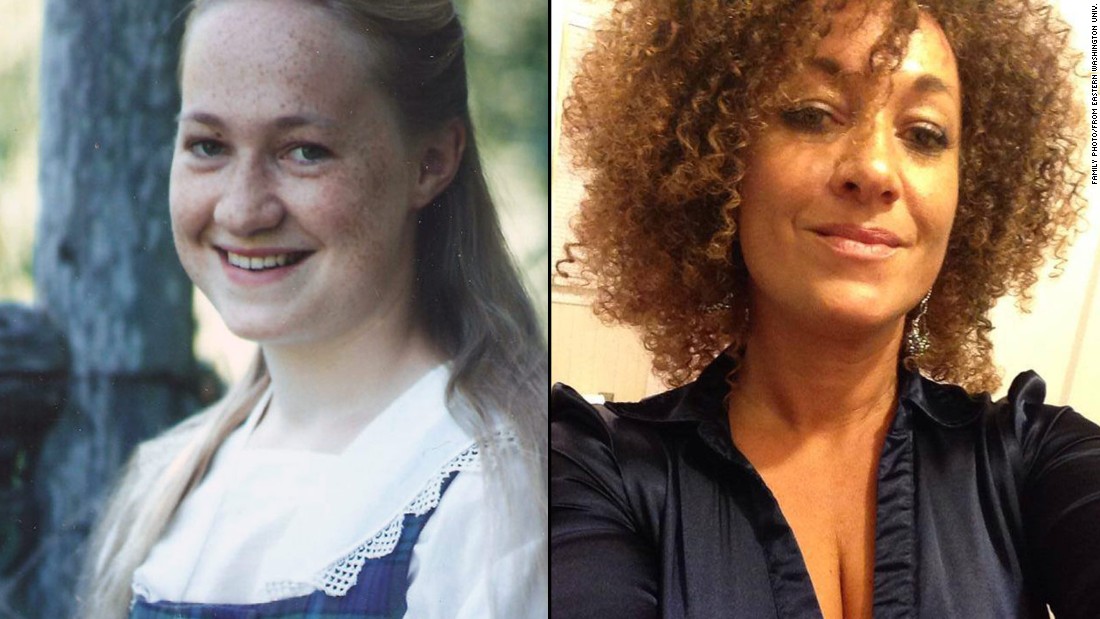
Dolezal as a white and black woman. Retrieved from CNN.
Let's start with the facts (or as close as we can get). Dolezal's parents are Caucasian and her heritage is made up of German, Swedish, and Czech ancestry. She went to Howard University and then got a job in Africana Studies at Eastern Washington University and became a chapter leader in the NAACP in Spokane, Washington. This is a relatively uninteresting history, even for a white person. There are no rules about who is allowed to teach what type of courses and many white people have been prominent actors in the NAACP. White women have taught courses about black women and men have taught feminist theory classes. Academic knowledge about these subjects is not exclusive. Of course, there are benefits to having professors who can address these perspectives from a particular standpoint, but having allies address these topics is also beneficial.

What, then, is the issue? The issue is that Dolezal, despite being a white woman, a blonde-haired, blue-eyed white woman at that, identifies and presented herself as a black woman. Dolezal's birth race did not jibe with the identity that she wished to portray, so she performed the identity of an African American. Many people believe that race, gender, and sexuality are social constructs - they are performed behaviors and identities that communicate to others who and what we are. Dolezal decided to perform and go through life (at least for those ten years) as an African American.

Prince Koyangi's first Tumblr post with profile picture. Retrieved from this site.
For those who were as confused as I was by this discovery of a potentially "transracial" person, I am going to walk through my thought process on the matter. I am aware this term traditionally refers to transracial adoption, where birth parents are of a different race than their children. The term was first brought to my attention, however, through the excellent work of friend and colleague, Alex Sastre. She discussed the transracial/transethnic Tumblr case of Prince Koyangi. For me, this term linguistically matches a similar, but different phenomenon in transgender people. I do not wish to make this comparison, at least in a fully equal sense, but I do want to explain the difficulties for people, and perhaps especially cisgender white people, to unpack the trans* identity.

One thing that I initially noted was a similarity in language between how news sites and people on Facebook were responding to Dolezal's actions. For me, terms like "impostor," "deceived," "pretended," "misleading," "lied," and others echoed claims that transgender people are somehow lying or deceiving people with impure motivations. One need only recall the disgusting words of Mike Huckabee in response to Caitlyn Jenner's announcement: "Now I wish that someone told me that when I was in high school that I could have felt like a woman when it came time to take showers in PE." These accusations assume that people are deceitful in their gender identity for the purpose of advantage in some way.

People began to talk about Dolezal in this same manner - that posing as black would somehow benefit her in her job prospects and appointment in the NAACP. A poignant note here is, as others have pointed out, that Dolezal potentially took that appointment away from a woman of color. There are other reports that Dolezal faked hate crimes against her to garner sympathy. Certainly, these are negative, consequential, and deceitful actions. But does that mean that transracial people do not exist?


A friend and colleague, Kari Storla, emailed me the above video by a black, trans*female vlogger, Kat Blaque. I appreciated the link and spent a lot of time thinking about Blaque's arguments. For me, I couldn't get past the apparent hypocrisy - Blaque was telling her truth, but was denying the possibility that Dolezal was telling hers. Isn't it really a matter of personal identity that is not something that any of us can determine? How is it Blaque's or any of our responsibilities to tell Dolezal that she is in fact lying and we are the ones with truth? When Dolezal says, that she "identifies" as a black woman, why do we not take her at her word? Many trans*people discover their identities later in life and some may never transition in an aesthetically explicit way for many reasons such as safety, finances, or personal choice. Dolezal certainly identified as white when she sued Howard for racial discrimination, but perhaps she discovered her identity later in life?

Any way I sliced it, I couldn't see a tangible difference between transgender and transracial individuals, despite a gut instinct that they were different. There are many times when my personal opinion towards something (that Dolezal is crazy and this can't possibly be a thing) is offset by my intellectual musings. There must be a reason to my nagging doubts, right? A small epiphany occurred during a conversation with my partner. We discussed the idea of privilege and how men transition into women and Dolezal transitioned into a black woman. We discussed ideas of passing and that some people can transition into the other gender more easily than others, can "pass" as something they are not. We discussed how I am a Caucasian woman and would never be mistaken for something else, despite having African ancestry. We discussed how people like Barack Obama, Tiger Woods, and even Stuart Hall, will never be anything but black men.

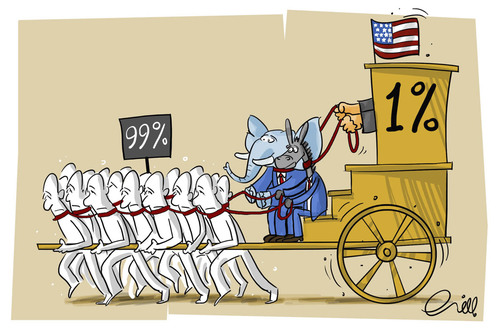
Cartoon explanation of white privilege. Retrieved from this site.
That's when it clicked - transgender people reflect a spectrum of identities. Trans*people identity as male-to-female, female-to-male, gender fluid, agender, and many other evolving labels. But, the idea of transracial-ness is distinctively a privilege of whites. Whites can "put on" and appropriate the culture of other races, and have for centuries. They are able to do this, as Richard Dyer notes, because they are the center, the normal, the non-race. If a black woman adopts a white hairstyle and bleaches her skin, she will never be anything but a black woman. But, if a white woman adopts a black hairstyle and a tan, she can be (and was) perceived as black. This lack of equality, of cross-racial mobility, solidified my opinion. Dolezal is not transracial, she is not a black woman, but a white woman who has appropriated black culture for personal reasons. There is no trans*ness about being transracial, because the privilege is reserved for those able to adopt the races of others - whites. I am still musing about this topic, but thinking through Dolezal's story has enlightened me about the different ways that white privilege functions in today's society.

This post certainly ignores other complicated aspects of this story such as historical racism, biological determinants of race, and blackface. Those are all important points as well that I do not mean to undermine. They did not, however, play a role in clarifying for me why the Dolezal story is so disturbing and yet simultaneously worthy of philosophical discussion. This story will probably engage more people as more facts are learned and I hope that it culminates in more important conversations about race and its tangible effects on life and society. It also brings attention to the unending struggle between the mind and body and the danger of not conforming with society's expectations.

Sunday, April 19, 2015

Capitalism and Entertainment: Show me the Money

In Communication and Culture, a class I teach at USC, we've been discussing themes of the intersection of capitalism, globalization, and culture. Something that immediately came to mind was the prevalence of capitalist themes within entertainment, particularly on reality television. Reality shows run the gamut from dating, cooking, tattoos, adventure, weight loss, and competition. Some of my favorite shows, and those that I've seen become increasingly popular and varied, are investment shows. These shows perpetuate and valorize the values of the American Dream and bring the token successes to national attention. While I enjoy these shows and generally think they are positive and helpful to participants, I worry about the larger implications of the show outcomes.

Retrieved from this site
My issues with these shows are twofold. First, I worry that they revere money over all other elements. The dollar is still key to any measure of success and is the bottom line for the happiness of the participants, investors, and the way the participants "win." Even good ideas, which are often acknowledged on the shows, are turned aside if they cannot be executed, shown to be scalable, or have reasonable time limits on returns. I also worry that the success and proliferation of these types of shows reinforce that these experiences are commonplace and plentiful. This type of mentality may blind us to the structural and societal barriers that do exist.

Retrieved from ABC
Perhaps the largest and most profitable of the capitalist entertainment shows is "Shark Tank." Based on the British version "Dragon's Den," "Shark Tank" shows a series of sharks, successful entrepreneurs, as they vet potential investment opportunities. Participants on the show pitch their idea, explain their process, and talk profits. Oftentimes, it is only established businesses that have track records of success and profit receive deals. People who come in only with ideas are often dismissed as too new, untested, or risky. On this show, people who have in some sense already "made it" are given investments to become more profitable with the help of investments. Sometimes, the sharks offer mentorship and experience beyond the monetary contribution, but the ultimate goal of the show is to receive their ask at a reasonable valuation. The "About Shark Tank" page has this to say, "The Sharks will once again give people from all walks of life the chance to chase the American dream, and potentially secure business deals that could make them millionaires." Shark Tank is not discriminatory, but then again, it has an intense vetting process which means not everyone can appear on the show. They are also only given a "chance to chase" success because that power is ultimately not in the hands of the everyday American, but by the always already profitable and successful elites.

Restaurant Startup investor Joe Bastianich

A spin-off of "Shark Tank" is "Food Fortunes," a new shop that specifically focuses on food-related innovations. This show adds the element of audience participation, where a live audience tests the food concepts and provides real-time feedback on the product. Also in the food category, "Restaurant Startup" gives people the opportunity to run a pop-up restaurant and get an investment to open a long-standing one. These shows follow the "Shark Tank" model where there are proven elites that have the power over the financial success of the participants. In "Restaurant Startup," the participants have some autonomy over their styling, logo, food, aesthetic, and supplies in creating the restaurant. But, they are still at the whims of the investors to change elements that are not amenable to them in order to open a real restaurant. In the interview above, Bastianich notes that a "business without profit is a hobby," again reinforcing the bottom line of profits over innovation, creativity, and even good quality food.

Retrieved from this site
Dana Cloud argued that token success stories, such as Oprah Winfrey, are harmful to the understanding of how power structures work and the barriers that exist to equality. When people see the success of Winfrey or others the myth of the American Dream, the self-made man, and Horatio Alger come alive. People are presented with proof "of the American Dream, implying the accessibility of this dream to black Americans despite the structural economic and political obstacles to achievement and survival posed in a racist society" (p. 116). This is not just race, however, but that the success of people who have overcome barriers in place are applicable to everyone. If anyone can succeed, everyone can. Winfrey's success is certainly something to be lauded, but it should not be generalized to the larger public. To do so is to blame individual agents for their positions and ignore larger social, cultural, and political issues that are beyond individual control.

Retrieved from this site
Many of my students tell me that it is hard to look at media the same way after taking Communication and Culture. There are many things to be cynical of in the contemporary media landscape. Where it is gender issues in advertising, racial stereotypes in movies, or the proliferation of questionable tropes, how are scholars supposed to genuinely enjoy media? I will say that I do enjoy the shows I have discussed and think there are great lessons to be learned and fun to be had in watching them. I cannot fault the investors on these shows for doing what the show encourages them to do, or even being business-oriented. It's their money, after all. But, I wholeheartedly hope that people become active instead of passive consumers of media. To watch The Bachelor and understand the questionable gender elements is much better than avoiding it completely or to accept its messages passively. Scholars, critics, and everyday people should be immersed in contemporary society and also interested in its workings.

Sunday, September 21, 2014

The Danger and Opportunity in Speaking for/with Others

There are many issues that I feel compelled to address as a rhetorician and social agent of change (Klumpp and Hollihan argue). Engaging with these issues, however, requires reflexivity about my own status as a privileged, white, heterosexual, cisgender, able-bodied, female and how that type of person/body can speak for others. Can I speak for others? Perhaps literally, yes, I could use my platform on this blog and as an academic to speak for others. It wouldn't be well or with full knowledge, but I could. Thus, the better question would be should I speak for others?

On one hand, attention to these important issues of transgender rights, racial inequalities, gender equality, and equality more broadly should have as many advocates as possible. People of all description can be allies and amplify the voices and stories of those who can speak more genuinely about these problems.

Image retrieved from this site.
On the other hand, speaking for others complicates issues of voice, could serve to isolate the voices of others, and reifies a system in which certain voices are more valuable than other voices. In an academic exchange in a journal, Campbell and Biesecker addressed the issue of speaking for women in rhetorical history and how the "canon" of rhetoric that is studied systematically removes female voices. Though Campbell erred on the side of including as many voices as possible into the current canon, Biesecker was in favor of rejecting the canon as a system of tokenization.

The rhetoric of tokenism highlights certain voices that triumph against an oppressive system as evidence that the system is not oppressive. The lauded status of certain individuals (Cloud has an excellent article on Oprah as exemplar) is unique and worthy of note, and their success is linked to their individual qualities. If others simply embodied these same qualities, they could also rise above the system, meaning that change is unnecessary.

This is the token black character on South Park, literally named "Token." Retrieved from this site.
Part of the problem in speaking for others is this dynamic of visibility, voice, invisibility, and silence. To speak for others is to reify that certain voices are not being paid attention to, but it also silences their actual message in favor of a conduit. To remain silent, though, is to allow and passively participate in the maintenance of the status quo.

I am still working through these problems and try to keep them in mind in the work that I address and the comments that I make. I try to always be reflective and aware of the position from which I consume information and process opinions. For now, I err on the side of commenting from my limited position, especially when certain issues are prevalent and pressing.

One issue that has recently emerged, and one which I am reluctant to rehash considering the wishes of my colleagues, has been the Annenberg Innovation Lab Black Twitter project. I wish only to comment on this situation's similarities to the issues of authorship, voice, and who is allowed/should study others as a researcher. A summary of the incident can be read here and an excellent response by my colleague Dayna Chatman can be read here. This incident helped me reflect more on my status as a researcher and how academia as a whole can be more reflexive of how our personal situations affect our approaches to certain issues.

Sunday, August 31, 2014

Race and Class in The Purge: Anarchy

I've already addressed my opinions on the societal shun of horror films. I think that horror films are much more inventive and experimental than traditional genre films and I wish more of my peers appreciated their subtle depth and creativity. This post is specifically about the second installment of The Purge, which I highly encourage everyone watch. Unlike the original, The Purge: Anarchy is a slick thriller with a moral message about class, race, and oppression. I will briefly discuss the horror aesthetics in this film (and its original) before discussing this interconnected themes of hierarchy and exploitation. The cultural scholar and common person alike would greatly benefit from exploring these themes on the silver screen (even with a bit of gore). It may not need saying, but this post will contain spoilers of both films.

The Purger: Anarchy Trailer. Retrieved from YouTube.

The first film was typical of its genre. There were cliche pop-out-from-behind-a-corner fake scares, misdirection, and a dearth of larger meaning than the human urge to kill. The film centered around the near future where a government has issued a 24-hour lift of all laws allowing society to "purge" through murder, robbery, etc. This results in a lower crime rate through the rest of the year and a boon in sales of home defense systems. The first film followed a family that had a break-in in their home after the young son tried to save a man being hunted in their neighborhood. This film was simply okay, an interesting idea poorly executed and mostly abandoned for the cheap and easy scares. I almost didn't go see the second film because of my disappointment in the first. I'm very glad that I didn't miss it.

Retrieved from this site.
The Purge: Anarchy focuses on the streets that are ravaged by roaming bands of vigilantes and the mysterious presence of military and government forces patrolling the streets. A Malcolm X type figure (Carmelo) becomes a prominent character who preaches that the purge is a government tactic to eradicate the poor (and subsequently, minorities) in order to keep the crime rate down during the year. We find out during the film that the government is targeting low income neighborhoods, kidnapping people, and performing genocides of the lower classes. One black woman and her daughter are saved from this government kidnapping by a (white) purger looking for revenge on the man who killed his son in a car accident.

Retrieved from this site.
Two scenes stand out for me as particularly shocking and expressive. The father of the woman saved from government forces disappears early in the film. The daughter and granddaughter find out that he has sold himself to a rich white family for $100,000 to allow them to purge in the safety of their home. The white family has literally bought a poor, black body as if it were property, to ruthlessly destroy and exploit it without exposing themselves to the risks of the purge. There is a poignant frame where the nuclear family is standing around the father wielding weapons in their pristine suits and plastic-wrapped living room of expensive art. Their massacre of this man will be their new art, their secret expression of white privilege that protects their valuables, status, and domination over the lower class.

Auctioneer before the hunt. Retrieved from this site.
The second powerful scene is shown briefly at the end of the trailer where a woman in a blue dress announces before a seated group of people in fancy dress that they have collected the last purge of the evening. The main characters are released into a pitch black maze where the highest bidders enter with night vision goggles and weapons to hunt them down. There are obvious echoes here about the purchasing of bodies as in the previous scene, but it also echoes themes from Richard Connell's "The Most Dangerous Game." This short story is about a stranded man looking for protection who ends up being hunted down for sport like an animal in a rich man's safari game. Humans being the most cunning (and thus perhaps most satisfying to kill) animal provides an elevated type of sport than the traditional hunt. Indeed, the highest bidders in The Purge: Anarchy wear traditional British fox hunting uniforms as if they were out in a normal hunting activity and not viciously murdering other people. In a quite satisfying ending, I will simply mention that the group manages to get a hold of one of the night vision goggles and weapons, making the hunt more of a fair fight.

Both of these scenes highlight for me the interrelationship between class and race and the exploitative powers of a system that only reifies the lasting order and undervalues the lives of poor and minority bodies. In this film, both the rich and the government specifically target and kill blacks, the homeless, deviants, and youth in an attempt to eradicate and "purge" the society of perceived evils. This movie asks us all to reflect on who is in power, what oppressive acts are they committing, and who does society really serve. Both the murderers and the white families who can afford to lock up and hide are complicit in the exploitation and eradication of people deemed unworthy of life. Just as a police officer in Ferguson made a decision of life and death for Michael Brown, The Purge: Anarchy asks us to consider who is in control and what those consequences are. Who gets to define who is worthy of life? Who gets to define how punishment is laid out? Who is in control of our streets, our livelihoods, our identities as targets or as civilians?

Carmelo, leader of the anti-purge movement. Retrieved from this site.
Carmelo is trying to start a revolt against this system. He targets the rich, white, and off-limits bodies to upend the genocide of the poor and the minorities. His tactics are in part successful, at least in saving the lives of the main characters, but his ultimate goal is left unfulfilled. Will it take violent revolution to change the system? Can violence itself do anything but reify the use of violence as a peace-keeping tactic? If anything can be learned in the current state of Ferguson, it is that the tensions between authority, race, and class run deep, and define for entire groups of people their ability to claim a place on this earth free from fear and death. That is unacceptable and violates the very basics of human rights. The Purge: Anarchy brings these themes to life in an exaggerated thriller that asks us to ponder our own situation: how far off are we from this being our reality?

Sunday, June 22, 2014

Donald Sterling as a Modern Day Earl Butz

It is impossible to ignore all of the online and offline discussion of the owner of the LA Clippers, Donald Sterling's racist remarks. He noted in a private conversation to his girlfriend that he didn't want her "associating with black people," and specifically bringing them to basketball games. The hypocrisy in Sterling becoming rich off of the labor of black bodies has been addressed better elsewhere, so I wish to address another important part of this discussion: the apologia. Using Kenneth Burke's guilt-redemption cycle, this post will discuss the similarities of Sterling's remarks to the racist statements of Earl Butz, and how these statements implicate the larger American public in the persistence of racism.

Donald Sterling and the Clippers's logo
Earl Butz was Secretary of Agriculture in 1976 who eventually resigned his position after racist comments emerged. This site has the full timeline of the events including the offensive joke. A scholarly article was written about that event by Dr. James Klumpp and Dr. Thomas A. Hollihan called "Debunking the Resignation of Earl Butz: Sacrificing an Official Racist." The title reveals some important terms and information that will inform this comparison between Butz and Sterling. I will also highlight some important differences that reveal modern racial tensions. Butz was "sacrificed" as Klumpp and Hollihan say, as a part of Burke's guilt-redemption cycle. This cycle describes how pollution, or some type of disorder, is introduced into an order, which creates guilt and a subsequent need for purification, purging, and redemption.

Earl Butz, retrieved from this site
For Butz and Sterling, the pollution was their racist statements that shattered the values of equality inherent in their respective social and political orders (government and sports). Both of these institutions are supposed to value equality, all Americans, and their constituents. As public figures, their voices can be seen as stand-ins for the groups that they represent. Butz was "sacrificed" by the Republican Party, who wished to separate their public appearance from racism. The NBA also separated itself from Sterling by banning him from the organization, fining him $2.5 million, and urging him to sell the team. The sacrifice can come in many forms, but it must make the punishment commensurate to the crime committed. Considering that the pollution for each was the potential crumbling of national organizations, the punishments were made quite prominent, public, and severe.
Some prominent reactions to Sterling's statements
Another important similarity between the two are the separation between public and private. Klumpp and Hollihan address this dichotomy by nothing that officials are sometimes seen as not have the right to privacy: anything said even in private could destroy a public persona, one's reputation, and career. Some were quick to jump to Sterling's defense such as columnists at Fox who pointed to the "thoughts" of Sterling as harmless and a personal right. Some articles went as far as to implicate the girlfriend (who recorded the conversation) as the real criminal. In the aftermath of the announcement, Mark Cuban echoed the words of a Fox News reporter about whether convicting people for statements in private could be a "slippery slope" to the thought-police.

Though some of these concerns were raised, there has been overwhelming support for Sterling's punishment. One might say that it was a "success" in some ways in that an athletic profiteer who undermined his own team and the values of the NBA (and perhaps, the country) would be receiving a just punishment. However, Klumpp and Hollihan raise a point of contention with these types of guilt-redemption activities. They note that by creating a sacrificial goat out of Butz and Sterling, we as a nation do not have to address underlying and persistent racism that we may all (or at least most of us) be guilty of. Instead, we can claim that wrongs have been righted and that racism is an individual issue that does not have to be addressed on a societal level. They note that these overt punishments of racism create a culture that "tolerates private racism and its consequences” (p. 11). Jon Stewart adeptly addresses the issue of post-racial society in his critique of Sterling and the recent SCOTUS decision to uphold Michigan's ban on affirmative action.

Retrieved from the Daily Show

What is to be learned by the Donald Sterling incident? One thing is perhaps most important: racism still exists. There is no magical, post-racial world because we have a black president. People haven't stopped being murdered because of their race, people haven't stopped trying to make relevant the KKK, and people still use the n-word. This is only the tip of the iceberg, however, as racism against other minorities, especially immigrant populations, is also a common American theme. Is this what America is all about? We need to take examples like Butz and Sterling and open our eyes to the underlying problems from which these individuals stem. Structural racism is happening and continues to happen; we cannot remain blind to it and only care when individuals break norms of keeping racism a private endeavor. All racism needs to be addressed, and we have a lot of work to do.

Sunday, June 1, 2014

What do Elliot Rodger and Tal Fortgang have in common?

I had previously started writing a piece in response to the Tal Fortgang “check your privilege” article. I wanted to discuss the plethora of space and attention the media (and society) gives to the white, male, cisgender, able-bodied, heteronormative perspective. I briefly stopped working on that article when news of UCSB’s campus attack became public. I immediately thought that Elliot Rodger’s story was perhaps more deserving of being critiqued. This was when I realized the great similarities between these two men (albeit very far away on the violence spectrum) that can be linked to underlying societal de-valuing of trans- and cis- women. I will address these two situations separately before critiquing the reinforcement of hegemony that allows us to avoid blaming ourselves for the rampant presence of continuous threats of rape and death.

For Tal, being told to “check his privilege” is the worst part of his college experience. Tal’s rejection of his inherent privilege denied the negative experiences of others (at college or elsewhere) of racial discrimination, violence, and sexual assault. The stories of so many women, especially transwomen and women of color, are forever swept under the rug, but the whining of a Princeton-educated, non-struggling story of Tal are lauded as examples of how society is forcing white people to feel guilty “just for existing.” It is quite disheartening to know that one’s story will not be believed simply because one does not have the access to media forums in which to express them. Or, even when those stories are told, they are often the white, cis-woman perspective. Or, when women are threatened, we still rely on the charity of men to raise the alarm and offer suggestions.

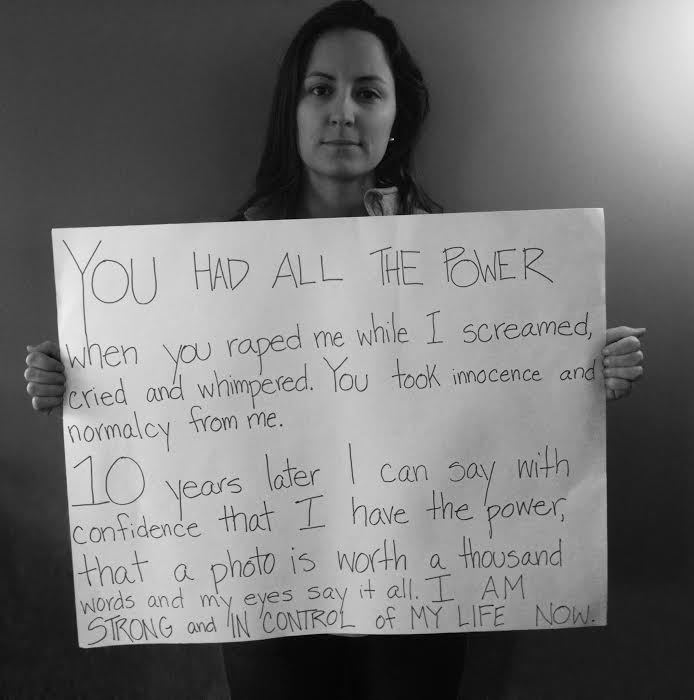
I praise the strong, powerful women at other institutions, such as USC and Northeastern (my current and previous institution of higher education) that have shared their story and fought back against institutions that deny women the right to say no, and their legal recourse against perpetrators. I was not strong enough to tell my story. Even with my high level of privilege, I was terrified of the consequences of reporting my sexual assault by a trusted friend at Northeastern. The word “survivor” never rang true for me. “Survivor” would imply that I had faced a natural force, like a tsunami or a disease, and overcame the event and devastating effects.  I didn't, though. I was faced with a human force, a man in complete control of his actions, a friend, who I had given my trust to, had made a conscious decision to act, devalue our friendship, and violate my body. This is, unfortunately, the story of so many women in collegiate settings, but so few are given the space to share their stories, or feel that they can freely and without consequence equally access our rights.

Retrieved from this site
Elliot Rodger’s story is also garnering national attention, including his manifesto where he declares his hatred of women and need to enact revenge through murder. Despite such plain, obvious language, some people have come to Rodger’s defense by displacing blame from his white, male privilege to mental illness. One of my colleagues at USC, Francesca Marie Smith, argued that mental illness can be used as an argumentative strategy to undermine the culpable of agents in a given situation. Examining the 2011 shooting of Gabby Giffords, she concluded that a focus on the mental capacity of Jared Lee Loughner derailed larger conversations about the societal pressures and political polarization that may have fueled the attack.

Elliot should not be memorialized, lauded, made a hero, or removed from blame. This was a calculated, terrorist attack on women as a whole because he had been told “no.” He believed he had a right to the female body as sexual property and projected his own shortcomings on the failure of (female) others. People should not watch his videos or read his manifesto: let us not immortalize a misogynist who decided to take life instead of realize the privilege in his own.

Retrieved from this site
These two stories began and ended very differently. Tal has certainly upset people with his lack of awareness and care for the stories of others, but Elliot has murdered. I do not wish to equate these stories; I am not making claims about “all men.” I am instead commenting on the attributes that they share and what this says about our society.

Both are inherently linked to race and gender, because they laud the white, male perspective over all other bodies. Yes, Elliot was mixed race, but there is no denying his feelings of privilege and superiority that accompany this perspective. Both believe in the power of their privileged body to make decisions and that they have the right to remove of agency from others. Tal and Elliot are not allowed to be told “no,” especially not by people of color or women. Tal cannot be told to “check his privilege” and Elliot cannot be denied sex. These are the autonomous decisions of others that put into question the privilege that Tal and Elliot could not even recognize they had (being blind to their own condition and the conditions of others). 

Retrieved from this site
These men are just two chapters in the larger story of a society that allows their privilege to continue unabated, that celebrates and defends them, and that prevents us from looking inward at our own complicity. If it the fault of people who question Tal’s struggle, Elliot’s mental condition, or my inebriation, then society as a whole is declared “not guilty.” We can live in the façade of a world where these events are mere peppered outliers in a properly functioning society, instead of symptoms of a diseased organism. Walking down the street or taking public transportation is an opportunity for women to be yelled at, groped, followed, threatened, or even worse. Even spending time with trusted friends and family members can lead to the violation of the female body. Althusser's police officer defines the power structure and everyone's position in it by addressing someone, "Hey you!" When I walk down the street and am called "bitch" while being grabbed from behind, that also defines me without my permission, reaction, or ability to subvert.

Many more stories of struggle and healing at Project Unbreakable
We cannot let these stories be drowned out by the mob quick to defend the current system. We must give space and attention to those that are fighting for change and awareness of larger issues. We perhaps cannot change the minds of current misogynists or denialists who will resist at all costs the crumbling of the society that preferences them. But, with increased effort, we may be able to usher in new generations brought up in a society that recognizes the issues that face the majority of us and fosters a culture that is actively trying to change it.

Sunday, April 20, 2014

The Weak and the High Maintenance: Female Stereotypes in Advertising

This was not the intended blog post for this Sunday, but a few recent advertisements have been on my mind, recently. Their repetition on the TV channels I watch and on Hulu has increasingly bothered me in their portrayal of the female. I will link to them both here and then discuss the problems that emerge in the persistent stereotyping (especially gender stereotyping) that occurs in media.

The first commercial is from Verizon, which advertises that if you buy a phone, you'll get a second free. Then, the commercial explores various options for who the second phone should be given to. Attempting humor, the commercial proposes that a girlfriend may enjoy the free phone, "but don't tell her that it's free." The face of the female fades from happy to disgruntled. This commercial plays on the "high maintenance" girlfriend trope where females are not happy or satisfied unless a lot of money has been spent. Shows such as Bridezillas, MTV True Life, arguably every Real Housewives version, emphasize this theme of women as spoiled, needing immediate and constant care, and focused on the material. These stereotypes overpower a more dimensional representation of the female outside of material goods and characterize all women as high maintenance. This description itself is inherently offensive. One's provides maintenance to a car or an object, not to a person. There is the association with a female as an accessory, a tool, an object needing maintenance, improvement, and upgrades in order to function. This also implies that the partner (oftentimes male) in the relationship is the only one with purchasing power. This clip from Bridezillas, featuring Remy and Rob, illustrates the dynamic quite well.


The Verizon commercial bother me, because it ignites these stereotypes as women as only valuing the material, lacking purchasing power, and only superficially strong in their demand of items they cannot provide for themselves. Even in the portrayal of strong women who declare they deserve certain items or treatment, there is an underlying weakness in the women who rely on others for self-validation, respect, and attention.

The second commercial focuses more on the vegetarian as weak, but the non-present character is given a female gender. This is a commercial from Walmart about setting a table for an Easter lunch. The planner describes why certain people are placed in certain spots noting that her vegetarian sister is at the opposite end of the table "so she can't see the ham." My first reaction was one of disgust that a commercial would rely on stereotyping vegetarians as too weak to even see meat. Though this is just a small statement, a lot of information is imparted in a short amount of time to the viewer. The audience is surely meant to consider the planner quite respectful. But, the implications are that vegetarians (and perhaps specifically female ones) cannot stomach the sight of food they cannot consume.

Both of these commercials highlight the importance of stereotyping in the world of advertising. When a company has only 30 seconds to compare one's attention and express the benefits of a product or service, stereotyping is a potential strategy. Originally conceptualized as the images that one sees in one's head, stereotyping is now defined as a mental shortcut that associates certain characteristics with others. There are racial, gender, ethnic, religious, political, and geographic stereotypes, all which connect a person to a host of underlying associations. Stereotyping makes sense if one's goal is to impart information as quickly and as succinctly as possible. The human brain is lazy and would rather use mental shortcuts to absorb, process, and respond to information. Popkin called this "low information rationality" where people tend to use the least amount of information possible to make their decisions. He connected this specifically to voting, where people may vote in elections based solely on a party affiliation, a rumor about a candidate, or even their aesthetic appearance over delving in deeply into issues and more complex information.

Apologies for the video quality. South Park's "Museum of Tolerance"

Though stereotyping may make sense for advertisers, other media theories, such as cultivation, encourage us to reconsider the potential consequences of long term, frequent consumption of media tropes. If females are consistently portrayed as weak, high maintenance, powerless, vulnerable, and other "feminine" characteristics, how can we expect a new generation that is more open to feminism and equality? There are certainly many factors that influence people's attitudes, opinions, and behaviors, but it may not be surprising that a media that reflects and stereotypes females in such as way may also be contributing to other gender-based issues. There are many examples I could pull from, but I will encourage people to look at this video from Fox News about women being paid "what they're worth."

Sunday, March 16, 2014

Thin Privilege and LGBTQ Issues: Discrimination based on Choice

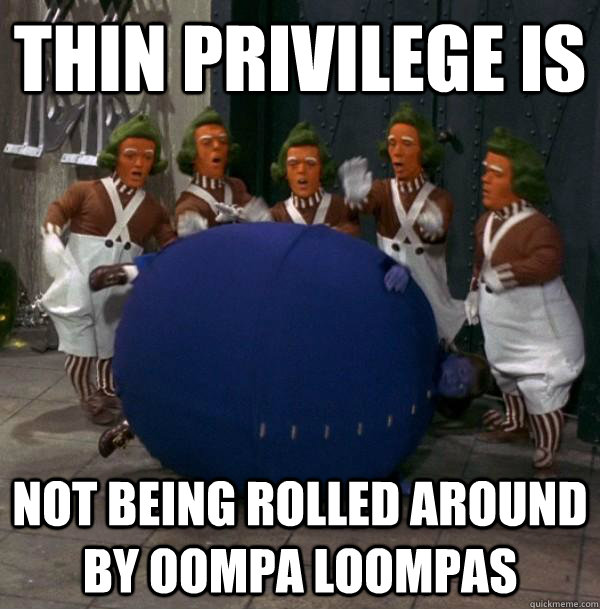
There has been a recent surge in websites, blogs, and tumblrs that deal with "Thin Privilege." These sites have also spawned spoof or parody sites  which have in turn encouraged reaction sites. In the back-and-forth on these websites that I have followed, I would like to comment on a common theme which I think connects issues of health and bodies to the LGBTQ community: choice. First, I will explain these communities then I will draw from examples from each and compare them through Burke's pentad as revolving around agency and choice.

Retrieved from this blog
Thin Privilege reflects the advantages and benefits that come with being thin (or non-fat) in a society that values skinny bodies over large bodies. This has resulted in cultural and institutionally prejudices levied at non-thin people. Thisisthinprivilege.tumblr.com is dedicated to individuals sharing their personal stories of discrimination because of their size. Key themes are the idea that being large in body is associated with unhealthiness (which they argue is not necessarily true), being impacted by a lack of services available to them (such as the size of airplane seats), lacking role models in media, and experiencing fat stigma (e.g., strangers trying to give diet advice or calling names). The stories range from not being able to find clothing sizes in stores to having doctors ignore potential health issues because weight was a perceived larger concern. This site often posts "troll" questions and comments and critiques them as coming from a place of privilege or purposefully trying to undermine their cause. The key take-away from this site is that no one with privilege can deny others their claim to discrimination, police their language, or undermine their cause.

Retrieved from this blog as an example of skewed expectations and a world made for unrealistic body sizes.
From comments on these webpages, I found immense similarities to discussions of LGBTQ rights. The similarities center around the idea of choice. If one believes that being fat or being LGBTQ is a choice, they are more likely to be negative, critical, and dismissive of societal backlash that occurs for them. If one believes that these identifications happen naturally or are a product of the environment (e.g., hereditary/genetic), then one is more sympathetic to the effects experienced. This proclivity to blame the individual (agent) or the environment (scene) can be mapped onto Burke's pentad. The pentad is a tool that critic's can use to analyze situations in terms of its agent, agency, purpose, scene, and act. If the act performed is discrimination against someone, emphasizing the agent may cause one to believe that the recipient caused it themselves. Emphasizing the scene, however, may cause one to believe that society fosters discriminatory attitudes against minority communities. Papers I've been working on, influenced strongly by papers by Brock (1990), argue that these can be directly related to political ideology. Republicans may be more likely to consider the agent responsible (e.g., pull one up by one's bootstraps) and Democrats may be more likely to consider extenuating circumstances (e.g., how scenic factors influence one's actions and treatment).

Retrieved from this site
To consider a large person and a gay person autonomous agents that make choices about their identity is to remove environmental and societal factors from responsibility. This type of view undermines the culpability of institutions and those with normative privilege (e.g., thin and hetero-) for discrimination. Somehow, making a choice to do something as opposed to having it happen to you, makes one more deserving of disdain and scorn. Those who had no choice can be viewed as vulnerable, victims, and innocent. Analyzing these situations as similar help us to connect issues of discrimination and shared experiences of minorities against ableist/cis/hetero/white/male society. From within that community, it is hard to assign oneself culpability and guilt; people would rather blame the individual than admit shared responsibility for discrimination. Just as people were quick to yell "post-race!" with the election of Obama, people are quick to jump to answers that do not include our own or systemic faults.

Retrieved from this site to represent the traditional Barbie size to the new "real proportions" doll

How does society move beyond discrimination? I think it's important for those of us with privilege is to step back and truly listen to the words of those without privilege or those at the intersections. We cannot understand the discrimination not having been privy to it. Trying to deny the stories of others or to argue with our own stories of discrimination only perpetuates structural inequalities. Just consider the backlash that happened when a new Barbie copy with "realistic proportions" came out that would encourage girls to idolize being unhealthy. Instead, why can we not consider these positive steps to creating a more inclusive culture that teaches people to love and respect their own bodies, no matter its size? ThisisThinPrivilege.tumblr.com is fighting against other blogs and the system that devalues fat bodies. Though this article is not meant to be evaluative, it cannot help but reach the conclusion that to reduce people's identities to arbitrary choices is to undermine the perpetual problem of discrimination. As posted on the website, people are fighting a system that "systematically reduces each of us to our dress size, hip measurement, and waist size, then grants favors, opportunities, or simple lack of punishment when the numbers are low enough" and instead fights for a system that treats everyone as equally human.

Sunday, February 9, 2014

USC Fence and Visibility Politics

Retrieved from Change.org
Responding to security concerns regarding an on-campus shooting in the fall of 2012, the University of Southern California (USC) built a chain-link fence around its campus for the start of the 2013 spring semester. The main section of USC’s University Park Campus was enclosed and ushered in with it new security protocols. Previously, the campus was a free space to walk through at any time of day. Now, anyone wishing to enter campus must negotiate the new openings around the fence. USC affiliates and visitors alike are subject to the gaze of security guards who check identification at specified gate entrances after 9pm. In spite of USC’s presence that extends outside of the main campus area, community members and non-USC affiliates are restricted from accessing campus spaces. The previously unfettered access of the community to campus spaces has been replaced by prominent visual and physical barrier to movement and agency.

The fence has been justified as a security measure to protect students on campus during certain hours. USC does have a primary importance in protecting its students, but choosing to isolate community members because of a few representatives influences the entire community. The consequence of such a symbolic action is to conflate a few violent individuals with the community and to reinforce narratives that off-campus spaces are not safe. This physical division operates as a linguistic turn from the USC community to USC vs. the community. This “us vs. them” mentality occurs through labeling the community as separate from USC affiliates. Carrying a USC ID card provides one access; without it, bodies are turned away and disciplined from entering. In creating this distinction, the community is labeled as violent, criminals, trespassers, unwelcome, and the other. “These names shape our relations with our fellows. They prepare us for some functions and against others, for or against the persons representing these functions. The names go further: they suggest how you shall be for or against” (Burke, 1984, p. 4). The fence helps establish hierarchies in naming that teach USC affiliates how to respond to and treat community members. These rules only operate between 9pm and 6am, but the labels last longer. Symbolic naming reconstructs the relationship between the community and USC that cannot be changed by the hour of the day.           
Foucault's Panopticon as surveillance
In restricting the movement of the body, USC also controls when those bodies can be seen, have a presence, and occupy certain spaces. Control over the body, or biopower and biopolitics, is a power over the movement of the body, its ability to be seen, and to be heard (Foucault, 1982; Hollinshead, 1999). Casper and Moore (2009) refer to “hysterical blindness” where institutions or people either choose not to or are somehow restricted from seeing or being seen (p. 10). “Hypervisuality” is this opposite, where people are targeted, heavily observed, and monitored (Casper & Moore, 2009, p. 10). This “complex system” of sight and obstruction means that powerful political entities can control who can see and who is seen (Casper & Moore, 2009, p. 10). At USC, bodies of students become marked, by carrying a marked ID, and those of community members unmarked as the “other,” not welcome within campus spaces (Phelan, 2004). Visitors to campus can apply for single-entry access for a specific purpose, creating a temporary mark of approval and access by institutions of power. The body receives either acceptance or denial at the fence border based on its membership in the Trojan Family. As Greg Dickinson (2002) notes, “the subject comes to known itself in some more or less coherent way depends on an ability to locate itself” (p. 7). Locating oneself either inside or outside of the campus borders changes how one defines membership, identity, and body autonomy. Knowledge of surveillance by guards also contributes to one’s ability to locate oneself within the political power structure as a target or threat worth monitoring.

There are concerns that these policies endanger community members while offering little extra protection for USC. Vice President of Student Affairs Michael Jackson published an updated campus policy online that said, “We are taking these steps because we care about the security and safety of our students, faculty, staff, guests and neighbors” (para. 4). It is an interesting rhetorical decision to separate “guests” of USC from its “neighbors,” but certainly these are fluctuating categories. The real importance in this statement is that somehow the construction of the fence will not only add protection for USC affiliates but also to the community members. To the contrary, the Los Angeles Times reported on January 13th, 2013, that blocking the USC campus off from non-students, faculty, and staff poses a risk to community members. For example, community members exiting the Exposition/USC stop on the new Metro Expo line used to be able to walk through “the safe, well-lit shortcut through campus” to catch buses at prominent Jefferson Boulevard stops (Jennings & Xia, 2013, para. 9). Now, community members have to circle the entire USC campus or change their regularly traveled public transportation routes home. The construction of the fence not only places the community under additional surveillance, but it also directly influences the movements of the community, with yet unseen benefits for USC. A Daily Trojan letter to the editor echoed these concerns noting that “as a university we should not sacrifice freedom of movement for relatively little or no added security” (Brown, 2013, para. 4).

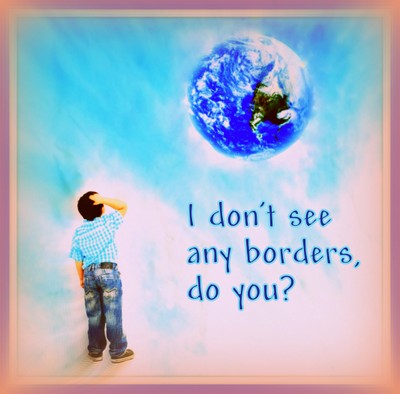
Though erected and implemented for supposed safety and benefit, borders oftentimes exacerbate economic, class, and racial divides by establishing rhetorical divisions in identity and membership. How bodies are restricted in their movement, displaced, or undervalued also restricts voice and visibility in terms of the powerful and the powerless. Surveillance, monitoring, and the construction of boundaries are all ways that bodies are disciplined and controlled. These barriers to full cooperation and integration, both physical and symbolic, construct an environment where identity is defined through one’s relationship with institutions of power. USC’s fence highlights the modern implications of race, borders, and visibility, where hierarchies still enact biopower and violate political autonomy. 
Retrieved from Mutual Responsibility
A Change.org petition has been started to “Take down the USC gates.” This petition notes the importance of welcoming, opening spaces, and condemn the “us vs them” mentality that the fence represents. The petition includes a space for comments and a letter addressed to USC President Max Nikias and the Provost Elizabeth Garrett. The petition is nearing the 500 signatures needed to be sent to Nikias and Garrett. The power of such a petition may be limited in terms of practical changes, but the petition is itself symbolic that the USC community is in part against the policy instituted by the administration. A lack of student support and involvement, however, many indicate that many are already accustomed to the surveillance and limitations that it imposes. Some may be optimistic about the future of surveillance, but it appears that great action and effort to shift notions of visibility are needed to reclaim privacy and personal autonomy.

References
Brown, N. (2013, January 22). In response to security measures. Daily Trojan. Retrieved from http://dailytrojan.com/2013/01/22/letter-to-the-editor-75/
Burke, K. (1984). Attitudes toward history. Berkeley, CA: University of California Press.
Casper, M. J., & Moore, L. J. (2009). Missing bodies: The politics of visibility. New York, NY: New York University Press.
Dickinson, G. (2002). Joe’s rhetoric: Finding authenticity at Starbucks. Rhetoric Society Quarterly, 32(4), 5–27. doi:10.1080/02773940209391238
Foucault, M. (1982). The subject and power. Critical inquiry, 8(4), 777–795.
Foucault, M. (2012). The history of sexuality: An introduction. New York, NY: Random House Digital, Inc.
Hollinshead, K. (1999). Surveillance of the worlds of tourism: Foucault and the eye-of-power. Tourism Management, 20(1), 7–23. doi:10.1016/S0261-5177(98)00090-9
Jennings, A., & Xia, R. (2013, January 15). USC rolls out the unwelcome mat. Los Angeles Times. Retrieved from http://articles.latimes.com/2013/jan/15/local/la-me-usc-safety-20130116
Phelan, P. (2004). Unmarked: The politics of performance. New York, NY: Routledge.