Sunday, August 30, 2015

Pedagogy Experiments: Grading in Public Speaking

In the beginning of Summer 2015, I taught COMM 204: Public Speaking to ten amazing undergraduate students. We tackled many important topics, such as logical fallacies, overcoming communication anxiety, and building sound, reasoned arguments. A few weeks before the course, one of my friends and colleagues, Kari Storla, forwarded me an article about autonomy and self-grading in the classroom. My first thought was dismay, shock, and disgust - let students....grade...themselves? It seemed like a ridiculous and pointless idea.

Image retrieved from this site.
But, after my gut reaction passed, I thought that public speaking might be the perfect course to tackle this interesting and innovative idea. I drafted a 25/25/50 rule: each student self-graded up to 25 points, the peer grades were averaged out of 25, and I provided the remaining 50. The article noted that few professors give scores below 50%. If 50% is given automatically, why not give the students some autonomy and control over that experience? I gave it a shot and this is what happened.

Overall, I found that the students were quite fair to themselves and their classmates. With the knowledge that everyone was peer-grading, there was a collective dependence on giving everyone decent scores. I averaged grades and all scores were anonymous, but the students still felt responsible for creating a supportive and welcoming environment. Even when comments were quite harsh, "This didn't really address the prompt, not sure I understood it," students (except for 1) still never graded below a 20/25. Across all speeches, there was agreement between the student self grade and the peer grade. Students, on average, gave themselves a 23.6 and the class gave them a 23.4. Even given the opportunity, only 1 student gave themselves perfect 25/25 across all 4 speeches. This same student also received the highest peer grades and the highest score in the course, despite the student having the third highest score from myself, on average.
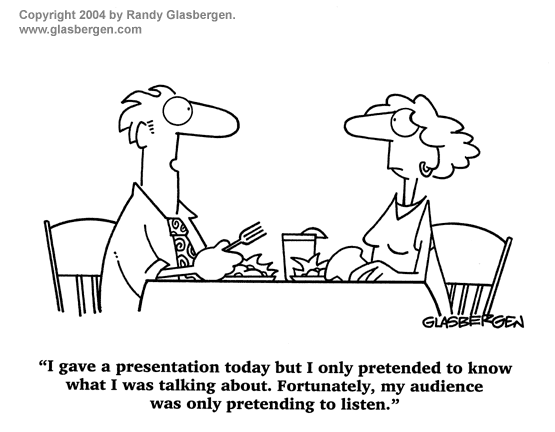
Image retrieved from this site.
There were no statistically significant differences between grades and a student's race, but there were some interesting patterns. The top three peer graded students were Caucasian while the lowest three were students of color. Overall, though, the peer grades spanned 24.4 to 22.8, a difference of 6%, which could bump a student half a grade. The students of color were also more likely to give themselves lower peer grades. For example, the lowest average self grades, 22.25/25, 22.88/25, and 23.50/25 were all students of color (and two international students). One student (briefly mentioned above) gave consistent low scores to two students of color, averaging a 19.3/25 and 18.2/25. These discrepancies and outlying scores did not affect the overall student average nor did it vary significantly from peers. Because of the low number of students in the class, teachers may want to keep potential biases in mind (for themselves and students participating in peer grading).

Image retrieved from this site.
The self- and peer- grading was done through an app that I previously wrote a post about: Socrative. In the past, I used this app for pop quizzes and anonymous feedback, but in Public Speaking, I used it for immediate scoring of students after speeches. I did not allow technology use during speeches, but started the Socrative quiz for students to give feedback out of 25, with both positive comments and constructive criticism.

I also used Socrative to asked students how they liked the self- and peer- grading. In response to the questions, "I like the method of self and peer grading in COMM 204 this summer," all students responded "Agree" or "Strongly Agree." In response to "I felt like I had more control over my grade because of the self and peer grading policy," I only had 2 neutrals, with the rest "Agree" and "Strongly Agree." In response to "The self and peer grading makes the grading process more fair than just having a teacher grade," I had one neutral response and the rest "Agree" and "Strongly Agree." I had the same one neutral student in response to "I felt that my classmates and myself were reasonable and accurate graders." Students were more neutral towards, "I think that peer and self grading could work in other COMM classes," with four neutrals and the rest, "Agree" and "Strongly Agree." The students all marked "Agree" or "Strongly Agree" with "The self and peer grading policy has positively affected my experience in COMM 204."
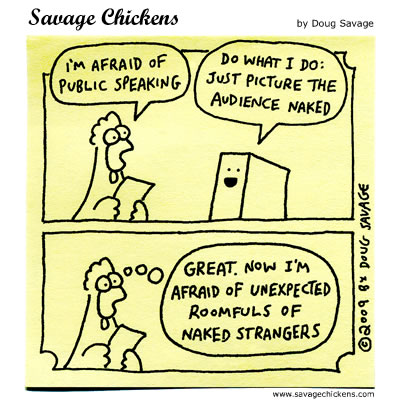
Image retrieved from this site.
In the comments, the students were quite candid about how they marked themselves and others. One student admitted, "I felt that I was obviously more bias about grading myself than my peers. I tried to be as unbias[ed] as possible, but I think it was easier for me to mark someone off for something than myself." One student noted the potential risk, "It's an interesting system to implement, although it also relies on the assumption that your classmates also grade you honestly and fairly." Other students saw the process as very beneficial: "Getting to know peer and teacher feedback helps improve and motivate me and helped me boost my confidence."

Overall, I think this experiment was a success. The students responded positively to the policy, despite concerns at first. I was sure to emphasize the community aspects of the course and how important it was to be both fair and supportive. I think this helped the students see the benefit of engaging with this grading system and giving their full attention to their peers. I could imagine this process working well in other classes that might do presentations. In COMM 206: Communication and Culture in Spring 2015, I had many students mentally check out during student presentations about readings. If the students were tasked with grading, however, and knew that they would be as well, perhaps they would pay more attention to their peers. I'm happy that I experimented with this teaching experiment and would encourage students in a Public Speaking or other presentation-heavy course to try it out as well.

Friday, August 28, 2015

Research Blog Update: More to Come

This is a quick post update to explain the lack of weekly posts. My summer was filled with travel, conferences, and vacation, so I took a break from the blog.

The blog starts back up this Sunday, where I will begin writing a series of posts about things I noticed about my travels, particularly cultural differences in China, my experiences teaching, public memory in the UK, movies I've watched, and general comments on public deliberation and culture.

Thanks for reading!

Thursday, June 18, 2015

I'm Blacker than Rachel Dolezal: Race, Identity, and Transracial Bodies

I meant to publish this post on Sunday, but I couldn't even remotely wrap my head around the twists and turns in the Rachel Dolezal story to make a coherent blog post. With the extra time to think, this may come closer. As a white, cisgender, able-bodied, heterosexual woman - I know that I fall victim to the same privileges of Dolezal and many people commenting on this story. I hope that my voice comes across as an ally and curious academic instead of offensive.

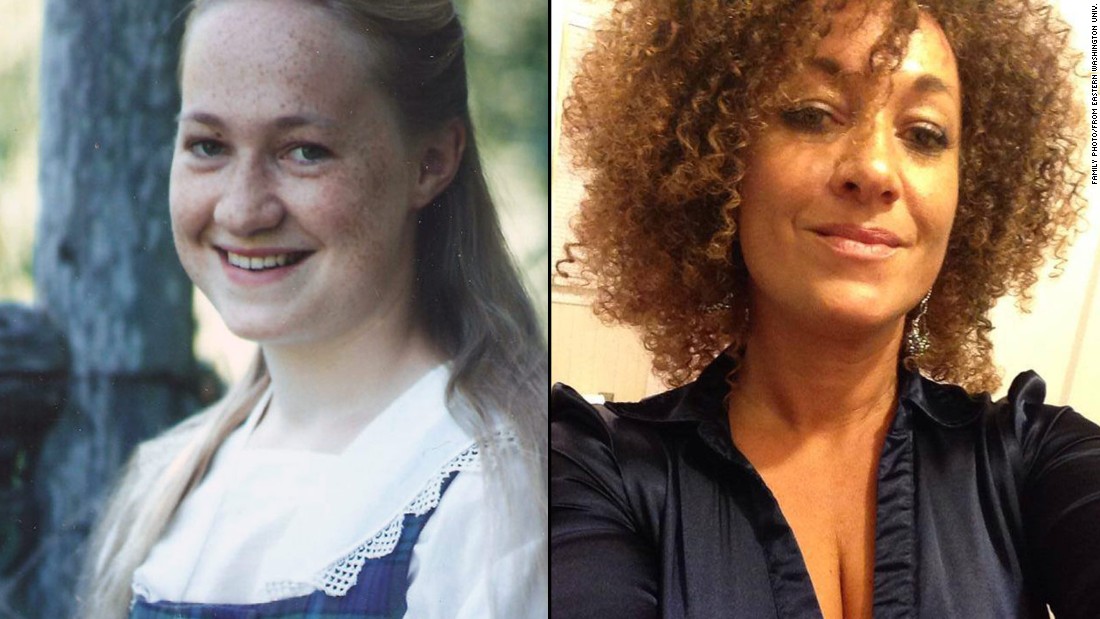
Dolezal as a white and black woman. Retrieved from CNN.
Let's start with the facts (or as close as we can get). Dolezal's parents are Caucasian and her heritage is made up of German, Swedish, and Czech ancestry. She went to Howard University and then got a job in Africana Studies at Eastern Washington University and became a chapter leader in the NAACP in Spokane, Washington. This is a relatively uninteresting history, even for a white person. There are no rules about who is allowed to teach what type of courses and many white people have been prominent actors in the NAACP. White women have taught courses about black women and men have taught feminist theory classes. Academic knowledge about these subjects is not exclusive. Of course, there are benefits to having professors who can address these perspectives from a particular standpoint, but having allies address these topics is also beneficial.

What, then, is the issue? The issue is that Dolezal, despite being a white woman, a blonde-haired, blue-eyed white woman at that, identifies and presented herself as a black woman. Dolezal's birth race did not jibe with the identity that she wished to portray, so she performed the identity of an African American. Many people believe that race, gender, and sexuality are social constructs - they are performed behaviors and identities that communicate to others who and what we are. Dolezal decided to perform and go through life (at least for those ten years) as an African American.

Prince Koyangi's first Tumblr post with profile picture. Retrieved from this site.
For those who were as confused as I was by this discovery of a potentially "transracial" person, I am going to walk through my thought process on the matter. I am aware this term traditionally refers to transracial adoption, where birth parents are of a different race than their children. The term was first brought to my attention, however, through the excellent work of friend and colleague, Alex Sastre. She discussed the transracial/transethnic Tumblr case of Prince Koyangi. For me, this term linguistically matches a similar, but different phenomenon in transgender people. I do not wish to make this comparison, at least in a fully equal sense, but I do want to explain the difficulties for people, and perhaps especially cisgender white people, to unpack the trans* identity.

One thing that I initially noted was a similarity in language between how news sites and people on Facebook were responding to Dolezal's actions. For me, terms like "impostor," "deceived," "pretended," "misleading," "lied," and others echoed claims that transgender people are somehow lying or deceiving people with impure motivations. One need only recall the disgusting words of Mike Huckabee in response to Caitlyn Jenner's announcement: "Now I wish that someone told me that when I was in high school that I could have felt like a woman when it came time to take showers in PE." These accusations assume that people are deceitful in their gender identity for the purpose of advantage in some way.

People began to talk about Dolezal in this same manner - that posing as black would somehow benefit her in her job prospects and appointment in the NAACP. A poignant note here is, as others have pointed out, that Dolezal potentially took that appointment away from a woman of color. There are other reports that Dolezal faked hate crimes against her to garner sympathy. Certainly, these are negative, consequential, and deceitful actions. But does that mean that transracial people do not exist?


A friend and colleague, Kari Storla, emailed me the above video by a black, trans*female vlogger, Kat Blaque. I appreciated the link and spent a lot of time thinking about Blaque's arguments. For me, I couldn't get past the apparent hypocrisy - Blaque was telling her truth, but was denying the possibility that Dolezal was telling hers. Isn't it really a matter of personal identity that is not something that any of us can determine? How is it Blaque's or any of our responsibilities to tell Dolezal that she is in fact lying and we are the ones with truth? When Dolezal says, that she "identifies" as a black woman, why do we not take her at her word? Many trans*people discover their identities later in life and some may never transition in an aesthetically explicit way for many reasons such as safety, finances, or personal choice. Dolezal certainly identified as white when she sued Howard for racial discrimination, but perhaps she discovered her identity later in life?

Any way I sliced it, I couldn't see a tangible difference between transgender and transracial individuals, despite a gut instinct that they were different. There are many times when my personal opinion towards something (that Dolezal is crazy and this can't possibly be a thing) is offset by my intellectual musings. There must be a reason to my nagging doubts, right? A small epiphany occurred during a conversation with my partner. We discussed the idea of privilege and how men transition into women and Dolezal transitioned into a black woman. We discussed ideas of passing and that some people can transition into the other gender more easily than others, can "pass" as something they are not. We discussed how I am a Caucasian woman and would never be mistaken for something else, despite having African ancestry. We discussed how people like Barack Obama, Tiger Woods, and even Stuart Hall, will never be anything but black men.

Cartoon explanation of white privilege. Retrieved from this site.
That's when it clicked - transgender people reflect a spectrum of identities. Trans*people identity as male-to-female, female-to-male, gender fluid, agender, and many other evolving labels. But, the idea of transracial-ness is distinctively a privilege of whites. Whites can "put on" and appropriate the culture of other races, and have for centuries. They are able to do this, as Richard Dyer notes, because they are the center, the normal, the non-race. If a black woman adopts a white hairstyle and bleaches her skin, she will never be anything but a black woman. But, if a white woman adopts a black hairstyle and a tan, she can be (and was) perceived as black. This lack of equality, of cross-racial mobility, solidified my opinion. Dolezal is not transracial, she is not a black woman, but a white woman who has appropriated black culture for personal reasons. There is no trans*ness about being transracial, because the privilege is reserved for those able to adopt the races of others - whites. I am still musing about this topic, but thinking through Dolezal's story has enlightened me about the different ways that white privilege functions in today's society.

This post certainly ignores other complicated aspects of this story such as historical racism, biological determinants of race, and blackface. Those are all important points as well that I do not mean to undermine. They did not, however, play a role in clarifying for me why the Dolezal story is so disturbing and yet simultaneously worthy of philosophical discussion. This story will probably engage more people as more facts are learned and I hope that it culminates in more important conversations about race and its tangible effects on life and society. It also brings attention to the unending struggle between the mind and body and the danger of not conforming with society's expectations.