Sunday, October 11, 2015

Rape Myths still Happen Here: Sexual Assault on College Campuses

It has been a few weeks since my last post. I've been hard at work at job applications and this post has been particularly difficult to write. This post is about a movie screening of "It Happened Here" held at USC. The movie addresses issues of sexual assault on college campuses and the effects on students there. "The Hunting Ground" is another recent movie that addresses these concerns and I recommend both of them to people interested in delving more into real life experiences and stories of those affected by sexual assault and rape. I will first summarize the reasons why I find films like these extremely important and the rhetorical techniques they used to communicate their message. Then, I will discuss the prevalence of rape myths and why I had to walk out of the Q&A at the movie screening.


IHH and THG tell the larger story of rape and sexual assault that plagues women across the country through the individual stories of a handful of women. The startling statistics that 1 in 5 women are victims of sexual assault during their time in college are presented through the voices of the few. These exemplars add detail, nuance, and a face to the victims of this particular crime. Statistics can often feel cold or unpersuasive - especially if people do not (think they) know anyone affected. There are many reasons why people may not want to share their story, so these crimes may appear anonymously in public discourse - or we only hear the amplified stories of the very few that are false. Kenneth Burke argued that the "circumference" of an event affects its communicative influence. The circumference is related to what counts as the event or environment for an action. For example, if we expand the circumference of "bullying" from only in person to also online and cyber-bullying, the term can take on a whole new meaning. In these films, they seem to be narrowing the circumference, and showing only a few campuses and a few women as stand-ins, or synecdoche, for all college-aged women. The audience is forced to engage and experience the narratives of each woman and, at least in part, sympathize with their situation.

Angie Epifano - one of the storytellers in IHH. Image retrieved from the IHH website.
The two films showed a variety of people affected by sexual assault and rape. There were women who had been drunk, those sober. Some women were at a party, some were victims in their own dorm rooms. Some didn't know their attacker, others were assaulted by friends and significant others. The variation in stories gave the impression that rape and sexual assault happen in many different ways to many different types of people. THG contained a few stories from men who had experienced rape or sexual assault. Overall, the individual narratives united to create a holistic view of sexual assault and college life. The films could have easily focused on the past and fetishized the experiences of the story-tellers. Both films, however, emphasized the present and even the future, choosing to spend most of the films engaged in the reactions of the college administrators and the steps the women were taking to combat future sexual assaults at their universities and across the nation. Descriptions of the assaults were left in the victim's own words and comprised very little of the movie's time. Instead, the films focused on the larger impact of these occurrences and how the women were working to reclaim their voice through campus events and protests (like Take Back the Night) and Title IX lawsuits. I have previously argued, among many others, that documentary films have an immense power to shift public discourse. These films are certainly persuasive and advance an argument, but they also provide real life examples packaged for public consumption. I hope that films like this will help to shift how people talk about sexual assault and rape.

Image retrieved from this website.
My optimism upon seeing this film and reflecting upon it and THG was almost immediately tempered during the Q&A. I first want to thank Director Lisa F. Jackson for attending the screening and handling two audiences members with aplomb and respect. It was far better than I would have done in that position. There was a couple in the back of the auditorium that dominated the Q&A session. As I told people of the event and even as I write it now, I am convinced no one will believe me. They presented a startling cliche of rape myths and expressed my greatest fear - that the film could not soften the hardened distrust of women and rape victims in the public. This is a warming that the following description of the Q&A may be triggering.

The gentleman in the back of the room raised his hand and was called on with the first question. He started his question with a preface about how he was the eldest brother of four sisters. Thinking back, this should have been an immediate red flag a la "I have a lot of black friends" before racists start talking. He asked Jackson why she didn't include any stories of false reporters and those who lied about their assault. He noted that this would have been more "fair" to share "both sides" of the story. Media representations of controversial events are often framed as debates, where there are two equally balanced sides. Similar to John Oliver's report on global warming, Jackson argued that there are so few false reports that giving them space in the film would not be reflective of the overarching narrative. Indeed, the number of false rape reports mirrors the false reports for other crimes. I groaned a bit at his question and I saw a few people shifting in their seats, but so far, it was bearable.

Image retrieved from this website.
A few other people asked questions, but my friend in the back wasn't done. He raised his hand and asked whether women don't "disassociate" themselves from the event while its happening and then "forget" in the morning that the activity was consensual. Perhaps, when reflecting on the event, women "make up" a story to make themselves feel better. It was "obvious" from the film that some of the women couldn't remember a lot of details, and that was an indicator that they were lying as opposed to those that would have a factually accurate and complete story. The women had "wanted" the attention initially, but then regretted the potential effect it would have on their "reputation" and thus cried rape afterwards. Everyone had turned to look at him, and I asked, "Are you serious?" The woman a few seats away from me said, "You're victim blaming." This person, sitting through the entire film, seeing women share their painful stories, hearing the statistics about the frequency of this crime, and learning about how the system fails victims, held fast to his beliefs that it was the victim who was at fault.

In response, a brave woman in the front of the room shared her story of assault and noted that there were probably more women like her in the audience as well. She wondered whether it was the larger culture that encouraged this type of behavior and rewarded men for aggressive behaviors. Our friend raised his hand once more and it was all I could do not to interrupt and claim the microphone back for the female voices in the room. As he received the microphone again, a handful of women left the room. The man echoed the concerns of the previous speaker and talked about the powerful force of masculinity over the mind. He argued that men are not at fault at all and it is really their sexual drives, natural to all men, that are at fault. This man was truly a sight to behold. Some of the most common rape myths that pervade our culture and insidiously undermine the stories of those brave enough to speak out. In retrospect, I'm surprised that he didn't ask what the women in the film were wearing when they were assaulted.

Lady Gaga's music video, "Til it Happens to You" about sexual assault

I mentioned that this person was a part of a couple because at this point, she spoke up. She asked Jackson why more women don't go to the cops right away to have their story verified. She said that the issue of lying and false reporting would be eliminated by lie detector tests. I applaud Jackson for ignoring the absurd part of this question and focused on the many reasons why women may not feel comfortable going to the police and how we might create changes in police protocols. The response I wanted to give, but could not muster the strength to, was to say that all women experience trauma differently. Expecting anyone to submit themselves to being tied up in a chair being asked probing questions about their assault shortly afterwards is completely illogical. Furthermore, lie detector tests measure nervousness and heart rate to detect lying, two things basically guaranteed to happen after an assault. There is a reason why they aren't used in criminal justice systems - they are not accurate enough. This woman echoed her partner's concerns that the victim should be analyzed and be on trial for being assaulted.

I was deeply hurt but this couple's comments and had to leave the audience when the man raised his hand again. He was overpowering all of our collective voices and challenging the basic tenets of what I felt was an excellent film. The Q&A experience highlighted for me that there is still a lot of work to be done to change the minds of many members of the public. This films are making important strides, but rape myths and dominating ideologies can be intractable parts of culture.

Sunday, September 13, 2015

"The Visit," Race, and Disability

I recently saw a pre-screening of M. Night Shyamalan's "The Visit" at USC. I was excited to see the film because the trailer looked creepy and, as others have noted, this was potentially a epic comeback for the director. I am a fan of horror movies, so even without the hype, I probably would have gone to see it. I have to say that while it is better than many of Shyamalan's movies, I was very disappointed with the film. I am not going to "spoil" the cliché Shyamalan twist, but address the three main problems I had with the film.  First, I will address my small concerns about the flow of the movie and its stylistic choices. I also was concerned by its attempts to corner the "comedy horror" genre through racial appropriation. Finally, I find problematic the use of disability as the catalyst for shock moments. Although there are no spoilers, I will discuss some scenes of the film in detail.


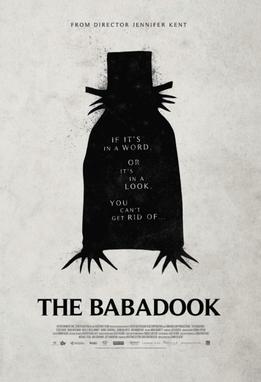
The appeal of the first-person, found footage horror films has waned for me. Original uses, such as the Blair Witch Project, were pioneers in filmmaking style. Other films made great use of the medium, such as the V/H/S series. I also found that this style worked for the gritty and entertaining As Above So Below. For most movies, however, I feel that the found footage genre reduces the thrills that it tries to engage. The camera angles and the following of the drama is completely limited by one of the characters moving it or its placement in a fixed position. Thus, the camera is either a static frame or is missing a character. Because the camera reacts with the character, frightening sequences are often cut short. In The Visit, the two children often interrupt or come across their grandma in various aggressive or startling actions. The audience, however, gets barely a glimpse before the main characters run away in fear. What could be longer, thrilling scenes turn into brief "shock" moments where the music amps up and something flashes before the screen. This type of horror tricks seems quite overplayed, where there are far more intriguing moments of horror in present day films. I hope to discuss It Follows more in an upcoming post, but I will note briefly here that it makes fabulous use of every day activities and long scenes where there is immense building of terror and suspense. Another great contemporary example is The Babadook, where the female protagonist bravely encounters the ghoul in her home in long, terrifying battle, instead of a brief flash in a window or doorway.

Image retrieved from Wikipedia
Image retrieved from this site.

Now that I've indulged my pure opinions on the horror genre, I will now engage more theoretically motivated concerns. While I did find The Visit funny (Katy Perry!), the humor was mostly nested in appropriating black culture and the juxtaposition between freestyle culture and a young, white boy. The younger brother in the film, Tyler, adopts the style, mannerisms, and attitude of black culture for the purpose of comedic relief. Comedy and horror often go together. For example, the iconic Evil Dead series could seamlessly make you laugh while you were terrified and a bit uneasy. This is epitomized in the Evil Dead 2 (my favorite of the series) scene in which the items in the cabin start laughing along with Ash - frightening and yet you cannot help but laugh along. Another one of my favorite horror films, Cabin in the Woods, makes you pause for reflecting at our own fascination with horror. The office party scene epitomizes the movie's brilliant satire work (and its opening is delightfully Funny Games-esque). Instead, the comedy in The Visit is pure relief, with no purpose behind it but to distract from what we just saw (brief as it already was) or poke fun at the disabled grandparents. I will discuss more about the grandparents later, but first I want to further discuss Tyler's character.

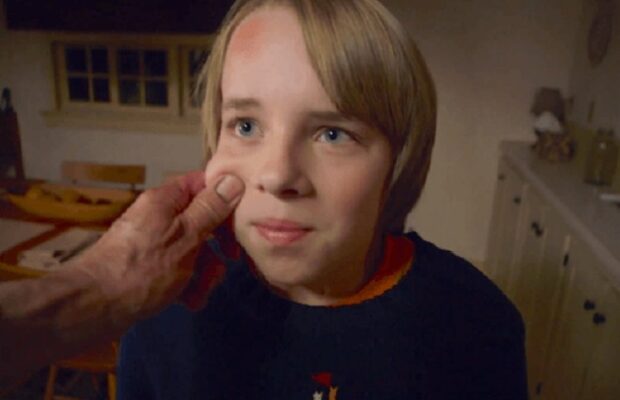
Image of Tyler in The Visit. Retrieved from this site.
The character is quite sweet and has his vulnerable moments where he seeks his sister's comfort. More often than not, Tyler draws his strength through his impersonation of black culture. As The Wrap's review noted, scenes where Tyler raps about women and sex are "burp[s] of coarse comedy." They seem out of place and forced, as if the only thing funny about the situation is that a young white boy might imitate gangster culture. This imitation, however, appropriates a different culture and undermines its history and purpose. The scene where Tyler raps on the train next to a black men, who is a worker on the train, is truly cringe-worthy. Kenneth Burke called this "perspective by incongruity" - where a word is applied in a completely new context and given a new meaning. What was once a unique part of black culture is now applied in a different context - a juxtaposition that creates humor. The humor is crude and appropriates black culture and further distracts from what could have been intriguing horror scenes.

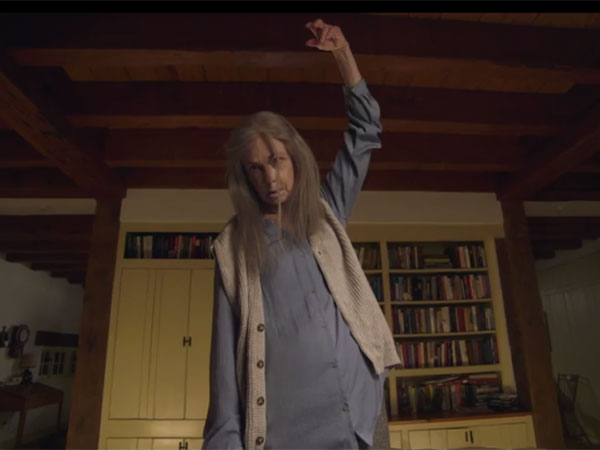
Terror - supposedly, from a scene in The Visit. Retrieved from this site.
More central to the plot of the film is the mental and physical condition of the grandparents. The mother, who they Skype with, frequently brush off erratic behavior as "old people problems" and nothing out of the ordinary. Incontinence, memory loss, confusion, and generally odd behaviors are boiled down to "normal" plights of the elderly. Natural, elderly bodies become a source of scorn and disgust because of there differing abilities. In one scene, Tyler follows his grandfather to a hut, where Tyler thinks he is hiding "secrets." To recall the horror of "what's in the box?" among this reveal is truly embarrassing. The hut does not contain dismembered bodies, secret writings, or clues to a great family mystery. Instead, it contains the grandfather's incontinent diapers. The thrilling sequence of entering the space and watching for the grandfather's return is let down by the "big reveal." At points, I felt quite bad for the grandparents, who were constantly pestered by the granddaughter, Rebecca's, video camera. In an interview with the grandmother, Rebecca repeatedly asked her what happened on the day Rebecca's mother left the house. The grandmother responded many times with sadness, confusion, and aggressive outbursts; this event had obviously caused her great stress and trauma. I felt pity where Shyamalan wanted me to be frightened. But, I wasn't. I wasn't frightened by the effects of aging and sometimes erratic confusion caused by people who may have Alzheimer's or another disorder.

The "evil" in the film is simply that: being old. There is no evil spirit, motivated killer, or other source of evil besides the mentally and physically disabled. And that is a horror trope I simply cannot support: that the elderly and differently-abled are a source of evil and horror. Shyamalan sets up the elderly as the "other"; the ones against which the main characters (and thus the audience) contrasts our identity. But, one day, we may all experience these same problems and I hope that we are met with comfort and appreciation instead of fear and isolation. For those who have seen the movie, I am aware that there is more going on than simple aging. Despite this fact, I believe that this film constructs a rhetorical framework that isolates the elderly and reifies ability as normal.

Sunday, September 6, 2015

Food Culture and Masculinity in China: Surviving as a Vegetarian

When I went to live in China for three weeks, I knew that being a vegetarian would be hard. All of the blog posts I read warned me of the lack of options, difficulty in communicating dietary needs, and frustration with the lack of translations on menus and in stores. Only a few articles discussed China's Buddhist history and praised China's openness to vegetarians. With my handy printed copies of Chinese words and characters and pictures of animals with red X'ed circles, I went out prepared to let everyone know "wo chi su" - I eat vegetables. What I wasn't prepared for was how many of my food decisions weren't made for me - and how masculinity and food culture are intertwined in Beijing, China.

Flight into China.
Before I elaborate on the previous statement, I do want to say that I greatly enjoyed my time in China, am grateful for the opportunity, and am deeply indebted to my hosts there and the many friends that I made. This post is not about my overall experience, but about the unique difficulties I had as a lacto-ovo vegetarian (no meat, fish, or poultry, yes to eggs and dairy) in Beijing. The food I did have was delicious and I think future vegetarian travelers (and travelers in general) can benefit from learning more about Chinese food culture.

At many of the restaurants I went to in China, large groups were given private rooms with huge round tables with a rotating plate in the center. Family-style restaurants are usually a niche market in the US, but it was the standard practice for Chinese restaurants. In those settings, the communal nature of China brought me face-to-face with my own individualistic tendencies. Even in the US, family-style means taking food from communal pots and placing it on individual plates. We had personal plates in China, but more often than not, the people at the table would take food directly from the communal plates into the mouth. The most dexterous man I saw would pop individual peanuts covered in sauce from the bowl to his mouth without dropping a single one. Those who use have tried using chopsticks know how difficult this is. The avoidance of personal plates signified that the meal was everyone's. There was no "hoarding" of favorite plates or claiming ownership over food by amassing it in front of you. Instead, everyone was patient, waited for the food to rotate, and grabbed what we needed as it passed.

Picture of fermented egg on tofu, a vegetarian Chinese specialty.

For me, it could be a long wait for what I needed to come around, and a few times I felt compelled to break the personal plate rule and accumulate stray mushrooms and pieces of eggplant. At a communal table, there was no individually-owned items, so everyone took from meat dishes and vegetarian ones, even if I could only take from a few. For the Chinese, this wasn't an issue because over-ordering is the norm. No plates are ever left completely empty - it is considered rude. So instead, the staff will dump the remaining pieces on one shared plate to save space for the many more dishes to come. On many occasions, vegetable dishes that were ordered had meat sauces, chunks, or components. I completely understand the need to be flexible when traveling, but for someone who was raised vegetarian, those dishes can make me extremely sick.

My blog post promised some musings about masculinity and patriarchy - and here it comes. The Chinese food culture was communal, but the head of the table was the boss. During our first meal in China, a fellow American sat at the back seat facing the door. I think this is a common practice in the US, as it is the most difficult seat to get to, so if often taken first to avoid inconveniencing others. Our advisor, however, encouraged him to move, unless he "wanted to pick up the tab" for our table of 15. The host paid the bill for the entire table; "splitting" checks was not common, but sometimes at smaller outings we would throw money into a communal payment pot. For the three weeks I was in China, the host was female one time, when we dined with the director of the school the group was teaching at. The other nights were all male hosts who oftentimes spoke little to no English. This made communicating to them my dietary concerns quite difficult and I sometimes felt that my request was treated flippantly or as unimportant.

Picture of the Night Market in Beijing, where they sold scorpions, snakes, starfish, and many other things on a stick.
What the hosts ordered, we had to eat and drink, including alcohol when it was not desired. We were told when to take food, when to drink, and how much of what we could have. I was offered meat (usually Peking Duck) many, many times, and found it difficult to explain to my hosts why I refused their very generous offers. A few hosts got quite upset and raised their voices while my advisor tried to explain the situation and encouraged me to try "just a little bit" to appease the hosts. I don't fault anyone for the situation; it's really a classic case of cultural clash and miscommunication. It's rude for me to refuse food and drink in Chinese culture; it's rude for people to force food and drink on people who don't want it in American culture. For both cultures, it's a matter of respect, either to the hierarchy of the community, or the power of the individual.

I saw, very often, women at the table, including myself, struggling to refuse alcohol. Chinese dinners, especially business ones, were filled with alcohol. And it was no one's choice when to drink but the host, who would stand, make a speech, and demand that everyone finish their glass. To not follow the call of "gānbēi!" by downing your drink was considered a rejection of the toaster's well-wishes. Furthermore, the host and other guests would often move around the table and toast everyone individually - meaning a toaster could go through a shot of alcohol (caled baiju) for each guest present. The male hosts were often complimentary to the female guests' looks, which emphasized my and my other American female companion's "exoticness." Those hosts would often touch, hug, or try to kiss us, as complete strangers, without warning.

I greatly enjoyed my time in China, but dinners were often wrought with nerves. Would the host order something I could eat? Would this meal have "secret meat" in it? Would we do a lot of toasts? Would I be given baiju instead of something I want to drink? Would the host make advances on myself or my friend? Would the host get angry if I refused his offer of Peking duck? If there were vegetarian food, would other people eat it before I could have any?

Obligatory panda photo
My favorite foods in China were the stewed eggplant, assorted mushrooms (sometimes called tree and ground fungus), and baozi (vegetable filled and steamed buns). I greatly enjoyed their variety of fruits such as jackfruit (inspiration for Juicy Fruit gum) and trying interesting-tasting fruit like durian. It was an adventure that I will never forget and I hope to go back soon. The food culture, in particular, made me reflect on the differences between China and America and the challenges of establishing a global community.