This
article has received much coverage and critique over the past month, but I wish to add my opinions on the matter of struggle, privilege, and hegemony.
It is not lost on me that this critique of Taylor Cotter's article is hypocritical as she is almost my complete double: Northeastern graduate, female, white, employed, and journalism/communication focused. In spite of these similarities, I would like to dissect Taylor's article and view it as a communication scholar would: in terms of issues of power. The ideas in her article, "A Struggle of Not Struggling" have been met with much contention, minimal but loud support, and debate over her intentions. The article is short so I recommend reading it, but to summarize, the main point of the article is that, for Taylor, having been successful has kept her from experiencing life from a different perspective: the struggling, freelancing journalist. Overall, she imagines what a different life might have been had she not been successful, or, as she describes, if she had fallen on the other side of the statistics.
In part, I can empathize with a general life feeling of uncertainty of making the right choice, wondering about making different decisions, or planning for the worst case scenario. These are natural feelings of anxiety, worry, and preparation that most people experience. The difference, then, is what the topic of anxiety is and what the side the grass is greener on. For Taylor, she pines for the less green side of the fence, the struggle and character-building that comes from falling on the other side of the statistics. Though Taylor could easily change her situation and decide that she wanted to leave her job and move to New York to live her dream lifestyle, she does not. In keeping the job and complaining about it, she denies herself the dreams she pines for, and further insults others who might not have been as fortunate.
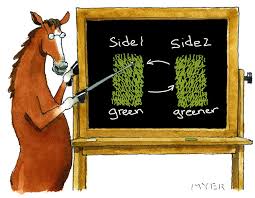
The key issue for me is choice. At the end of the day, Taylor chose her life and could easily change her decision. "I chose the path of a full-time job and an adult life. I gave up on the adventures, on freedom, on youth. " Her pining for the other side mistakenly equates a part-time job, living at home, and financially struggling with adventure, freedom, and youth. There is nothing inherently adult about having a job and there is nothing inherently youthful about having adventures. Condemning oneself to a boring, full time job is simply that: a mistake has been made and one has the opportunity to change it. Those who are not as lucky are not necessarily in a different situation, but are trapped, cannot choose. Working a part-time job, living at home, and eating ramen may seem a glamorous, enviable life to one in a higher, more entitled position. To those for which it is daily life, a necessity to survive, the glamor fades quickly.
I may not know what it means to be anything but a privileged, Caucasian, heterosexual, and middle-class ciswoman, but I would not pretend to know anything
else. I would not claim to look through the lens of others, understand others, or envy others (at least not intentionally). I, therefore, see the hypocrisy in writing this article and critiquing Taylor, not knowing her full story. But from the article, the only easy-accessible evidence in which she is explicit about her situation, I feel that a character-evaluation and full opinion can be made. The underlying narrative of the greener grass always being on the other side is undermined by hegemonic, pompous overtones.
Hegemony and power are important concepts in communication, especially in gender and cultural studies, where issues of power define all relationships and communication. Whether one believes in the Marx or Foucault brand of hegemony and power, one could argue that Taylor is a representative of the top or ruling class because of her self-reported situation (e.g., in terms of economy, race, opportunity, and social status). Marx would argue that power is held in the top and oppresses those beneath whereas Foucault argued that power is found in every level of society. The power of Marx is oppressive and top-down, but Foucault's power is flexible and multi-directional. Those in the top have the choice to abandon their post, the factory owner could leave power and become employed at the factory, Taylor could quit and pursue a different life. Those in the bottom, however, have no such independent, personal choice, the factory worker cannot simply become the owner, part-time workers cannot simply obtain a full time, well-paying job. The different positions are inherently issues of freedom, choice, and independence. While Taylor "often laments" her life were not different, she does not take the action to change it that others have no power to do. Instead, her lamentations of the path not taken appear as navel-gazing whining of an unnecessary quarter-life crisis. Nothing is permanent about her life, nothing is permanent about anyone's life when one has power. When one lacks power, however, they would not write such an article, for there would have been no choice to be made and thus no opportunity for regret.

Why this article offends, upsets, and bothers people is because by pining for the "other" life, Taylor denies her privilege as a benefit, insults those who have no choice, and
embarrass those in her same position that must now justify and defend the hegemonic claims to entitlement by those who are so ungrateful. This is not a question of wishing better decisions had been made, regretting mistakes, or pondering other avenues. This article puts under scrutiny the very definitions of sacrifice, success, hegemony, power, and personal freedom. When choice is stripped from you, you are not free, a fact that Taylor takes for granted.