Thursday, April 12, 2012

The Power of Online Sentiment Data: Article Review


An article in the April 2012 issue of Human Communication Research entitled, “Emotions, public opinion, and US presidential approval rates” argues that emotions in online discussion forums can be directly linked to approval ratings of the president. Not only does this article find an application for aggregated data from online sources, but it also uses the emotional content of the forums to create conclusions about the state of public opinion. If people, especially youth, are becoming more cynical and skeptical of political activities, they pull away from the system, but still need an outlet to express their emotions. Gonzalez-Bailon, Banchs, Kaltenbrunner (2012) separate out emotionally-charged words from online discussion forms labeled “politics” using the ANEW (Affective Norms for English Language Words) list. These words are rated based on three types of emotional factors: valence, arousal, and dominance. Valence indicates strong feelings, whether positive or negative (e.g., happiness or sadness), arousal indicates physical changes (e.g., excitement, anger), and dominance indicates response or actions (e.g., submission, awe). The conclusions were that the invasion of Iraq used the most words associated with a high arousal and that this use of arousal words helped emotions “crystallize into generalized sentiment” (Gonzalez-Bailon, et al., 2012). Thus, important events and the effects on public opinion can be assessed through online forums where “public officials can use it to respond faster to issues of public concern, and ultimately improve the channels for democratic governance” (Gonzalez-Bailon, et al., 2012).

This article has important implications for researchers that are attempting to create coherent narratives for public opinion from online spaces such as discussion forums and social media sites. The current issues regarding such data is how to code and make sense of the information and how (if possible) to generalize this data to the general public as these populations tend to be extremely narrow and race, gender, and age specific. The Gonzales-Bailon et al. article is an important step in understanding online information by using emotions as the tool to glean political views and opinions and also the validity of using such skewed online populations to make conclusions about the public. Using emotions as a standard is complicated, but the ANEW list creates a formalized standard for the comparison. It would be interesting to see if these emotions corresponded to other important political events besides presidential approval ratings and what other emotion-charged online discussions could be analyzed using this same method.

A current example of this type of data analysis is being performed in the Annenberg Innovation Lab on the Twitter Sentiment Team to determine how tweets regarding republican primary candidates can predict success and overall popularity among the candidates. Take a look at their real time dashboard to learn more: AIL Twitter Sentiment Dashboard.

As people become more withdrawn from traditional methods of participating in politics, perhaps the solution is to assess opinions online instead of hoping for a reversion to traditional practices.

Sunday, April 8, 2012

Easter 2012 and the Importance of the Pope

With Easter celebrations occurring today, I cannot help but think about the importance of Catholicism, the Pope, and religion in general on our world. Although I have posted previously that atheists should stand up for their beliefs, I believe still in religious expression and freedom, as long as the actions and behaviors that stem from these beliefs do not harm or infringe upon the rights of others. To these more extreme interpretations of religion, I am exploring the rhetoric of Rick Santorum and of the Westboro Baptist Church, so be sure to check my blog for updates on those topics soon.

First, I would like to discuss the importance of religion in modern society, from political to health to social issues, before discussing the specific importance of Pope Benedict XVI and his recent trips to Latin and South America.

In light of religion, Catholicism as an exemplar, and its influence on global policies, religious rhetoric and the ways that people incorporate religion into their lives is of the utmost importance. Considering that more than 80% of the world considers itself religious, with nearly 1 billion people believing specifically in Catholicism, the words and messages of the Pope, a social and cultural icon, have great influence in the modern day proceedings around the world. Religious leaders still have positions of prominence in many countries, from America's religious right to the Iranian Ayatollah, and their opinions can influence constituents and thus policy-makers in making decisions for entire countries and regions.

For example, the Catholic Church has repeatedly advocated against contraception use in Africa, despite the threat of HIV/AIDS transmission in the population. African religious leaders and missionaries tending to the sick there also preach abstinence and avoiding contraception, making it difficult for those advocating for condom use and safer sex to reduce HIV transmission to gain a foothold in many African populations. Religious influences may subvert scientific treatments for the disease and restrict those who have access to contraceptive measures that may restrict the transmission of the virus.

As Hilary Clinton stated in her UN speech this year, there is a new human rights issue plaguing the nation. The human rights of homosexual, bisexual, and transgender individuals have been denied in many countries, including America, for reasons that have roots in tradition, morality, and faith. The Catholic Church has been against recognizing homosexual unions, allowing adoption for same-sex couples, and offering gender neutral or more inclusive options for identification. Followers of Catholicism define marriage as being between a man and a woman. These teachings are not limited to Catholicism as many religious groups oppose contraception and rights for the LGBTQ community. However, in both the US and internationally, Catholicism can be considered an exemplar of religious influence in politics, social order, and community building.

Because the Pope heavily influences the Catholic community through encyclicals, proclamations, and visiting speeches, his words, ideas, and priorities can change the tides for political, social, and cultural policies and traditions. His influence may be epitomized by a recent Miami Herald article which states "Pope's visit to Cuba leaves little reason for hope". This may be a comparison to claims that Pope John Paul II helped spur the fall of communism as Pope Benedict XVI's visit to Cuba was one of mixed reviews. While a New York Times article referenced the Pope's urging of political reform, this request fell on deaf ears as politicians stated that political reforms would not be following the economic ones. Can we really describe this visit as a failure, though? It was the first visit to Cuba since John Paul II's visit in 1998 and symbolically shows that the Pope and Catholicism has not forgotten Cuba. Above all, I think that Benedict's visit reinforces the idea that he and perhaps many Catholics feel that the Pope does have the power to influence governments. If not, I feel there would not have been such negative reviews of the visit, as if him arriving and speaking there would change the entire political climate of the country.

In the case of the Pope, it is hard to delineate where one's expectations are too high or too low. His influence in global power is unmistakable and perhaps unmatched, but there are limits to the effectiveness of single visits and requests. In respect to the Easter holiday today, I admire the faith placed in the Pope to exact political change in Cuba but also critique how quickly this faith can turn to disappointment. The Pope is one man, and surely the world would not want one man, no matter their background or faith, to have such power and control over governments, nations, and people. But, it appears that the Pope does, because people and the media give him this power. Considering Pope Benedict XVI's tendency to be more conservative and to follow the letter of the Bible, there may be more changes in the Catholic community to come.

Sunday, April 1, 2012

Ethical Meat and Bourdieu's Distinction

A recent news article caught my eye about "frankenmeat" or "ethical meat" which is meat created from stem cells. The positives are overwhelming: less damage to the environment, people can enjoy steak without harming animals, and vegetarians no longer have to abstain from their favorites making the switch more palatable for many people. My initial reaction to this article was one of disgust, as the consumption of flesh is forever linked in my mind to the harming of animals. Eating flesh, no matter its origins, would literally make those who have adopted a vegetarian lifestyle ill, as bodies over time lose the enzymes needed for the consumption of meat. These enzymes can be restored through slowly adopting the eating habit, but one might ask, "why bother?". The article above makes the argument that vegetarians have the obligation to eat this meat in order to drive down prices to compete with animal-producing meat, thus creating a viable alternative. My response to such audacity is to question why the onus of purchasing this "ethical meat" is on the vegetarians, those who have already made a conscious decision to improve their dietary habits for the sake of others. Are those who are consuming meat getting a free ride? They are allowed to continue their harmful consumption while vegetarians are burdened with changing the entire food market on our stomachs alone? This type of argumentation allows for regular meat-consuming people to ignore the scientific advances and play ignorant to other possibilities. Instead of dumping responsibility onto vegetarians, this article should be encouraging everyone to consume the "ethical meat" to drive down prices and save the environment. Are these not values that everyone should share?


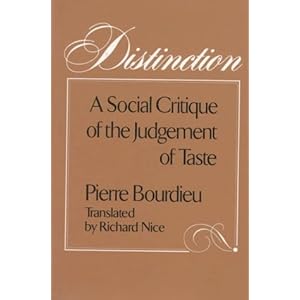
The most offensive part of the second article is the conclusion that vegetarians simultaneously refuse to eat meat on the subject of "taste" as well as values, as if children everywhere have the obligation to eat "frankenvegetables" because they don't like the taste of regular ones. The matter of food preference should not be minimized merely to taste, but should be recognized for what it is: a commitment to a healthier lifestyle that is better for the environment and animals. To do otherwise reinforces the stereotype of the "snobby" vegetarian who is trying to convert everyone to vegetarianism. In fact, eating and food is a personal choice, often laden with cultural, social, and class distinctions. Bourdieu wrote in "Distinction" that food preferences, as well as cultural and artistic preferences, are directly linked with educational and economic status. Many cultures engage in dietary habits based off of traditions such as sacrificing red meat during lent for Catholics or refraining from non-kosher meats for Jews. This aspect of vegetarianism, as the adoption of a lifestyle in line with traditional and societal values, and the subsequent importance, is forgotten. Many vegetarians, even though they might approve of "ethical meat", such as PETA (People for the Ethical Treatment of Animals) does, do not have any obligation to consume it themselves. There is no requirement for being a vegetarian to convert others to the cause, nor to carry on those same values in other aspects of their life (such as recycling or volunteering at an animal shelter). Everyone decides their own values and adjusts their behavior accordingly, and that is exactly why this is a personal decision, not for any politician, journalist, or scientist to decide. If there are more options available for people to enjoy meat and not to harm animals, I would be hard-pressed to think of people (besides perhaps avid hunters) who would be opposed to an abandonment of violence towards animals. Thus, the onus of consumption falls to no one, it is merely a choice, another option, that most everyone could agree is preferable to harming animals and the environment. The greatest ability for change, then, is to target those who are currently consuming meat and changing their habits, creating government subsidies for this meat, or investing more in its development for cheaper methods of production, instead of force-feeding it down the throats of vegetarians already helping the cause.


In conclusion, no one, not even those who currently eat meat have any obligation to consume "ethical meat". Dietary habits are personal choices that should be decided as such, without economic, social, or political pressures. Even if it were as easy to change markets as the article suggests, there is no reason to isolate vegetarians as carrying that burden. Everyone should consider their own habits and determine whether "ethical meat" is right for them. Just as economic class influences taste preferences in food (Bourdieu, 1984), the high price of the "ethical meat" most likely prohibits most people from trying it or adopting it as a common dietary addition. In time, however, the prices may fall and become more accessible to all economic classes. This change in price, however, does not need to be assigned to a portion of the population to achieve. Instead, the focus on scientific advancement and governmental support can help create better, more appetizing, and cheaper forms for global consumption.