After a long (and busy) summer, I am excited to be back to writing my weekly blog posts. Friday night, I attended the opening of Bomb-itty of Errors at the Nevada Conservatory Theater at UNLV. The play billed itself as the precursor to Hamilton, so I was expecting to hear intricate wordplay and have a great time. Bomb-itty of Errors definitely delivered. I disagree with a recent review of the play by the Review Journal that Shakespeare would not have recognized the source material. On the contrary, I think this adaptation is perhaps more faithful to Shakespeare's plays than faithful reenactments.
While Shakespeare is now considered to be high culture and difficult to understand, but it was once low-class entertainment for the common man. Shakespeare invented words and focused on lyricism and rhythm in his plays. Men played female roles and oftentimes multiple characters. While some people could enjoy the dramatic soliloquy of Lady Macbeth, others could be entertained by a man calling attention to his "woman's breasts." Shakespeare appealed to a variety of audiences in the original performances, not only high society that we sometimes associate with Shakespearean theater.
Bomb-itty of Errors capitalized on these associations and adjusted Shakespeare's play Comedy of Errors to contemporary hip-hop themes. Hip-hop and rap are common vernacular of today, making it a fitting substitute. The flow and rhythm of the rapped dialogues brought back the cadence of the original writing. I was amazed by the amount of information that the 4 actors memorized. They played all of the parts, so memorized at least 1/4 of the 2-hour play's discourse. They also had to remember what position to be in and what outfit they had to be wearing (and sometimes what accent to use) throughout the play. Even with this heavy burden, the actors succeed flawlessly in delivering funny, engaging, and understandable lyrics. Many of the jokes were subtly hidden within the dialogue (such as adding in lines about taming shrews), or in an actor mimicking the style of a famous rapper (I noticed DMX in particular). There were also overt comedic moves, like the overbearing, racist cop and the ditzy sister, Luciana. The variety, however, made this adaptation true to the performances of Shakespeare's days.
Three of the male actors played sizable female roles (and the fourth played one momentarily), adjusting their voices, outfits, and demeanor to be good actors but also sources of comedy simultaneously. One of the highlights of the play was the scene where the two Dromios argued about which of the two female characters (played by each of them) was more attractive. The self-awareness was refreshing and elicited a laugh from me even after I thought the play had come to an end. The play highlighted the humor of men playing female roles by creating close contact between the actors and outrageous costumes.
I previously commented on a play adaptation of The Picture of Dorian Gray. That play modeled itself after a rock opera, seeking to emphasize Gray's fall to sin with rock and roll. I found that adaptation fell flat, primarily because of the adjustments made to the story itself. Bomb-itty of Errors, however, seamlessly updated the story to contemporary hip-hop culture, using stereotypes to its comedic advantage. Theater allows for immense creativity and the ephemeral quality of performance. The Bomb-itty of Errors show I watched had many references to Las Vegas and the current election season. The lyrics and jokes could be updated, adapted, even ad-libbed (as many rap battles are) to fit the situation. The play and the actors' words are now lost in the wind, remnants of a contemporary oral culture where lyricism and word play still capture public attention.
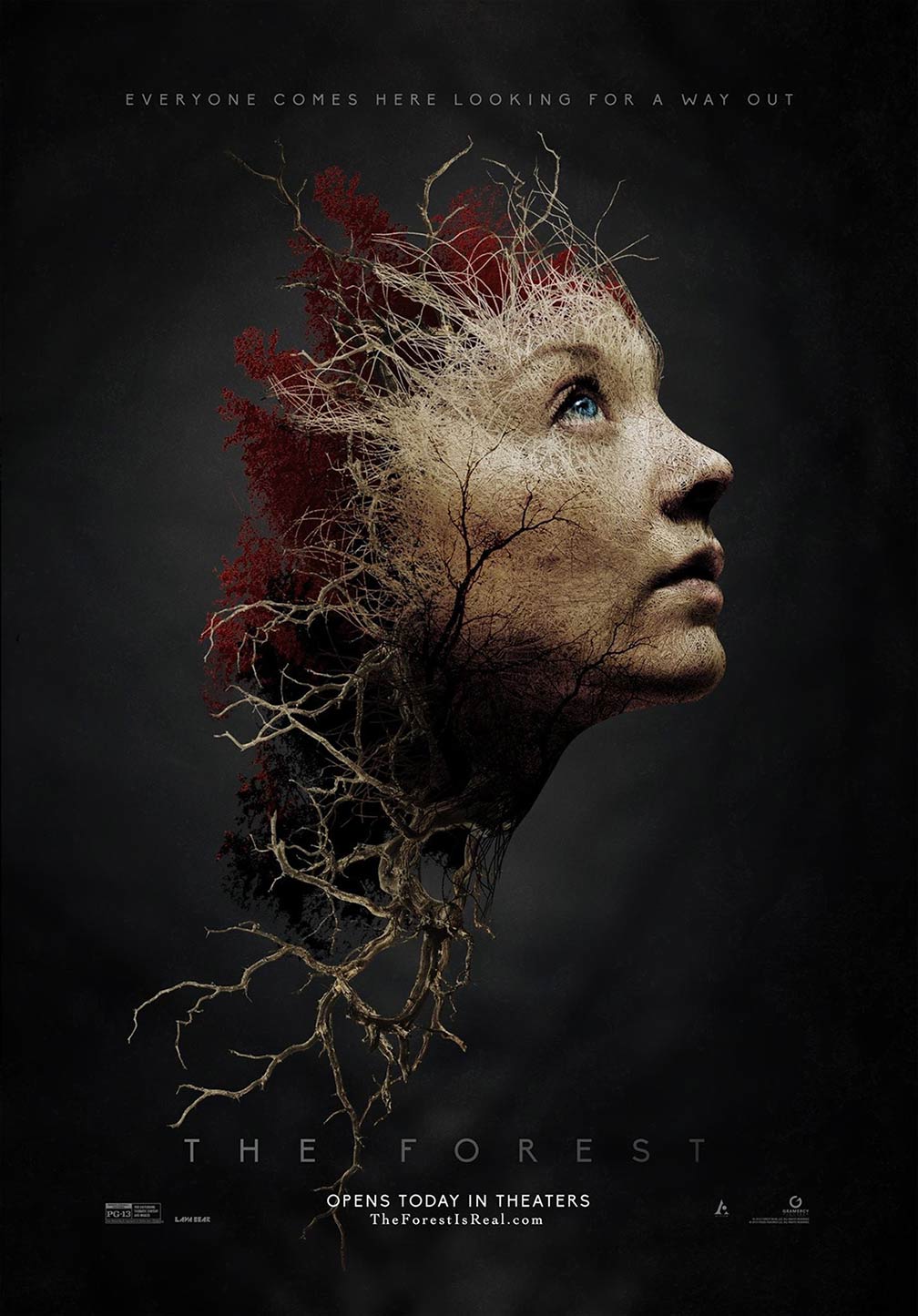
I recently saw "The Forest," a horror movie that discusses the Aokigahara Forest in Mount Fuji, Japan. The forest is known for its association with people committing suicide in the forest. The forest is said to be haunted by yurei, or the ghosts of those who have taken their lives in the forest. As with other horror films that I have analyzed (The Purge: Anarchy, Teeth, Crimson Peak, It Follows, The Visit, and Pride + Prejudice + Zombies), I will first summarize the film and then discuss some elements of the film that bear further critique. For "The Forest," I'd like to address issues of exoticism and Orientalism, responses to trauma, as well as issues of agency and explanation. This review will contain spoilers of the movie's key moments and plot developments.
The movie focuses on Sara and her twin sister, Jess. Sara travels to Japan to look for Jess once notified by police that her sister is missing in the Aokigahara Forest. Convinced that her twin bond tells her that Jess is alive, Sara disregards the warnings of pretty much everyone in the film and goes into the forest. With this incredibly long build-up and character development, Sara finally enters the forest and camps out with Aiden, a man she met hours earlier in a local bar. This is where the visions start happening and Sara is confronted with haunting images of dead bodies, ghosts, and people she isn't quite sure are alive or not. The climax of the film comes when she becomes suspicious enough of Aiden to stab him and leave herself alone in the forest. A final vision consumes her and she re-enacts finding her parents dead in her house with Jess. In this vision, Sara and Jess's father comes back to life and attacks Sara with a death-grip on her arm. Sara slices at her father's hand to free herself from his grasp. At this point, the continuity is not clear to me, so I will piece together what I think happened. Sara, in her mind, escapes her father's grasp and runs through the forest, trying to get back to the path. But, she's actually sliced her own wrists instead of her father's non-existent hands and has bled out. Her soul, or perhaps spirit, running through the forest alerts her sister, who had been camping the entire movie and seemingly unaffected by the yurei, and starts her running towards the path. Jess is eventually led back to the forest's entrance (in part by her sister's yurei?) and is reunited with Sara's fiance, who at first thinks it is Sara that has emerged from the forest. As the two look into the forest, they see Sara's yurei with glowing eyes.
Sara and Aiden in the forest. Image retrieved from this site.
Overall, I was not wowed by the film and would rate it as below average compared to other horror films, although not quite as awful as The Visit. In watching it, however, I was struck by a few details that stood out to me as unique in films I've recently watched and unique to my usual blog analysis. First, I'll address issues of Orientalism and exoticism. Edward Said argued that Western culture patronizes and infantilizes Eastern culture. Western media portrayals of Asia exoticizes Eastern culture and provides them no personal value or consideration beyond gross stereotypes. These inaccurate representations undermine the ability of the West and Western people to understand or value Eastern culture. When The Forest came out, there was backlash in the press that the film painted Japanese culture in a negative light. Many reviewers noted the distinct lack of any Japanese main characters, despite the film happening in Japan (why couldn't Aiden have been Japanese?), and the odd behaviors of many of those that were highlighted. When Sara enters her sister's classroom in Japan, one of the schoolgirls literally freaks out and cannot be consoled at the sight of seeing her teacher again. Although Jess is presumably there to teach children English, the girl is unable to communicate at all in English and instead stammers with cliche wide-eyes and a schoolgirl uniform about the supernatural and ghost stories. Every Japanese person appears to be an expert on local folklore and preoccupied with death. From the woman who keeps dead bodies in her basement and the tour guide who seems numb to cutting down hanged bodies, the movie portrays Japanese people as uncaring and obsessed with death. Many reviewers pointed out the potential for racism and mischaracterization. I must agree that the film engaged in white-washing of a Japanese health epidemic and used the Aokigahara Forest as nothing more than a foreign, exotic backdrop for foregrounding the important, tragic lives of white Americans.
Sara being dragged away by the yurei. Image retrieved from this site.
Reviews also condemned the film for ignoring an important mental health crisis and making light of a serious epidemic in Japan. One review asked, what if a similar film was made about the Golden Gate Bridge in San Francisco, another location that experiences many suicides. Borrowing from my previous points, this conceptualization of Japanese sites as specifically "haunted," exoticizes Japanese culture as being odd, occult, or unnatural. The suicide forest is not addressed as meaningful or an issue for the protagonist to tackle. The forest is merely a "creepy" location for the protagonist to search for her sister. In ignoring the mental health issues inherent in the forest, the movie does touch upon the trauma that Sara and Jess went through in their parents death. The distinction drawn between them is that Jess actually saw her parents' dead bodies while Sara did not. Sara frequently mentions that in not looking, she was not fully there for her sister and could not help her bear that burden. It is then Sara and not Jess who is repeatedly told that she is "filled with sadness," and should not enter the forest. Having seen her parents' bodies, Jess is somehow more fully able to cope with her parents' death. I do not wish to make grand conclusions about what is appropriate and not, but it does strike me as an incredibly interesting statement on trauma and coping mechanisms. There are many different ways to respond with losing loved ones, this case in a murder-suicide. The film seems to argue, or at least, imply that in not fully seeing and acknowledging her trauma, Sara has set herself up for her own suicide. Jess is much stronger against the yurei and the influences of the forest, because she has "faced" her trauma and has overcome it. The messages, however coded and unapparent, may send harmful messages to people coping with their own trauma, who may or may not be seeking actual medical and professional advice to counter or correct media images. While many reviewers advocated boycotting the film for its damaging portrayal of the forest and mental illness, others noted that "art should not be censored."
The very first analytical thought I had about the movie was about the lack of agency given to the people who enter the forest. I was struck by the fact that in showing Sara killing herself based on a "trick" of the yurei, that they were removing agency from everyone else who entered the forest. Perhaps they didn't really want to die, but were similarly tricked. Suicide is truly an awful act, and one that I have familiarity with, but minimizing the decision-making power of those who engage in it left me with a bad taste in my mouth. For the film to pawn off the responsibility from individuals to ghosts and supernatural trickery is to provide an explanation that denies the need for broad consideration of mental health and depression. To invoke Burke's pentadic ratio, the film removes agency from individuals and instead focuses on the scene, the Aokigahara Forest, as mitigating the individual's responsibility for their actions. I'm not saying that we should be blaming individuals for taking their lives, there are oftentimes many influencing factors at play. But, I am wary of a film that seems to reduce suicide to the hallucinations caused by the supernatural. I am reminded of Aaron Mahnke's podcast, Lore. In episode 11, Black Stockings, Mahnke discusses myths about fairies who would kidnap children and adults and replace them with "changelings." In his description of the podcast, Mahnke's describes the human need to create stories "to explain the unexplainable." Faced with mental illness and physical disability, it was easier for people to see others as less-than-human and others, instead of caring for fellow humans who were different. Instead of working to solve the issues that lead to suicide sites, like the Aokigahara Forest, people may excuse the actions using supernatural circumstances. This removes agency from individuals, particularly those with mental illness, and ignores larger societal problems.
As far as horror movies go, I thought this film was full of cliches and added nothing to the genre. It also brought up some interesting rhetorical implications for its depictions of Asian cultures, trauma, and mental illness. I hope that in the future that horror films might take more caution in subject matter selection and treatment of sensitive subjects. I agree with one blogger that art should not be censored, but I do think that in making films, people should be concerned with how their treatment might influence audiences and make statements about other cultures and mental illnesses.
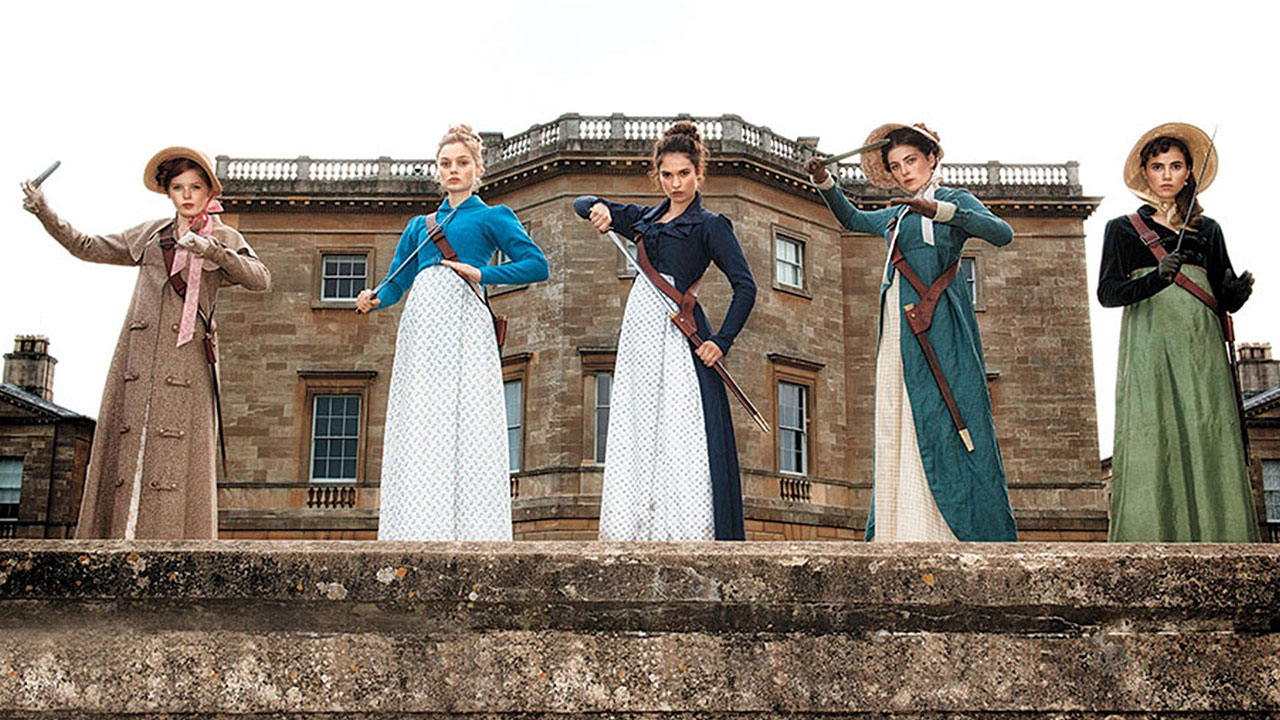
This past Thursday, I attended a film screening of Pride and Prejudice and Zombies, the latest film to be adapted from a book....that was itself adapted from a different book. I remember when the book Pride and Prejudice and Zombies came out, and I thought the book might lure unsuspecting youth into actually enjoying a literary matsterpiece and classic. I greatly enjoyed reading the original and admit that I snubbed the pop culture revival. Upon given the opportunity to go to a screening, however, I put my skepticism aside. As a film, I thought PPZ was excellent, extremely entertaining and just enough of the original to be a humorous homage. I have to say that Lily James and Matt Smith stole the show and created exciting and entertaining characters. This blog is not simply about movie reviews, however, so I feel compelled to discuss some elements of communication and rhetorical theory that, in this case, heightens my enjoyment of the film, and one cautionary note. I will first address what I felt were positive feminist inversions in the film through perspective by incongruity before discussing the future of orality and literacy. Suffice to say, this post will have comments about specific elements of the film. You have been warned.
Although many of the fighting scenes became repetitive, I never tired of the many scenes of the Bennet sisters pulling knives out of garter belts or revealing hidden weapons from underneath their dresses. The Bennet sisters were trained as Chinese warriors and often came to the aid of their family and male counterparts. In discussing these scenes, I am reminded of Kenneth Burke's perspective by incongruity, by which two disparate things are united to highlight the differences between them. In PPZ, I found this concept in play along multiple dimensions. The weaponry along the exaggerated feminity of the time period. Large skirts and corsets are made to restrict the movements of ladies, and yet the Bennet sisters move seemingly without pause to eliminate dozens of potential zombie threats. Furthermore, the juxtaposition of 19th century language and style with a contemporary horror fascination reflected the movie's unique narrative. One of my favorite parts was the puppeter-style history book that explained the relationship between the plague and the zombie outbreak - fascinating legitimization of a decidedly impossible occurrence.
Perspective by incongruity also laid a stark humor over the entire novel. The imminent zombie horde emphasizes how absurd the choice of husbands for Elizabeth is and the amount of time and attention given to such occasions. Even with zombies attacking and killing people at the balls, Mrs. Bennet and many of the people present are preoccupied with marriage and inheritances. The incongruence of these simultaneous acts highlights the odd traditions of the past and reignites the agency of Elizabeth in choosing her husband, despite the risks. I have recently paid much attention to the rise of feminist themes in horror movies (such as Teeth, It Follows, and Crimson Peak). I am happy to find these themes traversing genres and emerging in a more mainstream film. I hope these themes do not become overblown and trite, and keep their sincerity and calls for reconsidering the roles of women in narratives.
I did enjoy PPZ and found many instances of progressive film-making. I do wonder, however, if the creation of such films do not damage readership. When I first encountered the novel, I thought at least people would still be reading - what is there now? I do not mean to undermine film as a medium of communication, but I wonder what the long term effects are of children brought up watching the Lord of the Rings, Pride and Prejudice, Roald Dahl novels, the Great Gatsby, and Bride to Teribithia. Furthermoe, what happens when these film adaptations are perversions of the original text? Excellent movies, to be sure, but I wonder what components of visuality and literacy, minus orality, are lost on the current generation.
This semester, I'm teaching COMM499: Public Controversies, a class that I started as a part of a Provost's Fellowship. As a part of the foundational theory weeks (before we delve into specific topics and controversies), we are discussing sphere theory. Sphere theory involves categorizing different arenas where communication occurs. G. Thomas Goodnight theorized three communication arenas, the public sphere, the private sphere, and the technical sphere. I will first briefly explain these concepts before exploring a recent news article that caught my attention on the complexity of the United Nation's Intergovernmental Panel on Climate Change (IPCC) environmental reports. I argue that these reports are not targetting their intended audience, the public, and are instead retaining too many characteristics of the technical sphere. The UN needs to better bridge the gaps between the technical and the public sphere to increase public understanding of the severity and risks of climate change. Removing jargon and becoming more accessible can help remove the stigma of elitism from science and encourage people to engage themselves more with the science.
For additional discussion of the spheres and climate change, look up Mosley-Jensen's book.
The public, private, and technical spheres have their own standards for engagement with communication and often happen with different scopes, effects, and speakers. The public sphere is so named because it is the arena where the public, people, and politicians communicate about topics in general, accessible language. An example of a communication activity in the public sphere would be President Obama's State of the Union, which is a speech given to the general public about topics of great impact. The private sphere involves more intimate communication between smaller groups of people often not accessible to the public. Conversations between couples, family members, or employees and bosses would be considered private, because they have limited public impact. These conversations may also include situation-specific language, such as inside jokes or personal references. The technical sphere is made up of experts that have a standard, formalized discourse that often includes specified jargon and expectations. Legal jardon and law journals are an example of technical discourse, aimed at a specific, expert audience with advanced knowledge of a particular field.
In writing climate reports aimed at the general public, the UN is participating in what I call "bridging," where technical knowledge is translated into public discourse. Information created and anlayzed in the technical sphere is transferred to the public sphere. The article in question summarizes the conclusions of linguistics scholars Barkemeyer, Dessai, Monge-Sanz, Renzi, and Napolitano in their 2015 analysis of UN reports between 1990 and 2014. The analysis focused on the readability of the summary section of the reports aimed at policymakers and the public. The authors focused on the complexity of the vocabulary and sentence structure as potential barriers to public understanding. Compared to the readability of tabloid papers (50+ on their scale) and even scientific magazines (30+ on their scale), no IPCC reports surpassed 30 and the most recent barely hit 15. There is evidence that these reports have become increasingly unreadable, making it difficult for the general public to understand the IPCC's analysis and its implications.
Retrieved from Tollefson from the original article in Nature
The article noted that the IPCC is considering adding more members to the board to improve readability or potentially providing better communication training for the summary's writers. In my graduate research on the rhetoric of science and scientific controversies and membership in the Earth Sciences Communication Intiative, I have found that scientists are often more concerned with their own analysis instead of making the content accessible to the public. The jargon used can be off-putting and even unintentionally misleading. For example, my partner is a graduate student in physics and I am often asked to edit his papers. One example of jargon that has repeatedly stuck out to me is the use of "trivial." When my partner calls a result "trivial," he is indicating a specific standard of statistical impact, whereas I read the term with a disparaging and dismissive tone. Because these articles are often written with experts in mind, they also often gloss over important background knowledge or comparative statements that would elucidate the importance of the results. This writing style is appropriate for the technical sphere, but could potentially lead to misinterpretations by the public and can become fodder for climate skeptics.
Scientists should pay more attention to how they communicate. Whether that involves creating stronger bridges and training people to go-between, or including communication courses in science programs, Even including more sign-posting types of summaries, such as the chart above, would help clearly and succintly communicate the important take-a-ways for the reports. I think more problems would be minimized if attention to the ways people understand and process information were increased.
This past week, I was in Las Vegas, Nevada for the National Communication Association conference. I participated in a great pre-conference on sustainable communication, saw fabulous panels in rhetoric, religion, and science, and was honored to see a former student shine at her panel on material space and architecture. In the evening, I was able to explore some of Las Vegas's shows and strip night life. I attended Penn & Teller's show at the Rio Saturday night and knew immediately that I wanted to write a post about it. In this post, I will discuss some of my favorite tricks from the show and also my thoughts about the political, social, and scientific commentary that highlighted for me the importance of educational entertainment. I do not mean to give "spoilers" or to ruin the magic for anyone, so read at your own risk.
My first observation of the show was how honest and open Penn & Teller were about the art of deception. Many times, they blatantly told us what they doing and yet we were still bamboozled and confused. For example, Penn gave a speech condemning "psychics" who use tactics of cold reading to make audiences think that they have supernatural powers. Penn called out John Edward and Sylvia Browne, for example, for capitalizing on people's pain and misery in giving false hope through magic masquerading as messages from people who have passed. Penn has prepped us then, that what he is doing is really a trick. But, he does the readings so quickly and so spectacularly, it's really a wonder how he does it at all. In fact, being prepped and reminded about how the show is entirely full of tricks elevates one's awe and wonder because it has a natural explanation. If the answer is supernatural, then it is the supernatural power that is impressive, not the artist.
One of the themes of the show was represented on a sign that Teller held up during one of the tricks: "We aren't doing the trick you think we are doing." He flat out tells the audience that deception is occurring and Penn & Teller cannot be trusted, and yet the audience still falls for the trap, time and time again. My favorite trick was relatively simple in its set-up. Teller chose a woman from the audience and gave her a coin jar. He then began picking water drops from a fish tank and turned them into pennies which he placed in the jar. Even though I was in the very back corner of the mezzanine, I could still see and understand the tricks easily as they happened. The trick ended with Teller picking up a handful of pennies and dumping them back into the water. Instead of the pennies turning back into water, however, they sank to the bottom while dozens of goldfish appeared in the tank - it was truly incredible.
Retrieved from this site.
Part of what I was not expecting was the prevalence of social and political commentary in the show. Penn & Teller are widely known as libertarians and Penn is an outspoken public atheist. One trick included a short speech by Penn about airport security using a TSA metal detector. The trick was, again, amazing, but it also gave the audience an opportunity to reflect on the sacrificing of values and the usefulness of the TSA. Penn noted that the audience member chosen to come up on stage had as much training as a real TSA agent. They also showed how inaccurate and thus unnecessary many of the practices are. My favorite part of the sketch was Penn summarizing that we should all think about how our temporary security is often valued more highly than our eternal liberty. This is the type of comedy that reminds me of Lewis Black, where the jokes are purposeful and cause us to reflect on larger social issues.
This activism-comedy was also apparent in Penn & Teller's card trick. Teller performed sleight of hand magic while Penn played a guitar and told a story about "The Atheist's Deck of Cards." Based on a song by Tex Ritter, Penn & Teller tell the story about an audience member (Teller) who interrupts a physics lecture by Lawrence Krauss (who helped them write the song) and then tells a story using the cards to justify having them at the lecture. I was blown away by the amount of scientific information (which my partner, who is earning his PhD in Cosmology confirmed for me was accurate) packed into the song. From the four fundamental interactions in nature, the cosmological constant, and the size of the universe, the audience were learning about physics while also being mesmerized by Teller's sleight of hand.
I highly recommend Penn & Teller's show at the Rio. I'm not trying to advertise for them nor am I getting any reimbursement for this review. I am simply hopeful that Penn & Teller, along with other types of "edutainment" can help everyone learn more when they are not expecting it and give audiences chances for reflection and advocacy. Entertainment has aspects of education and can be harnessed to create a more active, engaged public. In a city known for its debauchery, sinfulness, and extravagance, I felt the simplicity and insight of Penn & Teller's show a welcome change of pace.
This is the final installment of my three series set on horror films and sexuality. My first two posts examined Teeth and It Follows. Each of these films embraces female sexuality in different ways that I think deserve scholarly attention. Teeth creates a monstrous feminine that frames female sexuality to be a tool for empowerment that is often suppressed by male domination. It Follows neutralizes sex as an equalizer between the sexes and removes the stigma of promiscuity from female sexual interactions. In this final post, I will unpack the sexual anxieties present in Crimson Peak (2015). As with the last two posts and my other posts about horror films (e.g., The Visit, The Purge: Anarchy), this post will have spoilers and detailed analysis about the film's key ideas.
To be frank, Crimson Peak was an awkward film to see with my brother. The film addresses incest and the blurred lines of familial love and familial violence. I will discuss the use of incest in the film as well as the romantic aspects of this horror film. I think Guillermo Del Toro has created another horror masterpiece. I do not know if it will stand up to the classics of Pan's Labyrinth, the Devil's Backbone, and The Orphanage, but it does embody an aesthetically pleasing and intoxicating horror story. The main character, Edith, is a timid virgin that falls hopelessly in love with Thomas marries him, and goes to live with him in England. Edith can see ghosts, namely the ghost of her mother, and writes ghost stories inspired by her supernatural abilities. This power is at first terrifying as she finds deformed, blood-soaked ghosts wandering her new home. It becomes clear, however, that these ghosts are warning Edith about her fate and imminent death at the hands of her new spouse and his sister, Lucille. It is revealed that Thomas and Lucille are lovers and have conspired to murder Edith for her father's money. Fighting and blood-stained snow occurs before Edith manages to escape the clutches of the incestuous pair. In what follows, I will bring up a few important points where I find female sexuality explored in interesting ways and sexuality's role in horror. I first briefly address the use of romance in the film, examine the taboo nature of incest, then the character of Lucille, and finally the role of women and traditional gender roles.
Lucille, Thomas, and Edith movie poster. Retrieved from this site.
In Edith's first rejection letter from a publisher, the editor laments that her ghost story does not include enough romance. This small scene was brilliantly added by Del Toro because it sets up the entire rest of the film for the audience to expect romance and not horror. Although Del Toro is the King of Horror and the film was marketed as such, this nearly throwaway line redirects the audience's attention from the ghost story to the romantic plot line. The film is really about Edith's love and, arguably more so, about Lucille's love. The two women have competing love stories that tie them together in a fight to death. Yes there are ghosts and yes there is blood, but the story's forward progress is not fear or anger, but love. Love is also an uncommon theme in horror films; more often it is lust, obsession, revenge, and sex that drives the character's actions. In this move, I think Del Toro does a great service to horror films by reminding contemporary audiences that fear and catharsis is but one aspect of a good story. Indeed, his film's often have the unique ability to incite both fear and awe, horror and hope, anger and sadness.
Del Toro immediately sets up the film so that we are suspect of Thomas and Lucille's intentions. There are secret meetings, unscrupulous attempts to raise money and to blackmail others, and an air of suggestive closeness between the two. At first, I thought perhaps they were married and were using a ruse of being siblings to attract dowries from Thomas's future spouses. The audience's mind, even though offered that they are related, first attempts other explanations to explain their lingering hugs, sideways glances, and Lucille's jealousy. When it is revealed in more explicit detail that Thomas and Lucille are sleeping together, Edith at first cannot believe it and shouts that she knew they were not brother and sister. Lucille responds, "but we are!" Confronted with the information directly before her eyes with knowledge of their deformed child, Edith still reconciles her perceptions with anything but incest. Incest becomes the twist, the plot point that was in front of our eyes the entire film, but we could not yet believe it until it is confirmed by Lucille. Incest is a sexual taboo not often addressed in horror films. It emerged in Here Comes the Devil, another film with a Spanish director, but is not a common media trope. Dysfunctional families and families undergoing trauma are often fodder for horror films, such as We Are What We Are, The Devil's Rejects, Red Dragon, The Babadook, and, of course, Psycho. Del Toro's use of incest and elevating the dysfunctional family to the level of incest draws forth interesting thoughts about how society differentiates between sexuality and love. If Lucille had simply loved her brother without having sex with him, perhaps the implications of their relationship would not be so terrifying.
I think that Lucille could have easily been the hero instead of the villain of the film if her sexuality had been removed from the film by either being Thomas's sister and not having sex with him, or not being his sister. Upon reflection, many of Lucille's actions are ones of pure love and adoration - she murders those who might come between her and Thomas, sacrifices her temporary satisfaction in the relationship to help the family financially, and is jealous of those that compete for Thomas's affection. For example, in Del Toro's other films, we don't fault the mother in The Orphanage for jeopardizing her relationship with her husband in her search for her son. In Mama, we don't question the actions of the lead character for protecting her boyfriends nieces. These familial relationships are honored and understandable, but we do not perceive of Lucille in the same way. Instead, Lucille is evil because her brand of love is taboo. I do not condone incest; it's presence caused me to think about the lines that all humans draw through symbols and communication that separate the sacred and profane. Mircea Eliade argued that religious thought is rooted in human separation between what is sacred and thus revered and worshiped, and what profane or filthy. Much like eating cow if you are Hindu, certain actions and rituals are deemed off limits to remain pious to a particular order. I remember talking in sociology class about how eating human flesh and incest are as close to the two most universal taboo actions in human history, and still they are not universal. Incest is close enough to it, however, that its presence in a narrative immediately defines those who are good and those who are evil. I wonder if this particular sexuality were removed from Lucille, however, that we would hate her so much for her actions. She is fighting for the wrong, most profane, most taboo type of love, whereas Edith's virginity and purity are the foil.
Brother and sister. Retrieved from this site.
These two arguments unfold what I think is the most important part of the film - it's not about Thomas. Although he does receive a good portion of screen time, the film is a war between Edith and Lucille with Thomas as merely a chess piece. You are clearly told through the plot that Thomas has been overwhelmingly influenced by his sister to act as he does and you wonder if Thomas is responsible for any of film's terrors. The audience becomes sympathetic to him as he tries to reconcile his sister with Edith, the new woman he loves. Thomas has no control over the action of the film; even in death he is only a brief distraction that Edith uses to kill Lucille. The female leads trump the "hero" doctor, Alan, who comes to save Edith and only ends up a burden to her as she slowly walks his injured self back to town. The men are ancillary characters to the epic battle between empowered and strong women. They fight for their lives and also for love and normalcy. Unlike the traditional story line of multiple men fighting over a woman like an object, it is Thomas who becomes the target of the audience's gaze as he is pushed and pulled between the two women, unable to control his own emotions and unable to act to protect himself, Alan, Lucille, or Edith. Instead it is Lucille and Edith who take strong, decisive action - they break rules to explore passages, they murder men with their bare hands, they beat and chase each other, they sacrifice their own flesh and blood for what they want.
In these three horror films, I find fascinating and interesting themes about female sexuality and how it can be used as a source of power, can be normalized in everyday life, and can be used to invert traditional roles for women. As I've mentioned in a previous post, one aspect that draws me to the horror genre is its penchant for creativity. Many genres become pigeon-holed in cliche plots that never seem to vary from the boy meets girl or person saves someone from place they aren't supposed to be narratives. In horror, however, I find innovation, inversion, and inquiry into the very aspects of what makes us human, and the different ways that people deal with reality and the supernatural. Unlike other genres, I also think horror addresses sexuality and the line between life and death in unique ways. I'm hopeful that the genre will continue to innovate and push our expectations for what we expect films to do.
Last week, I started a series of three posts about horror films and sexuality. The first week discussed "Teeth" and the complications of sexual purity, education, and consent. This week addresses "It Follows," a 2015 film with a unique and exciting "monster." I will first discuss the film as an innovative step forward in the horror genre. Then, I will praise the film's subtle but profound incorporation of female sexual empowerment. All three of these posts will contain detailed plot information and reflection, so those who do not want to be "spoiled" should skip these posts.
It Follows was simultaneously praised as an instant classic and creative horror endeavor. The plot is simple, yet immediately and strikingly unnerving. The film's "monster" is a shape-shifting, unidentified creature that slowly but adamantly walks directly towards its prey. Once caught, the person is ripped to shreds. The creature has no shape of its own; the monster is truly hidden in plain sight, hiding with the appearance of strangers, friends, or family. This set-up has the unique ability to invoke fear in the audience with scenes of people walking towards the camera in the background. What is normally considered an average part of everyday life becomes a potential and immediate threat. Without seeing the film yourself, it is hard to convey the silliness one feels at being completely terrified at a young girl or old woman walking slowly towards you. That is part of the genius of the film; the banal, everyday activities become risky, dangerous, and potentially life-ending. What actions do we participate in everyday, how many people do we cross paths with, that could alter our lives indefinitely? The film also conveys intense paranoia, where anyone approaching the main characters are met with skepticism and aggression before they can be identified. Even when the characters flee the town briefly and relax on the beach, there is an ominous aura that the creature will catch up eventually; any safety is only temporary.
I will now discuss the sexual elements of the film. The "creature" follows individuals based on their sexual partners. The origins of the creature are left quite murky, but, in short, the creature follows whoever the person it was previously following has sex with. Jay, the lead female character, has sex on a date and catches "It." Her sexual partner was kind enough to explain the creature to her and warn her to pass "It" along quickly or else it will kill her. There are certainly undertones of sexual anxiety here. Any sexual partner could result in an STD or pregnancy, which is an obvious metaphor for "It" that silently follows but has the potential to kill. This metaphor breaks down, however, when one thinks of passing the creature to others so that one could be rid of it themselves. STDs are reciprocal and cannot be erased by sex with others. Indeed, this type of thinking is indicative of myths where sex with virgins can cure AIDS. Some have called It Follows as an exercise in sexual fear and anxiety, because of the potential consequences and risks one takes when engaging in sexual activity, especially casually so. Despite these potentially shaming interpretations, I see positive and productive scenes that sexually empower women. I will discuss three of them: when Jay is originally passed "It," the discussions the main characters have about destroying the creature, and the act of following and stalking.
There is a long-lasting myth that women use sex for power, money, and ulterior motives. The stereotype is that men require sex more and women less, so women can dangle sexual relief as a bargaining chip. I feel no need to explicate why these stereotypes are just that, stereotypes with little practical application. Given this assumption and other sexual myths that circulate in popular culture, I find the scene where Jay is passed the creature by Hugh a welcome inversion. Hugh, a male, is the one using Jay and sex for a non-sexual purpose - to pass the creature along. He dates Jay and acts with a motivation unrelated to the relationship and having sex. Instead, he has sex out of the need for self-preservation, out of fear, not unlike a victim of domestic assault. Instead of the female using sex maliciously or with ulterior motives, Jay enjoys her casual, sexual encounter and we feel no animosity towards her. Instead, our scorn is directed towards Hugh, however briefly, the man who has sex to save his own skin and endangers the main character's life. Sex becomes a betrayal of her consent; Jay got far more than she expected from the encounter. Unlike current arguments about abortion and birth control, we don't feel that Jay's consent to the sexual encounter makes her somehow "deserving" of this fate.
After Jay convinces her friend of the danger she is in, they discuss how to kill it. Jay decides and consents to sex with a member of the group to pass the creature along to buy them more time. There is the implication that the male may be better able to protect himself, or simply that this is Jay's sexual preference. Either way, his brutal death confirms for the group that there is no safety based on one's gender. Everyone is equally susceptible to the actions of this creature. Perhaps it is time or death itself that marches towards all of us. Later in the film, Jay has sex with another male friend, who quickly has sex with a prostitute. Sex, in the film, is removed from its traditional, romantic settings. Instead, it becomes a normal part of life that may be engaged in for many reasons besides love. Although we might condemn Hugh at first for his actions, we become accustomed quickly to the idea that if sex is the way "It" operates, sex may also be the solution to defeating it. Jay and Paul have sex from a platonic, friendship type of love, concerned for Jay's safety. This sexual act blossoms into romantic love, but this was not its roots. It Follows presents an alternative view of sex. Unlike Teeth, sex is not dangerous or shameful. There are potential consequences to its engagement, but the danger of "It" is separated and distinct from the sex itself. Sex is a more normalized, everyday activity that holds no more or no less threat than other daily activities. Sex is not given the importance that is provided in Teeth and thus removes the common sex-shaming in horror films and the "sluts die first" mentality.
Catcalling video mentioned below.
While watching It Follows, I couldn't help but be reminded of the video where a woman filmed herself walking along in New York City for a day. The simple act of walking, of being followed, is a fear that women every day fear. As someone who has been followed from a bus to a Metro being taunted by a man, and on a separate occasion been grabbed by someone approaching from behind (in addition to numerous verbal assaults), the fear and uncertainty of being followed is well communicated in the film. Everyone may not immediately recognize the potential danger in stalkers or people following, but the film illuminates this potential danger. Anyone walking behind the main characters is noticed and understood as a threat. I don't believe that everyone is a potential threat, but it is clear that everyone has the potential to be. Unexpectedly, strangers (and sometimes even friends) can become risks to one's self-hood and safety. And it may begin with a simple act of following.
It Follows quickly became one of my favorite horror films. I applaud the interesting and exciting decisions made about the actions and appearance of the creature and greatly enjoyed the sexual themes throughout the film. No film is perfect, and indeed I may have changed a few elements of the film to further its cohesion and consistency, but It Follows communicated a positive, inclusive message that I hope will be furthered in future horror films. Films have the power to influence public opinion and insert educational messages in an entertaining way. The normalization of sex and the empowerment of female sexuality are productive trends in the journey towards equality and sexual freedom.
Sexuality and horror films often go together. They represent the promise of new life, the pleasure of intimacy coupled with the fear of death and the terror of isolation. Beginnings and endings are ideas I am pursuing in my dissertation. I'm interested in how these concepts emerge together in many contemporary controversies. Horror films are another place where beginnings and endings are merged seamlessly. In this three-post series, I take a comparative look at three horror films, Teeth, It Follows, and Crimson Peak. I find a pattern of sexual anxiety and sexual exploration that pushes boundaries of "normal" sexual behavior. If people haven't seen these films, or don't want to be "spoiled," this is a warning that I will be talking about film details and plot elements. These films have captured my imagination because they play with and expand on the agency and power of females, which I think is a positive (and at the very least interesting) trend in contemporary film.
Post image retrieved from this website.
This poster brings up an interesting correlation between Dawn's last name, O'Keefe, and the
association between flowers and vaginas in Georgia O'Keefe's paintings.
Teeth (2007) is about Dawn, an advocacy speaker for the purity movement at her church. When she is raped by a fellow church member, she discovers that she has vagina dentata or a "toothed vagina." These teeth act on their own accord and work to protect Dawn from her rapist, castrating him in a gruesome scene. At first, she is understandably frightened and considers her plight a result of her sin. After research about herself and these teeth, Dawn has an epiphany. Her enlightenment, as indicated by her name and frequent references to the sun, comes in the form of sexual empowerment, where she can use her teeth to her advantage. Although the teeth are not under Dawn's direct control, they do not attack in a scene where Dawn is enjoying consensual sex. When the same sex scene invites Dawn's scorn and rage, the teeth attack and emasculate him. There are certainly problems in this film that disempower Dawn. Dawn does not preemptively attack or fend off potentially negative sexual encounters. For Dawn to fight back in her unique way, she must first be penetrated and submit herself to the sexual advances of men. At the end of the film, Dawn takes refuge in a man's car, who begins licking his lips and making sexual advances towards Dawn. Knowledgeable that the imminent sexual encounter will result in his castration, she smiles.
Dawn at the end of the film. Image retrieved from Rotten Tomatoes.
This film blurs lines of consent in the sense that Dawn "willingly" engages in certain sexual encounters with the knowledge that her teeth would attack her sexual partner. Despite these issues, Teeth does show a sexual empowered female who explores her own sexuality and comes to terms with her unique strength and eroticism. In Audre Lorde's "The Uses of the Erotic," she argues, "the erotic is a resource within each of us that lies in a deeply female and spiritual plan, firmly rooted in the power of our unexpressed or unrecognized feeling" (p. 87). The erotic is a power that is oppressed and corrupted by dominant power structures to keep women from realizing its power. For Dawn, the religious group is the source of oppression, where her sexual power is "vilified, abused, and devalued" (p. 88). Issues of purity and virginity are non-identities, where a lack of participation (such as atheism or vegetarianism) in an action indicates membership. Lorde argues that this oppression keeps women "in the service of men" as "a distant/inferior" person (p. 88). Teeth offers Dawn the opportunity to reclaim her sexuality and eroticism from men who take advantage of her and only see her as a sexual object. Dawn transforms from a meek virgin to an empowered crusader throughout the film, in part from her increased knowledge about sexuality and the body. In one scene, Dawn removes a sticker (shaped liked a golden sun) from her sex ed textbook covering the anatomy of the vagina. The film makes a strong statement that her religious upbringing and lack of accurate and complete sexual education directly leads to her vulnerable, naive condition. It is through knowledge and an enlightenment religion that Dawn becomes a more powerful female. Lorde argues that when women embrace the erotic, they "rise up empowered" (p. 88).
With that empowerment, however, comes scorn. Lorde said, "women so empowered are dangerous" (p. 88). Women who claim power and dare to challenge the system, as seen in the new movie Suffragette, they receive backlash. The contemporary feminist movement is often accused of grasping for more than women are due, that attempts at "equality" are really clothed attempts at dominance. Similar to arguments about affirmative action, those that oppose feminism truly fear losing their place in the system or damaging what is deemed "normal," and thus the desired order. In a recent r/ChangeMyView post on Reddit, a female redditor claimed that "Men are superior to women." Her reasons were because of men and women's physical differences and also the presence of men in more challenging/intellectual jobs. It's clear to me that even disturbances in an order that disadvantages women receives scorn from women themselves. If everyone is equal, perhaps there is no reason other than our own shortcomings to blame on our failures. Or, if everyone is equal, then perhaps our successes are not as meaningful as others. In a powerful article by Carole Blair, Julie R. Brown, and Leslie A. Baxter, they argue that the academic review process, filled with intelligent and intellectual women, is also a biased space. They respond to an article that ranks the publication count of female communication scholars and rejection letters they received on an earlier version of the article. Their attempt to challenge the ranking article was met with scorn and rejection from both male and female reviewers. They argue that the original report "is a thematic marker of a masculinist ideology and that the anonymous reviews of our original essay are unusually explicit manifestations of the apparatuses that sustain and enable those ideological themes" (p. 384).
Teeth brings up these important issues of female agency and how sexuality can be used as a force of attraction but also creating fear. This film puts an interesting spin on how female sexuality can itself be a weapon, the monstrous female fighting back with the strength of her form. I see many movies that laud the adjusted or upgraded female, such as Aeon Flux and Ultraviolet, but less often do I see films that empower the everyday female to fight back. There are definitely a notable few which I hope to address in a later post. As recent articles have suggested, it is oftentimes females who end up surviving horror films, oftentimes with the help and intervention of others. Teeth, however, empowers the female protagonist to use not only her self, but her sexual self, to survive.
On Friday, September 25th, I attended an event at the USC Caruso Catholic Center hosted by many organizations including Pando Populus. This organization takes it name from the pando tree and describes its significance on its website: "Above ground, Pando appears to be a vast grove of individual trees. Underground they are all interconnected through a single root system. Each part is affected by and nourishes the other. It has survived this way for as long as 80,000 years." The pando tree is a synecdoche for the interconnectedness of all life and an analogy for how we must work together to correct the damage done to our environment.
The event was held in support of Pope Francis's visit to Washington D.C. and the release of his encyclical "Laudato Si." The event was religious-themed with the Bishop Mary Douglas Glasspool representing the Episcopal Diocese of Los Angeles, held in a Catholic Church, with speakers from the Muslim Public Affairs Council, Faith2Green, and Interfaith Power and Light. The theme, "The Pope is Pando" lauded the work of Francis as a figurehead and representative of how religion can be a uniting force for environmental activism. I've previously discussed the rhetoric of creation care as an emerging social movement with the potential power to tip the scales in favor of larger influence. While the group I studied was primarily evangelical rhetoric, it's clear that many religions are finding common ground in the spiritual to influence their view of the natural.
Logo for the Pope is Pando event. Retrieved from this site.
In Francis's encyclical, he made repeated mention of an "integral ecology" where life is integrated in a familial metaphor. Common to Catholic and Christian rhetoric, the familial metaphor connects people and faith leaders as fathers, mothers, sisters, and brothers. Francis incorporates the environment in the familial metaphor as shared children in God's creation. He argued that the Earth and nature are female family members: "our common home is like a sister with whom we share our life and a beautiful mother who opens her arms to embrace us" (p. 3). The feminization of "Mother Earth" is a phenomenon I would like to explore in a different blog post. For now, I will say that emphasizing the femininity of nature implies vulnerability in need of our protection and to motivate us to save her as one might a damsel in distress. Francis argued, "This sister now cries out to us because of the harm we have inflicted on her by our irresponsible use and abuse of the goods with which God has endowed her" (p. 3). If we are all interconnected - a united organism - then a threat to one part of it is a threat to the whole. Faith appears to be one way that people are transcending differences in order to focus attention away from economics and politics and onto justice, morality, and the environment.
It has been a few weeks since my last post. I've been hard at work at job applications and this post has been particularly difficult to write. This post is about a movie screening of "It Happened Here" held at USC. The movie addresses issues of sexual assault on college campuses and the effects on students there. "The Hunting Ground" is another recent movie that addresses these concerns and I recommend both of them to people interested in delving more into real life experiences and stories of those affected by sexual assault and rape. I will first summarize the reasons why I find films like these extremely important and the rhetorical techniques they used to communicate their message. Then, I will discuss the prevalence of rape myths and why I had to walk out of the Q&A at the movie screening.
IHH and THG tell the larger story of rape and sexual assault that plagues women across the country through the individual stories of a handful of women. The startling statistics that 1 in 5 women are victims of sexual assault during their time in college are presented through the voices of the few. These exemplars add detail, nuance, and a face to the victims of this particular crime. Statistics can often feel cold or unpersuasive - especially if people do not (think they) know anyone affected. There are many reasons why people may not want to share their story, so these crimes may appear anonymously in public discourse - or we only hear the amplified stories of the very few that are false. Kenneth Burke argued that the "circumference" of an event affects its communicative influence. The circumference is related to what counts as the event or environment for an action. For example, if we expand the circumference of "bullying" from only in person to also online and cyber-bullying, the term can take on a whole new meaning. In these films, they seem to be narrowing the circumference, and showing only a few campuses and a few women as stand-ins, or synecdoche, for all college-aged women. The audience is forced to engage and experience the narratives of each woman and, at least in part, sympathize with their situation.
Angie Epifano - one of the storytellers in IHH. Image retrieved from the IHH website.
The two films showed a variety of people affected by sexual assault and rape. There were women who had been drunk, those sober. Some women were at a party, some were victims in their own dorm rooms. Some didn't know their attacker, others were assaulted by friends and significant others. The variation in stories gave the impression that rape and sexual assault happen in many different ways to many different types of people. THG contained a few stories from men who had experienced rape or sexual assault. Overall, the individual narratives united to create a holistic view of sexual assault and college life. The films could have easily focused on the past and fetishized the experiences of the story-tellers. Both films, however, emphasized the present and even the future, choosing to spend most of the films engaged in the reactions of the college administrators and the steps the women were taking to combat future sexual assaults at their universities and across the nation. Descriptions of the assaults were left in the victim's own words and comprised very little of the movie's time. Instead, the films focused on the larger impact of these occurrences and how the women were working to reclaim their voice through campus events and protests (like Take Back the Night) and Title IX lawsuits. I have previously argued, among many others, that documentary films have an immense power to shift public discourse. These films are certainly persuasive and advance an argument, but they also provide real life examples packaged for public consumption. I hope that films like this will help to shift how people talk about sexual assault and rape.
My optimism upon seeing this film and reflecting upon it and THG was almost immediately tempered during the Q&A. I first want to thank Director Lisa F. Jackson for attending the screening and handling two audiences members with aplomb and respect. It was far better than I would have done in that position. There was a couple in the back of the auditorium that dominated the Q&A session. As I told people of the event and even as I write it now, I am convinced no one will believe me. They presented a startling cliche of rape myths and expressed my greatest fear - that the film could not soften the hardened distrust of women and rape victims in the public. This is a warming that the following description of the Q&A may be triggering.
The gentleman in the back of the room raised his hand and was called on with the first question. He started his question with a preface about how he was the eldest brother of four sisters. Thinking back, this should have been an immediate red flag a la "I have a lot of black friends" before racists start talking. He asked Jackson why she didn't include any stories of false reporters and those who lied about their assault. He noted that this would have been more "fair" to share "both sides" of the story. Media representations of controversial events are often framed as debates, where there are two equally balanced sides. Similar to John Oliver's report on global warming, Jackson argued that there are so few false reports that giving them space in the film would not be reflective of the overarching narrative. Indeed, the number of false rape reports mirrors the false reports for other crimes. I groaned a bit at his question and I saw a few people shifting in their seats, but so far, it was bearable.
A few other people asked questions, but my friend in the back wasn't done. He raised his hand and asked whether women don't "disassociate" themselves from the event while its happening and then "forget" in the morning that the activity was consensual. Perhaps, when reflecting on the event, women "make up" a story to make themselves feel better. It was "obvious" from the film that some of the women couldn't remember a lot of details, and that was an indicator that they were lying as opposed to those that would have a factually accurate and complete story. The women had "wanted" the attention initially, but then regretted the potential effect it would have on their "reputation" and thus cried rape afterwards. Everyone had turned to look at him, and I asked, "Are you serious?" The woman a few seats away from me said, "You're victim blaming." This person, sitting through the entire film, seeing women share their painful stories, hearing the statistics about the frequency of this crime, and learning about how the system fails victims, held fast to his beliefs that it was the victim who was at fault.
In response, a brave woman in the front of the room shared her story of assault and noted that there were probably more women like her in the audience as well. She wondered whether it was the larger culture that encouraged this type of behavior and rewarded men for aggressive behaviors. Our friend raised his hand once more and it was all I could do not to interrupt and claim the microphone back for the female voices in the room. As he received the microphone again, a handful of women left the room. The man echoed the concerns of the previous speaker and talked about the powerful force of masculinity over the mind. He argued that men are not at fault at all and it is really their sexual drives, natural to all men, that are at fault. This man was truly a sight to behold. Some of the most common rape myths that pervade our culture and insidiously undermine the stories of those brave enough to speak out. In retrospect, I'm surprised that he didn't ask what the women in the film were wearing when they were assaulted.
Lady Gaga's music video, "Til it Happens to You" about sexual assault
I mentioned that this person was a part of a couple because at this point, she spoke up. She asked Jackson why more women don't go to the cops right away to have their story verified. She said that the issue of lying and false reporting would be eliminated by lie detector tests. I applaud Jackson for ignoring the absurd part of this question and focused on the many reasons why women may not feel comfortable going to the police and how we might create changes in police protocols. The response I wanted to give, but could not muster the strength to, was to say that all women experience trauma differently. Expecting anyone to submit themselves to being tied up in a chair being asked probing questions about their assault shortly afterwards is completely illogical. Furthermore, lie detector tests measure nervousness and heart rate to detect lying, two things basically guaranteed to happen after an assault. There is a reason why they aren't used in criminal justice systems - they are not accurate enough. This woman echoed her partner's concerns that the victim should be analyzed and be on trial for being assaulted.
I was deeply hurt but this couple's comments and had to leave the audience when the man raised his hand again. He was overpowering all of our collective voices and challenging the basic tenets of what I felt was an excellent film. The Q&A experience highlighted for me that there is still a lot of work to be done to change the minds of many members of the public. This films are making important strides, but rape myths and dominating ideologies can be intractable parts of culture.